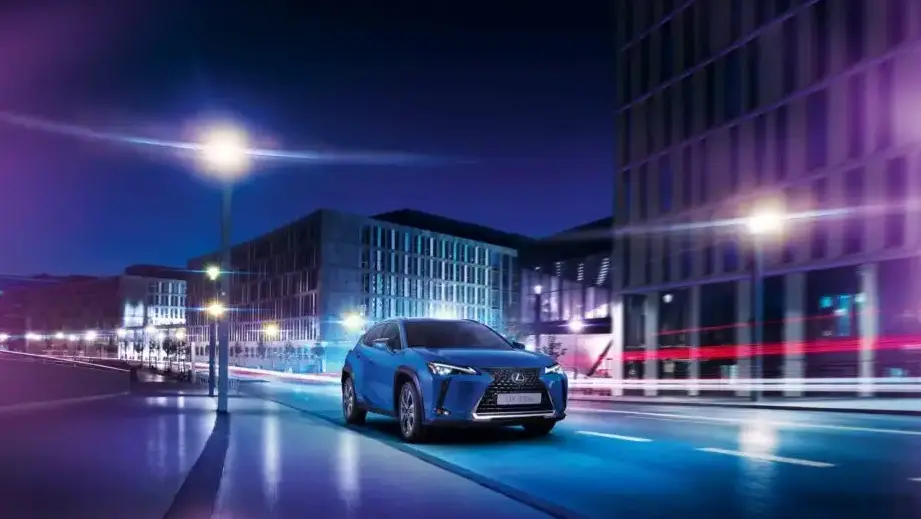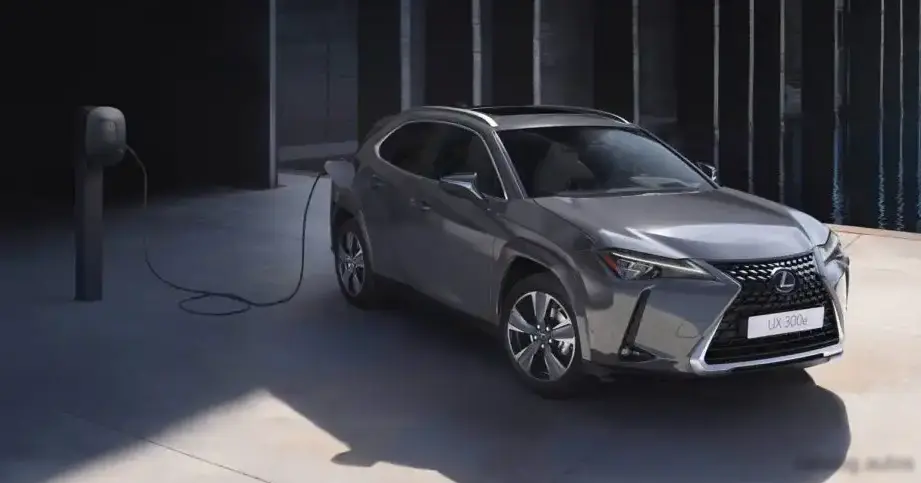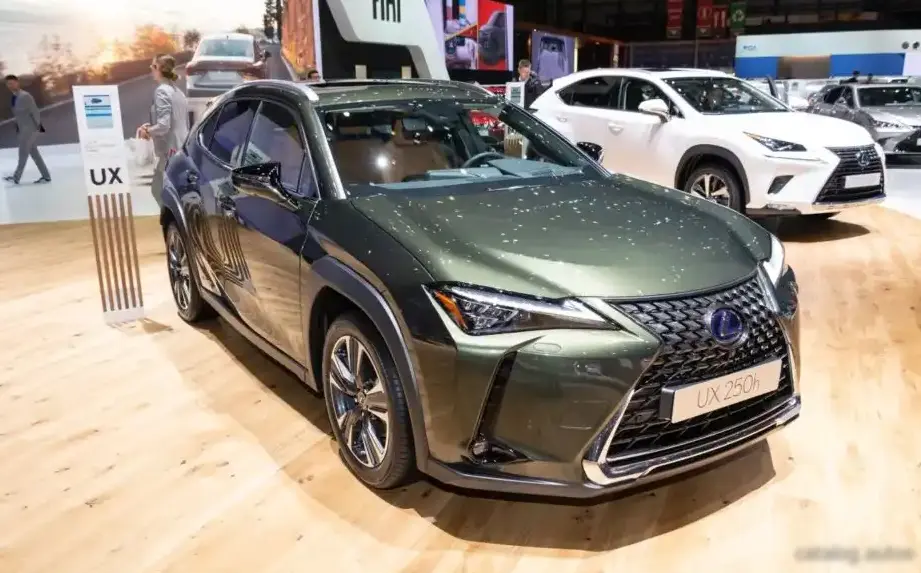
The Lexus UX 250h, a compact luxury crossover SUV, was produced from March 2019 through April 2024. It represents Lexus’s entry into the subcompact luxury SUV segment, positioned below the NX. The UX 250h is notable for being the first Lexus model to utilize the GA-C platform, part of Toyota’s New Global Architecture (TNGA). This particular variant, equipped with a 2.0-liter inline-four engine paired with an electric motor and an electronically controlled continuously variable transmission (e-CVT) and all-wheel drive (E-Four), was a core offering within the UX lineup, emphasizing fuel efficiency and accessible luxury. It aimed to attract buyers seeking a premium experience with a focus on hybrid technology.
Technical Specifications
| Brand | Lexus |
| Model | UX |
| Generation | UX |
| Type (Engine) | 250h (177 Hp) Hybrid E-Four e-CVT |
| Start of production | March, 2019 |
| End of production | April, 2024 |
| Powertrain Architecture | FHEV (Full Hybrid Electric Vehicle) |
| Body type | SUV |
| Seats | 5 |
| Doors | 5 |
| Fuel consumption (combined) | 4.5-4.8 l/100 km (52.3 – 49 US mpg, 62.8 – 58.9 UK mpg, 22.2 – 20.8 km/l) |
| CO2 emissions | 106-114 g/km |
| Fuel Type | Petrol (Gasoline) |
| Acceleration 0 – 100 km/h | 8.7 sec |
| Acceleration 0 – 62 mph | 8.7 sec |
| Acceleration 0 – 60 mph | 8.3 sec |
| Maximum speed | 177 km/h (109.98 mph) |
| Emission standard | Euro 6d |
| Weight-to-power ratio | 9 kg/Hp, 110.6 Hp/tonne |
| Weight-to-torque ratio | 8.9 kg/Nm, 112.5 Nm/tonne |
| Gross battery capacity | 1.4 kWh |
| Battery voltage | 216 V |
| Battery technology | Nickel-metal hydride (NiMH) |
| Battery location | Under the rear seats |
| Electric motor power | 109 Hp |
| Electric motor Torque | 202 Nm (148.99 lb.-ft.) |
| Electric motor location | Integrated into the transmission |
| Electric motor type | Synchronous |
| Electric motor 2 power | 7.2 Hp |
| Electric motor 2 Torque | 55 Nm (40.57 lb.-ft.) |
| Electric motor 2 location | Rear axle, Transverse |
| System power | 177 Hp |
| Power | 146 Hp @ 6000 rpm |
| Torque | 180 Nm @ 4400 rpm (132.76 lb.-ft. @ 4400 rpm) |
| Engine layout | Front, Transverse |
| Engine Model/Code | M20A-FXS |
| Engine displacement | 1987 cm3 (121.25 cu. in.) |
| Number of cylinders | 4 |
| Engine configuration | Inline |
| Cylinder Bore | 80.5 mm (3.17 in.) |
| Piston Stroke | 97.6 mm (3.84 in.) |
| Compression ratio | 14:1 |
| Number of valves per cylinder | 4 |
| Fuel injection system | Direct injection and Multi-port manifold injection |
| Engine aspiration | Naturally aspirated engine |
| Valvetrain | DOHC-VVT-i |
| Engine oil capacity | 4.3 l (4.54 US qt | 3.78 UK qt) |
| Coolant | 5.9 l (6.23 US qt | 5.19 UK qt) |
| Kerb Weight | 1600-1680 kg (3527.4 – 3703.77 lbs.) |
| Max. weight | 2110 kg (4651.75 lbs.) |
| Max load | 430-510 kg (947.99 – 1124.36 lbs.) |
| Fuel tank capacity | 40 l (10.57 US gal | 8.8 UK gal) |
| Permitted trailer load with brakes (12%) | 750 kg (1653.47 lbs.) |
| Permitted trailer load without brakes | 750 kg (1653.47 lbs.) |
| Length | 4495 mm (176.97 in.) |
| Width | 1840 mm (72.44 in.) |
| Height | 1520-1540 mm (59.84 – 60.63 in.) |
| Wheelbase | 2640 mm (103.94 in.) |
| Front track | 1550-1560 mm (61.02 – 61.42 in.) |
| Rear (Back) track | 1550-1560 mm (61.02 – 61.42 in.) |
| Front overhang | 970 mm (38.19 in.) |
| Rear overhang | 885 mm (34.84 in.) |
| Ride height (ground clearance) | 160 mm (6.3 in.) |
| Drag coefficient (Cd) | 0.33 |
| Minimum turning circle (turning diameter) | 11.2 m (36.75 ft.) |
| Front brakes | Ventilated discs, 305 mm |
| Rear brakes | Disc, 281 mm |
| Gearbox | automatic transmission e-CVT |
Powertrain & Engine Architecture
The Lexus UX 250h utilizes a fourth-generation hybrid system. At its heart is the M20A-FXS 2.0-liter inline-four cylinder engine, part of Toyota’s Dynamic Force Engine family. This engine features a high compression ratio of 14:1, direct injection, and a combination of direct and port fuel injection for optimized combustion efficiency. The engine produces 146 horsepower at 6000 rpm and 180 Nm (132.76 lb-ft) of torque at 4400 rpm. The electric motor, integrated with the e-CVT, contributes an additional 109 horsepower and 202 Nm (148.99 lb-ft) of torque. A rear electric motor adds 7.2 hp and 55 Nm (40.57 lb-ft) of torque, enabling the E-Four all-wheel-drive system. The total system output is 177 horsepower. The e-CVT, unlike traditional CVTs, doesn’t rely on a belt but uses a planetary gearset to seamlessly blend power from the engine and electric motor. The nickel-metal hydride (NiMH) battery pack, located under the rear seats, has a gross capacity of 1.4 kWh and provides a limited all-electric range.
Driving Characteristics
The UX 250h’s driving experience prioritizes smoothness and efficiency over outright performance. The e-CVT provides a linear and seamless acceleration feel, lacking the stepped shifts of a conventional automatic transmission. While the combined 177 horsepower is adequate for everyday driving, acceleration to 60 mph takes around 8.3 seconds. The E-Four system provides enhanced traction, particularly in inclement weather, but doesn’t transform the UX 250h into a performance SUV. The hybrid system’s programming favors electric drive at lower speeds, resulting in quiet and refined urban driving. Compared to the UX 200 (non-hybrid), the 250h offers significantly improved fuel economy and a more relaxed driving experience. It doesn’t possess the punch of higher-performance luxury crossovers, but its focus is on a comfortable and efficient ride.
Equipment & Trim Levels
The UX 250h was offered in several trim levels, with standard features including Lexus Safety System+ 2.0 (pre-collision system with pedestrian detection, lane departure alert with intelligent steering assist, and dynamic radar cruise control), a 7-inch infotainment display, Bluetooth connectivity, and automatic climate control. Higher trims added features like a larger 10.3-inch infotainment display, navigation, premium audio systems, heated and ventilated front seats, and a power rear door. Interior upholstery ranged from fabric to leather, with various color options available. Optional extras included a sunroof, blind-spot monitoring, and parking assist.
Chassis & Braking
The UX 250h utilizes a MacPherson strut front suspension and a double wishbone rear suspension, tuned for comfort and stability. The chassis is designed to minimize body roll and provide predictable handling. Braking duties are handled by ventilated discs at the front (305mm) and solid discs at the rear (281mm). The hybrid system incorporates regenerative braking, which helps to recharge the battery and improve fuel efficiency. Anti-lock braking system (ABS) is standard. The E-Four system intelligently distributes torque between the front and rear axles based on driving conditions.
Market Reception & Comparison
The Lexus UX 250h was generally well-received by critics for its fuel efficiency, comfortable ride, and refined interior. However, some reviewers noted its relatively modest performance and the somewhat dated infotainment system. Compared to rivals like the BMW X1 and Audi Q3, the UX 250h offered a more fuel-efficient and comfortable experience, but lacked the same level of sporty handling. Its fuel economy, ranging from 4.5 to 4.8 l/100 km, was a key selling point, making it an attractive option for environmentally conscious buyers. Reliability ratings were generally positive, consistent with Lexus’s reputation for build quality.
Legacy
The Lexus UX 250h established Lexus as a player in the burgeoning subcompact luxury SUV segment. While the model was discontinued in April 2024, the UX line continues with a fully electric variant. The 250h powertrain, while not groundbreaking in terms of performance, proved to be reliable and efficient. On the used car market, the UX 250h remains a popular choice for buyers seeking a well-equipped, fuel-efficient, and dependable luxury crossover. Its hybrid technology and Lexus’s reputation for quality ensure continued demand for this model in the years to come.