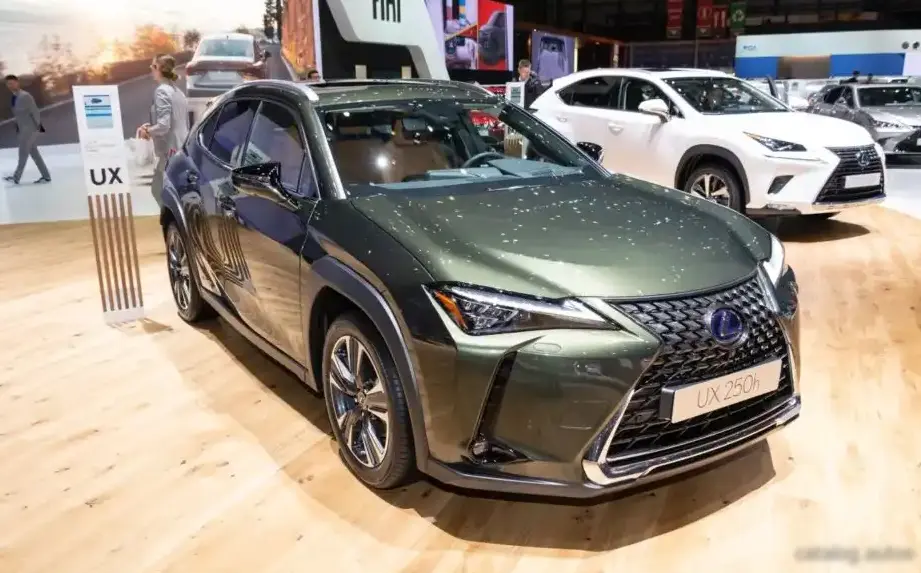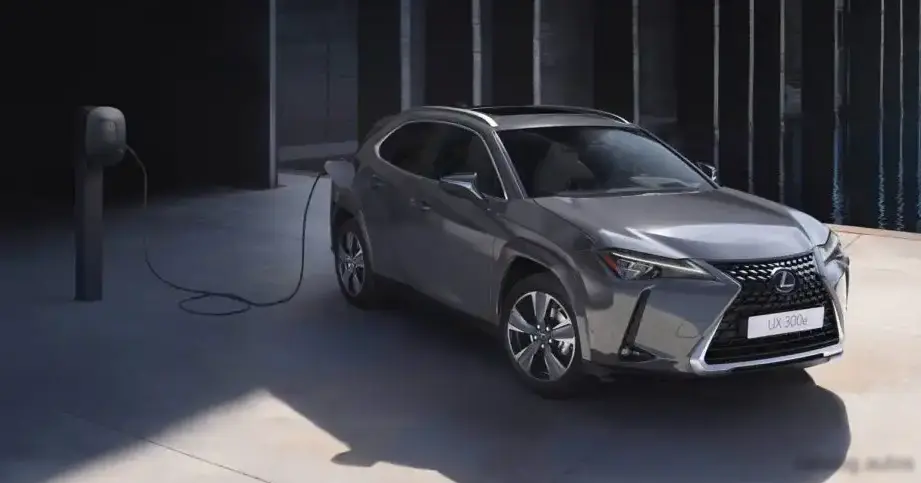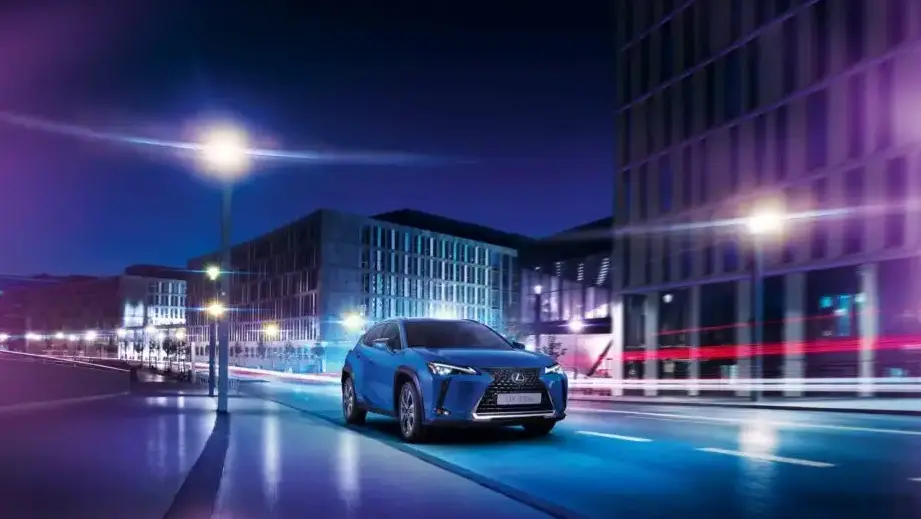
The Lexus UX 300e, introduced in January 2020 and produced through March 2023, represents Lexus’s first all-electric vehicle (BEV). Based on the UX compact crossover, the 300e variant was initially targeted primarily at the European and Asian markets, where demand for electric vehicles was rapidly increasing and regulatory pressures favored zero-emission vehicles. It utilizes a dedicated electric powertrain within the existing UX platform (AXX10 series), offering a blend of Lexus luxury and electric mobility. This specific configuration, featuring a 54.3 kWh battery pack and a 204 horsepower electric motor, served as the initial offering for the UX 300e, aiming to provide a balance between range, performance, and practicality for urban and suburban drivers.
Technical Specifications
| Brand | Lexus |
| Model | UX |
| Generation | UX |
| Type (Engine) | 300e 54.3 kWh (204 Hp) |
| Start of production | January, 2020 |
| End of production | March, 2023 |
| Powertrain Architecture | BEV (Electric Vehicle) |
| Body type | SUV |
| Seats | 5 |
| Doors | 5 |
| Fuel Type | Electricity |
| Acceleration 0 – 100 km/h | 7.5 sec |
| Acceleration 0 – 62 mph | 7.5 sec |
| Acceleration 0 – 60 mph | 7.1 sec |
| Maximum speed | 160 km/h (99.42 mph) |
| Weight-to-power ratio | 9 kg/Hp, 110.9 Hp/tonne |
| Weight-to-torque ratio | 6.1 kg/Nm, 163 Nm/tonne |
| Gross battery capacity | 54.3 kWh |
| Net (usable) battery capacity | 45 kWh |
| Battery voltage | 355.2 V |
| Battery technology | Lithium-ion (Li-Ion) |
| Battery location | Below the floor |
| All-electric range (WLTP) | 314 km (195.11 mi) |
| All-electric range (US Estimate) | 400 km (248.55 mi) |
| Average Energy consumption (WLTP) | 16.8-17.1 kWh/100 km (27.04 – 27.52 kWh/100 mi) |
| MPGe | 125 – 122 |
| km/kWh | 6 – 5.8 |
| mi/kWh | 3.7 – 3.6 |
| Electric motor power | 204 Hp |
| Electric motor Torque | 300 Nm (221.27 lb.-ft.) |
| Electric motor model/code | 4KM |
| Electric motor location | Front axle, Transverse |
| Electric motor type | Synchronous |
| System power | 204 Hp |
| System torque | 300 Nm (221.27 lb.-ft.) |
| Kerb Weight | 1840 kg (4056.51 lbs.) |
| Max. weight | 2245 kg (4949.38 lbs.) |
| Max load | 405 kg (892.87 lbs.) |
| Trunk (boot) space – minimum | 486 l (17.16 cu. ft.) |
| Length | 4495 mm (176.97 in.) |
| Width | 1840 mm (72.44 in.) |
| Width including mirrors | 2078 mm (81.81 in.) |
| Height | 1545 mm (60.83 in.) |
| Wheelbase | 2640 mm (103.94 in.) |
| Front track | 1550 mm (61.02 in.) |
| Rear (Back) track | 1550 mm (61.02 in.) |
| Front overhang | 970 mm (38.19 in.) |
| Rear overhang | 885 mm (34.84 in.) |
| Ride height (ground clearance) | 140 mm (5.51 in.) |
| Drag coefficient (Cd) | 0.31 |
| Minimum turning circle | 10.4 m (34.12 ft.) |
| Approach angle | 14.4° |
| Departure angle | 25.8° |
| Ramp-over angle | 22.9° |
| Drivetrain Architecture | One electric motor drives the front wheels. |
| Drive wheel | Front wheel drive |
| Number of gears | 1 |
| Type of gearbox | automatic transmission |
| Front suspension | Independent type McPherson |
| Rear suspension | Trailing arm |
| Front brakes | Ventilated discs, 305×28 mm |
| Rear brakes | Ventilated discs, 317×18 mm |
| Assisting systems | ABS (Anti-lock braking system) |
| Steering type | Steering rack and pinion |
| Power steering | Electric Steering |
| Tires size | 215/60 R17 |
Powertrain & Engine Architecture
The Lexus UX 300e utilizes a single electric motor, designated 4KM, driving the front wheels. This synchronous motor produces 204 horsepower and 300 Nm (221 lb-ft) of torque. The motor is powered by a 54.3 kWh lithium-ion battery pack located under the vehicle floor, contributing to a low center of gravity. The battery pack operates at 355.2V. The powertrain features a single-speed automatic transmission, typical of electric vehicles, providing seamless acceleration. The vehicle employs regenerative braking to recapture energy during deceleration, enhancing efficiency and extending range. The charging port location varies by market, but supports both AC and DC fast charging capabilities.
Driving Characteristics
The UX 300e, with its 204 hp and instant torque delivery, offers brisk acceleration. Zero to 60 mph is achieved in approximately 7.1 seconds, and 0-100 km/h in 7.5 seconds. While not a performance-oriented EV, it provides ample power for everyday driving and highway merging. The single-speed transmission ensures smooth, linear acceleration. Compared to potential future higher-performance variants, this initial configuration prioritizes efficiency and a comfortable driving experience. The front-wheel-drive layout provides predictable handling, but lacks the all-wheel-drive capability found in some competing EVs. The low center of gravity, thanks to the underfloor battery pack, contributes to stable cornering.
Equipment & Trim Levels
The UX 300e was generally well-equipped, reflecting Lexus’s luxury positioning. Standard features typically included Lexus Safety System+ 2.0 (including pre-collision system with pedestrian detection, lane departure alert with steering assist, and dynamic radar cruise control), a 10.3-inch infotainment display with Apple CarPlay and Android Auto compatibility, and a suite of comfort features like automatic climate control and power-adjustable seats. Interior upholstery was typically a combination of synthetic leather and fabric, with optional upgrades to full leather available. Trim levels varied by market, but generally offered options for upgraded audio systems, navigation, and exterior styling enhancements.
Chassis & Braking
The UX 300e utilizes a McPherson strut independent suspension at the front and a trailing arm suspension at the rear. This setup is tuned for comfort and ride quality, prioritizing a smooth driving experience over sporty handling. The vehicle is equipped with ventilated disc brakes on all four wheels, measuring 305x28mm at the front and 317x18mm at the rear. An Anti-lock Braking System (ABS) is standard. The steering system is an electric power-assisted rack and pinion system, providing precise and responsive steering feel.
Market Reception & Comparison
The Lexus UX 300e received generally positive reviews, with critics praising its comfortable ride, quiet cabin, and Lexus’s reputation for reliability. However, its relatively limited range compared to some competitors (around 195 miles WLTP) was a common criticism. Compared to other electric SUVs in its class, such as the Hyundai Kona Electric or the Kia Niro EV, the UX 300e offered a more premium interior and a more refined driving experience, but at a higher price point. Fuel economy, expressed as MPGe, ranged from 122-125, and energy consumption was between 16.8-17.1 kWh/100km.
Legacy
The Lexus UX 300e served as Lexus’s initial foray into the all-electric vehicle market, paving the way for future EV offerings. While production was relatively short-lived, the UX 300e established Lexus as a contender in the growing EV segment. The powertrain, while not without its limitations in terms of range, has proven to be generally reliable in early reports. On the used car market, the UX 300e represents an entry point into the Lexus brand for buyers seeking an electric vehicle, and its value is influenced by battery health and mileage. The lessons learned from the UX 300e are expected to inform the development of Lexus’s future electric vehicles, including the RZ 450e.