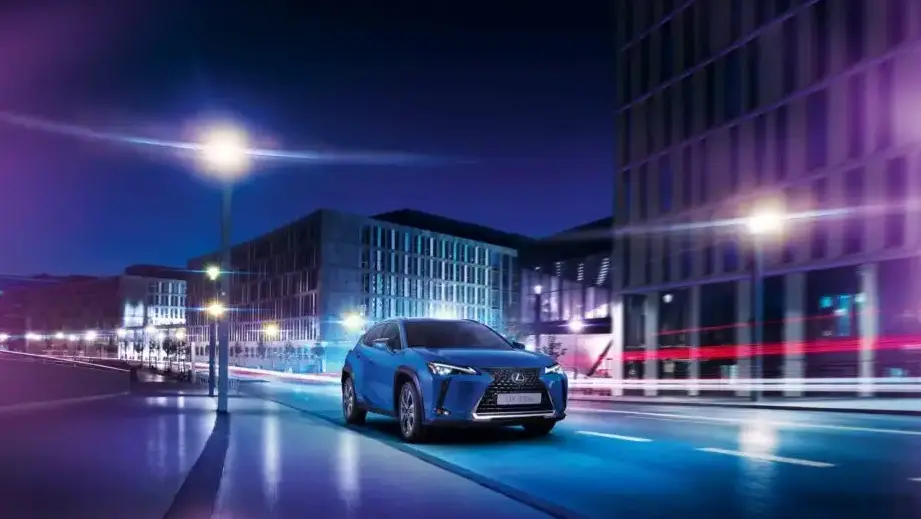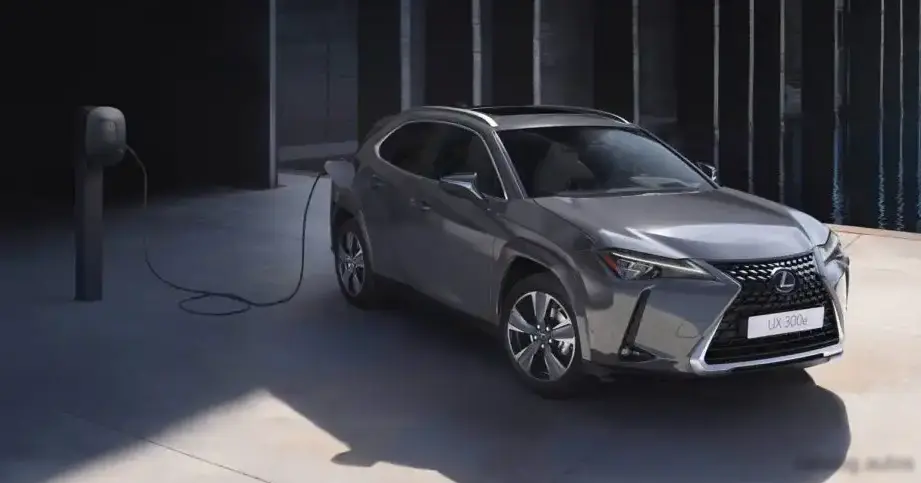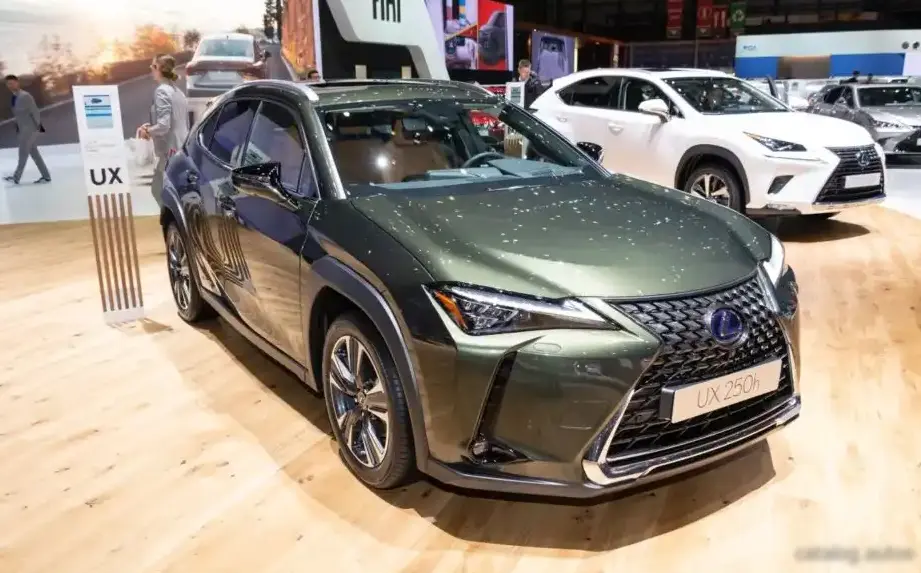
The Lexus UX 300h E-Four, launched in April 2024, represents Lexus’s entry into the subcompact luxury crossover segment with a focus on hybrid efficiency and all-wheel-drive capability. Positioned as a premium offering, the UX 300h utilizes Lexus’s fourth-generation hybrid technology and is built upon the GA-C platform, shared with other Toyota and Lexus models. This particular variant, boasting a combined system output of 199 horsepower and an electronically controlled continuously variable transmission (ECVT), aims to balance fuel economy with a refined driving experience. It serves as the primary hybrid powertrain option for the UX line, offering a step up in performance and features compared to non-hybrid trims where available in other markets.
Technical Specifications
| Brand | Lexus |
| Model | UX |
| Generation | UX |
| Type (Engine) | 300h (199 Hp) Hybrid E-Four ECVT |
| Start of production | April, 2024 |
| Powertrain Architecture | FHEV (Full Hybrid Electric Vehicle) |
| Body type | SUV |
| Seats | 5 |
| Doors | 5 |
| Combined fuel consumption (WLTP) | 5.3-5.7 l/100 km (44.4 – 41.3 US mpg, 53.3 – 49.6 UK mpg, 18.9 – 17.5 km/l) |
| CO2 emissions (WLTP) | 121-128 g/km |
| Fuel Type | Petrol (Gasoline) |
| Acceleration 0 – 100 km/h | 7.9 sec |
| Acceleration 0 – 62 mph | 7.9 sec |
| Acceleration 0 – 60 mph | 7.9 sec |
| Maximum speed | 177 km/h (109.98 mph) |
| Emission standard | Euro 6e |
| Weight-to-power ratio | 7.8 kg/Hp, 128 Hp/tonne |
| Weight-to-torque ratio | 8.2 kg/Nm, 122.2 Nm/tonne |
| Battery voltage | 222 V |
| Battery technology | Lithium-ion (Li-Ion) |
| Battery location | Below the floor, under the rear seats |
| Electric motor power (1) | 113 Hp |
| Electric motor Torque (1) | 206 Nm (151.94 lb.-ft.) |
| Electric motor model/code (1) | PB10 |
| Electric motor location (1) | Between the combustion engine and the transmission |
| Electric motor type (1) | Synchronous |
| Electric motor power (2) | 41 Hp |
| Electric motor Torque (2) | 84 Nm (61.96 lb.-ft.) |
| Electric motor model/code (2) | Q810 |
| Electric motor location (2) | Rear axle, Transverse |
| Electric motor type (2) | Synchronous |
| System power | 199 Hp |
| Power | 152 Hp @ 6000 rpm |
| Torque | 190 Nm @ 4400-5200 rpm (140.14 lb.-ft. @ 4400-5200 rpm) |
| Engine layout | Front, Transverse |
| Engine Model/Code | M20A-FXS |
| Engine displacement | 1987 cm3 (121.25 cu. in.) |
| Number of cylinders | 4 |
| Engine configuration | Inline |
| Cylinder Bore | 80.5 mm (3.17 in.) |
| Piston Stroke | 97.6 mm (3.84 in.) |
| Compression ratio | 14:1 |
| Number of valves per cylinder | 4 |
| Fuel injection system | Direct injection and Multi-port manifold injection |
| Engine aspiration | Naturally aspirated engine |
| Valvetrain | DOHC, VVT-iE, VVT-i |
| Engine oil capacity | 4.3 l (4.54 US qt | 3.78 UK qt) |
| Coolant | 6.1 l (6.45 US qt | 5.37 UK qt) |
| Kerb Weight | 1555-1635 kg (3428.19 – 3604.56 lbs.) |
| Max. weight | 2110 kg (4651.75 lbs.) |
| Max load | 475-555 kg (1047.2 – 1223.57 lbs.) |
| Trunk (boot) space – minimum | 317-435 l (11.19 – 15.36 cu. ft.) |
| Fuel tank capacity | 43 l (11.36 US gal | 9.46 UK gal) |
| Permitted trailer load with brakes (12%) | 750 kg (1653.47 lbs.) |
| Permitted trailer load without brakes | 750 kg (1653.47 lbs.) |
| Length | 4495 mm (176.97 in.) |
| Width | 1840 mm (72.44 in.) |
| Height | 1540 mm (60.63 in.) |
| Wheelbase | 2640 mm (103.94 in.) |
| Front track | 1550-1560 mm (61.02 – 61.42 in.) |
| Rear (Back) track | 1550-1560 mm (61.02 – 61.42 in.) |
| Front overhang | 970 mm (38.19 in.) |
| Rear overhang | 885 mm (34.84 in.) |
| Ride height (ground clearance) | 160 mm (6.3 in.) |
| Drag coefficient (Cd) | 0.33 |
| Minimum turning circle (turning diameter) | 11.2 m (36.75 ft.) |
| Front suspension | Independent type McPherson |
| Rear suspension | Double wishbone |
| Front brakes | Ventilated discs, 305×28 mm |
| Rear brakes | Disc, 281×12 mm |
| Steering type | Steering rack and pinion |
| Power steering | Electric Steering |
| Tires size | 215/60 R17; 225/50 R18 |
| Wheel rims size | 17; 18 |
Powertrain & Engine Architecture
The Lexus UX 300h employs a sophisticated Full Hybrid Electric Vehicle (FHEV) powertrain. At its core is the 2.0-liter M20A-FXS inline-four cylinder engine, producing 152 horsepower and 190 Nm of torque. This engine utilizes both direct injection and multi-port fuel injection to optimize combustion efficiency and reduce emissions. The engine features a high compression ratio of 14:1 and incorporates Toyota’s Variable Valve Timing with intelligence – Electric (VVT-iE) and VVT-i technologies for improved performance and fuel economy. Crucially, this engine is paired with two electric motors – a primary motor (PB10) delivering 113 horsepower and 206 Nm of torque, and a secondary motor (Q810) producing 41 horsepower and 84 Nm of torque. The primary motor is integrated between the engine and the ECVT, while the secondary motor powers the rear wheels, providing on-demand all-wheel drive. The system’s total combined output is 199 horsepower. The ECVT, unlike traditional stepped automatic transmissions, offers a seamless and continuously variable gear ratio, optimizing engine efficiency and responsiveness.
Driving Characteristics
The UX 300h E-Four delivers a smooth and refined driving experience. The ECVT, while not offering the immediate response of a traditional automatic, provides linear acceleration and minimizes shift shock. The combined output of the engine and electric motors results in a 0-60 mph time of around 7.9 seconds. The all-wheel-drive system enhances traction and stability, particularly in inclement weather. Compared to a hypothetical UX 300 with a conventional gasoline engine and automatic transmission, the hybrid variant prioritizes fuel efficiency over outright performance. While the power delivery feels adequate for everyday driving, it lacks the punch of more powerful competitors. The electric motors provide instant torque at low speeds, contributing to a responsive feel in urban environments. The vehicle can operate in EV mode at lower speeds and under light loads, further enhancing fuel economy.
Equipment & Trim Levels
The UX 300h E-Four typically comes standard with a comprehensive suite of features, including Lexus Safety System+ 2.5 (featuring Pre-Collision System with Pedestrian Detection, Lane Departure Alert with Intelligent Steering Assist, and Dynamic Radar Cruise Control), a 12.3-inch touchscreen display, Apple CarPlay and Android Auto integration, and a premium audio system. Interior upholstery is typically NuLuxe, a high-quality synthetic leather. Available options include heated and ventilated front seats, a power moonroof, and a Mark Levinson premium sound system. Trim levels often vary by market, but generally offer increasing levels of luxury and technology.
Chassis & Braking
The UX 300h utilizes a McPherson strut front suspension and a double wishbone rear suspension, tuned for a balance of comfort and handling. The suspension geometry is optimized to minimize body roll and provide stable cornering. Braking duties are handled by ventilated discs at the front and solid discs at the rear. The hybrid system incorporates regenerative braking, which captures energy during deceleration and stores it in the battery, further improving fuel efficiency. The E-Four all-wheel-drive system distributes torque between the front and rear axles as needed, enhancing traction and stability.
Market Reception & Comparison
The Lexus UX 300h has been generally well-received by automotive critics, praised for its fuel efficiency, comfortable ride, and refined interior. However, some reviewers have noted its relatively modest performance and the sometimes-unconventional feel of the ECVT. Compared to other subcompact luxury crossovers, such as the BMW X1 or Audi Q3, the UX 300h prioritizes fuel economy and hybrid technology over sporty handling and raw power. Its fuel economy figures of 5.3-5.7 l/100 km are competitive within its class. Reliability is expected to be high, consistent with Lexus’s reputation for build quality and dependability.
Legacy
The Lexus UX 300h powertrain, leveraging Toyota’s proven hybrid technology, is expected to offer long-term reliability. The hybrid system components, including the battery pack, are covered by an extended warranty, providing peace of mind for owners. As the UX 300h enters the used car market, it is likely to retain its value due to its fuel efficiency, Lexus brand reputation, and the growing demand for hybrid vehicles. The UX 300h represents a significant step for Lexus in offering a more fuel-efficient and environmentally friendly option in the popular subcompact luxury crossover segment.