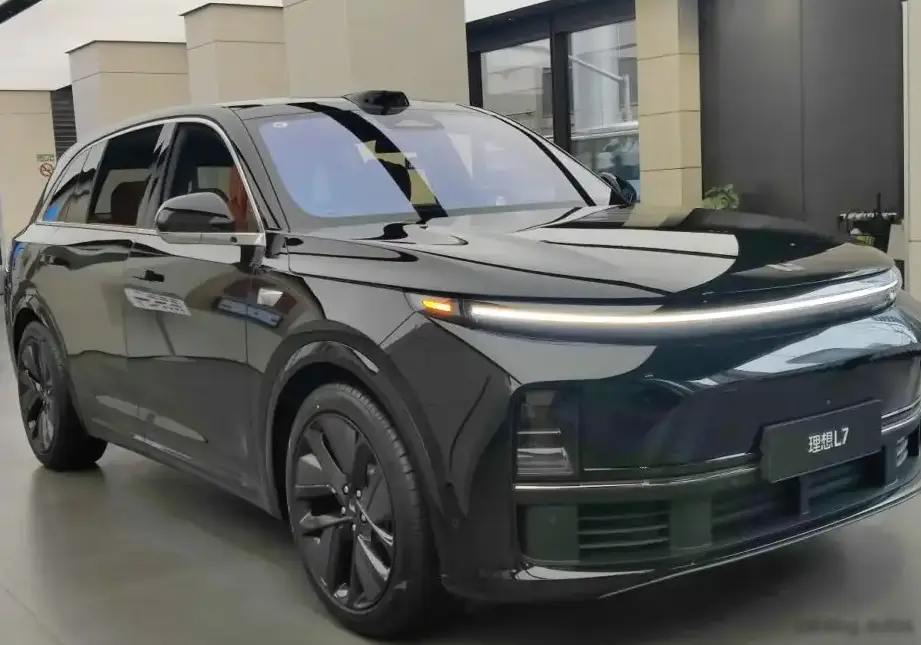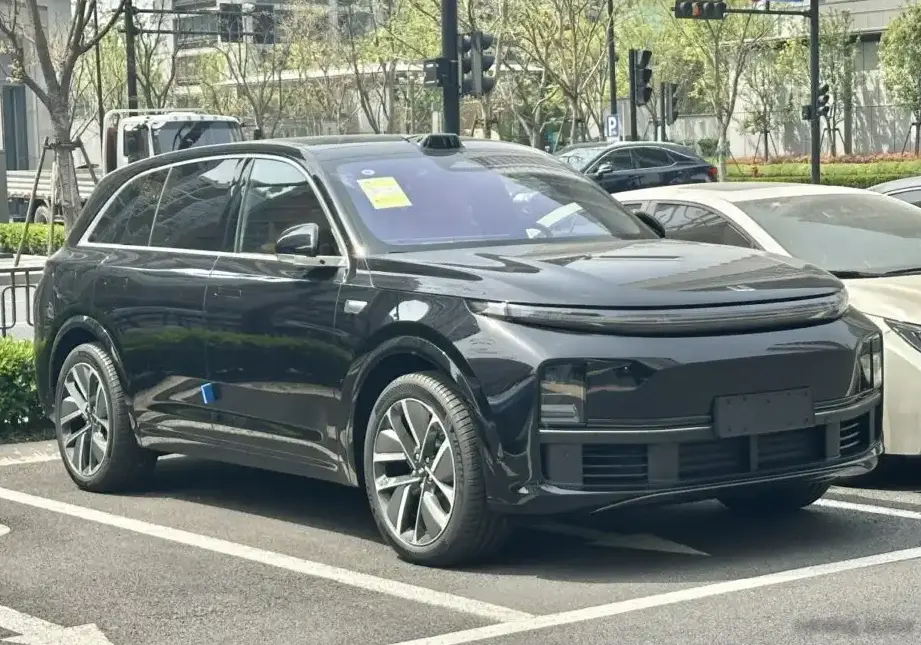
The Li L7 (facelift 2024) 1.5T 42.8 kWh (449 Hp) Extended Range 4WD is a plug-in hybrid electric vehicle (PHEV) SUV produced by the Chinese automaker Li Auto, beginning in March 2024. Representing a significant update to the original L7, this variant occupies the upper-midrange position within the Li Auto lineup, offering an extended all-electric range and a combined system output geared towards performance and efficiency. It’s designed to appeal to buyers seeking a luxurious and technologically advanced SUV with the flexibility of both electric and gasoline power. The L7 competes with other premium PHEV SUVs in the Chinese market, and represents Li Auto’s commitment to range-extended electric vehicles.
| Brand | Li |
| Model | L7 |
| Generation | L7 (facelift 2024) |
| Type (Engine) | 1.5T 42.8 kWh (449 Hp) Extended Range 4WD |
| Start of production | March, 2024 |
| Powertrain Architecture | PHEV (Plug-in Hybrid Electric Vehicle) |
| Body type | SUV |
| Seats | 5 |
| Doors | 5 |
| Fuel consumption (combined) | 7.4 l/100 km (31.8 US mpg, 38.2 UK mpg, 13.5 km/l) |
| Fuel Type | Petrol / electricity |
| Acceleration 0 – 100 km/h | 5.3 sec |
| Acceleration 0 – 62 mph | 5.3 sec |
| Acceleration 0 – 60 mph | 5 sec |
| Maximum speed | 180 km/h (111.85 mph) |
| Emission standard | China VI B |
| Weight-to-power ratio | 5.5 kg/Hp, 182.5 Hp/tonne |
| Weight-to-torque ratio | 4 kg/Nm, 252 Nm/tonne |
| Gross battery capacity | 42.8 kWh |
| Battery technology | Lithium nickel manganese cobalt oxides (Li-NMC) |
| Battery location | Below the floor |
| All-electric range (WLTC) | 190 km (118.06 mi) |
| Average Energy consumption (WLTC) | 22.8 kWh/100 km (36.69 kWh/100 mi, 92 MPGe, 4.4 km/kWh, 2.7 mi/kWh) |
| Electric motor power (Rear) | 272 Hp |
| Electric motor Torque (Rear) | 400 Nm (295.02 lb.-ft.) |
| Electric motor model/code (Rear) | TZ220XS066 |
| Electric motor location (Rear) | Rear axle, Transverse |
| Electric motor type (Rear) | Synchronous |
| Electric motor power (Front) | 177 Hp |
| Electric motor Torque (Front) | 220 Nm (162.26 lb.-ft.) |
| Electric motor model/code (Front) | TZ180XS008 |
| Electric motor location (Front) | Front axle, Transverse |
| Electric motor type (Front) | Synchronous |
| System power | 449 Hp |
| System torque | 620 Nm (457.29 lb.-ft.) |
| Power (ICE) | 154 Hp |
| Power per litre (ICE) | 102.9 Hp/l |
| Engine layout | Front, Transverse |
| Engine Model/Code | L2E15M |
| Engine displacement | 1496 cm3 (91.29 cu. in.) |
| Number of cylinders | 4 |
| Engine configuration | Inline |
| Number of valves per cylinder | 4 |
| Fuel injection system | Direct injection |
| Engine aspiration | Turbocharger, Intercooler |
| Valvetrain | DOHC |
| Kerb Weight | 2460 kg (5423.37 lbs.) |
| Max. weight | 3130 kg (6900.47 lbs.) |
| Max load | 670 kg (1477.1 lbs.) |
| Trunk (boot) space – minimum | 801 l (28.29 cu. ft.) |
| Fuel tank capacity | 65 l (17.17 US gal, 14.3 UK gal) |
| Length | 5050 mm (198.82 in.) |
| Width | 1995 mm (78.54 in.) |
| Height | 1750 mm (68.9 in.) |
| Wheelbase | 3005 mm (118.31 in.) |
| Front track | 1725 mm (67.91 in.) |
| Rear (Back) track | 1741 mm (68.54 in.) |
| Gears/Gearbox | 1, automatic transmission |
Powertrain & Engine Architecture
The Li L7 utilizes a sophisticated plug-in hybrid architecture. The core of the system is a 1.5-liter turbocharged inline-four cylinder gasoline engine (code L2E15M) producing 154 horsepower and 102.9 hp per liter. This engine doesn’t directly drive the wheels; instead, it functions solely as a generator to charge the 42.8 kWh lithium nickel manganese cobalt oxide (Li-NMC) battery pack. Power is delivered to both axles via two electric motors – a 272 hp motor driving the rear wheels and a 177 hp motor powering the front wheels, resulting in a combined system output of 449 horsepower and 620 Nm (457.29 lb.-ft.) of torque. The single-speed automatic transmission is optimized for efficiency and seamless power delivery. The engine features direct fuel injection and a double overhead camshaft (DOHC) valvetrain for improved combustion efficiency and power output.
Driving Characteristics
The L7 1.5T Extended Range 4WD delivers brisk acceleration, achieving 0-60 mph in approximately 5 seconds. The electric motors provide instant torque, resulting in responsive acceleration in electric mode. The transition between electric and hybrid modes is generally seamless, although the engine can be noticeable under hard acceleration. The all-wheel-drive system provides excellent traction and stability in various driving conditions. The single-speed transmission, while simplifying the driving experience, doesn’t offer the gear ratios for maximizing efficiency at highway speeds like a multi-gear transmission might. Compared to lower-trim L7 models, the 449 hp variant offers a significant performance upgrade, while still prioritizing fuel efficiency through its PHEV design.
Equipment & Trim Levels
The Li L7 (facelift 2024) 1.5T 42.8 kWh variant is typically well-equipped, reflecting its position as a mid-to-upper range model. Standard features generally include a large touchscreen infotainment system, advanced driver-assistance systems (ADAS) such as adaptive cruise control and lane keeping assist, premium upholstery (often leather or synthetic leather), a panoramic sunroof, and a high-quality audio system. Optional extras can include upgraded interior trim, a head-up display, and more advanced ADAS features. The interior design emphasizes a minimalist aesthetic with a focus on technology and comfort.
Chassis & Braking
The L7 features a double wishbone front suspension and an independent multi-link rear suspension, both incorporating transverse stabilizers and air suspension for a comfortable ride and improved handling. The air suspension allows for adjustable ride height, enhancing both comfort and off-road capability. Braking duties are handled by ventilated discs on all four wheels, providing ample stopping power. Anti-lock braking system (ABS) is standard. The vehicle’s relatively high curb weight (2460 kg / 5423.37 lbs) necessitates a robust braking system and suspension setup.
Market Reception & Comparison
The Li L7 has been well-received in the Chinese market, praised for its spacious interior, advanced technology, and extended electric range. Critics have noted the vehicle’s comfortable ride and responsive performance. Compared to other PHEV SUVs in its class, the L7 offers a competitive combination of range, performance, and features. Its fuel economy of 7.4 l/100 km (31.8 US mpg) is respectable for a vehicle of its size and performance. Reliability reports are still emerging, but early indications suggest that the powertrain is generally reliable.
Legacy
The Li L7 represents a significant step forward in the development of range-extended electric vehicles. Its combination of a gasoline generator and powerful electric motors provides the flexibility of both electric and gasoline power, addressing range anxiety concerns while still offering a sustainable driving experience. The L7’s success has helped to establish Li Auto as a major player in the Chinese EV market. As the used car market matures, the L7’s long-term reliability and battery health will be key factors in determining its residual value. The powertrain’s complexity, however, may lead to higher maintenance costs compared to simpler gasoline-powered vehicles.