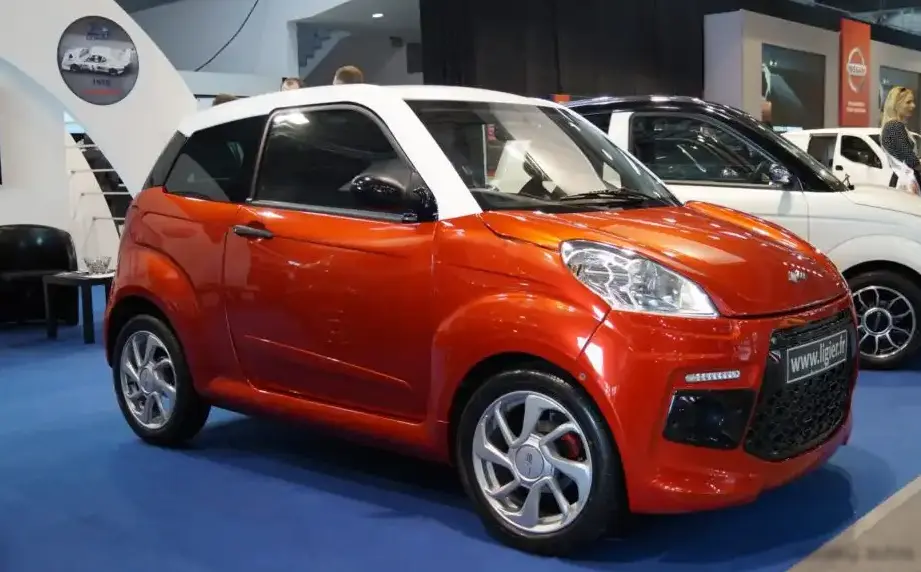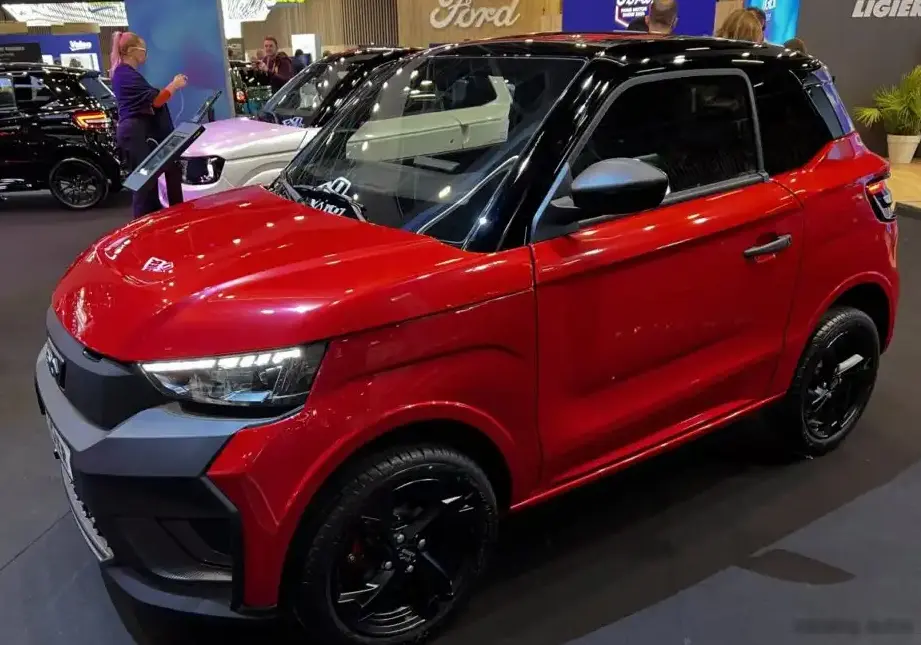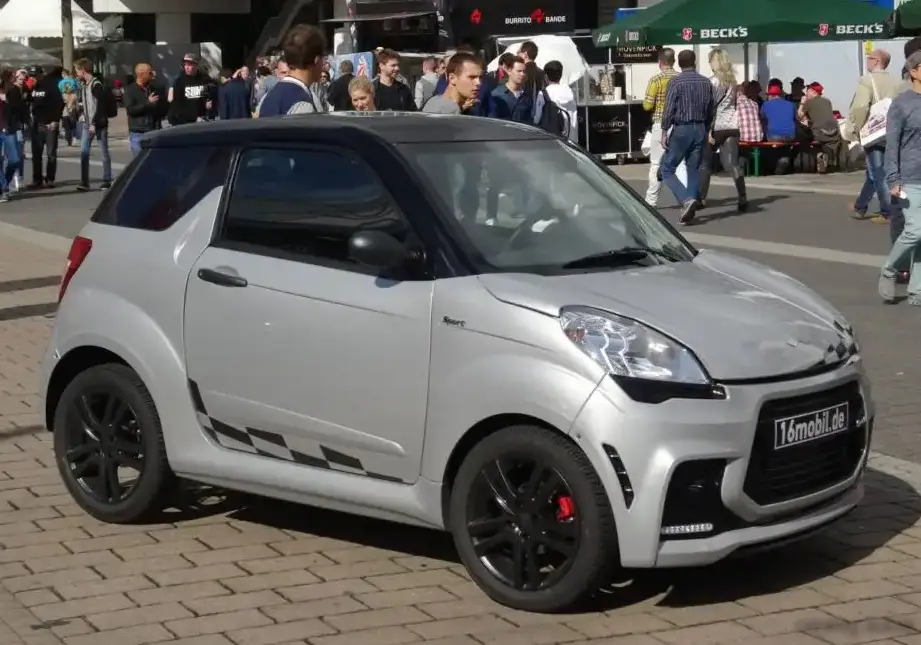
The Ligier JS50 I 0.5 DCI (5 hp) CVT is a microcar produced by the French manufacturer Ligier between 2012 and 2017. Classified as a quadricycle, it was designed to offer an affordable and economical transportation solution, particularly within urban environments. This specific variant, powered by a diminutive 480cc diesel engine and coupled with a continuously variable transmission (CVT), represented an entry-level option within the JS50 range, appealing to buyers seeking basic mobility with minimal running costs. The JS50 I falls under the European Union’s heavy quadricycle regulations, allowing for a slightly higher power output and overall weight compared to lighter quadricycles.
Technical Specifications
| Brand | Ligier |
| Model | JS50 |
| Generation | JS50 I |
| Type (Engine) | 0.5 DCI (5 Hp) CVT |
| Start of production | October, 2012 |
| End of production | 2017 |
| Powertrain Architecture | Internal Combustion engine |
| Body type | Quadricycle |
| Seats | 2 |
| Doors | 3 |
| Fuel consumption (combined) | 2.5 l/100 km (94.1 US mpg, 113 UK mpg, 40 km/l) |
| CO2 emissions | 65 g/km |
| Fuel Type | Diesel |
| Maximum speed | 45 km/h (27.96 mph) |
| Weight-to-power ratio | 70 kg/Hp, 14.3 Hp/tonne |
| Weight-to-torque ratio | 13.5 kg/Nm, 74.3 Nm/tonne |
| Power | 5 Hp @ 3200 rpm |
| Power per litre | 10.4 Hp/l |
| Torque | 26 Nm @ 1400 rpm (19.18 lb.-ft. @ 1400 rpm) |
| Maximum engine speed | 3400 rpm |
| Engine layout | Front, Transverse |
| Engine Model/Code | LDW492DCI |
| Engine displacement | 480 cm3 (29.29 cu. in.) |
| Number of cylinders | 2 |
| Engine configuration | Inline |
| Cylinder Bore | 69 mm (2.72 in.) |
| Piston Stroke | 64 mm (2.52 in.) |
| Number of valves per cylinder | 2 |
| Fuel injection system | Diesel Commonrail |
| Engine aspiration | Naturally aspirated engine |
| Valvetrain | SOHC |
| Engine oil capacity | 2.1 l (2.22 US qt | 1.85 UK qt) |
| Coolant | 3.1 l (3.28 US qt | 2.73 UK qt) |
| Kerb Weight | 350 kg (771.62 lbs.) |
| Max. weight | 675 kg (1488.12 lbs.) |
| Max load | 325 kg (716.5 lbs.) |
| Fuel tank capacity | 17.5 l (4.62 US gal | 3.85 UK gal) |
| Length | 2826 mm (111.26 in.) |
| Width | 1561 mm (61.46 in.) |
| Width including mirrors | 1782 mm (70.16 in.) |
| Height | 1372 mm (54.02 in.) |
| Wheelbase | 1827 mm (71.93 in.) |
| Front track | 1372 mm (54.02 in.) |
| Rear (Back) track | 1356 mm (53.39 in.) |
| Minimum turning circle | 9.2 m (30.18 ft.) |
| Drivetrain Architecture | The Internal combustion engine (ICE) drives the front wheels of the vehicle. |
| Drive wheel | Front wheel drive |
| Number of gears and type of gearbox | automatic transmission CVT |
| Front suspension | Independent type McPherson |
| Rear suspension | Independent coil spring |
| Front brakes | Disc, 220 mm |
| Rear brakes | Disc, 180 mm |
| Steering type | Steering rack and pinion |
| Tires size | 145/70 R13; 155/65 R14; 155/60 R15 |
| Wheel rims size | 13; 14; 15 |
INTRODUCTION
The Ligier JS50 I 0.5 DCI CVT, launched in October 2012, was a key model in Ligier’s lineup during its production run until 2017. Built on the JS50 I platform, it catered to a niche market seeking ultra-economical and compact urban transportation. The JS50 series, including this variant, was particularly popular in Europe, where regulations surrounding quadricycles allowed for a different approach to vehicle design and licensing compared to traditional automobiles. This model aimed to provide a practical alternative to scooters or public transport for short commutes and city driving.
Powertrain & Engine Architecture
At the heart of the JS50 I 0.5 DCI CVT lies the LDW492DCI engine, a 480cc inline two-cylinder diesel engine. This engine, while small, utilizes a diesel commonrail fuel injection system to optimize combustion efficiency and reduce emissions. The engine features a single overhead camshaft (SOHC) valvetrain, operating two valves per cylinder. The modest 5 horsepower output is achieved at 3200 rpm, with a torque figure of 26 Nm (19.18 lb-ft) available from just 1400 rpm. This low-end torque is crucial for providing adequate acceleration from a standstill, given the vehicle’s limited power. The engine is transversely mounted at the front of the vehicle. The CVT (Continuously Variable Transmission) is a key component of this variant. Unlike traditional automatic transmissions with fixed gear ratios, a CVT provides a seamless range of ratios, allowing the engine to operate at its most efficient point for any given speed. This contributes significantly to the JS50’s impressive fuel economy.
Driving Characteristics
The driving experience in the JS50 I 0.5 DCI CVT is defined by its simplicity and focus on economy. Acceleration is understandably slow, with a top speed limited to 45 km/h (27.96 mph). The CVT transmission contributes to a smooth, albeit somewhat uninspiring, driving experience. The lack of distinct gear changes can feel unusual to drivers accustomed to traditional transmissions. However, it effectively maximizes the engine’s limited power output. The low-end torque helps with initial acceleration, making it suitable for navigating city traffic. Compared to potential higher-powered variants (which were not widely available in the JS50 range), this 0.5 DCI CVT prioritizes fuel efficiency and ease of use over outright performance. A manual transmission, if offered, would likely have provided a slightly more engaging driving experience, but at the expense of some convenience.
Equipment & Trim Levels
The JS50 I 0.5 DCI CVT was generally offered with a basic level of equipment, reflecting its position as an entry-level model. Standard features typically included basic instrumentation, manually adjustable seats, and a heating system. Interior upholstery was typically simple and durable, prioritizing practicality over luxury. Optional extras could include power windows, a radio/CD player, and upgraded interior trim. The exterior styling was functional rather than flamboyant, with a focus on maximizing interior space within a compact footprint. Safety features were limited, typically including seatbelts and a basic braking system. The trim level was often differentiated by minor cosmetic changes, such as different wheel cover designs or exterior color options.
Chassis & Braking
The JS50 I features an independent McPherson strut suspension at the front and an independent coil spring suspension at the rear, providing a reasonable level of ride comfort given its lightweight construction. The front brakes are disc brakes measuring 220mm, while the rear brakes are also disc brakes, measuring 180mm. This braking setup is adequate for the vehicle’s weight and performance capabilities. The steering system utilizes a rack and pinion setup, providing relatively precise steering control. Tire sizes varied depending on the trim level, with options ranging from 145/70 R13 to 155/60 R15. The relatively narrow tires contribute to reduced rolling resistance, further enhancing fuel economy.
Market Reception & Comparison
The Ligier JS50 I 0.5 DCI CVT was generally well-received by buyers seeking an ultra-economical and practical urban transportation solution. Critics praised its exceptional fuel economy and low running costs. However, its limited performance and basic equipment levels were also noted. Compared to other quadricycles and small city cars available at the time, the JS50 offered a compelling combination of affordability and efficiency. Its fuel economy of 2.5 l/100 km (94.1 US mpg) was significantly better than most conventional automobiles. Reliability was generally good, owing to the simplicity of the powertrain and chassis. However, maintenance costs could be higher due to the specialized nature of the vehicle and the limited availability of spare parts in some regions.
Legacy
The Ligier JS50 I 0.5 DCI CVT remains a popular choice in the used car market, particularly among buyers seeking an affordable and economical means of transportation. The LDW492DCI engine, while small, has proven to be relatively reliable with proper maintenance. However, potential buyers should be aware of the vehicle’s limited performance and basic equipment levels. The JS50’s legacy lies in its ability to provide a practical and affordable transportation solution for urban environments, demonstrating that efficient mobility doesn’t necessarily require a large or expensive vehicle. The continued demand for these microcars highlights the enduring appeal of simple, economical transportation.