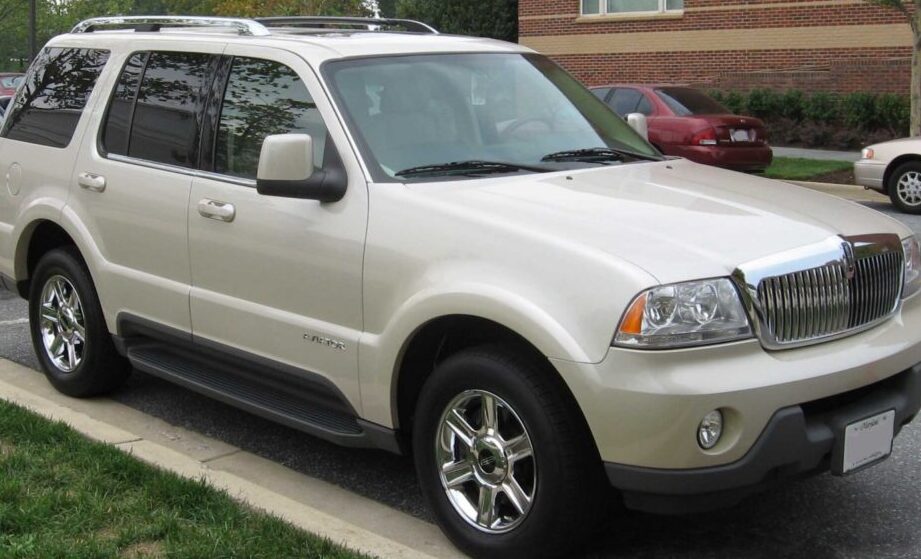
The Lincoln Aviator, introduced for the 2003 model year, represented Lincoln’s entry into the burgeoning luxury SUV market. Built on a truck-based platform, the Aviator aimed to blend the comfort and features expected of a Lincoln with the capability of a traditional body-on-frame SUV. Production continued through 2005, with the 4.6L V8 engine being the sole powertrain offering throughout its lifespan. This particular variant, equipped with the 4.6-liter V8 producing 306 horsepower and a five-speed automatic transmission, served as the standard engine and transmission combination for the entire Aviator production run. It positioned itself as a mainstream luxury SUV, competing with vehicles like the Cadillac Escalade and the Lexus GX 470.
Technical Specifications
| Brand | Lincoln |
| Model | Aviator |
| Generation | Aviator I |
| Type (Engine) | 4.6 i V8 32V (306 Hp) |
| Start of production | 2003 |
| End of production | 2005 |
| Powertrain Architecture | Internal Combustion engine |
| Body type | SUV |
| Seats | 7 |
| Doors | 5 |
| Fuel consumption (urban) | 18.1 l/100 km (13 US mpg, 15.6 UK mpg, 5.5 km/l) |
| Fuel consumption (extra urban) | 13.1 l/100 km (18 US mpg, 21.6 UK mpg, 7.6 km/l) |
| Fuel Type | Petrol (Gasoline) |
| Acceleration 0 – 100 km/h | 10 sec |
| Acceleration 0 – 62 mph | 10 sec |
| Acceleration 0 – 60 mph | 9.5 sec |
| Maximum speed | 180 km/h (111.85 mph) |
| Weight-to-power ratio | 7.3 kg/Hp, 136.6 Hp/tonne |
| Weight-to-torque ratio | 5.5 kg/Nm, 181.3 Nm/tonne |
| Power | 306 Hp @ 5750 rpm |
| Power per litre | 66.5 Hp/l |
| Torque | 406 Nm @ 3250 rpm (299.45 lb.-ft. @ 3250 rpm) |
| Engine layout | Front, Longitudinal |
| Engine displacement | 4601 cm3 (280.77 cu. in.) |
| Number of cylinders | 8 |
| Engine configuration | V-engine |
| Cylinder Bore | 90.2 mm (3.55 in.) |
| Piston Stroke | 90 mm (3.54 in.) |
| Compression ratio | 10:1 |
| Number of valves per cylinder | 4 |
| Fuel injection system | Multi-port manifold injection |
| Engine aspiration | Naturally aspirated engine |
| Valvetrain | DOHC |
| Engine oil capacity | 5.7 l (6.02 US qt | 5.02 UK qt) |
| Coolant | 19 l (20.08 US qt | 16.72 UK qt) |
| Kerb Weight | 2240 kg (4938.35 lbs.) |
| Max. weight | 2740 kg (6040.67 lbs.) |
| Max load | 500 kg (1102.31 lbs.) |
| Trunk (boot) space – minimum | 351 l (12.4 cu. ft.) |
| Trunk (boot) space – maximum | 2189 l (77.3 cu. ft.) |
| Fuel tank capacity | 85 l (22.45 US gal | 18.7 UK gal) |
| Length | 4909 mm (193.27 in.) |
| Width | 1877 mm (73.9 in.) |
| Height | 1800 mm (70.87 in.) |
| Wheelbase | 2889 mm (113.74 in.) |
| Front track | 1547 mm (60.91 in.) |
| Rear (Back) track | 1554 mm (61.18 in.) |
| Drivetrain Architecture | The Internal combustion engine (ICE) drives the rear wheels of the vehicle. |
| Drive wheel | Rear wheel drive |
| Number of gears and type of gearbox | 5 gears, automatic transmission |
Powertrain & Engine Architecture
The Lincoln Aviator’s engine was the 4.6-liter Modular V8, specifically the version designated as the 306 horsepower variant. This engine, part of Ford’s Modular engine family, featured a cast iron block with aluminum cylinder heads. It utilized a single overhead camshaft (SOHC) design per bank, with four valves per cylinder. Fuel delivery was handled by a multi-port fuel injection system. The engine’s architecture prioritized smooth power delivery and refinement over outright performance. The five-speed automatic transmission, a Ford 5R55E unit, was chosen for its smooth shifting characteristics and suitability for luxury applications. This transmission featured electronic control and overdrive for improved fuel efficiency at highway speeds. The transmission was calibrated for comfortable cruising rather than aggressive downshifting.
Driving Characteristics
The 4.6L V8 and five-speed automatic combination in the Aviator delivered adequate, but not exhilarating, performance. Acceleration from 0-60 mph took around 9.5 seconds, which was competitive for the segment but lagged behind some of the more powerful offerings. The automatic transmission’s gear ratios were tuned for relaxed driving, prioritizing smooth transitions over quick shifts. While the engine produced ample torque for everyday driving and towing, it lacked the responsiveness of some competitors. The rear-wheel-drive configuration provided a more traditional SUV driving experience, but also meant it lacked the all-weather capability of all-wheel-drive rivals. The Aviator’s substantial weight (over 4,900 pounds) contributed to a feeling of solidity but also limited its agility.
Equipment & Trim Levels
The Lincoln Aviator came reasonably well-equipped, even in its base form. Standard features included leather upholstery, power-adjustable front seats, a premium sound system, and automatic climate control. Optional extras included a navigation system, a DVD entertainment system for rear passengers, and upgraded leather trim. The Aviator’s interior was designed to provide a luxurious and comfortable experience, with a focus on high-quality materials and a spacious cabin. The third-row seating, while present, was best suited for children or shorter adults. The dashboard layout was relatively straightforward and user-friendly, typical of Lincoln designs of the era.
Chassis & Braking
The Aviator utilized a traditional body-on-frame construction, providing a robust and durable chassis. The front suspension featured independent upper and lower control arms with coil springs and a transverse stabilizer bar. The rear suspension employed a solid axle with leaf springs and shock absorbers. Braking duties were handled by ventilated discs at the front and solid discs at the rear. Anti-lock brakes (ABS) were standard. The braking system was adequate for the vehicle’s weight, but lacked the stopping power of some competitors. The steering system was a hydraulic rack-and-pinion setup, providing reasonably precise steering feel.
Market Reception & Comparison
The Lincoln Aviator received mixed reviews from automotive critics. While praised for its comfortable ride, spacious interior, and luxurious features, it was often criticized for its lackluster performance and relatively poor fuel economy. Compared to the Cadillac Escalade, the Aviator offered a more refined driving experience but lacked the Escalade’s powerful engine options. Against the Lexus GX 470, the Aviator offered a lower price point but lacked the GX 470’s standard all-wheel-drive system and reputation for reliability. Fuel economy was a significant drawback, with the Aviator averaging around 13-18 mpg in real-world driving.
Legacy
The Lincoln Aviator, despite its relatively short production run, remains a popular choice among used car buyers seeking a comfortable and spacious luxury SUV. The 4.6L V8 engine and 5R55E transmission are generally considered reliable, although regular maintenance is crucial. Common issues include transmission slipping and oil leaks. The Aviator’s body-on-frame construction provides a durable platform, but it is also susceptible to rust in areas with harsh winters. Today, the Aviator represents a unique blend of American luxury and traditional SUV design, offering a distinctive alternative to more modern crossover SUVs.