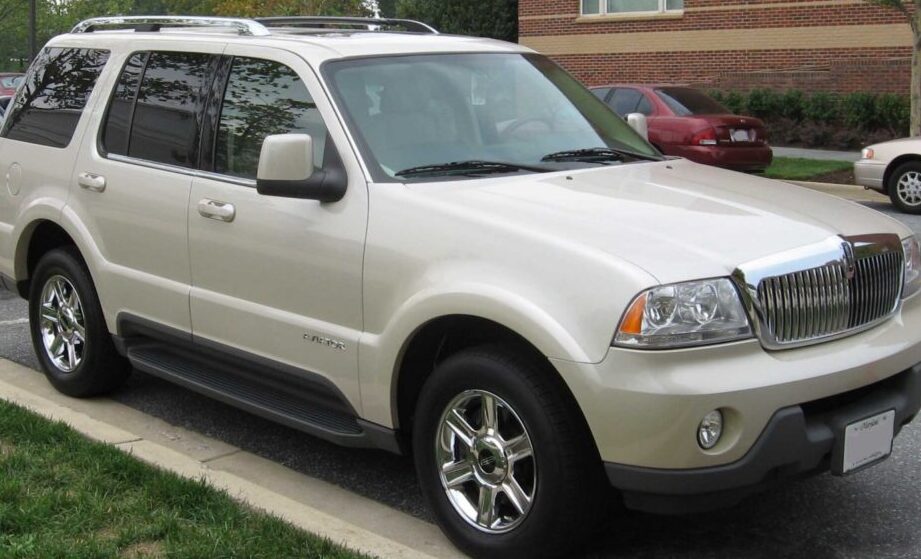
The Lincoln Aviator, introduced for the 2003 model year, represented Lincoln’s entry into the burgeoning luxury SUV market. Built on a truck-based platform, the Aviator aimed to blend the comfort and features expected of a Lincoln with the capability of a sport utility vehicle. Production continued through 2005, with the 4.6L V8 AWD variant being a key offering within the lineup. This particular configuration, producing 306 horsepower, positioned itself as a strong mid-range option, offering a balance between performance and luxury features. It shared its platform with the Ford Explorer, but with significantly upgraded interior appointments and a more refined driving experience.
Technical Specifications
| Brand | Lincoln |
| Model | Aviator |
| Generation | Aviator I |
| Type (Engine) | 4.6 i V8 32V AWD (306 Hp) |
| Start of production | 2003 |
| End of production | 2005 |
| Powertrain Architecture | Internal Combustion engine |
| Body type | SUV |
| Seats | 7 |
| Doors | 5 |
| Fuel consumption (urban) | 18.1 l/100 km (13 US mpg, 15.6 UK mpg, 5.5 km/l) |
| Fuel consumption (extra urban) | 13.1 l/100 km (18 US mpg, 21.6 UK mpg, 7.6 km/l) |
| Fuel Type | Petrol (Gasoline) |
| Acceleration 0 – 100 km/h | 7.6 sec |
| Acceleration 0 – 62 mph | 7.6 sec |
| Acceleration 0 – 60 mph | 7.2 sec |
| Maximum speed | 170 km/h (105.63 mph) |
| Weight-to-power ratio | 7.6 kg/Hp, 132.2 Hp/tonne |
| Weight-to-torque ratio | 5.7 kg/Nm, 175.4 Nm/tonne |
| Power | 306 Hp @ 5750 rpm |
| Power per litre | 66.5 Hp/l |
| Torque | 406 Nm @ 3250 rpm (299.45 lb.-ft. @ 3250 rpm) |
| Engine layout | Front, Longitudinal |
| Engine displacement | 4601 cm3 (280.77 cu. in.) |
| Number of cylinders | 8 |
| Engine configuration | V-engine |
| Cylinder Bore | 90.2 mm (3.55 in.) |
| Piston Stroke | 90 mm (3.54 in.) |
| Compression ratio | 10:1 |
| Number of valves per cylinder | 4 |
| Fuel injection system | Multi-port manifold injection |
| Engine aspiration | Naturally aspirated engine |
| Valvetrain | DOHC |
| Engine oil capacity | 5.7 l (6.02 US qt | 5.02 UK qt) |
| Coolant | 19 l (20.08 US qt | 16.72 UK qt) |
| Kerb Weight | 2315 kg (5103.7 lbs.) |
| Max. weight | 2850 kg (6283.17 lbs.) |
| Max load | 535 kg (1179.47 lbs.) |
| Trunk (boot) space – minimum | 351 l (12.4 cu. ft.) |
| Trunk (boot) space – maximum | 2189 l (77.3 cu. ft.) |
| Fuel tank capacity | 85 l (22.45 US gal | 18.7 UK gal) |
| Length | 4909 mm (193.27 in.) |
| Width | 1877 mm (73.9 in.) |
| Height | 1800 mm (70.87 in.) |
| Wheelbase | 2889 mm (113.74 in.) |
| Front track | 1547 mm (60.91 in.) |
| Rear (Back) track | 1554 mm (61.18 in.) |
| Drive wheel | All wheel drive (4×4) |
| Number of gears and type of gearbox | 5 gears, automatic transmission |
| Front suspension | Transverse stabilizer |
| Rear suspension | Transverse stabilizer |
| Front brakes | Ventilated discs |
| Rear brakes | Disc |
| Assisting systems | ABS (Anti-lock braking system) |
| Power steering | Hydraulic Steering |
| Tires size | 245/65 R17 |
| Wheel rims size | 17 |
Powertrain & Engine Architecture
The heart of the Aviator I 4.6 i V8 AWD was the 4.6-liter Modular V8 engine, specifically the version designated for truck applications. This engine, part of Ford’s Modular engine family, featured a 90-degree V8 configuration with a cast iron block and aluminum cylinder heads. It utilized a single overhead camshaft (SOHC) design per bank, operating 32 valves in total. Fuel delivery was managed by a multi-port fuel injection system, providing precise fuel metering for optimal combustion. The engine produced 306 horsepower at 5750 rpm and 406 Nm (299.45 lb-ft) of torque at 3250 rpm. The engine was mated to a five-speed automatic transmission, designed to handle the engine’s torque output and provide smooth shifting. This transmission was calibrated for a balance of performance and fuel efficiency, prioritizing comfortable cruising over aggressive acceleration.
Driving Characteristics
The 4.6L V8 and five-speed automatic combination in the Aviator delivered a capable, if not overtly sporty, driving experience. Acceleration to 60 mph was achieved in approximately 7.2-7.6 seconds, respectable for a large SUV of its era. The automatic transmission, while smooth, wasn’t particularly quick to downshift, resulting in a slight delay in response during overtaking maneuvers. The all-wheel-drive system provided enhanced traction in various weather conditions, making it a confident performer in snow or rain. Compared to the higher-output versions of the Aviator (which were not commonly offered), this 4.6L variant prioritized smooth power delivery and fuel economy over outright performance. The gear ratios were tuned for relaxed highway cruising, making it a comfortable long-distance vehicle.
Equipment & Trim Levels
The 4.6L AWD Aviator typically came well-equipped, reflecting Lincoln’s luxury positioning. Standard features included leather upholstery, power-adjustable front seats with memory function, a premium audio system, automatic climate control, and alloy wheels. Optional extras included a navigation system, rear-seat entertainment system, and upgraded interior trim packages. The Aviator’s interior was designed to be spacious and comfortable, with seating for up to seven passengers. The third-row seats were relatively accessible, making it a practical choice for families. The dashboard layout was straightforward and user-friendly, with logically placed controls.
Chassis & Braking
The Aviator’s chassis was based on a body-on-frame construction, providing a robust and durable platform. The front suspension utilized an independent double-wishbone setup with coil springs and a stabilizer bar, while the rear suspension featured a solid axle with coil springs and a stabilizer bar. This suspension configuration provided a comfortable ride, but wasn’t particularly sporty in handling. Braking duties were handled by ventilated discs at the front and solid discs at the rear, equipped with an anti-lock braking system (ABS) as standard. The hydraulic power steering provided light and easy steering effort.
Market Reception & Comparison
The Lincoln Aviator was generally well-received by critics, who praised its spacious interior, comfortable ride, and luxurious features. However, some reviewers noted that its handling wasn’t as sharp as some of its competitors, and its fuel economy was relatively poor. Compared to other trims in the Aviator lineup, the 4.6L AWD variant offered a good balance of performance and fuel efficiency. It was more affordable than the potential higher-output options, making it an attractive choice for buyers who didn’t need maximum power. Fuel economy figures averaged around 13-18 mpg in combined driving, which was typical for a large SUV of that era.
Legacy
The Lincoln Aviator, despite its relatively short production run, left a lasting impression on the luxury SUV market. The 4.6L V8 powertrain proved to be reasonably reliable, although routine maintenance was essential to prevent issues such as oil leaks and timing chain wear. Today, well-maintained Aviators are sought after by collectors and enthusiasts who appreciate their classic American styling and comfortable ride. While not known for being a particularly fuel-efficient vehicle, the Aviator remains a capable and comfortable SUV, offering a unique blend of luxury and practicality. The engine, while aging, is generally considered durable if properly maintained, and parts availability remains reasonable.