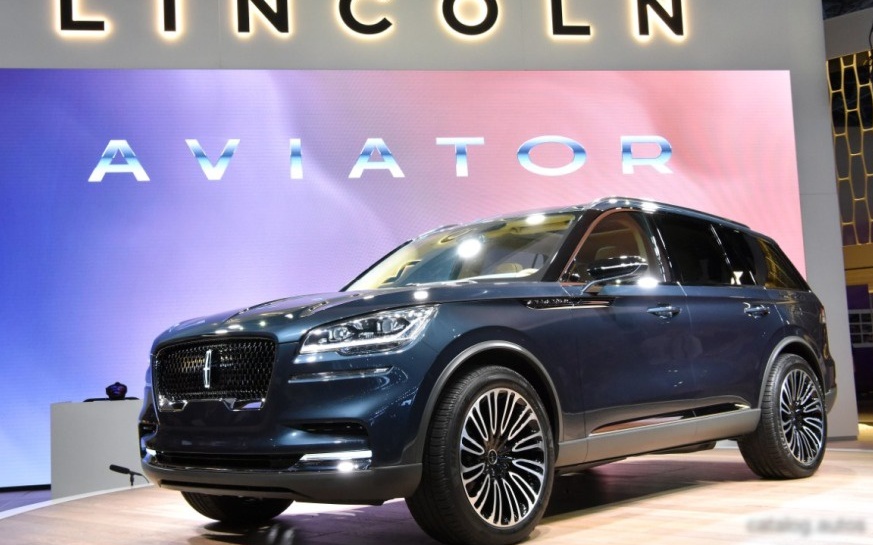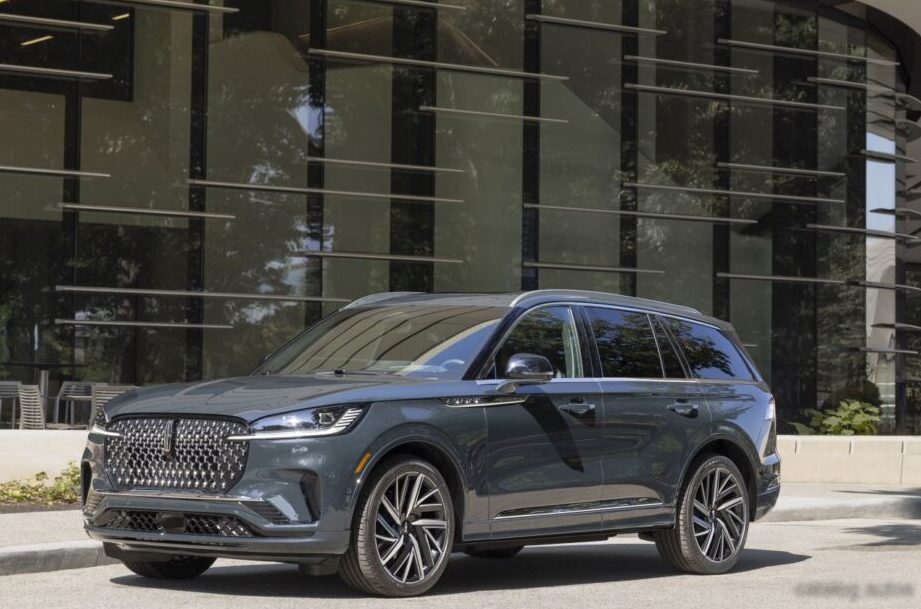
The Lincoln Aviator II, specifically the facelifted 2024 model year equipped with the 3.0-liter V6 engine producing 400 horsepower and paired with an all-wheel-drive (AWD) SelectShift automatic transmission, represents Lincoln’s entry into the premium three-row SUV segment. Introduced as a revival of the Aviator nameplate for the 2020 model year, the 2024 facelift brings styling updates and technological enhancements to an already competitive platform. This particular configuration sits towards the higher end of the Aviator lineup, offering a balance of performance, luxury, and capability. It competes directly with vehicles like the Cadillac XT6, Acura MDX, and BMW X5.
Technical Specifications
| Brand | Lincoln |
| Model | Aviator |
| Generation | Aviator II (facelift 2024) |
| Type (Engine) | 3.0 V6 (400 Hp) AWD SelectShift |
| Start of production | 2024 |
| Powertrain Architecture | Internal Combustion engine |
| Body type | SUV |
| Seats | 6-7 |
| Doors | 5 |
| Fuel consumption (economy) – urban (EPA) | 13.8 l/100 km (17 US mpg, 20.5 UK mpg, 7.2 km/l) |
| Fuel consumption (economy) – extra urban (EPA) | 9.4 l/100 km (25 US mpg, 30.1 UK mpg, 10.6 km/l) |
| Fuel consumption (economy) – combined (EPA) | 11.8 l/100 km (19.9 US mpg, 23.9 UK mpg, 8.5 km/l) |
| Fuel Type | Petrol (Gasoline) |
| Weight-to-power ratio | 5.5 kg/Hp, 181.4 Hp/tonne |
| Weight-to-torque ratio | 3.9 kg/Nm, 255.3 Nm/tonne |
| Power | 400 Hp @ 5500 rpm |
| Power per litre | 135.3 Hp/l |
| Torque | 563 Nm @ 3000 rpm (415.25 lb.-ft. @ 3000 rpm) |
| Engine layout | Front, Longitudinal |
| Engine Model/Code | EcoBoost Nano |
| Engine displacement | 2956 cm3 (180.39 cu. in.) |
| Number of cylinders | 6 |
| Engine configuration | V-engine |
| Cylinder Bore | 85.4 mm (3.36 in.) |
| Piston Stroke | 86 mm (3.39 in.) |
| Compression ratio | 9.5:1 |
| Number of valves per cylinder | 4 |
| Fuel injection system | Direct injection |
| Engine aspiration | Twin-Turbo, Intercooler |
| Valvetrain | DOHC, Dual VCT |
| Engine oil capacity | 5.7 l (6.02 US qt | 5.02 UK qt) |
| Coolant | 14.7 l (15.53 US qt | 12.93 UK qt) |
| Kerb Weight | 2205-2254 kg (4861.19 – 4969.22 lbs.) |
| Trunk (boot) space – minimum | 518 l (18.29 cu. ft.) |
| Trunk (boot) space – maximum | 2200 l (77.69 cu. ft.) |
| Fuel tank capacity | 76.5 l (20.21 US gal | 16.83 UK gal) |
| Permitted trailer load with brakes (12%) | 2268 kg (5000.08 lbs.) |
| Length | 5062 mm (199.29 in.) |
| Width | 2022 mm (79.61 in.) |
| Width with mirrors folded | 2090 mm (82.28 in.) |
| Width including mirrors | 2284 mm (89.92 in.) |
| Height | 1768 mm (69.61 in.) |
| Wheelbase | 3025 mm (119.09 in.) |
| Front track | 1700 mm (66.93 in.) |
| Rear (Back) track | 1700 mm (66.93 in.) |
| Drivetrain Architecture | All wheel drive (4×4). ICE drives rear wheels, front wheels engaged via clutch. |
| Number of gears and type of gearbox | 10 gears, automatic transmission SelectShift |
| Front brakes | Ventilated discs, 345×32 mm |
| Rear brakes | Ventilated discs, 350×26 mm |
| Tires size | 255/55 R20 |
| Wheel rims size | 20 |
Powertrain & Engine Architecture
At the heart of the 2024 Lincoln Aviator II is the Ford EcoBoost 3.0-liter V6 engine, internally designated as the EcoBoost Nano. This engine utilizes a 60-degree V-configuration and employs twin-turbocharging with an integrated intercooler to deliver a substantial 400 horsepower at 5500 rpm and 563 Nm (415.25 lb-ft) of torque at 3000 rpm. The engine features direct fuel injection, a double overhead camshaft (DOHC) valvetrain with dual variable cam timing (VCT), and a compression ratio of 9.5:1. The SelectShift 10-speed automatic transmission is standard, providing smooth and responsive gear changes. This transmission is designed to optimize both performance and fuel efficiency. The powertrain is longitudinally mounted, driving all four wheels through Lincoln’s intelligent AWD system, which can seamlessly transition between rear-wheel drive and all-wheel drive depending on road conditions and driver input.
Driving Characteristics
The 400-horsepower V6 and 10-speed automatic combination in the Aviator delivers a refined and capable driving experience. Acceleration is brisk, with the SUV capable of reaching 60 mph in around 6.0 seconds. The 10-speed transmission helps keep the engine in its optimal power band, providing ample torque for passing maneuvers and confident highway cruising. Compared to lower-powered Aviator variants (like those with the Grand Touring plug-in hybrid powertrain), this configuration prioritizes immediate power delivery and a more traditional internal combustion engine feel. While not as fuel-efficient as the hybrid, it offers a more straightforward driving experience for those less interested in electric driving modes. The AWD system provides enhanced traction and stability in various weather conditions.
Equipment & Trim Levels
The 2024 Lincoln Aviator II 3.0 V6 AWD SelectShift typically comes standard with a high level of equipment. Standard features generally include leather upholstery, heated and ventilated front seats, a panoramic sunroof, a premium sound system, and a 12.3-inch touchscreen infotainment system with Apple CarPlay and Android Auto compatibility. Safety features are also comprehensive, including blind-spot monitoring, lane-keeping assist, automatic emergency braking, and adaptive cruise control. Optional extras often include upgraded leather packages, rear-seat entertainment systems, and a suite of advanced driver-assistance technologies like Active Park Assist. Trim levels beyond the base model often add features like massaging seats, unique interior trim, and enhanced exterior styling elements.
Chassis & Braking
The Aviator II utilizes a robust chassis designed to provide a comfortable ride and confident handling. The suspension system typically features independent front and rear suspension, with optional air suspension available on higher trim levels. The air suspension allows for adjustable ride height and damping, further enhancing ride comfort and off-road capability. Braking duties are handled by ventilated discs on all four wheels, with front discs measuring 345×32 mm and rear discs measuring 350×26 mm. The braking system is augmented by ABS (Anti-lock Braking System), electronic brake-force distribution, and brake assist. Steering is provided by an electric power steering system, offering precise and responsive control.
Market Reception & Comparison
The 2024 Lincoln Aviator II has been generally well-received by automotive critics, praised for its luxurious interior, comfortable ride, and strong performance. The 3.0-liter V6 engine has been noted for its smooth power delivery and refined character. Fuel economy, however, is a common point of criticism, with the combined EPA rating of 19.9 US mpg being somewhat lower than some competitors. Compared to the Aviator Grand Touring plug-in hybrid, the 3.0 V6 offers a simpler ownership experience but sacrifices fuel efficiency. Reliability has been generally good, although some owners have reported minor issues with the infotainment system.
Legacy
The Lincoln Aviator II, particularly the 3.0 V6 AWD SelectShift variant, represents a significant step forward for the Lincoln brand, demonstrating its commitment to delivering luxurious and capable SUVs. The EcoBoost engine and 10-speed transmission are proven technologies, offering a good balance of performance and reliability. As the model matures, its long-term durability will become clearer, but early indications suggest that it is a well-built and dependable vehicle. On the used car market, the 2024 Aviator is expected to hold its value well, appealing to buyers seeking a premium three-row SUV with a strong powertrain and a comfortable driving experience.