
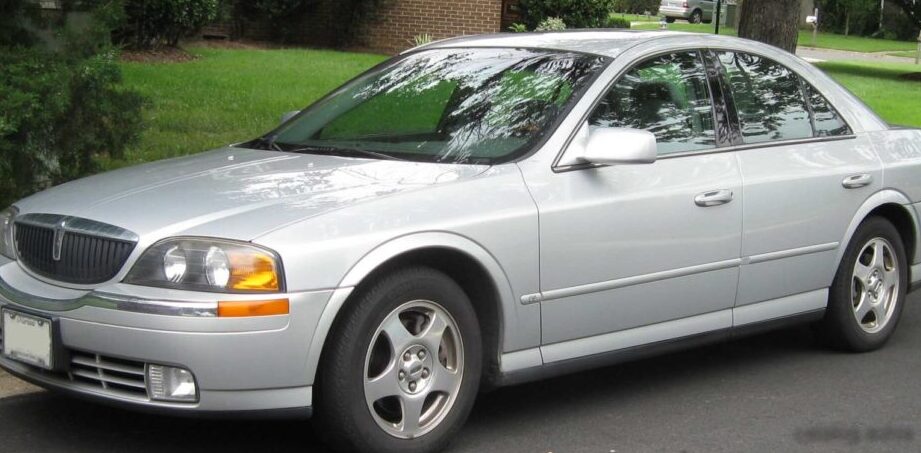
The Lincoln LS 3.0 V6 24V, produced from 1998 to 2000, represented Lincoln’s initial foray into the mid-size luxury sedan segment, directly challenging established European competitors like the BMW 5 Series and Mercedes-Benz E-Class. This variant, powered by a 3.0-liter V6 engine generating 190 horsepower, occupied a crucial middle ground within the LS lineup, positioned between the base 3.0L model and the more potent 3.8L V8. It served as a key offering during the early years of the LS platform, aiming to deliver a balanced combination of luxury, performance, and value to American consumers. This specific configuration, paired exclusively with a 5-speed manual transmission, targeted a more driver-focused buyer than the later automatic-equipped models.
Technical Specifications
| Brand | Lincoln |
| Model | LS |
| Generation | LS |
| Type (Engine) | 3.0 V6 24V (190 Hp) |
| Start of production | 1998 |
| End of production | 2000 |
| Powertrain Architecture | Internal Combustion engine |
| Body type | Sedan |
| Seats | 5 |
| Doors | 4 |
| Fuel consumption (urban) | 12 l/100 km (19.6 US mpg) |
| Fuel consumption (extra urban) | 8 l/100 km (29.4 US mpg) |
| Fuel Type | Petrol (Gasoline) |
| Maximum speed | 190 km/h (118.06 mph) |
| Weight-to-power ratio | 8.8 kg/Hp |
| Weight-to-torque ratio | 6.2 kg/Nm |
| Power | 190 Hp @ 5750 rpm |
| Power per litre | 64 Hp/l |
| Torque | 270 Nm @ 4500 rpm (199.14 lb.-ft. @ 4500 rpm) |
| Engine layout | Front, Longitudinal |
| Engine Model/Code | 99S |
| Engine displacement | 2967 cm3 (181.06 cu. in.) |
| Number of cylinders | 6 |
| Engine configuration | V-engine |
| Cylinder Bore | 89 mm (3.5 in.) |
| Piston Stroke | 79.5 mm (3.13 in.) |
| Compression ratio | 10:1 |
| Number of valves per cylinder | 4 |
| Fuel injection system | Multi-port manifold injection |
| Engine aspiration | Naturally aspirated engine |
| Valvetrain | DOHC |
| Engine oil capacity | 6.4 l (6.76 US qt | 5.63 UK qt) |
| Coolant | 10.6 l (11.2 US qt | 9.33 UK qt) |
| Kerb Weight | 1665 kg (3670.7 lbs.) |
| Trunk (boot) space (minimum) | 382 l (13.49 cu. ft.) |
| Fuel tank capacity | 68 l (17.96 US gal | 14.96 UK gal) |
| Length | 4925 mm (193.9 in.) |
| Width | 1860 mm (73.23 in.) |
| Height | 1425 mm (56.1 in.) |
| Wheelbase | 2908 mm (114.49 in.) |
| Front track | 1537 mm (60.51 in.) |
| Rear track | 1544 mm (60.79 in.) |
| Drivetrain Architecture | Rear wheel drive |
| Drive wheel | Rear wheel drive |
| Number of gears and type of gearbox | 5 gears, manual transmission |
| Front suspension | Coil spring |
| Rear suspension | Coil spring |
| Front brakes | Ventilated discs |
| Rear brakes | Disc |
| Assisting systems | ABS (Anti-lock braking system) |
| Steering type | Steering rack and pinion |
| Power steering | Hydraulic Steering |
| Tires size | 215/60 R16 |
| Wheel rims size | 16 |
Powertrain & Engine Architecture
The Lincoln LS 3.0’s core was the 99S engine, a 3.0-liter (2967 cc) naturally aspirated V6. The engine’s 60-degree V-angle contributed to its relatively compact size, allowing for a more balanced chassis layout. It featured a dual overhead camshaft (DOHC) valvetrain with four valves per cylinder, optimizing airflow and contributing to its 190 horsepower output at 5750 rpm and 270 Nm (199 lb-ft) of torque at 4500 rpm. Multi-port fuel injection precisely delivered fuel to each intake port. Crucially, this variant was exclusively offered with a 5-speed manual transmission, a deliberate choice to appeal to drivers seeking a more involved driving experience. The engine’s longitudinal mounting and rear-wheel-drive configuration were a significant departure from the front-wheel-drive norm for American sedans, aiming to emulate the handling characteristics of European sports sedans.
Driving Characteristics
The 3.0L LS, equipped with the 5-speed manual, provided a noticeably more engaging driving experience than its automatic counterparts. While lacking the outright acceleration of the 3.8L V8 models, the 3.0L offered sufficient power for everyday driving. The manual transmission allowed drivers to maintain the engine within its optimal power band, maximizing available torque. The rear-wheel-drive layout contributed to balanced handling, though the car’s weight (approximately 3670 lbs) was still apparent during aggressive maneuvers. Compared to the V8, the 3.0L’s engine note was more pronounced, and the overall driving experience felt less refined. The manual gearbox, while appreciated by enthusiasts, narrowed its appeal to buyers prioritizing convenience.
Equipment & Trim Levels
The Lincoln LS 3.0 came standard with features typical of a luxury sedan, including leather upholstery, power-adjustable front seats, a premium sound system, and automatic climate control. Standard safety features included ABS brakes and dual front airbags. Optional extras included a sunroof, upgraded audio systems, and various interior trim packages. Compared to the 3.8L models, the 3.0L trim generally lacked some of the more luxurious appointments, such as heated seats and advanced audio options. The interior design emphasized a clean, modern aesthetic with a driver-focused layout.
Chassis & Braking
The Lincoln LS utilized a fully independent suspension system, employing coil springs and stabilizer bars at both the front and rear. This setup aimed to balance ride comfort with handling precision. The front suspension featured MacPherson struts, while the rear employed a multi-link design. Braking was provided by ventilated discs at the front and solid discs at the rear, offering adequate stopping power for the vehicle’s weight. Hydraulic power steering provided responsive feedback, although some drivers found it slightly heavy at lower speeds.
Market Reception & Comparison
The Lincoln LS 3.0 received a mixed reception from automotive critics. Its handling and rear-wheel-drive layout were praised, but the interior quality was often criticized as not fully matching the standards of its European rivals. The 3.0L engine was considered adequate but lacked the refinement and power of the V8. Fuel economy was reasonable for its class, averaging around 19.6 mpg in the city and 29.4 mpg on the highway. Compared to the 3.8L V8, the 3.0L offered a lower price point and slightly improved fuel efficiency, making it an attractive option for value-conscious buyers. However, the V8 delivered a significantly more luxurious and powerful driving experience.
Legacy
Despite its relatively short production run, the Lincoln LS remains a notable attempt by Lincoln to compete in the European-dominated luxury sport sedan market. The 3.0L variant, while not the most collectible model, provides a relatively affordable entry point into LS ownership. The 99S engine, while generally reliable, requires regular maintenance, including oil changes and timing belt replacements. Today, well-maintained examples of the Lincoln LS 3.0 can be found on the used car market, appealing to enthusiasts seeking a unique and relatively affordable rear-wheel-drive luxury sedan with a manual transmission. Its rarity, particularly the manual transmission version, is slowly increasing its appeal among collectors and driving enthusiasts.
