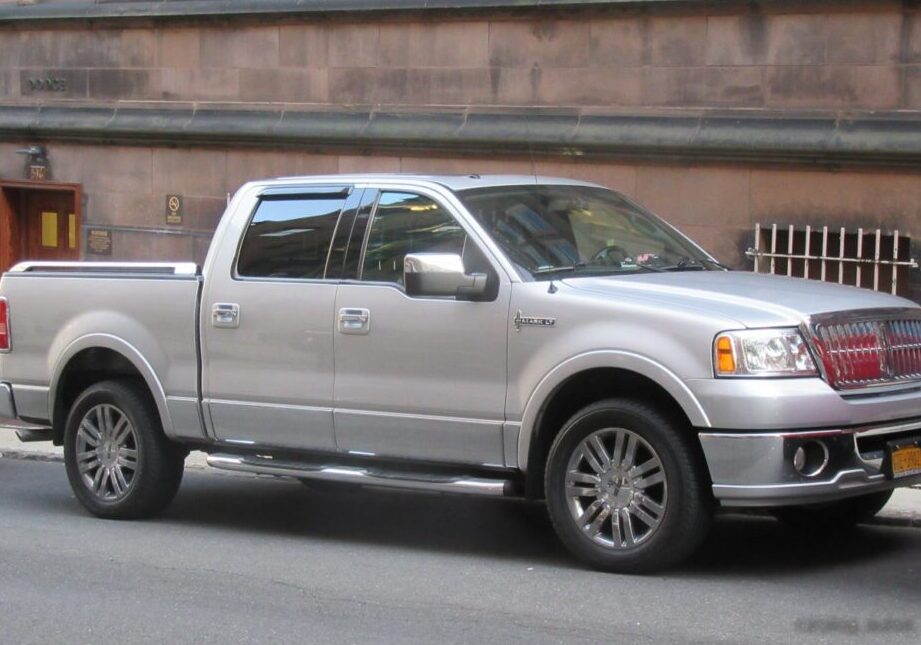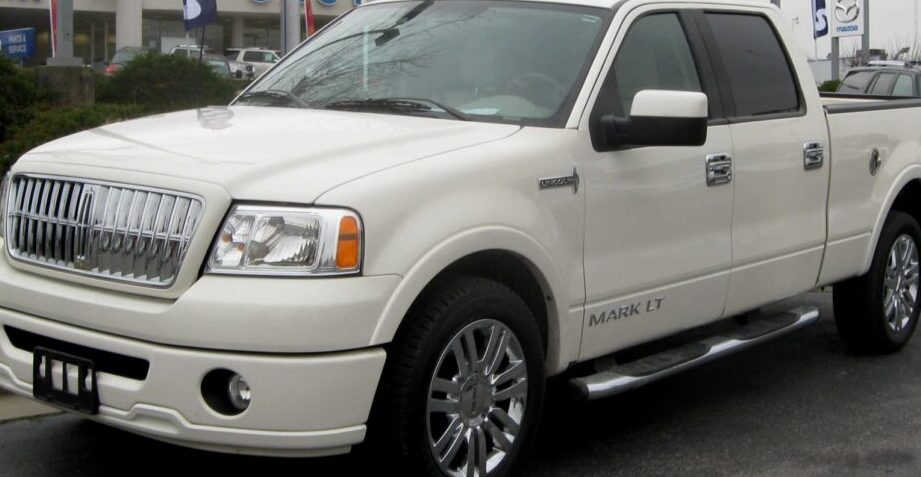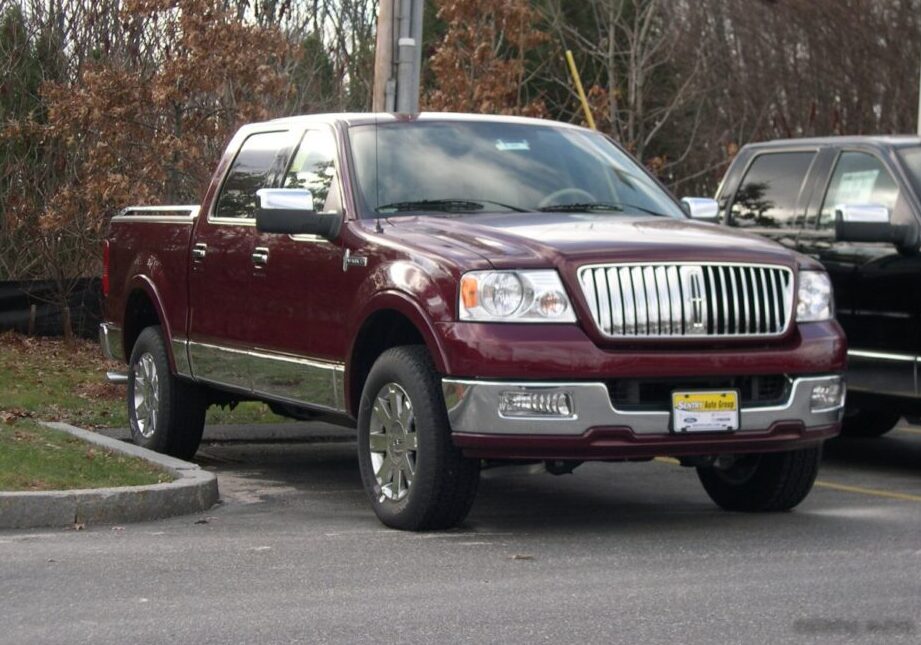
The Lincoln Mark LT with the 5.4-liter V8 engine and four-speed automatic transmission represents a unique offering in the luxury pickup truck segment. Produced for only two model years, 2005 and 2006, the Mark LT was Lincoln’s attempt to capitalize on the growing popularity of crew-cab pickups while offering a more refined and luxurious experience than traditional offerings from Ford, Chevrolet, or GMC. Positioned as a premium trim, it aimed to attract buyers who desired the capability of a pickup but also valued the comfort and features associated with a luxury vehicle. The Mark LT was based on the Ford F-150 chassis, but featured distinctive styling cues and a higher level of standard equipment.
Technical Specifications
| Brand | Lincoln |
| Model | Mark LT |
| Generation | Mark LT |
| Type (Engine) | 5.4 V8 (300 Hp) 4WD Automatic |
| Start of production | 2005 |
| End of production | 2006 |
| Powertrain Architecture | Internal Combustion engine |
| Body type | Pick-up |
| Seats | 5 |
| Doors | 4 |
| Fuel consumption (economy) – urban (EPA) | 16.8 l/100 km (14 US mpg, 16.8 UK mpg, 6 km/l) |
| Fuel consumption (economy) – extra urban (EPA) | 13.1 l/100 km (18 US mpg, 21.6 UK mpg, 7.6 km/l) |
| Fuel consumption (economy) – combined (EPA) | 15.7 l/100 km (15 US mpg, 18 UK mpg, 6.4 km/l) |
| Fuel Type | Petrol (Gasoline) |
| Weight-to-power ratio | 8.5 kg/Hp, 118.1 Hp/tonne |
| Weight-to-torque ratio | 5.1 kg/Nm, 194.9 Nm/tonne |
| Power | 300 Hp @ 5000 rpm |
| Power per litre | 55.5 Hp/l |
| Torque | 495 Nm @ 3750 rpm (365.09 lb.-ft. @ 3750 rpm) |
| Maximum engine speed | 5400 rpm |
| Engine layout | Front, Longitudinal |
| Engine Model/Code | Triton |
| Engine displacement | 5409 cm3 (330.08 cu. in.) |
| Number of cylinders | 8 |
| Engine configuration | V-engine |
| Cylinder Bore | 90.2 mm (3.55 in.) |
| Piston Stroke | 105.8 mm (4.17 in.) |
| Compression ratio | 9.8:1 |
| Number of valves per cylinder | 3 |
| Fuel injection system | Multi-port manifold injection |
| Engine aspiration | Naturally aspirated engine |
| Valvetrain | SOHC, VCT |
| Engine oil capacity | 6.6 l (6.97 US qt | 5.81 UK qt) |
| Coolant | 20 l (21.13 US qt | 17.6 UK qt) |
| Kerb Weight | 2540 kg (5599.74 lbs.) |
| Max. weight | 3266 kg (7200.3 lbs.) |
| Max load | 726 kg (1600.56 lbs.) |
| Trunk (boot) space – maximum | 1572 l (55.51 cu. ft.) |
| Fuel tank capacity | 114 l (30.12 US gal | 25.08 UK gal) |
| Permitted trailer load with brakes (12%) | 3900 kg (8598.03 lbs.) |
| Length | 5685 mm (223.82 in.) |
| Width | 2004 mm (78.9 in.) |
| Height | 1930 mm (75.98 in.) |
| Wheelbase | 3518 mm (138.5 in.) |
| Front track | 1702 mm (67.01 in.) |
| Rear (Back) track | 1702 mm (67.01 in.) |
| Front overhang | 937 mm (36.89 in.) |
| Rear overhang | 1229 mm (48.39 in.) |
| Ride height (ground clearance) | 206 mm (8.11 in.) |
| Minimum turning circle (turning diameter) | 13.7 m (44.95 ft.) |
| Approach angle | 26° |
| Departure angle | 25.3° |
| Ramp-over (brakeover) angle | 21.2° |
| Drivetrain Architecture | The Internal combustion engine (ICE) drives the rear wheels permanently, and the front wheels are driven through an electrically or mechanically operated clutch if necessary. |
| Drive wheel | All wheel drive (4×4) |
| Number of gears and type of gearbox | 4 gears, automatic transmission |
| Front suspension | Double wishbone, Independent coil spring, Transverse stabilizer |
| Rear suspension | Rigid axle suspension, Leaf spring |
| Front brakes | Ventilated discs, 330 mm |
| Rear brakes | Ventilated discs, 348 mm |
| Assisting systems | ABS (Anti-lock braking system) |
| Steering type | Steering rack and pinion |
| Power steering | Hydraulic Steering |
| Tires size | 275/65 R18 |
| Wheel rims size | 8J x 18 |
Powertrain & Engine Architecture
The heart of the Mark LT was the 5.4-liter Triton V8 engine. This engine, part of Ford’s modular engine family, featured a cast-iron block with aluminum cylinder heads. It utilized a single overhead camshaft (SOHC) design per cylinder bank, incorporating variable valve timing (VCT) to optimize performance and fuel efficiency. The engine employed multi-port fuel injection, delivering fuel directly to each intake port. The 5.4L Triton produced 300 horsepower at 5000 rpm and 495 lb-ft of torque at 3750 rpm. This output was delivered through a four-speed automatic transmission, a 4R75E unit, known for its durability but relatively conservative gear ratios compared to some contemporary transmissions. The transmission was electronically controlled, adapting shift points based on throttle position and vehicle speed.
Driving Characteristics
The combination of the 5.4-liter V8 and the four-speed automatic transmission provided adequate, but not exhilarating, performance. Acceleration was respectable, but the Mark LT wasn’t designed for rapid acceleration. The automatic transmission, while smooth, lacked the responsiveness of more modern transmissions with more gears. The gear ratios were geared more towards towing and hauling than outright speed. Compared to a manual transmission-equipped F-150 with the same engine, the Mark LT felt slightly less responsive. However, the automatic offered a more relaxed driving experience, particularly in city traffic. The 4WD system provided enhanced traction in inclement weather or off-road conditions, though the Mark LT was primarily intended for on-road use.
Equipment & Trim Levels
The Mark LT came standard with a generous array of features, reflecting its luxury positioning. Standard equipment included leather upholstery, power-adjustable front seats with memory function, automatic climate control, a premium audio system, and alloy wheels. Optional extras included a power moonroof, navigation system, and upgraded audio options. The interior trim was generally more upscale than that of a standard F-150, with woodgrain accents and chrome detailing. The Mark LT was offered in a single, well-equipped trim level, minimizing complexity for buyers.
Chassis & Braking
The Mark LT’s chassis was based on the Ford F-150 frame, providing a robust foundation for its capabilities. The front suspension utilized an independent double wishbone setup with coil springs and a stabilizer bar, while the rear suspension employed a traditional leaf spring configuration. Braking duties were handled by ventilated disc brakes on all four wheels, providing adequate stopping power for the vehicle’s weight. An anti-lock braking system (ABS) was standard. The suspension was tuned to provide a comfortable ride, prioritizing smoothness over sporty handling.
Market Reception & Comparison
The Lincoln Mark LT received mixed reviews from automotive critics. While praised for its luxurious interior and comfortable ride, it was often criticized for its relatively high price and lack of significant performance advantages over a similarly equipped Ford F-150. Fuel economy was also a concern, with the 5.4-liter V8 consuming a considerable amount of gasoline. Compared to other trims in the F-150 lineup, the Mark LT offered a more refined experience but at a premium cost. The 5.4L engine was generally considered reliable, but required regular maintenance, including spark plug replacement, which could be costly due to the engine’s design.
Legacy
The Lincoln Mark LT was a short-lived experiment in the luxury pickup truck market. Its limited production run and relatively high price contributed to its modest sales figures. However, the Mark LT has developed a following among collectors and enthusiasts who appreciate its unique combination of luxury and capability. The 5.4-liter Triton engine, while known for its potential maintenance needs, is generally considered durable when properly maintained. Today, well-maintained examples of the Mark LT can command a premium in the used car market, appealing to buyers seeking a distinctive and comfortable pickup truck.