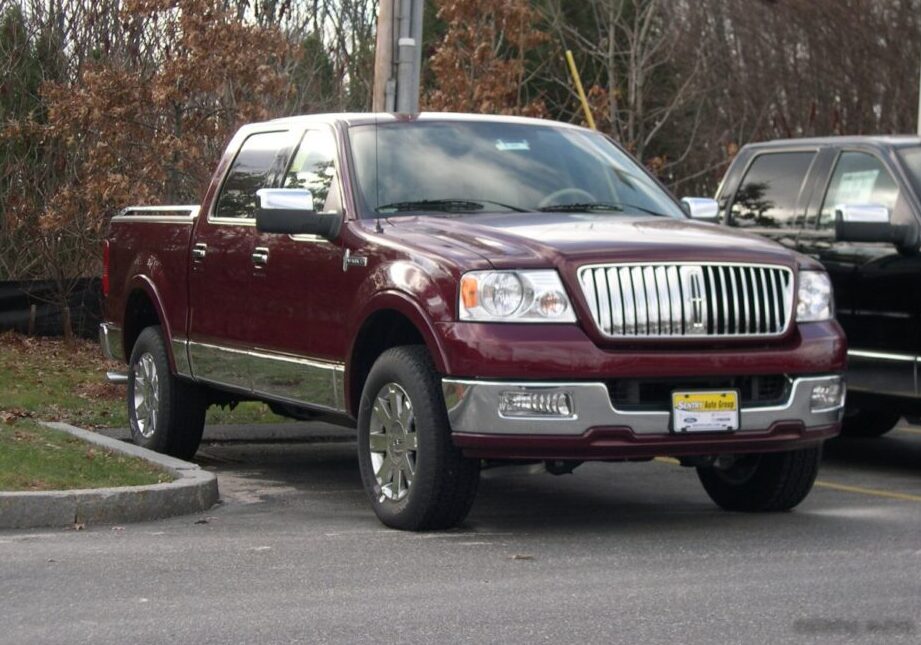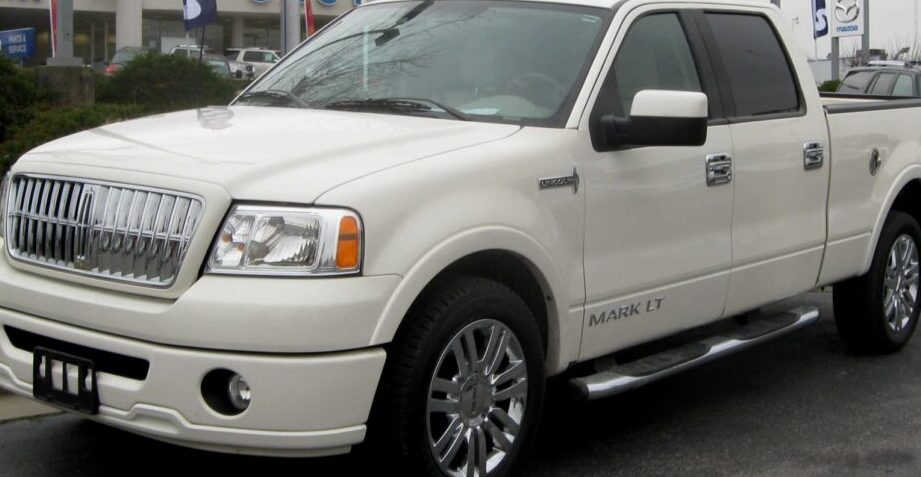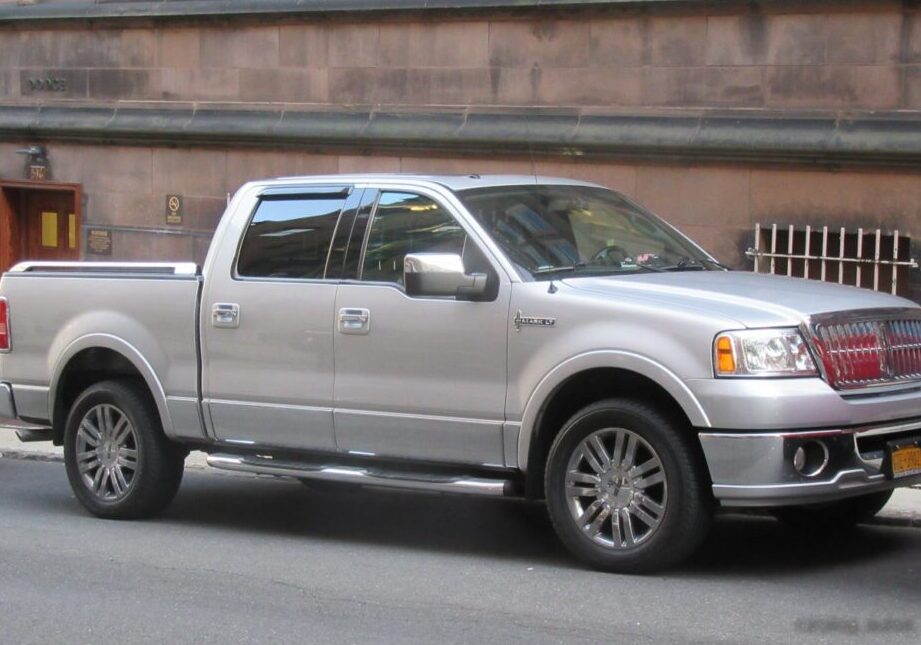
The Lincoln Mark LT, particularly the facelifted version produced from 2006 to 2008, represented Lincoln’s entry into the luxury pickup truck market. Built on the Ford F-150 platform, the Mark LT aimed to offer a more refined and upscale experience compared to its Ford counterpart. The 2006-2008 facelift brought subtle styling updates and continued to be powered by a range of engines, with the 5.4-liter V8 being a prominent offering. This variant, producing 300 horsepower and paired with a four-speed automatic transmission and four-wheel drive, occupied the top end of the Mark LT lineup, targeting buyers seeking both capability and luxury.
Technical Specifications
| Brand | Lincoln |
| Model | Mark LT |
| Generation | Mark LT (facelift 2006) |
| Type (Engine) | 5.4 V8 (300 Hp) 4WD Automatic |
| Start of production | July, 2006 |
| End of production | 2008 |
| Powertrain Architecture | Internal Combustion engine |
| Body type | Pick-up |
| Seats | 5 |
| Doors | 4 |
| Fuel consumption (urban) | 16.8-18.1 l/100 km (14-13 US mpg) |
| Fuel consumption (extra urban) | 13.1-13.8 l/100 km (18-17 US mpg) |
| Fuel consumption (combined) | 15.7-16.8 l/100 km (15-14 US mpg) |
| Fuel Type | Petrol (Gasoline) |
| Weight-to-power ratio | 8.4 kg/Hp |
| Weight-to-torque ratio | 5.1 kg/Nm |
| Power | 300 Hp @ 5000 rpm |
| Power per litre | 55.5 Hp/l |
| Torque | 495 Nm @ 3750 rpm (365.09 lb.-ft. @ 3750 rpm) |
| Maximum engine speed | 5400 rpm |
| Engine layout | Front, Longitudinal |
| Engine Model/Code | Triton |
| Engine displacement | 5409 cm3 (330.08 cu. in.) |
| Number of cylinders | 8 |
| Engine configuration | V-engine |
| Cylinder Bore | 90.2 mm (3.55 in.) |
| Piston Stroke | 105.8 mm (4.17 in.) |
| Compression ratio | 9.8:1 |
| Number of valves per cylinder | 3 |
| Fuel injection system | Multi-port manifold injection |
| Engine aspiration | Naturally aspirated engine |
| Valvetrain | SOHC, VCT |
| Engine oil capacity | 6.6 l (6.97 US qt | 5.81 UK qt) |
| Coolant capacity | 20 l (21.13 US qt | 17.6 UK qt) |
| Kerb Weight | 2527-2541 kg (5571.08 – 5601.95 lbs.) |
| Max. weight | 3266 kg (7200.3 lbs.) |
| Max load | 725-739 kg (1598.35 – 1629.22 lbs.) |
| Trunk (boot) space – maximum | 1572 l (55.51 cu. ft.) |
| Fuel tank capacity | 114 l (30.12 US gal | 25.08 UK gal) |
| Permitted trailer load with brakes (12%) | 3946 kg (8699.44 lbs.) |
| Permitted towbar download | 390 kg (859.8 lbs.) |
| Length | 5685 mm (223.82 in.) |
| Width | 2004 mm (78.9 in.) |
| Width including mirrors | 2459 mm (96.81 in.) |
| Height | 1930 mm (75.98 in.) |
| Wheelbase | 3518 mm (138.5 in.) |
| Front track | 1702 mm (67.01 in.) |
| Rear track | 1702 mm (67.01 in.) |
| Front overhang | 937 mm (36.89 in.) |
| Rear overhang | 1229 mm (48.39 in.) |
| Ride height (ground clearance) | 206-231 mm (8.11 – 9.09 in.) |
| Minimum turning circle | 13.7 m (44.95 ft.) |
| Approach angle | 25-25.9° |
| Departure angle | 25.2-25.4° |
| Ramp-over angle | 21.2° |
| Drivetrain Architecture | All wheel drive (4×4) |
| Number of gears and type of gearbox | 4 gears, automatic transmission |
| Front suspension | Double wishbone, Independent coil spring, Transverse stabilizer |
| Rear suspension | Rigid axle suspension, Leaf spring |
| Front brakes | Ventilated discs, 330 mm |
| Rear brakes | Ventilated discs, 348 mm |
| Assisting systems | ABS (Anti-lock braking system) |
| Steering type | Steering rack and pinion |
| Power steering | Hydraulic Steering |
| Tires size | 275/65 R18; 275/55 R20 |
| Wheel rims size | 8J x 18; 8.5J x 20 |
INTRODUCTION
The Lincoln Mark LT, introduced for the 2006 model year, was Lincoln’s first foray into the luxury pickup truck segment. Based on the Ford F-150, the Mark LT aimed to provide a more upscale alternative with unique styling and a more refined interior. The 2006 facelift brought minor cosmetic changes, but the core formula remained the same: a luxurious pickup experience. The 5.4-liter V8 engine, paired with a four-speed automatic transmission and a four-wheel-drive system, was the top-tier powertrain option, offering a balance of power and capability for those needing a premium truck for work and leisure. It was positioned as the flagship trim, offering the most power and features within the Mark LT range.
Powertrain & Engine Architecture
The heart of this Mark LT variant is Ford’s 5.4-liter Triton V8 engine. This engine, designated as the 3V version due to its three valves per cylinder, produced 300 horsepower at 5000 rpm and 495 lb-ft of torque at 3750 rpm. The engine utilizes a 9.8:1 compression ratio and multi-port fuel injection. The Triton engine family is known for its robust construction, but the 3V version introduced variable valve timing (VCT) to improve both power and fuel efficiency. The four-speed 4R75E automatic transmission was the sole transmission option for the 5.4L engine. This transmission is known for its durability but is considered somewhat dated compared to more modern transmissions with more gears. The 4R75E features electronic control and overdrive for improved highway cruising. The four-wheel-drive system is a traditional part-time system, allowing the driver to switch between 2WD, 4HI, and 4LO modes.
Driving Characteristics
The 5.4-liter V8 in the Mark LT provided adequate power for everyday driving and towing. While not as quick as some of its competitors, the engine delivered a smooth and refined driving experience. The four-speed automatic transmission, while reliable, lacked the responsiveness and efficiency of newer transmissions. Gear ratios were tuned for a balance of acceleration and fuel economy, but the truck felt somewhat sluggish during quick acceleration maneuvers. Compared to the smaller 4.6-liter V8 offered in lower trims, the 5.4-liter provided a noticeable increase in power and torque, making it more suitable for hauling heavy loads or towing trailers. The four-wheel-drive system provided enhanced traction in inclement weather and off-road conditions.
Equipment & Trim Levels
The 5.4-liter Mark LT typically came well-equipped with features designed to enhance comfort and convenience. Standard features included leather upholstery, power-adjustable front seats, a premium audio system, automatic climate control, and power windows and locks. Optional extras included a navigation system, a sunroof, and upgraded interior trim. The Mark LT’s interior was designed to be more luxurious than the standard Ford F-150, with higher-quality materials and a more refined design. The exterior featured unique styling cues, such as a chrome grille and body-colored bumpers, to differentiate it from its Ford counterpart.
Chassis & Braking
The Mark LT’s chassis was based on the Ford F-150’s fully boxed frame, providing a solid and durable foundation. The front suspension featured an independent double-wishbone design with coil springs and a stabilizer bar, while the rear suspension utilized a traditional leaf spring setup. This configuration provided a comfortable ride, but the leaf springs could sometimes result in a slightly bumpy ride when the truck was unloaded. The braking system consisted of ventilated disc brakes on all four wheels, providing adequate stopping power for the truck’s weight. An anti-lock braking system (ABS) was standard.
Market Reception & Comparison
The Lincoln Mark LT received mixed reviews from critics. While praised for its luxurious interior and comfortable ride, it was often criticized for its high price and relatively dated technology. Compared to other luxury pickup trucks, such as the Cadillac Escalade EXT, the Mark LT offered a more understated and refined experience. Fuel economy was a significant drawback, with the 5.4-liter V8 achieving only around 14-15 mpg in combined driving. Reliability was generally good, but some owners reported issues with the spark plugs breaking during removal, a common problem with the Triton V8 engine.
Legacy
The Lincoln Mark LT was discontinued after the 2008 model year due to slow sales. Today, the 5.4-liter V8-powered Mark LT is a relatively rare and affordable luxury pickup truck on the used car market. The Triton engine, while known for its potential spark plug issues, is generally considered durable and reliable when properly maintained. The Mark LT offers a unique combination of luxury, capability, and affordability, making it an appealing option for buyers seeking a premium pickup truck experience without the high price tag of newer models. Its relatively simple design and robust construction make it a relatively easy vehicle to maintain and repair.