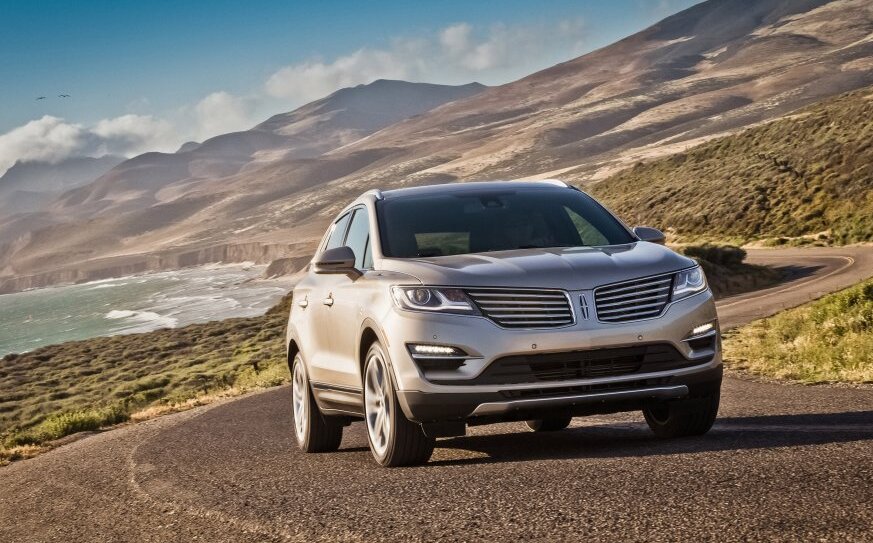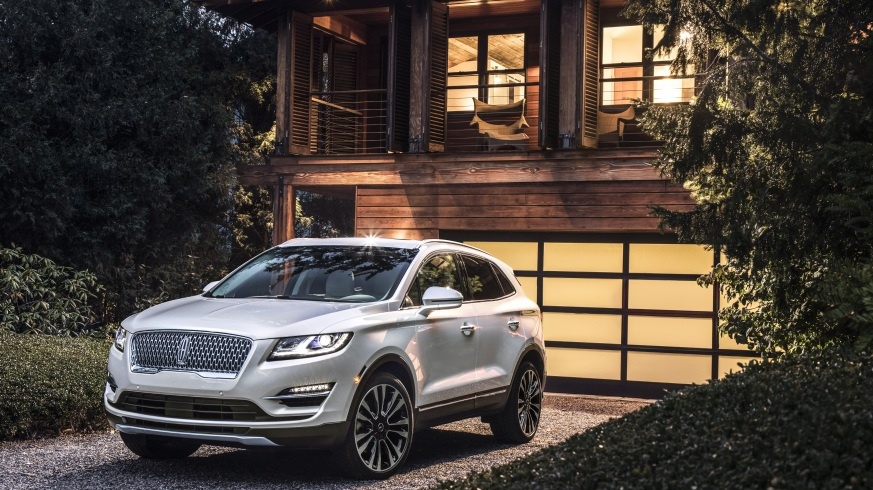
The Lincoln MKC (facelifted for the 2019 model year) represented Lincoln’s entry into the compact luxury SUV segment. Introduced for the 2014 model year and receiving a significant refresh in 2019, the MKC aimed to attract buyers seeking a more refined and comfortable alternative to European and Japanese competitors. The 2.3-liter EcoBoost engine paired with an all-wheel-drive system and a six-speed automatic transmission was a mid-range offering within the MKC lineup, positioned above the base 2.0-liter engine and below the potential for more luxurious trim packages. Production of the MKC continued through 2019, after which it was replaced by the Lincoln Corsair.
Technical Specifications
| Brand | Lincoln |
| Model | MKC |
| Generation | MKC (facelift 2019) |
| Type (Engine) | 2.3 (285 Hp) AWD Automatic |
| Start of production | 2018 |
| Powertrain Architecture | Internal Combustion engine |
| Body type | SUV |
| Seats | 5 |
| Doors | 5 |
| Fuel consumption (urban) | 15.7 l/100 km (15 US mpg, 18 UK mpg, 6.4 km/l) |
| Fuel consumption (extra urban) | 11.3 l/100 km (20.8 US mpg, 25 UK mpg, 8.8 km/l) |
| Fuel consumption (combined) | 14.1 l/100 km (16.7 US mpg, 20 UK mpg, 7.1 km/l) |
| Fuel Type | Petrol (Gasoline) |
| Weight-to-power ratio | 6.3 kg/Hp, 158.3 Hp/tonne |
| Weight-to-torque ratio | 4.3 kg/Nm, 230 Nm/tonne |
| Power | 285 Hp @ 5500 rpm |
| Power per litre | 126.1 Hp/l |
| Torque | 414 Nm @ 2750 rpm (305.35 lb.-ft. @ 2750 rpm) |
| Engine layout | Front, Transverse |
| Engine Model/Code | EcoBoost |
| Engine displacement | 2261 cm3 (137.97 cu. in.) |
| Number of cylinders | 4 |
| Engine configuration | Inline |
| Cylinder Bore | 87.5 mm (3.44 in.) |
| Piston Stroke | 94 mm (3.7 in.) |
| Compression ratio | 9.5:1 |
| Number of valves per cylinder | 4 |
| Fuel injection system | Direct injection |
| Engine aspiration | Turbocharger, Intercooler |
| Valvetrain | DOHC, Ti-VCT |
| Engine oil capacity | 5.4 l (5.71 US qt | 4.75 UK qt) |
| Coolant | 7.7 l (8.14 US qt | 6.78 UK qt) |
| Kerb Weight | 1800 kg (3968.32 lbs.) |
| Trunk (boot) space – minimum | 714 l (25.21 cu. ft.) |
| Trunk (boot) space – maximum | 1504 l (53.11 cu. ft.) |
| Fuel tank capacity | 59 l (15.59 US gal | 12.98 UK gal) |
| Permitted trailer load with brakes (12%) | 1361 kg (3000.49 lbs.) |
| Length | 4552 mm (179.21 in.) |
| Width | 1938 mm (76.3 in.) |
| Width including mirrors | 2136 mm (84.09 in.) |
| Height | 1656 mm (65.2 in.) |
| Wheelbase | 2690 mm (105.91 in.) |
| Front track | 1585 mm (62.4 in.) |
| Rear (Back) track | 1588 mm (62.52 in.) |
| Minimum turning circle (turning diameter) | 11.6 m (38.06 ft.) |
| Drive wheel | All wheel drive (4×4) |
| Number of gears and type of gearbox | 6 gears, automatic transmission SelectShift |
| Front suspension | Independent, type McPherson with coil spring and anti-roll bar |
| Rear suspension | Independent multi-link spring suspension with stabilizer |
| Front brakes | Ventilated discs |
| Rear brakes | Disc |
| Assisting systems | ABS (Anti-lock braking system) |
| Steering type | Steering rack and pinion |
| Power steering | Electric Steering |
| Tires size | 245/45 R19 |
| Wheel rims size | 19 |
INTRODUCTION
The 2019 Lincoln MKC 2.3 AWD Automatic represented a refinement of Lincoln’s compact luxury SUV offering. Built on the Ford C1 platform (also known as the 1HX0/A3 platform), the MKC aimed to provide a more upscale experience than its Ford Escape sibling. The facelifted model, introduced for 2019, featured revised styling, updated technology, and a focus on comfort and quietness. The 2.3-liter EcoBoost engine, paired with all-wheel drive and a six-speed automatic, was a popular choice, offering a balance of performance and fuel efficiency for buyers in the North American market.
Powertrain & Engine Architecture
At the heart of the MKC 2.3 was Ford’s 2.3-liter EcoBoost inline-four cylinder engine. This engine, part of Ford’s EcoBoost family, utilized direct fuel injection, a single turbocharger with an intercooler, and a double overhead camshaft (DOHC) valvetrain with variable valve timing (Ti-VCT). The engine code is generally associated with the broader EcoBoost family, and specific variations exist. The 2.3L EcoBoost produced 285 horsepower at 5,500 rpm and 305 lb-ft of torque at 2,750 rpm. The six-speed automatic transmission, marketed as SelectShift, offered a blend of smooth operation and driver control. While not a dual-clutch transmission, it featured selectable shift modes. The all-wheel-drive system was primarily front-wheel drive, engaging the rear wheels as needed for improved traction.
Driving Characteristics
The MKC 2.3 AWD delivered a comfortable and composed driving experience. The 285 horsepower provided adequate acceleration for everyday driving and highway merging, though it wasn’t a particularly sporty SUV. The six-speed automatic transmission was generally smooth-shifting, but some reviewers noted it could occasionally feel hesitant during quick downshifts. Compared to the base 2.0-liter engine, the 2.3-liter offered a noticeable improvement in performance. The all-wheel-drive system provided enhanced stability in inclement weather. The gear ratios were tuned for a balance of fuel economy and responsiveness, prioritizing comfort over outright performance. The MKC wasn’t designed to be a corner carver, but it offered a secure and predictable feel on the road.
Equipment & Trim Levels
The MKC 2.3 AWD was typically available in well-equipped trims, often including features like leather upholstery, heated and ventilated front seats, a power liftgate, and a premium sound system. Standard equipment generally included a rearview camera, parking sensors, and Lincoln Drive Connect infotainment system with an 8-inch touchscreen. Optional extras included navigation, adaptive cruise control, and a panoramic sunroof. Interior materials were generally of high quality, with a focus on creating a luxurious and comfortable cabin. The dashboard layout was clean and intuitive, with a focus on ease of use.
Chassis & Braking
The MKC utilized an independent front suspension with McPherson struts and a coil spring, along with an independent multi-link rear suspension. A stabilizer bar was included at both the front and rear to reduce body roll. The braking system consisted of ventilated discs at the front and solid discs at the rear. Anti-lock brakes (ABS) were standard. The suspension tuning prioritized ride comfort over sporty handling, resulting in a smooth and forgiving ride quality. The steering was electrically assisted, providing light and precise control.
Market Reception & Comparison
The Lincoln MKC 2.3 AWD was generally well-received by critics, who praised its comfortable ride, quiet cabin, and upscale interior. However, some reviewers noted that the infotainment system could be slow to respond and that the six-speed automatic transmission felt dated compared to newer eight- or nine-speed automatics found in competitors. Compared to the base 2.0-liter MKC, the 2.3-liter offered a significant performance upgrade, but at a higher price point. Fuel economy was comparable to other compact luxury SUVs with similar engines and drivetrains. The MKC competed with vehicles like the Acura RDX, Audi Q5, and BMW X3.
Legacy
The Lincoln MKC 2.3 AWD, while not a groundbreaking vehicle, represented a solid effort by Lincoln to compete in the growing compact luxury SUV segment. The 2.3-liter EcoBoost engine proved to be a reliable and durable powertrain, and the MKC has maintained a reasonable reputation for reliability in the used car market. While the MKC has been replaced by the Corsair, it remains a viable option for buyers seeking a comfortable and well-equipped luxury SUV at a more affordable price point. The powertrain, in particular, has proven to be relatively trouble-free, making it a good choice for long-term ownership.