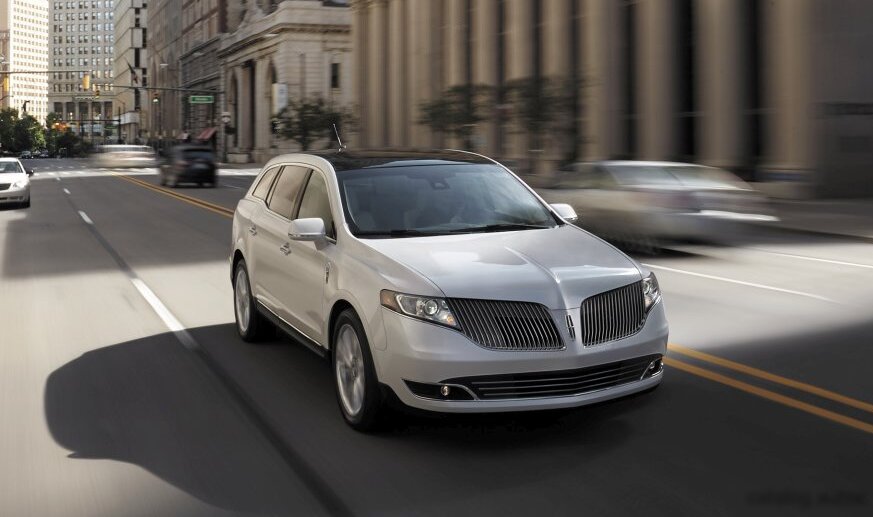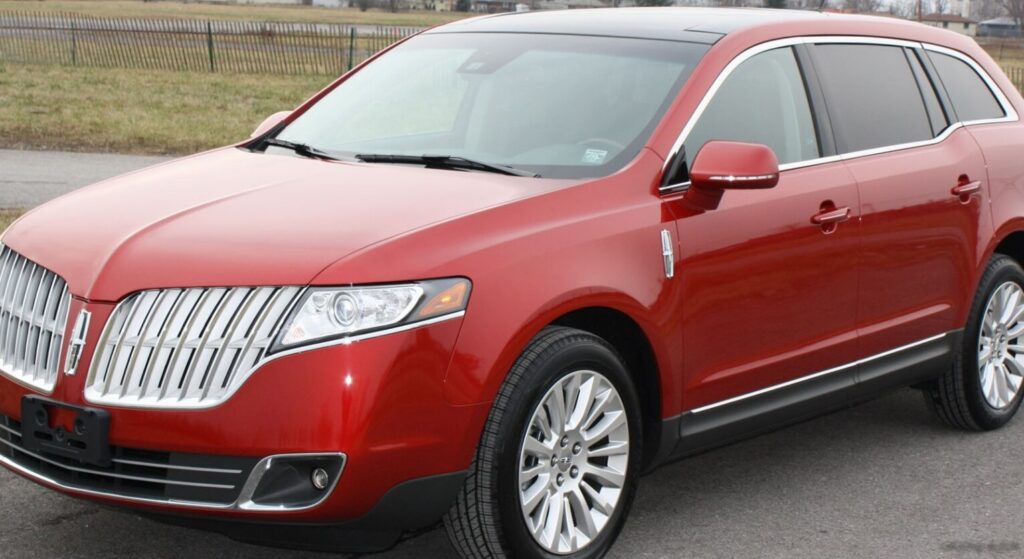
The Lincoln MKT I 3.7 V6 Automatic, produced for the 2011 and 2012 model years, represented Lincoln’s entry into the full-size luxury crossover SUV segment. Built on the D3 platform shared with the Ford Flex and Ford Taurus, the MKT aimed to offer a more upscale alternative with distinctive styling and a focus on passenger comfort. This particular variant, powered by the 3.7-liter Cyclone V6 engine paired with a six-speed automatic transmission, occupied a mid-range position within the MKT lineup, offering a balance of performance and fuel efficiency compared to the available EcoBoost turbocharged engine option. It was primarily marketed towards American consumers seeking a spacious, comfortable, and well-equipped family vehicle.
Technical Specifications
| Brand | Lincoln |
| Model | MKT |
| Generation | MKT I |
| Type (Engine) | 3.7 V6 (268 Hp) Automatic |
| Start of production | 2011 |
| End of production | 2012 |
| Powertrain Architecture | Internal Combustion engine |
| Body type | SUV |
| Seats | 7 |
| Doors | 5 |
| Fuel consumption (economy) – urban | 13.8 l/100 km (17 US mpg, 20.5 UK mpg, 7.2 km/l) |
| Fuel consumption (economy) – extra urban | 9.8 l/100 km (24 US mpg, 28.8 UK mpg, 10.2 km/l) |
| Fuel consumption (economy) – combined | 11.8 l/100 km (19.9 US mpg, 23.9 UK mpg, 8.5 km/l) |
| Fuel Type | Petrol (Gasoline) |
| Weight-to-power ratio | 7.9 kg/Hp, 125.8 Hp/tonne |
| Weight-to-torque ratio | 5.9 kg/Nm, 170 Nm/tonne |
| Power | 268 Hp @ 6250 rpm |
| Power per litre | 71.9 Hp/l |
| Torque | 362 Nm @ 4250 rpm (267 lb.-ft. @ 4250 rpm) |
| Maximum engine speed | 6750 rpm |
| Engine layout | Front, Transverse |
| Engine Model/Code | Cyclone |
| Engine displacement | 3726 cm3 (227.37 cu. in.) |
| Number of cylinders | 6 |
| Engine configuration | V-engine |
| Cylinder Bore | 95.5 mm (3.76 in.) |
| Piston Stroke | 86.7 mm (3.41 in.) |
| Compression ratio | 10.3:1 |
| Number of valves per cylinder | 4 |
| Fuel injection system | Multi-port manifold injection |
| Engine aspiration | Naturally aspirated engine |
| Valvetrain | DOHC, i-VCT |
| Engine oil capacity | 5.2 l (5.49 US qt | 4.58 UK qt) |
| Coolant | 12.5 l (13.21 US qt | 11 UK qt) |
| Kerb Weight | 2130 kg (4695.85 lbs.) |
| Trunk (boot) space – minimum | 507 l (17.9 cu. ft.) |
| Trunk (boot) space – maximum | 2149 l (75.89 cu. ft.) |
| Fuel tank capacity | 70 l (18.49 US gal | 15.4 UK gal) |
| Length | 5273 mm (207.6 in.) |
| Width | 1930 mm (75.98 in.) |
| Width including mirrors | 2177 mm (85.71 in.) |
| Height | 1712 mm (67.4 in.) |
| Wheelbase | 2995 mm (117.91 in.) |
| Front track | 1661 mm (65.39 in.) |
| Rear (Back) track | 1659 mm (65.31 in.) |
| Drag coefficient (Cd) | 0.35 |
| Minimum turning circle (turning diameter) | 12.92 m (42.39 ft.) |
| Drivetrain Architecture | The Internal combustion engine (ICE) drives the front wheels of the vehicle. |
| Drive wheel | Front wheel drive |
| Number of gears and type of gearbox | 6 gears, automatic transmission SelectShift |
| Front brakes | Ventilated discs |
| Rear brakes | Ventilated discs |
| Assisting systems | ABS (Anti-lock braking system) |
| Steering type | Steering rack and pinion |
| Power steering | Electric Steering |
| Tires size | 235/55 R19 |
| Wheel rims size | 19 |
INTRODUCTION
The Lincoln MKT I, launched in 2010, was a significant departure for the brand, moving away from traditional body-on-frame SUVs towards a more modern, car-based crossover platform. The 2011-2012 model year 3.7 V6 Automatic variant served as the entry point to the MKT range, offering a more accessible price point and a focus on comfortable cruising. It was positioned below the more powerful EcoBoost twin-turbocharged V6 option, targeting buyers who prioritized a smooth ride and ample space over outright performance. The MKT aimed to recapture some of Lincoln’s lost market share by appealing to families and individuals seeking a luxurious and practical vehicle.
Powertrain & Engine Architecture
At the heart of the MKT I 3.7 V6 Automatic lies the Ford Cyclone family of engines. This 3.7-liter, naturally aspirated V6 (engine code 3726) produces 268 horsepower at 6250 rpm and 267 lb.-ft. of torque at 4250 rpm. The engine utilizes a dual overhead camshaft (DOHC) valvetrain with independent variable camshaft timing (i-VCT) for both intake and exhaust valves, optimizing performance and fuel efficiency. Fuel delivery is managed by a multi-port fuel injection system. The engine’s aluminum block and cylinder heads contribute to a relatively lightweight construction. The engine is transversely mounted in the front of the vehicle.
The powertrain is paired with a six-speed automatic transmission, marketed by Ford as SelectShift. This transmission offers smooth and responsive shifting, with a manual shift mode for greater driver control. The transmission is tuned for comfort and efficiency, with gear ratios optimized for relaxed highway cruising. The front-wheel-drive configuration was standard, although all-wheel drive was available as an option.
Driving Characteristics
The 3.7-liter V6 and six-speed automatic combination in the MKT delivers adequate, but not exhilarating, performance. Acceleration from 0 to 60 mph takes approximately 8.5-9 seconds. The transmission is programmed for smooth shifts, prioritizing comfort over aggressive downshifts. Compared to the EcoBoost variant, the 3.7L feels less responsive, particularly during overtaking maneuvers. However, the 3.7L offers a more linear power delivery, making it easier to modulate throttle inputs. The front-wheel-drive setup provides predictable handling, but lacks the enhanced grip and stability of the all-wheel-drive system. The MKT’s suspension is tuned for a comfortable ride, absorbing bumps and imperfections in the road effectively.
Equipment & Trim Levels
The MKT I 3.7 V6 Automatic typically came standard with a generous array of features, including leather upholstery, tri-zone automatic climate control, a rearview camera, and a premium audio system. Higher trim levels added features such as heated and ventilated front seats, power-adjustable pedals, and a navigation system. Optional extras included a panoramic sunroof, adaptive cruise control, and a rear-seat entertainment system. Interior materials were generally of high quality, contributing to the MKT’s luxurious feel. The standard seating configuration accommodated seven passengers, with second-row captain’s chairs available as an option.
Chassis & Braking
The MKT I utilizes an independent front suspension with MacPherson struts and a multi-link rear suspension. This setup provides a comfortable ride and predictable handling. The base model typically featured ventilated disc brakes on all four wheels, while the anti-lock braking system (ABS) was standard. The MKT’s steering is electrically assisted, providing light and precise steering feel. The standard tire size was 235/55R19, mounted on 19-inch alloy wheels.
Market Reception & Comparison
The Lincoln MKT I 3.7 V6 Automatic received mixed reviews from automotive critics. While praised for its spacious interior, comfortable ride, and generous features, it was often criticized for its lackluster performance compared to competitors and the EcoBoost version. Fuel economy was also a concern, averaging around 19.9 US mpg in combined driving. Compared to the EcoBoost model, the 3.7L offered a lower price point and potentially better long-term reliability due to its simpler engine design. However, the EcoBoost provided significantly more power and a more engaging driving experience.
Legacy
The Lincoln MKT, while not a commercial success in the same vein as some of its competitors, represented a bold attempt by Lincoln to redefine its brand identity. The 3.7-liter V6 powertrain proved to be generally reliable, with few widespread mechanical issues reported. On the used car market, the MKT I 3.7 V6 Automatic offers a relatively affordable entry point into the luxury crossover segment. Its spacious interior and comfortable ride continue to appeal to families and individuals seeking a practical and well-equipped vehicle. However, potential buyers should be aware of the relatively low fuel economy and the availability of more powerful and efficient alternatives.