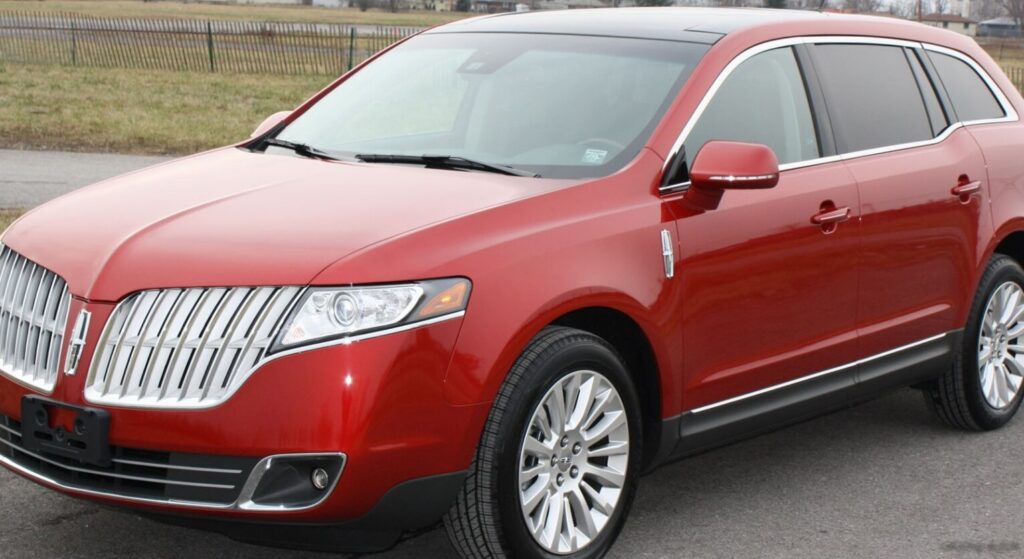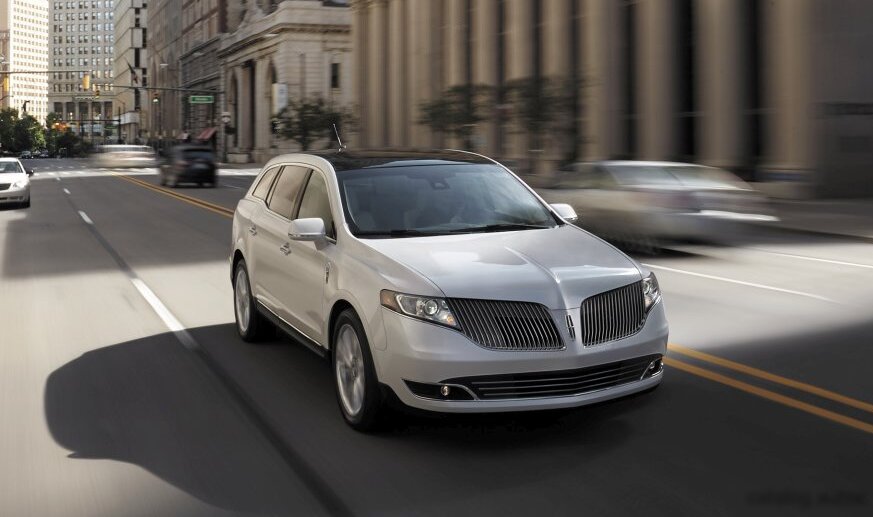
The Lincoln MKT, particularly the facelifted version produced from 2013 to 2016, represented Lincoln’s entry into the full-size luxury crossover SUV segment. This iteration, often equipped with the 3.7-liter V6 engine paired with a six-speed automatic transmission, aimed to provide a comfortable and spacious experience for families and those requiring substantial cargo capacity. The MKT occupied a unique position within Lincoln’s lineup, bridging the gap between traditional body-on-frame SUVs and the emerging trend of car-based crossovers. It was built on the D3 platform, shared with the Ford Explorer and Taurus, but with Lincoln-specific styling and a more luxurious interior.
Technical Specifications
| Brand | Lincoln |
| Model | MKT |
| Generation | MKT I (facelift 2013) |
| Type (Engine) | 3.7 V6 (303 Hp) Automatic |
| Start of production | 2012 |
| End of production | 2016 |
| Powertrain Architecture | Internal Combustion engine |
| Body type | SUV |
| Seats | 7 |
| Doors | 5 |
| Fuel consumption (urban) | 13.8 l/100 km (17 US mpg, 20.5 UK mpg, 7.2 km/l) |
| Fuel consumption (extra urban) | 9.4 l/100 km (25 US mpg, 30.1 UK mpg, 10.6 km/l) |
| Fuel consumption (combined) | 11.8 l/100 km (19.9 US mpg, 23.9 UK mpg, 8.5 km/l) |
| Fuel Type | Petrol (Gasoline) |
| Weight-to-power ratio | 7 kg/Hp, 142.1 Hp/tonne |
| Weight-to-torque ratio | 5.7 kg/Nm, 176.7 Nm/tonne |
| Power | 303 Hp @ 6500 rpm |
| Power per litre | 81.3 Hp/l |
| Torque | 377 Nm @ 4000 rpm (278.06 lb.-ft. @ 4000 rpm) |
| Maximum engine speed | 6750 rpm |
| Engine layout | Front, Transverse |
| Engine Model/Code | Cyclone |
| Engine displacement | 3726 cm3 (227.37 cu. in.) |
| Number of cylinders | 6 |
| Engine configuration | V-engine |
| Cylinder Bore | 95.5 mm (3.76 in.) |
| Piston Stroke | 86.7 mm (3.41 in.) |
| Compression ratio | 10.5:1 |
| Number of valves per cylinder | 4 |
| Fuel injection system | Multi-port manifold injection |
| Engine aspiration | Naturally aspirated engine |
| Valvetrain | DOHC, Ti-VCT |
| Engine oil capacity | 5.7 l (6.02 US qt | 5.02 UK qt) |
| Coolant capacity | 12.5 l (13.21 US qt | 11 UK qt) |
| Kerb Weight | 2133 kg (4702.46 lbs.) |
| Trunk (boot) space – minimum | 507 l (17.9 cu. ft.) |
| Trunk (boot) space – maximum | 2149 l (75.89 cu. ft.) |
| Fuel tank capacity | 70 l (18.49 US gal | 15.4 UK gal) |
| Length | 5273 mm (207.6 in.) |
| Width | 1930 mm (75.98 in.) |
| Width including mirrors | 2177 mm (85.71 in.) |
| Height | 1712 mm (67.4 in.) |
| Wheelbase | 2995 mm (117.91 in.) |
| Front track | 1661 mm (65.39 in.) |
| Rear (Back) track | 1659 mm (65.31 in.) |
| Drag coefficient (Cd) | 0.35 |
| Minimum turning circle | 12.92 m (42.39 ft.) |
| Drivetrain Architecture | Front wheel drive |
| Number of gears | 6 |
| Gearbox type | Automatic transmission SelectShift |
| Front brakes | Ventilated discs |
| Rear brakes | Ventilated discs |
| Assisting systems | ABS (Anti-lock braking system) |
| Steering type | Steering rack and pinion |
| Power steering | Electric Steering |
| Tires size | 235/55 R19 |
| Wheel rims size | 19 |
INTRODUCTION
The 2013-2016 Lincoln MKT with the 3.7-liter V6 and automatic transmission was positioned as a mid-range offering within the MKT lineup. While a 3.5-liter EcoBoost V6 was available for those seeking more performance, the 3.7-liter variant prioritized a balance of power, fuel efficiency, and affordability. It was aimed at buyers who desired the spaciousness and luxury of a large crossover but didn’t necessarily require the highest levels of performance. The MKT, as a whole, was Lincoln’s attempt to modernize its image and appeal to a broader audience, moving away from the traditional, body-on-frame SUV formula.
Powertrain & Engine Architecture
The heart of this MKT variant is the Ford Cyclone family 3.7-liter V6 engine. This naturally aspirated engine, designated as the 3.7L Ti-VCT, produces 303 horsepower at 6500 rpm and 278 lb-ft of torque at 4000 rpm. It features a dual overhead camshaft (DOHC) valvetrain with variable valve timing (Ti-VCT) on both intake and exhaust valves, optimizing performance and efficiency. Fuel delivery is handled by a multi-port fuel injection system. The engine’s aluminum block and cylinder heads contribute to weight reduction. The engine is transversely mounted in the front of the vehicle.
The engine is mated to a six-speed automatic transmission, marketed by Ford as SelectShift. This transmission offers a blend of smooth automatic operation and the ability for the driver to manually select gears via a shift lever. The transmission’s gear ratios are tuned for a balance of acceleration and fuel economy. The front-wheel-drive configuration was standard, although all-wheel drive was an available option.
Driving Characteristics
The 3.7-liter V6 in the MKT provides adequate power for everyday driving and highway cruising. Acceleration is respectable, but not particularly brisk, with a 0-60 mph time estimated around 8-9 seconds. Compared to the EcoBoost V6 version, the 3.7-liter feels noticeably less powerful, especially when fully loaded with passengers and cargo. The automatic transmission generally shifts smoothly, but can sometimes feel hesitant during quick acceleration maneuvers. The front-wheel-drive setup contributes to decent fuel economy, but can exhibit some torque steer under hard acceleration. The MKT’s large size and weight are noticeable in corners, resulting in a less agile driving experience than smaller crossovers.
Equipment & Trim Levels
The 3.7-liter MKT typically came standard with features such as leather upholstery, tri-zone automatic climate control, a rearview camera, and a premium audio system. Higher trim levels added features like power-adjustable pedals, heated and ventilated front seats, a navigation system, and a panoramic sunroof. Optional extras included a rear-seat entertainment system, adaptive cruise control, and blind-spot monitoring. Interior color schemes varied depending on the trim level, with options ranging from light beige to dark charcoal.
Chassis & Braking
The MKT’s chassis features an independent front suspension with MacPherson struts and an independent rear suspension with a multi-link design. The suspension is tuned for a comfortable ride, absorbing bumps and imperfections in the road effectively. Front and rear brakes are ventilated discs, providing adequate stopping power. Anti-lock brakes (ABS) are standard. The MKT’s relatively heavy weight necessitates a robust braking system. Stabilizer bars are fitted to both the front and rear axles to reduce body roll during cornering.
Market Reception & Comparison
Critics generally praised the MKT for its spacious interior, comfortable ride, and quiet cabin. However, the 3.7-liter V6 engine was often criticized for being underpowered for a vehicle of its size. Compared to the EcoBoost V6 version, the 3.7-liter offered better fuel economy but significantly less performance. The MKT’s fuel economy figures were competitive with other large crossovers of the time, averaging around 19 mpg combined. Reliability was generally good, with few major issues reported. However, some owners experienced minor problems with the infotainment system and electrical components.
Legacy
The Lincoln MKT, while not a massive sales success, represented a significant step forward for the brand in terms of design and technology. The 3.7-liter V6 powertrain proved to be relatively reliable, and many examples are still on the road today. In the used car market, the 3.7-liter MKT offers a good value proposition for buyers seeking a spacious and comfortable luxury crossover at an affordable price. While it may not be the most exciting vehicle to drive, it provides a practical and refined transportation experience.