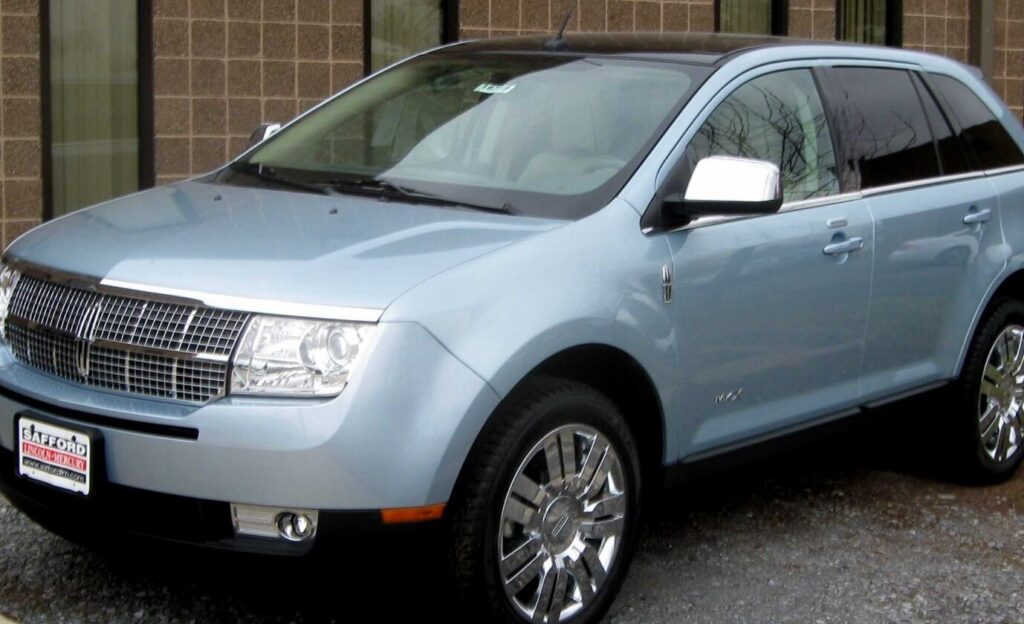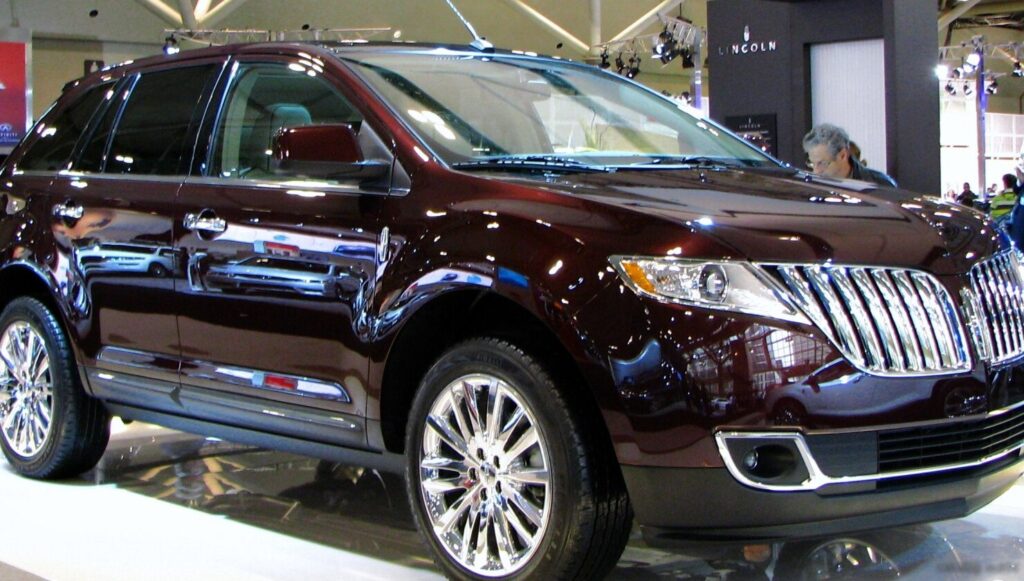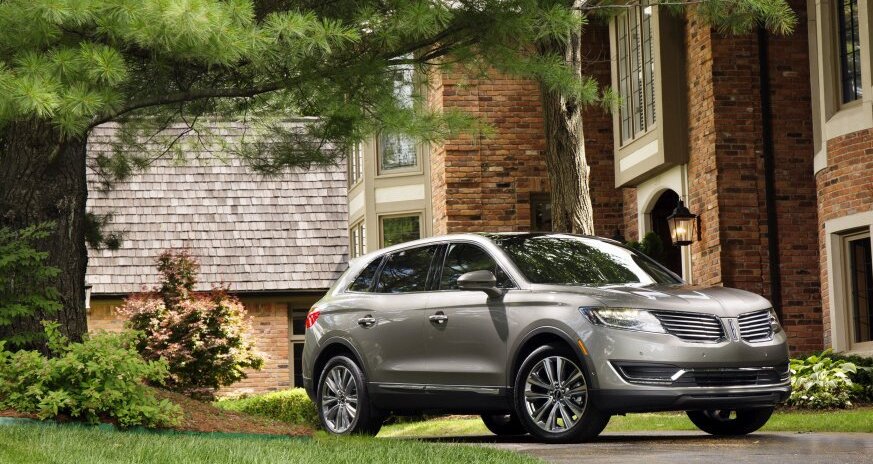
The Lincoln MKX II, specifically the 3.7 V6 AWD Automatic variant, represented a significant step forward for Lincoln’s mid-size luxury crossover offering. Produced from 2015 to 2018, this generation MKX aimed to blend American comfort and spaciousness with a more contemporary design and improved technology. This particular configuration, powered by the 3.7-liter Cyclone V6 engine paired with a six-speed automatic transmission and all-wheel drive, occupied a central position in the MKX II lineup, offering a balance between performance, features, and price. It served as the primary volume seller, appealing to buyers seeking a refined and capable crossover without the added expense of the top-tier trims.
Technical Specifications
| Brand | Lincoln |
| Model | MKX |
| Generation | MKX II |
| Type (Engine) | 3.7 V6 (303 Hp) AWD Automatic |
| Start of production | 2015 year |
| End of production | 2018 year |
| Powertrain Architecture | Internal Combustion engine |
| Body type | Crossover |
| Seats | 5 |
| Doors | 5 |
| Fuel consumption (economy) – urban | 14.7 l/100 km (16 US mpg, 19.2 UK mpg, 6.8 km/l) |
| Fuel consumption (economy) – extra urban | 10.2 l/100 km (23.1 US mpg, 27.7 UK mpg, 9.8 km/l) |
| Fuel consumption (economy) – combined | 12.4 l/100 km (19 US mpg, 22.8 UK mpg, 8.1 km/l) |
| Fuel Type | Petrol (Gasoline) |
| Weight-to-power ratio | 6.6 kg/Hp, 152.3 Hp/tonne |
| Weight-to-torque ratio | 5.3 kg/Nm, 189.4 Nm/tonne |
| Power | 303 Hp @ 6500 rpm |
| Power per litre | 81.3 Hp/l |
| Torque | 377 Nm @ 4000 rpm (278.06 lb.-ft. @ 4000 rpm) |
| Maximum engine speed | 7000 rpm |
| Engine layout | Front, Transverse |
| Engine Model/Code | Cyclone |
| Engine displacement | 3726 cm3 (227.37 cu. in.) |
| Number of cylinders | 6 |
| Engine configuration | V-engine |
| Cylinder Bore | 95.5 mm (3.76 in.) |
| Piston Stroke | 86.7 mm (3.41 in.) |
| Compression ratio | 10.5:1 |
| Number of valves per cylinder | 4 |
| Fuel injection system | Multi-port manifold injection |
| Engine aspiration | Naturally aspirated engine |
| Valvetrain | DOHC, Ti-VCT |
| Engine oil capacity | 5.7 l (6.02 US qt | 5.02 UK qt) |
| Coolant | 11.1 l (11.73 US qt | 9.77 UK qt) |
| Kerb Weight | 1990 kg (4387.2 lbs.) |
| Max. weight | 2398 kg (5286.69 lbs.) |
| Max load | 408 kg (899.49 lbs.) |
| Trunk (boot) space – minimum | 1053 l (37.19 cu. ft.) |
| Trunk (boot) space – maximum | 1948 l (68.79 cu. ft.) |
| Fuel tank capacity | 70 l (18.49 US gal | 15.4 UK gal) |
| Permitted trailer load with brakes (12%) | 1587 kg (3498.74 lbs.) |
| Permitted trailer load without brakes | 907 kg (1999.59 lbs.) |
| Length | 4826 mm (190 in.) |
| Width | 1933 mm (76.1 in.) |
| Width including mirrors | 2187 mm (86.1 in.) |
| Height | 1681 mm (66.18 in.) |
| Wheelbase | 2850 mm (112.2 in.) |
| Front track | 1646 mm (64.8 in.) |
| Rear (Back) track | 1644 mm (64.72 in.) |
| Ride height (ground clearance) | 198 mm (7.8 in.) |
| Drag coefficient (Cd) | 0.34 |
| Minimum turning circle (turning diameter) | 11.77 m (38.62 ft.) |
| Approach angle | 18° |
| Departure angle | 23.6° |
| Ramp-over (brakeover) angle | 16.4° |
| Drive wheel | All wheel drive (4×4) |
| Number of gears and type of gearbox | 6 gears, automatic transmission SelectShift |
| Front brakes | Ventilated discs |
| Rear brakes | Disc |
| Assisting systems | ABS (Anti-lock braking system) |
| Power steering | Electric Steering |
| Tires size | 245/60 R18 |
| Wheel rims size | 18 |
Powertrain & Engine Architecture
The heart of the MKX II 3.7 was the Ford Cyclone family of engines. This 3.7-liter, naturally aspirated V6 engine (engine code often found as 3.7L Ti-VCT) is a 24-valve DOHC design featuring twin independent variable camshaft timing (Ti-VCT). This technology optimizes valve timing for improved performance and fuel efficiency across the engine’s operating range. The engine utilized multi-port fuel injection, delivering fuel directly to the intake ports. The 3.7L Cyclone produced 303 horsepower at 6500 rpm and 278 lb-ft of torque at 4000 rpm. This power was channeled through a six-speed automatic transmission, marketed by Lincoln as SelectShift, which offered a manual shift mode for more driver control. The all-wheel-drive system was primarily front-wheel drive, engaging the rear wheels as needed to enhance traction.
Driving Characteristics
The 3.7-liter V6 and six-speed automatic combination in the MKX II delivered a comfortable and capable driving experience. While not overtly sporty, the powertrain provided adequate acceleration for everyday driving and highway merging. The automatic transmission was generally smooth and responsive, though it could occasionally feel hesitant during quick downshifts. Compared to the available 2.7-liter EcoBoost turbocharged engine, the 3.7 offered a more linear power delivery, lacking the EcoBoost’s immediate punch. However, it also avoided the potential for turbo lag. The all-wheel-drive system provided enhanced stability and confidence in inclement weather conditions. The gear ratios were tuned for a balance of fuel economy and usability, prioritizing smooth cruising over outright performance.
Equipment & Trim Levels
The MKX II 3.7 AWD Automatic typically came standard with features such as leather upholstery, heated front seats, a power liftgate, a rearview camera, and Lincoln Drive Control (allowing drivers to select different driving modes). Optional extras included a panoramic sunroof, navigation system, premium sound system, and advanced safety features like blind-spot monitoring and lane-keeping assist. Trim levels above the base model added features like upgraded leather, wood trim, and more sophisticated infotainment systems. The interior design focused on providing a luxurious and comfortable environment, with a focus on high-quality materials and a user-friendly layout.
Chassis & Braking
The MKX II utilized a front-wheel-drive based platform with independent front and rear suspension. The front suspension featured MacPherson struts, while the rear employed a multi-link setup. This configuration aimed to provide a comfortable ride while maintaining reasonable handling characteristics. The 3.7-liter models typically featured larger brakes than the base engine options, with ventilated discs at all four corners. Anti-lock brakes (ABS) and electronic stability control were standard safety features. The steering was electrically assisted, providing a light and easy steering feel.
Market Reception & Comparison
The Lincoln MKX II 3.7 V6 AWD Automatic was generally well-received by critics, who praised its comfortable ride, spacious interior, and user-friendly technology. However, some reviewers noted that the 3.7-liter engine lacked the refinement and fuel efficiency of some of its competitors’ turbocharged engines. Compared to the 2.7-liter EcoBoost version of the MKX, the 3.7 offered a lower price point but sacrificed some performance and fuel economy. Against rivals like the Acura RDX, Audi Q5, and BMW X3, the MKX II offered a compelling value proposition, particularly for buyers prioritizing comfort and space over sporty handling.
Legacy
The 3.7-liter Cyclone V6 engine, while not known for being a particularly groundbreaking design, proved to be a relatively reliable powertrain. Common issues were generally minor, such as occasional oil leaks or sensor failures. The six-speed automatic transmission also demonstrated good durability. On the used car market, the MKX II 3.7 AWD Automatic remains a popular choice for buyers seeking a comfortable and well-equipped mid-size crossover at an affordable price. Its blend of American comfort, spaciousness, and reasonable reliability continues to appeal to a wide range of buyers.