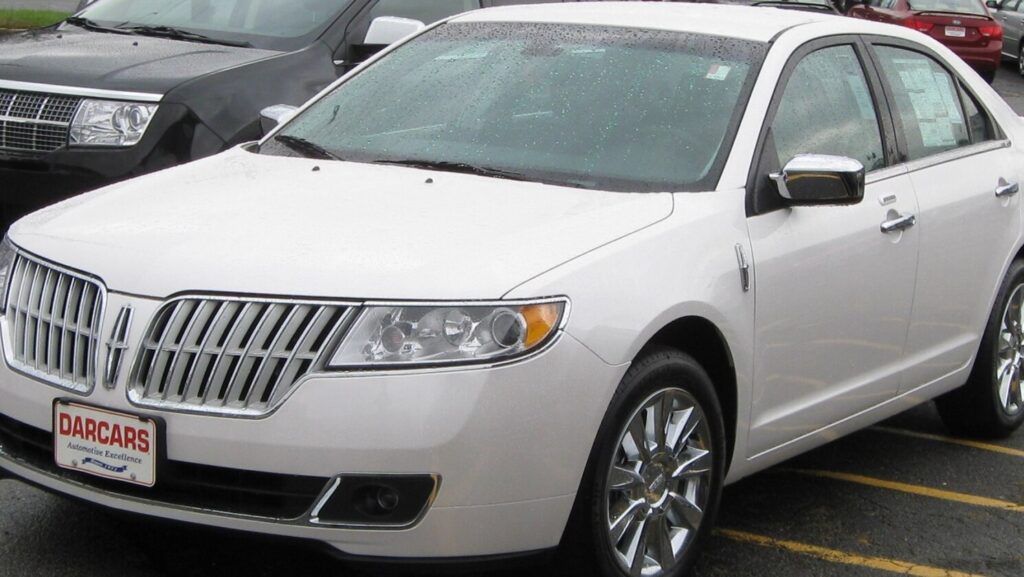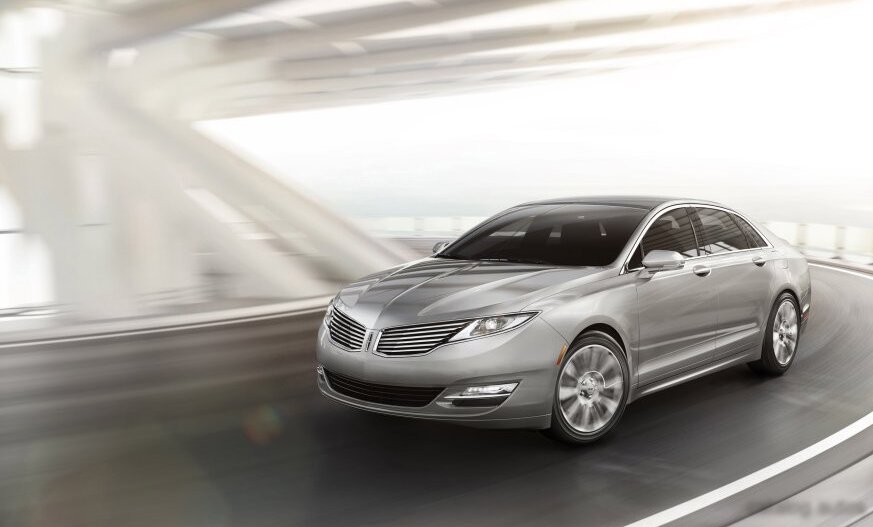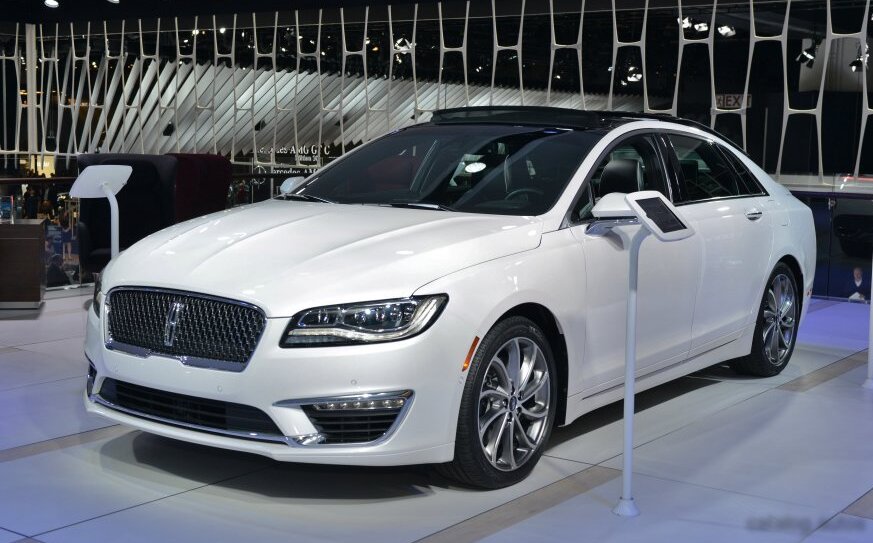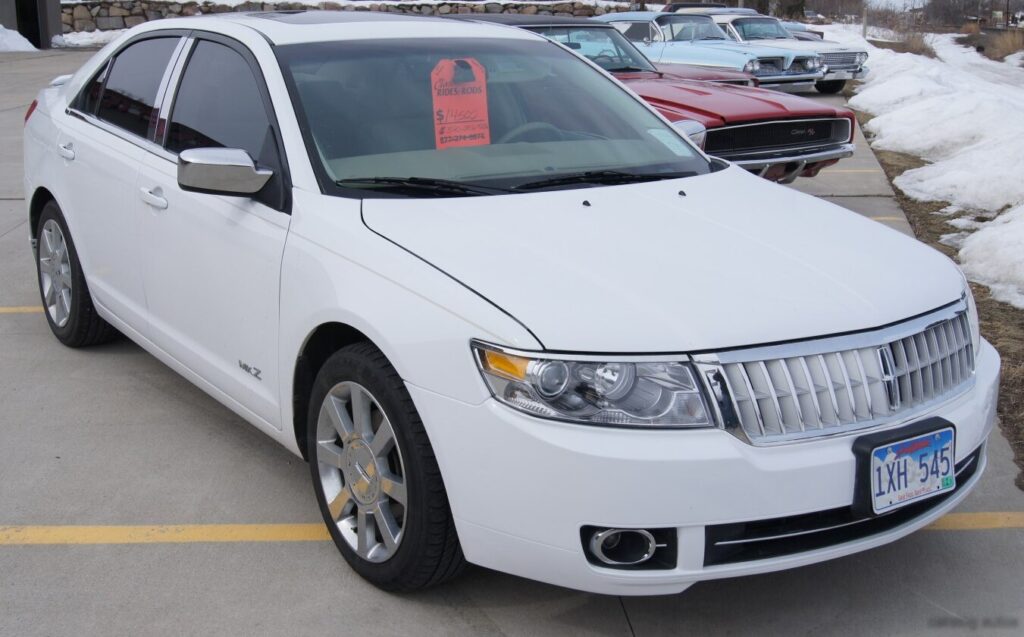
The Lincoln MKZ, first introduced for the 2006 model year, represented a significant departure for the brand, moving away from traditional, boxy designs towards a more contemporary and European-influenced aesthetic. The first generation MKZ (2006-2009), internally designated as the MKZ I, was built on the Ford CD2 platform, shared with the Ford Fusion and Mercury Milan. The 3.5L V6 with an automatic transmission was a key offering in the lineup, positioned as a step up from the base 4-cylinder engine, providing a balance of performance and luxury. It aimed to attract buyers seeking a comfortable and well-equipped mid-size sedan with a more premium feel than its Ford and Mercury siblings.
Technical Specifications
| Brand | Lincoln |
| Model | MKZ |
| Generation | MKZ I |
| Type (Engine) | 3.5 V6 24V (263 Hp) Automatic |
| Start of production | 2006 |
| End of production | 2009 |
| Powertrain Architecture | Internal Combustion engine |
| Body type | Sedan |
| Seats | 5 |
| Doors | 4 |
| Fuel consumption (urban) | 12.4 l/100 km (19 US mpg) |
| Fuel consumption (extra urban) | 8.7 l/100 km (27 US mpg) |
| Fuel consumption (combined) | 10.7 l/100 km (22 US mpg) |
| Fuel Type | Petrol (Gasoline) |
| Acceleration 0 – 100 km/h | 8 sec |
| Acceleration 0 – 62 mph | 8 sec |
| Acceleration 0 – 60 mph | 7.6 sec |
| Maximum speed | 204 km/h (126.76 mph) |
| Weight-to-power ratio | 6 kg/Hp |
| Weight-to-torque ratio | 4.7 kg/Nm |
| Power | 263 Hp @ 6250 rpm |
| Torque | 337 Nm @ 4500 rpm (248.56 lb.-ft. @ 4500 rpm) |
| Engine layout | Front, Transverse |
| Engine Model/Code | Cyclone |
| Engine displacement | 3496 cm3 (213.34 cu. in.) |
| Number of cylinders | 6 |
| Engine configuration | V-engine |
| Cylinder Bore | 92.5 mm (3.64 in.) |
| Piston Stroke | 86.7 mm (3.41 in.) |
| Compression ratio | 10.3:1 |
| Number of valves per cylinder | 4 |
| Fuel injection system | Multi-port manifold injection |
| Engine aspiration | Naturally aspirated engine |
| Valvetrain | DOHC, i-VCT |
| Engine oil capacity | 5.2 l (5.49 US qt | 4.58 UK qt) |
| Coolant | 9.5 l (10.04 US qt | 8.36 UK qt) |
| Kerb Weight | 1574 kg (3470.08 lbs.) |
| Trunk (boot) space – maximum | 447 l (15.79 cu. ft.) |
| Fuel tank capacity | 76 l (20.08 US gal | 16.72 UK gal) |
| Length | 4839 mm (190.51 in.) |
| Width | 1834 mm (72.2 in.) |
| Height | 1453 mm (57.2 in.) |
| Wheelbase | 2728 mm (107.4 in.) |
| Front track | 1565 mm (61.61 in.) |
| Rear (Back) track | 1557 mm (61.3 in.) |
| Drag coefficient (Cd) | 0.32 |
| Minimum turning circle | 12.19 m (39.99 ft.) |
| Drivetrain Architecture | Front wheel drive |
| Number of gears | 6 |
| Gearbox type | Automatic transmission |
| Front suspension | Independent coil spring |
| Rear suspension | Independent multi-link suspension |
| Front brakes | Ventilated discs |
| Rear brakes | Disc |
| Assisting systems | ABS (Anti-lock braking system) |
| Steering type | Steering rack and pinion |
| Tires size | 225/50 R17 |
| Wheel rims size | 8.0J x 17 |
Powertrain & Engine Architecture
The heart of the MKZ 3.5 was Ford’s Cyclone 3.5-liter V6 engine. This engine, part of Ford’s Duratec family, featured a 60-degree V-angle, dual overhead camshafts (DOHC) with variable valve timing (i-VCT) on both intake and exhaust valves, and a multi-port fuel injection system. The engine produced 263 horsepower at 6250 rpm and 248 lb-ft of torque at 4500 rpm. The automatic transmission was a 6-speed unit, designed to provide smooth shifts and optimize fuel efficiency. This transmission was a crucial component in delivering a refined driving experience, particularly for buyers prioritizing comfort over outright performance. The engine code is often associated with the Duratec 35, a widely used and generally reliable powerplant within the Ford family.
Driving Characteristics
The 3.5L V6 automatic MKZ offered a comfortable and capable driving experience. Acceleration from 0-60 mph was achieved in around 7.6 seconds, making it reasonably quick for its class. The automatic transmission, while smooth, wasn’t particularly sporty. Gear ratios were tuned for relaxed cruising and fuel economy rather than aggressive acceleration. Compared to the base 4-cylinder model, the V6 provided significantly more power and responsiveness, making highway merging and passing maneuvers much easier. However, it didn’t offer the same level of engagement as the optional manual transmission available on some trims. The front-wheel-drive configuration contributed to predictable handling, but lacked the dynamic capabilities of all-wheel-drive systems found in some competitors.
Equipment & Trim Levels
The 3.5L V6 automatic trim typically included features such as leather upholstery, power-adjustable front seats, a premium audio system, and automatic climate control. Optional extras included a navigation system, sunroof, and upgraded wheels. The MKZ aimed for a more luxurious feel than the Fusion and Milan, with a focus on interior refinement and comfort. Standard safety features included ABS, traction control, and multiple airbags. The MKZ’s interior design was generally well-received, offering a comfortable and spacious cabin for both front and rear passengers.
Chassis & Braking
The MKZ I utilized an independent coil spring suspension in the front and an independent multi-link suspension in the rear, providing a comfortable ride quality. Front brakes were ventilated discs, while rear brakes were solid discs. ABS was standard, enhancing braking performance and stability. The suspension tuning prioritized ride comfort over sporty handling, making it well-suited for everyday driving. Stabilizer bars were included to reduce body roll during cornering, but the overall handling characteristics were geared towards a relaxed and comfortable experience.
Market Reception & Comparison
Critics generally praised the MKZ for its stylish design, comfortable ride, and well-appointed interior. The 3.5L V6 engine was considered a strong performer, providing ample power for most driving situations. However, some reviewers noted that the handling wasn’t as sharp as some competitors, and the automatic transmission could feel somewhat sluggish. Fuel economy was average for its class, with combined ratings around 22 mpg. Compared to the base 4-cylinder model, the V6 offered a significant performance upgrade, but at the cost of increased fuel consumption. Compared to the Fusion and Milan, the MKZ offered a more upscale interior and a more refined driving experience, justifying its higher price point.
Legacy
The Lincoln MKZ I 3.5L V6 automatic, while not a groundbreaking vehicle, played an important role in Lincoln’s attempt to modernize its image and attract a new generation of buyers. The Cyclone V6 engine proved to be a reliable powerplant, and many examples remain on the road today. The 6-speed automatic transmission, while not the most advanced, provided smooth and dependable operation. In the used car market, these MKZs are often sought after for their comfortable ride, spacious interior, and relatively affordable price. Maintenance is generally straightforward, with readily available parts. However, like any vehicle of this age, potential buyers should be aware of potential issues such as worn suspension components and aging electronics.