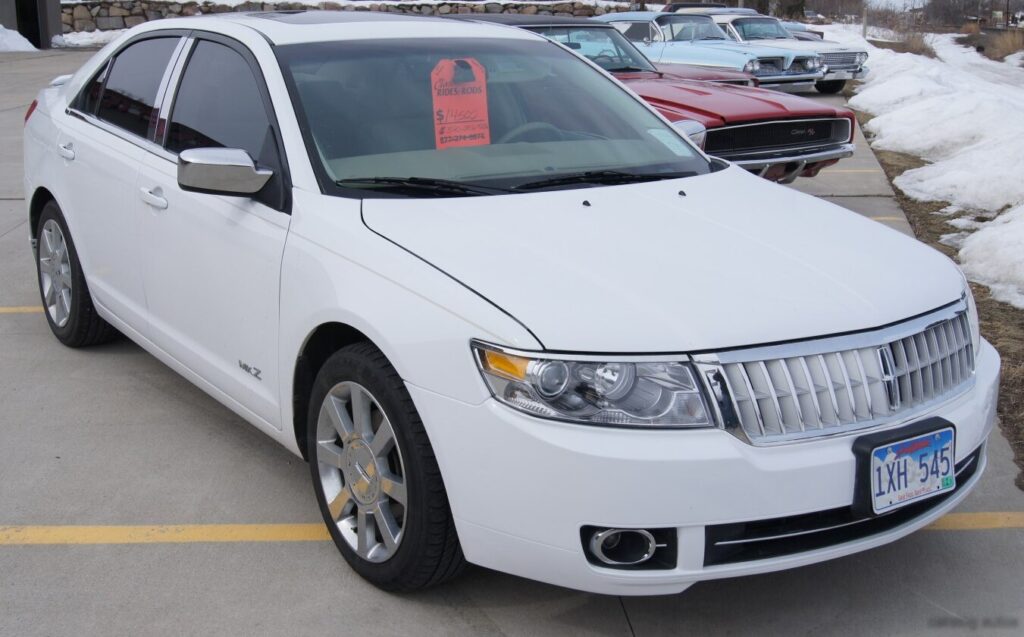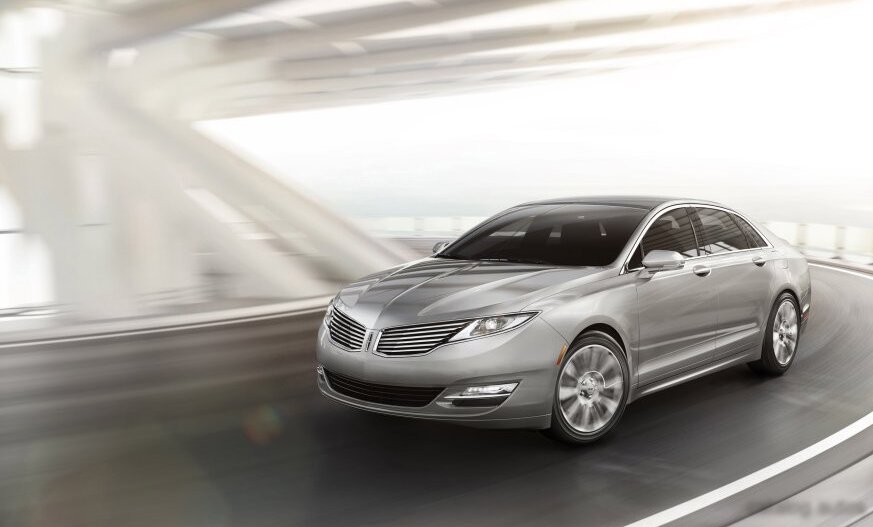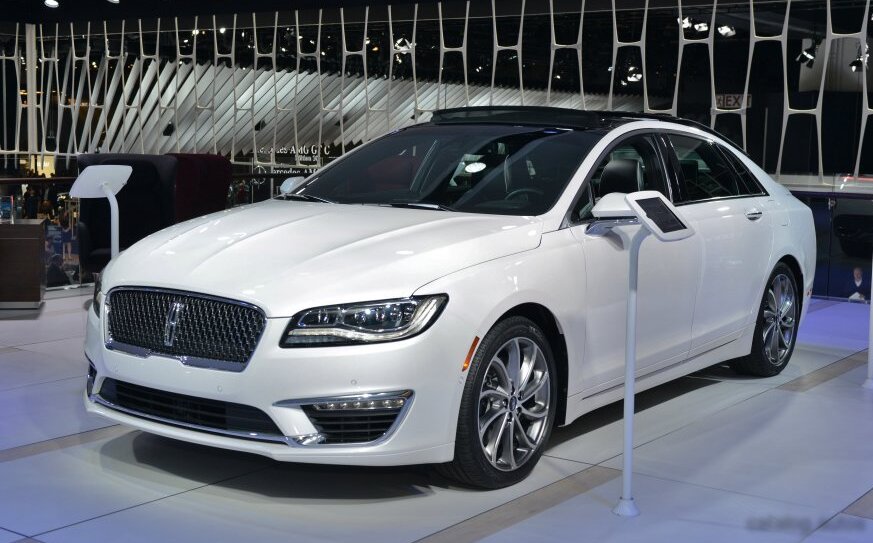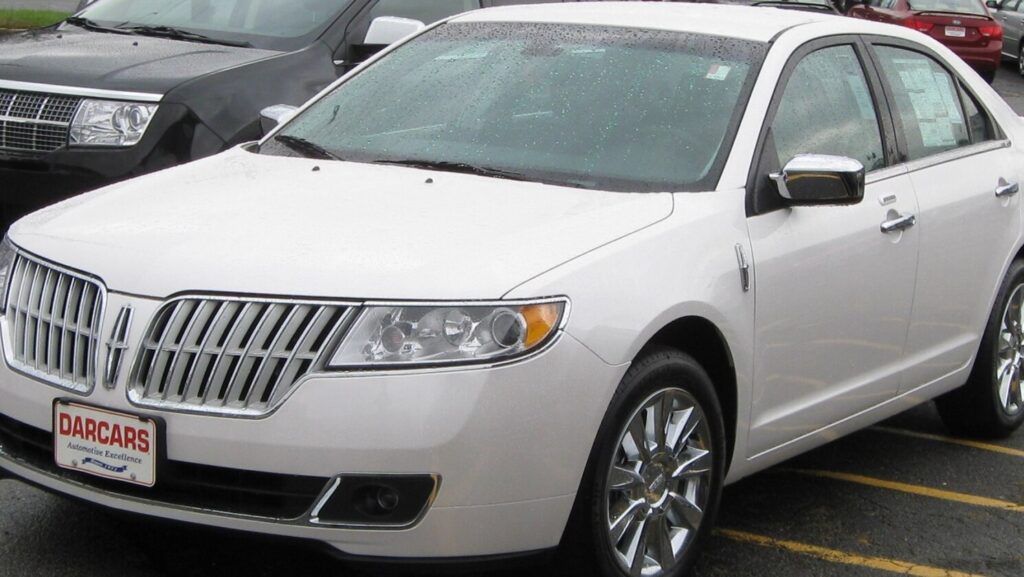
The Lincoln MKZ, specifically the facelifted first generation produced from 2011 to 2012, represented Lincoln’s entry into the burgeoning mid-size luxury hybrid market. This variant, powered by a 2.5-liter four-cylinder engine paired with an electric motor and an eCVT transmission, aimed to deliver a balance of fuel efficiency and refined driving experience. Positioned as a more economical alternative to the standard 3.5-liter V6 MKZ, the Hybrid model targeted buyers prioritizing fuel savings and environmental consciousness within the luxury segment. It was built on the Ford CD3 platform, shared with the Ford Fusion and Mercury Milan, but distinguished itself through unique styling cues and a more upscale interior.
Technical Specifications
| Brand | Lincoln |
| Model | MKZ |
| Generation | MKZ I (facelift 2010) |
| Type (Engine) | 2.5 (191 Hp) Hybrid eCVT |
| Start of production | 2011 |
| End of production | 2012 |
| Powertrain Architecture | FHEV (Full Hybrid Electric Vehicle) |
| Body type | Sedan |
| Seats | 5 |
| Doors | 4 |
| Fuel consumption (urban) | 5.7 l/100 km (41.3 US mpg, 49.6 UK mpg, 17.5 km/l) |
| Fuel consumption (extra urban) | 6.5 l/100 km (36.2 US mpg, 43.5 UK mpg, 15.4 km/l) |
| Fuel consumption (combined) | 6 l/100 km (39.2 US mpg, 47.1 UK mpg, 16.7 km/l) |
| Fuel Type | Petrol (Gasoline) |
| Weight-to-power ratio | 8.9 kg/Hp, 112.2 Hp/tonne |
| Weight-to-torque ratio | 9.3 kg/Nm, 107.5 Nm/tonne |
| Gross battery capacity | 1.4 kWh |
| Electric motor power | 106 Hp @ 6500 rpm |
| System power | 191 Hp @ 6000 rpm |
| Internal combustion engine power | 156 Hp @ 6000 rpm |
| Power per litre | 62.7 Hp/l |
| Torque | 183 Nm @ 2250 rpm (134.97 lb.-ft. @ 2250 rpm) |
| Engine layout | Front, Transverse |
| Engine Model/Code | Duratec |
| Engine displacement | 2488 cm3 (151.83 cu. in.) |
| Number of cylinders | 4 |
| Engine configuration | Inline |
| Cylinder Bore | 89 mm (3.5 in.) |
| Piston Stroke | 100 mm (3.94 in.) |
| Compression ratio | 12.3:1 |
| Number of valves per cylinder | 4 |
| Fuel injection system | Multi-port manifold injection |
| Valvetrain | DOHC |
| Engine oil capacity | 4.7 l (4.97 US qt | 4.14 UK qt) |
| Coolant | 8.8 l (9.3 US qt | 7.74 UK qt) |
| Kerb Weight | 1702 kg (3752.27 lbs.) |
| Trunk (boot) space – maximum | 334 l (11.8 cu. ft.) |
| Fuel tank capacity | 66 l (17.44 US gal | 14.52 UK gal) |
| Length | 4821 mm (189.8 in.) |
| Width | 1834 mm (72.2 in.) |
| Height | 1445 mm (56.89 in.) |
| Wheelbase | 2728 mm (107.4 in.) |
| Front track | 1557 mm (61.3 in.) |
| Rear (Back) track | 1549 mm (60.98 in.) |
| Drag coefficient (Cd) | 0.32 |
| Minimum turning circle (turning diameter) | 11.43 m (37.5 ft.) |
| Drive wheel | Front wheel drive |
| Number of gears and type of gearbox | automatic transmission eCVT |
| Front suspension | Independent coil spring |
| Rear suspension | Independent multi-link suspension |
| Front brakes | Ventilated discs |
| Rear brakes | Disc |
| Assisting systems | ABS (Anti-lock braking system) |
| Steering type | Steering rack and pinion |
| Tires size | 225/50 R17 V |
| Wheel rims size | 17 |
Powertrain & Engine Architecture
The heart of the 2011-2012 Lincoln MKZ Hybrid is a 2.5-liter Duratec inline-four engine. This engine, internally designated as the 302A, utilizes multi-port fuel injection and a double overhead camshaft (DOHC) valvetrain with four valves per cylinder. The high 12.3:1 compression ratio contributes to its efficiency. The engine produces 156 horsepower and 183 Nm (135 lb-ft) of torque. However, the system’s total output is 191 horsepower, thanks to the addition of a 106-horsepower electric motor. The electric motor draws power from a 1.4 kWh nickel-metal hydride battery pack. The powertrain employs a planetary gearset acting as an eCVT (electronically controlled continuously variable transmission). This system seamlessly blends power from the gasoline engine and electric motor, optimizing for fuel economy or performance as needed. The eCVT lacks traditional gears, providing a smooth and linear acceleration experience.
Driving Characteristics
The MKZ Hybrid’s driving experience is geared towards comfort and efficiency. The eCVT provides smooth, almost seamless acceleration, though it lacks the responsiveness of a traditional automatic transmission. The combined output of 191 horsepower is adequate for everyday driving, but it doesn’t offer the brisk acceleration of the 3.5-liter V6 MKZ. The electric motor provides instant torque, which helps with initial acceleration and city driving. The hybrid system prioritizes electric-only operation at low speeds, resulting in near-silent operation and excellent fuel economy in urban environments. The steering is light and precise, and the suspension provides a comfortable ride, absorbing bumps and imperfections in the road. Compared to the V6 model, the Hybrid feels less powerful but offers significantly better fuel economy.
Equipment & Trim Levels
The MKZ Hybrid was generally well-equipped, even in its base form. Standard features included leather upholstery, dual-zone automatic climate control, a premium audio system, and a suite of safety features like ABS, traction control, and multiple airbags. Available options included a navigation system, a rear-view camera, and upgraded interior trim materials. The Hybrid trim was often positioned as a step above the base MKZ in terms of standard features, reflecting its higher price point and focus on technology. Exterior styling cues included unique grille and wheel designs to differentiate it from the standard MKZ.
Chassis & Braking
The MKZ Hybrid utilizes an independent coil spring suspension in the front and an independent multi-link suspension in the rear, providing a comfortable and controlled ride. The front brakes are ventilated discs, while the rear brakes are solid discs. ABS (Anti-lock Braking System) is standard, enhancing safety and control during emergency braking situations. The chassis was tuned to balance ride comfort with handling stability, prioritizing a smooth and refined driving experience over sporty performance. The weight distribution is slightly affected by the battery pack, but the suspension is designed to compensate for this.
Market Reception & Comparison
The Lincoln MKZ Hybrid was generally well-received by critics, who praised its fuel efficiency and comfortable ride. However, some reviewers noted its lack of sporty handling and its relatively high price compared to other mid-size hybrids. Compared to the standard MKZ, the Hybrid offered significantly better fuel economy but less overall performance. Against competitors like the Lexus ES 300h and the Acura TLX Hybrid, the MKZ Hybrid offered a competitive blend of features and fuel efficiency, but it often lagged behind in terms of brand prestige and driving dynamics. Reliability reports were generally positive, with few major issues reported with the hybrid powertrain.
Legacy
The Lincoln MKZ Hybrid represented an important step for Lincoln in embracing hybrid technology and appealing to environmentally conscious luxury buyers. While the first generation MKZ was ultimately discontinued, the hybrid powertrain technology paved the way for future Lincoln hybrid and electric vehicles. On the used car market, the 2011-2012 MKZ Hybrid remains a relatively affordable option for those seeking a comfortable and fuel-efficient luxury sedan. The Duratec engine and eCVT transmission have proven to be reasonably reliable, although regular maintenance is crucial to ensure long-term durability. The battery pack, while generally lasting a long time, may eventually require replacement, which can be a significant expense.