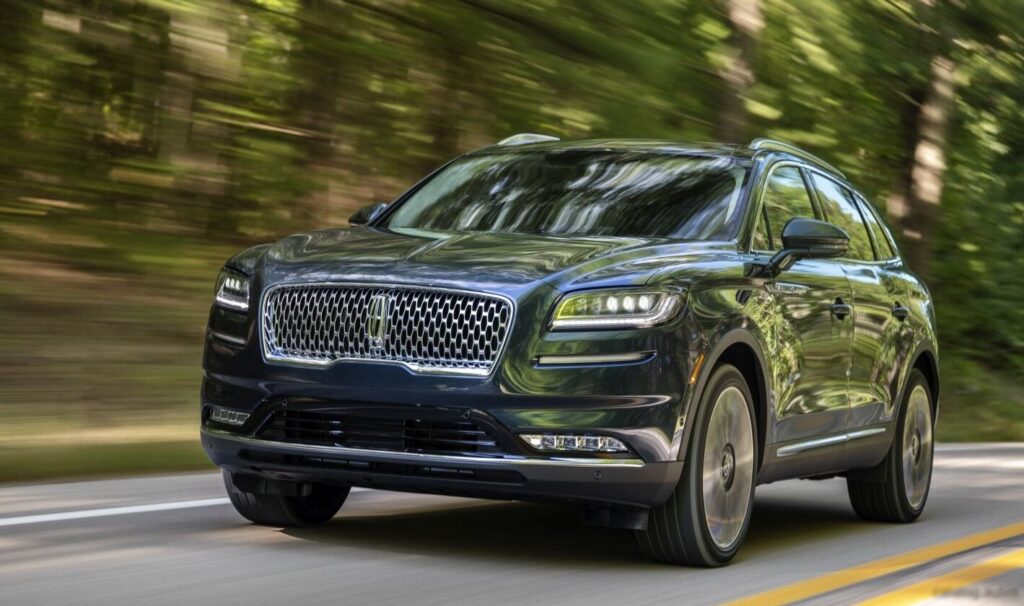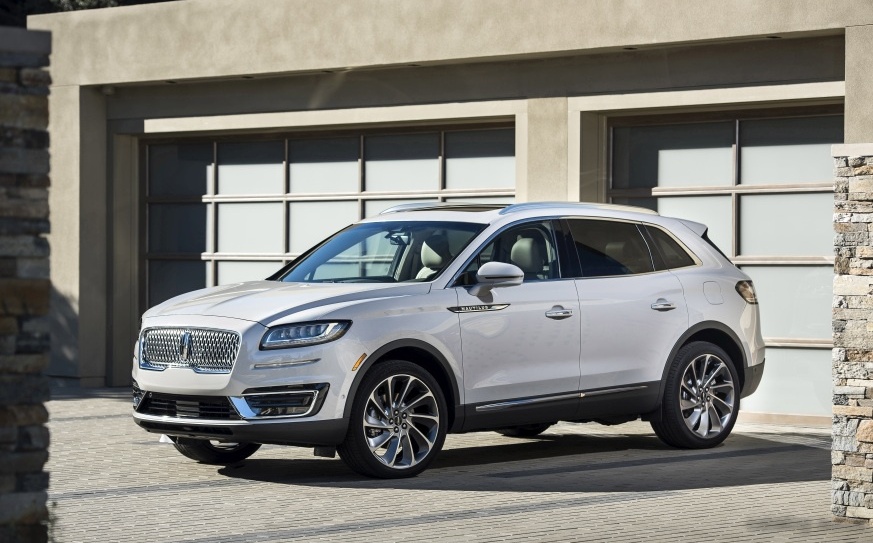
The Lincoln Nautilus I 2.0 (250 Hp) AWD Automatic represents a significant entry in the mid-size luxury SUV segment for the American brand. Produced from 2018 through November 2020, this variant occupied a key position within the first generation (Nautilus I) of the vehicle, which itself was a redesign of the previous MKX model. Positioned as a mainstream offering within the Nautilus lineup, it aimed to balance performance, fuel efficiency, and luxury features, appealing to a broad range of buyers seeking a comfortable and capable SUV. The Nautilus I was built on the CD4 platform, shared with the Ford Explorer and other Ford Motor Company vehicles.
Technical Specifications
| Brand | Lincoln |
| Model | Nautilus |
| Generation | Nautilus I |
| Type (Engine) | 2.0 (250 Hp) AWD Automatic |
| Start of production | 2018 |
| End of production | November, 2020 |
| Powertrain Architecture | Internal Combustion engine |
| Body type | SUV |
| Seats | 5 |
| Doors | 5 |
| Fuel consumption (urban) | 11.8 l/100 km (19.9 US mpg) |
| Fuel consumption (extra urban) | 9.4 l/100 km (25 US mpg) |
| Fuel consumption (combined) | 10.7 l/100 km (22 US mpg) |
| Fuel Type | Petrol (Gasoline) |
| Weight-to-power ratio | 7.8 kg/Hp (128 Hp/tonne) |
| Weight-to-torque ratio | 5.1 kg/Nm (194.6 Nm/tonne) |
| Power | 250 Hp @ 5500 rpm |
| Torque | 380 Nm @ 3000 rpm (280.27 lb.-ft. @ 3000 rpm) |
| Engine layout | Front, Transverse |
| Engine Model/Code | EcoBoost |
| Number of cylinders | 4 |
| Engine configuration | Inline |
| Cylinder Bore | 86.4 mm (3.4 in.) |
| Piston Stroke | 83.1 mm (3.27 in.) |
| Compression ratio | 10:1 |
| Number of valves per cylinder | 4 |
| Fuel injection system | Direct injection |
| Engine aspiration | Turbocharger, Intercooler |
| Valvetrain | DOHC |
| Engine oil capacity | 5.2 l (5.49 US qt | 4.58 UK qt) |
| Coolant | 9.2 l (9.72 US qt | 8.09 UK qt) |
| Kerb Weight | 1953 kg (4305.63 lbs.) |
| Trunk (boot) space – minimum | 1053 l (37.19 cu. ft.) |
| Trunk (boot) space – maximum | 1948 l (68.79 cu. ft.) |
| Fuel tank capacity | 68 l (17.96 US gal | 14.96 UK gal) |
| Permitted trailer load with brakes (12%) | 1588 kg (3500.94 lbs.) |
| Length | 4826 mm (190 in.) |
| Width with mirrors folded | 1999 mm (78.7 in.) |
| Width including mirrors | 2187 mm (86.1 in.) |
| Height | 1681 mm (66.18 in.) |
| Wheelbase | 2850 mm (112.2 in.) |
| Front track | 1646 mm (64.8 in.) |
| Rear (Back) track | 1643 mm (64.69 in.) |
| Minimum turning circle (turning diameter) | 11.9 m (39.04 ft.) |
| Drive wheel | All wheel drive (4×4) |
| Number of gears and type of gearbox | 8 gears, automatic transmission SelectShift |
| Front suspension | Independent, type McPherson with coil spring and anti-roll bar |
| Rear suspension | Independent multi-link spring suspension with stabilizer |
| Front brakes | Ventilated discs |
| Rear brakes | Disc |
| Assisting systems | ABS (Anti-lock braking system) |
| Steering type | Steering rack and pinion |
| Power steering | Electric Steering |
| Tires size | 235/60 R18; 245/60 R18 |
| Wheel rims size | 18 |
Powertrain & Engine Architecture
The heart of the Nautilus I 2.0 AWD is Ford’s 2.0-liter EcoBoost inline-four cylinder engine. This engine, part of Ford’s EcoBoost family, utilizes direct fuel injection and a single turbocharger with an intercooler to deliver a balance of power and efficiency. The engine code is typically associated with the Ford engine family, and variations exist depending on the specific calibration. The 2.0L EcoBoost produces 250 horsepower at 5500 rpm and 280 lb-ft of torque at 3000 rpm. The engine features a double overhead camshaft (DOHC) valvetrain with four valves per cylinder, contributing to its responsiveness. Paired with this engine is an eight-speed automatic transmission, marketed by Lincoln as SelectShift. This transmission offers smooth shifting and allows the engine to operate in its optimal power band. The all-wheel-drive system is primarily front-wheel drive, engaging the rear wheels as needed for enhanced traction.
Driving Characteristics
The 2.0L EcoBoost engine, coupled with the eight-speed automatic, provides adequate performance for everyday driving. While not as quick as the optional 3.0L V6 engine offered in the Nautilus, the 2.0L delivers sufficient power for merging onto highways and passing maneuvers. The automatic transmission is well-tuned, providing smooth and predictable shifts. The gear ratios are optimized for both fuel economy and responsiveness. Compared to manual transmission options (not offered on this variant), the automatic prioritizes convenience and ease of use. The all-wheel-drive system enhances stability and traction, particularly in inclement weather conditions. However, drivers seeking a more engaging driving experience might find the 2.0L/automatic combination less sporty than higher-output trims.
Equipment & Trim Levels
The Nautilus I 2.0 AWD Automatic typically came standard with a comprehensive list of features, reflecting its luxury positioning. Standard equipment included leather upholstery, a power-adjustable driver’s seat, a rearview camera, and a suite of driver-assistance technologies such as blind-spot monitoring and lane-keeping assist. Infotainment was provided by Lincoln’s SYNC 3 system, featuring an 8-inch touchscreen display. Optional extras included a panoramic sunroof, premium audio system, navigation, and adaptive cruise control. Trim levels varied, but the 2.0L AWD Automatic was often available in Reserve and Black Label trims, offering progressively more luxurious appointments and features.
Chassis & Braking
The Nautilus I utilizes an independent suspension system at all four corners. The front suspension employs a McPherson strut design with coil springs and an anti-roll bar, while the rear suspension features a multi-link setup with a stabilizer bar. This suspension configuration provides a comfortable ride quality, absorbing bumps and irregularities in the road surface effectively. Braking duties are handled by ventilated discs at the front and solid discs at the rear. The vehicle is equipped with an anti-lock braking system (ABS) and electronic stability control to enhance safety. Steering is provided by an electric power steering system, offering a light and responsive feel.
Market Reception & Comparison
The Lincoln Nautilus I 2.0 AWD Automatic was generally well-received by automotive critics. Reviewers praised its comfortable ride, spacious interior, and user-friendly technology. However, some critics noted that the 2.0L engine could feel underpowered when fully loaded or when tackling steep inclines. Compared to the 3.0L V6 Nautilus, the 2.0L offered better fuel economy, achieving around 22 mpg combined. In terms of reliability, the 2.0L EcoBoost engine has proven to be generally reliable, although some owners have reported issues with the turbocharger and fuel injectors. Compared to competitors like the Acura RDX and BMW X3, the Nautilus offered a more comfortable ride and a more spacious interior, but lacked the same level of sporty handling.
Legacy
The Lincoln Nautilus I 2.0 AWD Automatic remains a popular choice in the used car market. Its combination of luxury, comfort, and reasonable fuel economy makes it an attractive option for buyers seeking a mid-size SUV. The 2.0L EcoBoost engine, while not the most powerful option, has proven to be relatively durable with proper maintenance. Regular oil changes and timely servicing of the turbocharger are crucial for long-term reliability. As a representative of Lincoln’s attempt to re-establish itself in the luxury SUV segment, the Nautilus I 2.0 AWD Automatic holds a significant place in the brand’s recent history.