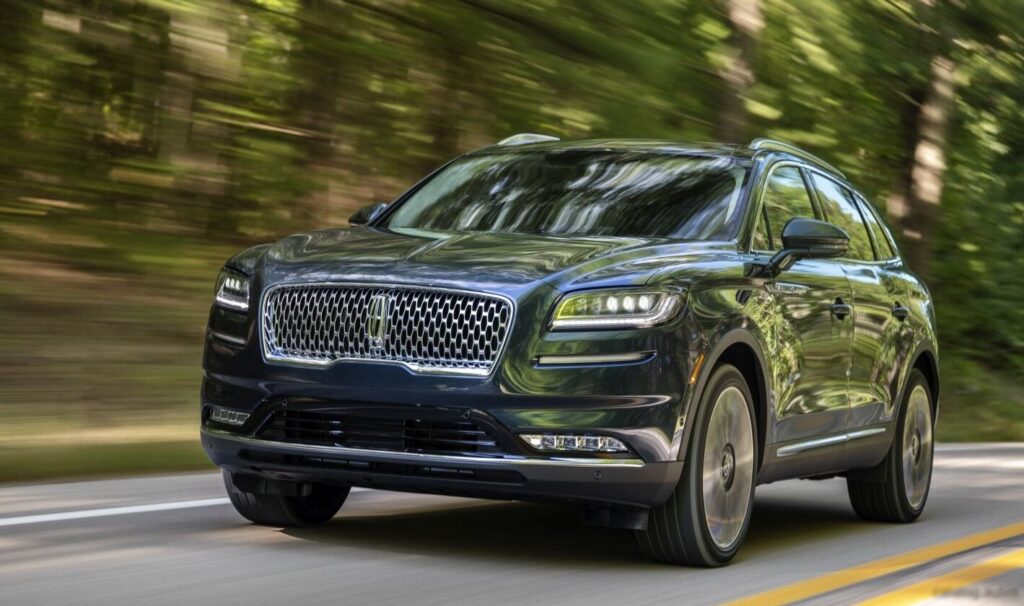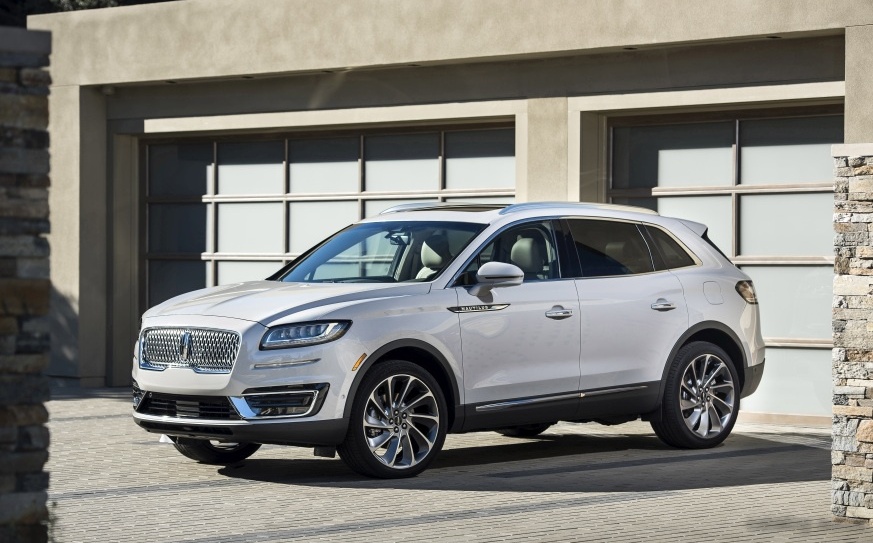
The Lincoln Nautilus I 2.7 V6 (335 Hp) Automatic represents a significant offering in the mid-size luxury SUV segment. Produced from 2018 through November 2020, this variant occupied a key position within the first generation (Nautilus I) of the Nautilus, which itself replaced the MKX. Positioned as a premium trim, it aimed to deliver a balance of performance, comfort, and technology for the North American market. The Nautilus I was built on the Ford D4 platform, shared with the Ford Explorer and other Ford Motor Company vehicles.
Technical Specifications
| Brand | Lincoln |
| Model | Nautilus |
| Generation | Nautilus I |
| Type (Engine) | 2.7 V6 (335 Hp) Automatic |
| Start of production | 2018 |
| End of production | November, 2020 |
| Powertrain Architecture | Internal Combustion engine |
| Body type | SUV |
| Seats | 5 |
| Doors | 5 |
| Fuel consumption (urban) | 11.8 l/100 km (19.9 US mpg) |
| Fuel consumption (extra urban) | 8.7 l/100 km (27 US mpg) |
| Fuel consumption (combined) | 10.7 l/100 km (22 US mpg) |
| Fuel Type | Petrol (Gasoline) |
| Weight-to-power ratio | 5.6 kg/Hp, 178.3 Hp/tonne |
| Weight-to-torque ratio | 3.6 kg/Nm, 274.1 Nm/tonne |
| Power | 335 Hp @ 5500 rpm |
| Torque | 515 Nm @ 3250 rpm (379.84 lb.-ft. @ 3250 rpm) |
| Engine layout | Front, Transverse |
| Engine Model/Code | EcoBoost |
| Number of cylinders | 6 |
| Engine configuration | V-engine |
| Cylinder Bore | 83.8 mm (3.3 in) |
| Piston Stroke | 83.8 mm (3.3 in) |
| Compression ratio | 10:1 |
| Number of valves per cylinder | 4 |
| Fuel injection system | Direct injection |
| Engine aspiration | Twin-Turbo, Intercooler |
| Valvetrain | DOHC |
| Engine oil capacity | 5.7 l (6.02 US qt | 5.02 UK qt) |
| Coolant capacity | 11.8 l (12.47 US qt | 10.38 UK qt) |
| Kerb Weight | 1879 kg (4142.49 lbs) |
| Trunk (boot) space – minimum | 1053 l (37.19 cu. ft) |
| Trunk (boot) space – maximum | 1948 l (68.79 cu. ft) |
| Fuel tank capacity | 68 l (17.96 US gal | 14.96 UK gal) |
| Permitted trailer load with brakes (12%) | 1588 kg (3500.94 lbs) |
| Length | 4826 mm (190 in) |
| Width with mirrors folded | 1999 mm (78.7 in) |
| Width including mirrors | 2187 mm (86.1 in) |
| Height | 1681 mm (66.18 in) |
| Wheelbase | 2850 mm (112.2 in) |
| Front track | 1646 mm (64.8 in) |
| Rear (Back) track | 1643 mm (64.69 in) |
| Minimum turning circle | 11.9 m (39.04 ft) |
| Drivetrain Architecture | Front wheel drive |
| Number of gears and type of gearbox | 8 gears, automatic transmission SelectShift |
| Front suspension | Independent, type McPherson with coil spring and anti-roll bar |
| Rear suspension | Independent multi-link spring suspension with stabilizer |
| Front brakes | Ventilated discs |
| Rear brakes | Disc |
| Assisting systems | ABS (Anti-lock braking system) |
| Steering type | Steering rack and pinion |
| Power steering | Electric Steering |
| Tires size | 245/50 R20; 265/40 R21 |
| Wheel rims size | 20; 21 |
Powertrain & Engine Architecture
The heart of the Nautilus I 2.7 V6 Automatic is Lincoln’s 2.7-liter EcoBoost V6 engine. This engine, part of Ford’s EcoBoost family, utilizes a twin-turbocharged configuration to deliver a substantial 335 horsepower and 380 lb-ft of torque. The engine employs direct fuel injection, maximizing combustion efficiency and power output. The valvetrain is a Double Overhead Camshaft (DOHC) design, contributing to precise valve control and improved engine breathing. The engine’s aluminum block and cylinder heads help to reduce weight. Paired with this engine is an eight-speed automatic transmission, marketed as SelectShift. This transmission offers smooth and responsive shifting, with the ability for the driver to manually select gears when desired. The transmission’s gear ratios are tuned to balance acceleration and fuel economy.
Driving Characteristics
The 2.7L EcoBoost V6 Automatic Nautilus delivers a noticeably more spirited driving experience compared to lower-trim models equipped with the 2.0L turbocharged four-cylinder. Acceleration is brisk, and the engine provides ample power for merging onto highways and overtaking other vehicles. The eight-speed automatic transmission contributes to this performance, offering quick and seamless gear changes. While not a sports SUV, the Nautilus I 2.7 V6 provides a confident and composed ride. The front-wheel-drive configuration offers predictable handling, and the suspension effectively absorbs bumps and imperfections in the road. Compared to all-wheel-drive variants, the front-wheel-drive model offers slightly better fuel economy, but sacrifices some traction in inclement weather.
Equipment & Trim Levels
The Nautilus I 2.7 V6 Automatic typically came well-equipped, reflecting its position as a premium trim. Standard features often included leather upholstery, heated and ventilated front seats, a power-adjustable driver’s seat with memory function, a premium sound system, and a large touchscreen infotainment system with navigation. Available options included a panoramic sunroof, adaptive cruise control, a 360-degree camera system, and advanced safety features like lane-keeping assist and automatic emergency braking. Interior color schemes varied, with options for light and dark leather finishes. Dashboard trim could be upgraded with wood or aluminum accents.
Chassis & Braking
The Nautilus I utilizes an independent McPherson strut front suspension and an independent multi-link rear suspension. This setup provides a comfortable ride and good handling characteristics. The front suspension incorporates a coil spring and anti-roll bar to reduce body roll during cornering. The rear suspension also features a stabilizer bar for enhanced stability. Braking duties are handled by ventilated discs at the front and solid discs at the rear. The vehicle is equipped with an Anti-lock Braking System (ABS) to prevent wheel lockup during hard braking. Electric power steering provides precise and responsive steering feel.
Market Reception & Comparison
The Lincoln Nautilus I 2.7 V6 Automatic was generally well-received by automotive critics. Reviewers praised its powerful engine, comfortable ride, and spacious interior. Fuel economy was considered adequate for its class, but not exceptional. Compared to competitors like the Acura RDX and BMW X3, the Nautilus offered a more luxurious and comfortable experience, but perhaps lacked the same level of sporty handling. The 2.7L EcoBoost engine offered a significant performance advantage over the base 2.0L engine, but came at a higher price point. Reliability reports have been mixed, with some owners reporting issues with the turbochargers and transmission, while others have experienced few problems.
Legacy
The Lincoln Nautilus I 2.7 V6 Automatic remains a popular choice in the used car market. Its combination of luxury, performance, and technology continues to appeal to buyers seeking a comfortable and capable mid-size SUV. The 2.7L EcoBoost engine, while potentially requiring more maintenance than naturally aspirated engines, is generally considered durable when properly maintained. Regular oil changes and timely servicing of the turbochargers are crucial for long-term reliability. The eight-speed automatic transmission has also proven to be relatively reliable, although some owners have reported occasional shifting issues. Overall, the Nautilus I 2.7 V6 Automatic represents a solid value proposition for buyers looking for a well-equipped and capable luxury SUV.