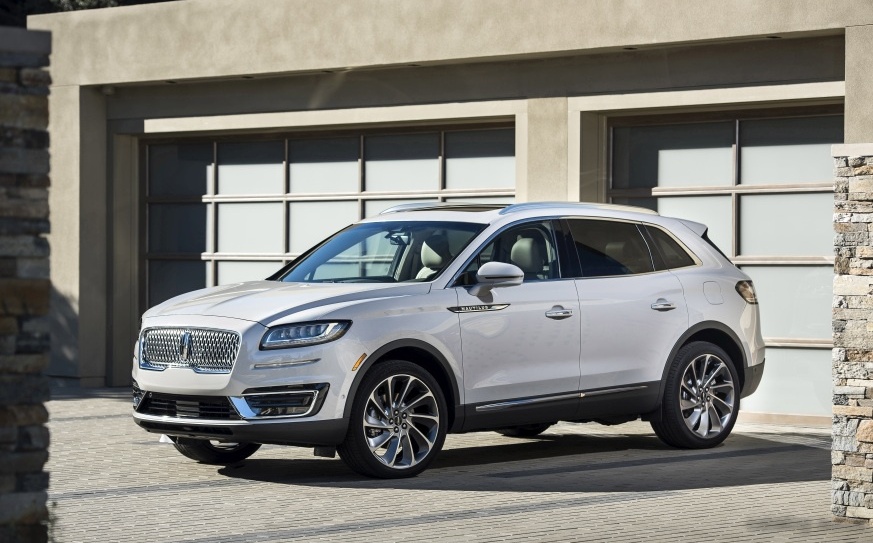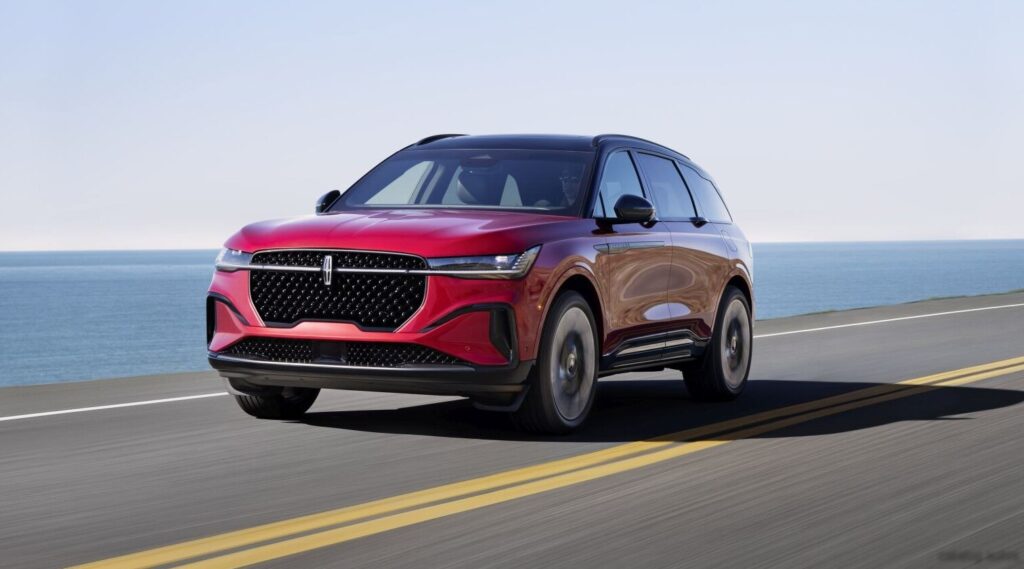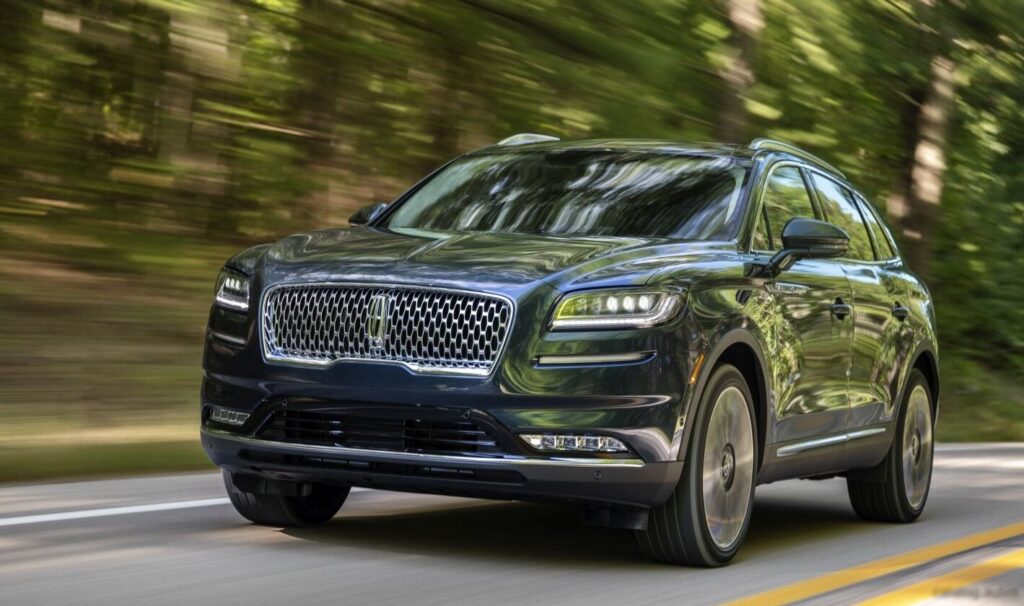
The Lincoln Nautilus I (facelift, 2020) 2.0L (250 hp) Automatic represents a mid-cycle refresh of the first-generation Nautilus, a mid-size luxury SUV positioned below the larger Aviator in Lincoln’s lineup. Introduced in November 2020 for the 2021 model year and continuing through April 2023, this variant aimed to provide a balance of performance, fuel efficiency, and luxury features. It served as a key offering in the competitive luxury crossover segment, appealing to buyers seeking a comfortable and well-equipped vehicle. The facelift brought updated styling, enhanced technology, and refinements to the driving experience, building upon the foundation laid by the original Nautilus introduced in 2018.
Technical Specifications
| Brand | Lincoln |
| Model | Nautilus |
| Generation | Nautilus I (facelift 2020) |
| Type (Engine) | 2.0 (250 Hp) Automatic |
| Start of production | November, 2020 |
| End of production | April, 2023 |
| Powertrain Architecture | Internal Combustion engine |
| Body type | SUV |
| Seats | 5 |
| Doors | 5 |
| Fuel consumption (urban) | 11.2 l/100 km (21 US mpg, 25.2 UK mpg, 8.9 km/l) |
| Fuel consumption (extra urban) | 9 l/100 km (26.1 US mpg, 31.4 UK mpg, 11.1 km/l) |
| Fuel consumption (combined) | 10.2 l/100 km (23.1 US mpg, 27.7 UK mpg, 9.8 km/l) |
| Fuel Type | Petrol (Gasoline) |
| Weight-to-power ratio | 7.6 kg/Hp, 132.3 Hp/tonne |
| Weight-to-torque ratio | 5 kg/Nm, 201.2 Nm/tonne |
| Power | 250 Hp @ 5500 rpm |
| Torque | 380 Nm @ 3000 rpm (280.27 lb.-ft. @ 3000 rpm) |
| Engine layout | Front, Transverse |
| Engine Model/Code | EcoBoost |
| Number of cylinders | 4 |
| Engine configuration | Inline |
| Cylinder Bore | 86.36 mm (3.4 in) |
| Piston Stroke | 83.06 mm (3.27 in) |
| Compression ratio | 10:1 |
| Number of valves per cylinder | 4 |
| Fuel injection system | Direct injection |
| Engine aspiration | Turbocharger, Intercooler |
| Valvetrain | DOHC |
| Engine oil capacity | 5.2 l (5.49 US qt | 4.58 UK qt) |
| Coolant | 9.2 l (9.72 US qt | 8.09 UK qt) |
| Kerb Weight | 1889 kg (4164.53 lbs) |
| Trunk (boot) space – minimum | 1053 l (37.19 cu. ft) |
| Trunk (boot) space – maximum | 1948 l (68.79 cu. ft) |
| Fuel tank capacity | 68 l (17.96 US gal | 14.96 UK gal) |
| Permitted trailer load with brakes (12%) | 1588 kg (3500.94 lbs) |
| Length | 4826 mm (190 in) |
| Width with mirrors folded | 1999 mm (78.7 in) |
| Width including mirrors | 2187 mm (86.1 in) |
| Height | 1681 mm (66.18 in) |
| Wheelbase | 2850 mm (112.2 in) |
| Front track | 1646 mm (64.8 in) |
| Rear (Back) track | 1643 mm (64.69 in) |
| Minimum turning circle (turning diameter) | 12 m (39.37 ft) |
| Drivetrain Architecture | The Internal combustion engine (ICE) drives the front wheels of the vehicle. |
| Drive wheel | Front wheel drive |
| Number of gears and type of gearbox | 8 gears, automatic transmission SelectShift |
| Front suspension | Independent, type McPherson with coil spring and anti-roll bar |
| Rear suspension | Independent multi-link spring suspension with stabilizer |
| Front brakes | Ventilated discs, 350×32 mm |
| Rear brakes | Disc, 316×11 mm |
| Assisting systems | ABS (Anti-lock braking system) |
| Steering type | Steering rack and pinion |
| Power steering | Electric Steering |
| Tires size | 245/60 R18 |
| Wheel rims size | 18 |
INTRODUCTION
The 2021-2023 Lincoln Nautilus 2.0L Automatic represents a significant offering in the mid-size luxury SUV segment. Built on the Ford CD4 platform (also known as the 1HX0/A3 platform), the Nautilus aimed to deliver a refined driving experience and a comfortable interior. The 2.0-liter EcoBoost engine with the eight-speed automatic transmission was positioned as the entry-level powertrain option, offering a balance between fuel economy and adequate performance for everyday driving. This variant was designed to attract buyers who prioritized comfort and features over outright speed, making it a popular choice for families and individuals seeking a luxurious and practical SUV.
Powertrain & Engine Architecture
At the heart of the Nautilus 2.0L is Ford’s 2.0-liter EcoBoost inline-four cylinder engine. This engine, designated with various internal codes depending on the specific year and market, utilizes direct fuel injection and a single turbocharger with an intercooler to deliver 250 horsepower at 5500 rpm and 380 Nm (280 lb-ft) of torque at 3000 rpm. The engine features a double overhead camshaft (DOHC) valvetrain with four valves per cylinder, contributing to its efficiency and responsiveness. The eight-speed automatic transmission, marketed as SelectShift, provides smooth and efficient gear changes. This transmission is designed to optimize fuel economy while still providing adequate acceleration. The powertrain incorporates a Start & Stop system to further enhance fuel efficiency by automatically shutting off the engine when the vehicle is stationary.
Driving Characteristics
The Nautilus 2.0L Automatic delivers a comfortable and composed driving experience. While not as sporty as higher-output variants, the 250 hp engine provides sufficient power for merging onto highways and passing other vehicles. The eight-speed automatic transmission is well-tuned, offering smooth shifts and responsive downshifts. The gear ratios are optimized for both fuel efficiency and everyday drivability. Compared to the optional 2.7-liter EcoBoost V6, the 2.0L offers less acceleration, but it compensates with improved fuel economy. The front-wheel-drive configuration contributes to a slightly more fuel-efficient driving experience, although all-wheel drive was available as an option. The suspension is tuned for comfort, absorbing bumps and imperfections in the road effectively.
Equipment & Trim Levels
The Nautilus 2.0L Automatic typically came standard with a generous array of features, including a leather-wrapped steering wheel, power-adjustable front seats, a touchscreen infotainment system with Apple CarPlay and Android Auto compatibility, and a suite of advanced safety features such as automatic emergency braking and lane-keeping assist. Higher trim levels offered upgrades such as premium leather upholstery, a panoramic sunroof, a navigation system, and a premium sound system. Optional extras included adaptive cruise control, a 360-degree camera system, and ventilated front seats. The interior design focused on creating a luxurious and comfortable environment, with attention paid to materials and craftsmanship.
Chassis & Braking
The Nautilus 2.0L utilizes an independent McPherson strut front suspension and an independent multi-link rear suspension, both featuring coil springs and anti-roll bars. This suspension setup provides a comfortable ride and stable handling. The braking system consists of ventilated discs at the front (350x32mm) and solid discs at the rear (316x11mm). The vehicle is equipped with an Anti-lock Braking System (ABS) and electronic stability control to enhance safety. The electric power steering provides precise and responsive steering feel.
Market Reception & Comparison
The Lincoln Nautilus 2.0L Automatic received generally positive reviews from critics, who praised its comfortable ride, spacious interior, and user-friendly technology. However, some reviewers noted that the 2.0-liter engine could feel underpowered when fully loaded or when tackling steep hills. Compared to competitors such as the Acura RDX, BMW X3, and Audi Q5, the Nautilus offered a more comfortable ride and a more spacious interior, but it lacked the sporty handling of some of its rivals. Fuel economy was competitive within its class, averaging around 23 mpg in combined driving. Reliability reports were generally favorable, with owners reporting few major issues.
Legacy
The Lincoln Nautilus 2.0L Automatic has proven to be a reliable and durable vehicle, with many examples still on the road today. The EcoBoost engine has a generally good reputation for longevity, although regular maintenance is essential. The eight-speed automatic transmission is also known for its reliability. In the used car market, the Nautilus 2.0L represents a good value proposition, offering a luxurious and well-equipped SUV at a competitive price. Its comfortable ride, spacious interior, and user-friendly technology continue to appeal to buyers seeking a practical and refined luxury crossover.