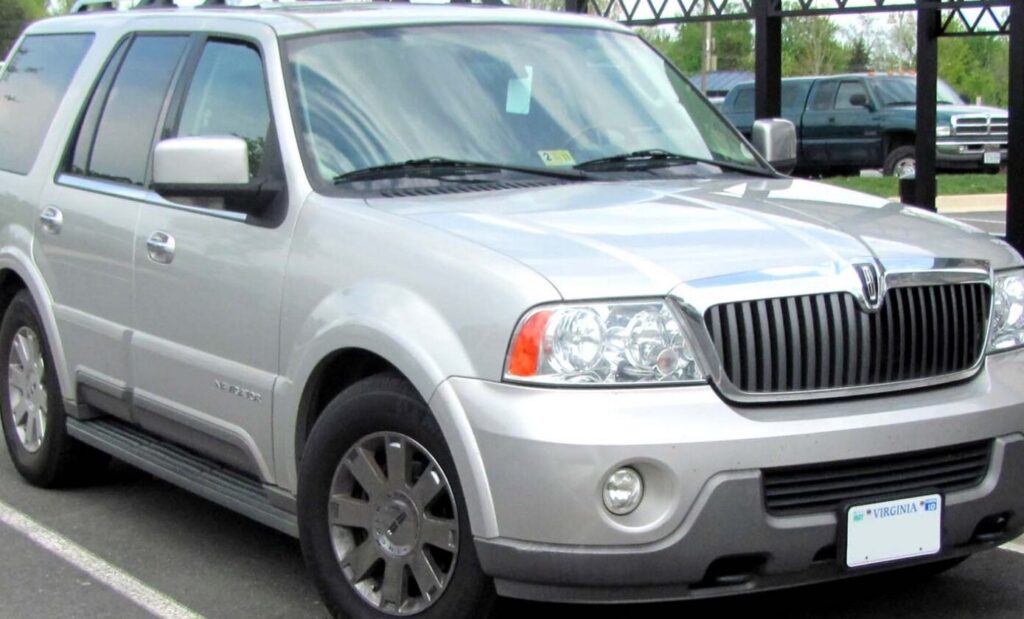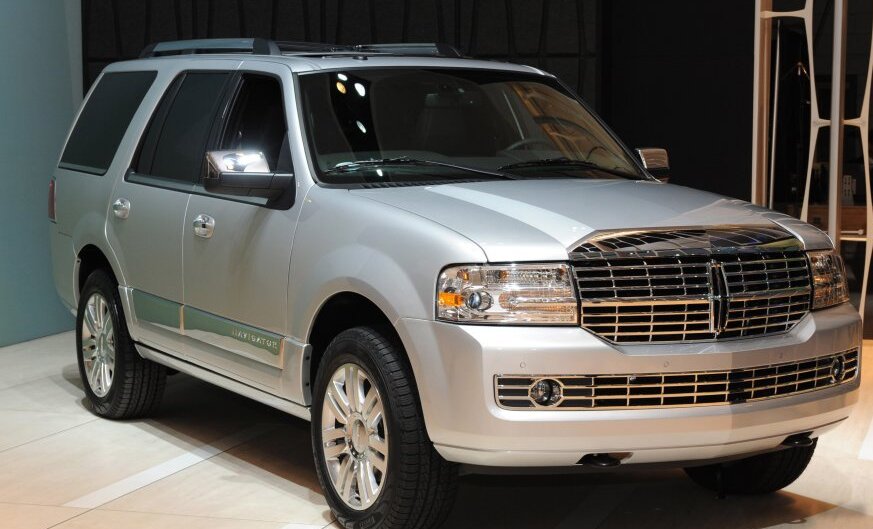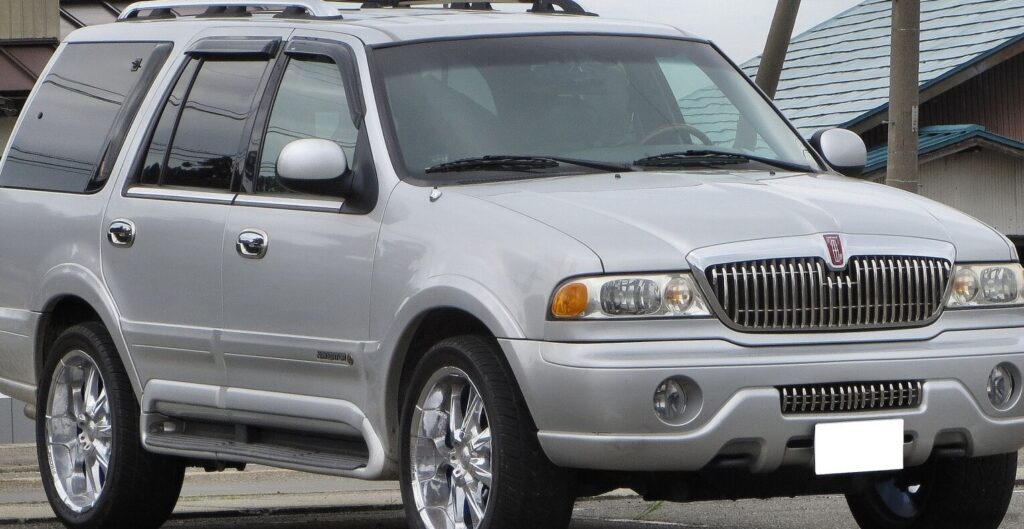
The Lincoln Navigator of the first generation, produced from 1998 to 1999, represented Lincoln’s entry into the burgeoning full-size SUV market. Built on a modified Ford F-150 chassis (specifically the 1HX0 platform), the Navigator aimed to provide a more luxurious and refined experience than its Ford counterpart, competing directly with the Cadillac Escalade and the Chevrolet Suburban. The 5.4-liter V8 engine paired with a four-speed automatic transmission was a cornerstone of the Navigator lineup, offering a balance of power and capability for the time. This configuration was positioned as the standard engine option, serving as the foundation for the Navigator’s appeal to buyers seeking a large, comfortable, and capable SUV.
Technical Specifications
| Brand | Lincoln |
| Model | Navigator |
| Generation | Navigator I |
| Type (Engine) | 5.4 V8 (260 Hp) Automatic |
| Start of production | 1998 |
| End of production | 1999 |
| Powertrain Architecture | Internal Combustion engine |
| Body type | SUV |
| Seats | 8 |
| Doors | 5 |
| Fuel consumption (urban) | 18.1 l/100 km (13 US mpg, 15.6 UK mpg, 5.5 km/l) |
| Fuel consumption (extra urban) | 13.1 l/100 km (18 US mpg, 21.6 UK mpg, 7.6 km/l) |
| Fuel consumption (combined) | 15.7 l/100 km (15 US mpg, 18 UK mpg, 6.4 km/l) |
| Fuel Type | Petrol (Gasoline) |
| Weight-to-power ratio | 9 kg/Hp, 111.3 Hp/tonne |
| Weight-to-torque ratio | 5.3 kg/Nm, 188.9 Nm/tonne |
| Power | 260 Hp @ 4500 rpm |
| Power per litre | 48.1 Hp/l |
| Torque | 441 Nm @ 3000 rpm (325.26 lb.-ft. @ 3000 rpm) |
| Engine layout | Front, Longitudinal |
| Engine Model/Code | Triton |
| Engine displacement | 5408 cm3 (330.02 cu. in.) |
| Number of cylinders | 8 |
| Engine configuration | V-engine |
| Cylinder Bore | 90.2 mm (3.55 in.) |
| Piston Stroke | 105.7 mm (4.16 in.) |
| Compression ratio | 9:1 |
| Number of valves per cylinder | 2 |
| Fuel injection system | Multi-port manifold injection |
| Engine aspiration | Naturally aspirated engine |
| Valvetrain | SOHC |
| Engine oil capacity | 5.7 l (6.02 US qt | 5.02 UK qt) |
| Coolant | 19.7 l (20.82 US qt | 17.33 UK qt) |
| Kerb Weight | 2335 kg (5147.79 lbs.) |
| Trunk (boot) space – minimum | 1832 l (64.7 cu. ft.) |
| Trunk (boot) space – maximum | 3295 l (116.36 cu. ft.) |
| Fuel tank capacity | 114 l (30.12 US gal | 25.08 UK gal) |
| Length | 5202 mm (204.8 in.) |
| Width | 2030 mm (79.92 in.) |
| Height | 1910 mm (75.2 in.) |
| Wheelbase | 3023 mm (119.02 in.) |
| Front track | 1661 mm (65.39 in.) |
| Rear (Back) track | 1664 mm (65.51 in.) |
| Ride height (ground clearance) | 210 mm (8.27 in.) |
| Drag coefficient (Cd) | 0.43 |
| Minimum turning circle (turning diameter) | 12.3 m (40.35 ft.) |
| Drivetrain Architecture | The Internal combustion engine (ICE) drives the rear wheels of the vehicle. |
| Drive wheel | Rear wheel drive |
| Number of gears and type of gearbox | 4 gears, automatic transmission |
| Front suspension | Air suspension |
| Rear suspension | Air suspension |
| Front brakes | Ventilated discs |
| Rear brakes | Disc |
| Assisting systems | ABS (Anti-lock braking system) |
| Power steering | Hydraulic Steering |
| Tires size | 245/75 R16 |
| Wheel rims size | 16 |
INTRODUCTION
The first-generation Lincoln Navigator, launched in 1998, was a pivotal vehicle for the brand, marking its foray into the full-size luxury SUV segment. Sharing its platform with the Ford F-150, the Navigator distinguished itself through a more opulent interior, refined ride quality, and a focus on comfort. The 5.4-liter Triton V8 engine, coupled with a four-speed automatic transmission, was the standard powertrain, offering a balance of power and usability for the vehicle’s substantial size and weight. This combination aimed to appeal to families and individuals seeking a spacious, capable, and luxurious SUV for both daily driving and towing needs.
Powertrain & Engine Architecture
The heart of the 1998-1999 Lincoln Navigator was the 5.4-liter Triton V8 engine. This engine, designated as the engine code for this generation, was a member of Ford’s modular engine family. It featured a cast-iron block with aluminum cylinder heads, a configuration designed to balance durability with weight reduction. The engine utilized a single overhead camshaft (SOHC) design with two valves per cylinder. Fuel delivery was managed by a multi-port fuel injection system, providing precise fuel metering for optimal performance and efficiency. The 5.4L Triton V8 produced 260 horsepower at 4500 rpm and 441 Nm (325.26 lb-ft) of torque at 3000 rpm. The four-speed automatic transmission (likely a 4R70W variant) was chosen for its smooth shifting characteristics and ability to handle the engine’s torque output. This transmission was a conventional hydraulic control unit, lacking the electronic sophistication of later transmissions.
Driving Characteristics
The Navigator with the 5.4L V8 and automatic transmission offered a comfortable, albeit not particularly sporty, driving experience. Acceleration was adequate for its size, but the vehicle’s substantial weight (over 5,000 pounds) meant it wasn’t quick off the line. The automatic transmission was tuned for smooth, relaxed shifts, prioritizing comfort over aggressive performance. Compared to a manual transmission-equipped F-150 with the same engine, the Navigator felt less responsive, but the convenience of the automatic was a significant draw for its target audience. The gear ratios were optimized for towing and cruising, providing sufficient power for highway passing maneuvers. The air suspension, standard on the Navigator, contributed to a smooth and controlled ride, absorbing bumps and irregularities in the road surface effectively.
Equipment & Trim Levels
The Lincoln Navigator was well-equipped for its time, offering a range of comfort and convenience features as standard. These included leather upholstery, power-adjustable front seats, a premium sound system, automatic climate control, and power windows and locks. Optional extras included a navigation system (a relatively new feature at the time), a sunroof, and upgraded audio options. The interior design emphasized luxury and spaciousness, with woodgrain trim and a generally upscale aesthetic. The Navigator’s trim levels were relatively simple, with most buyers opting for the standard configuration, with a few packages available to add additional features.
Chassis & Braking
The Navigator’s chassis was based on the Ford F-150’s fully boxed frame, providing a robust foundation for the vehicle’s size and weight. The front suspension utilized an independent air suspension system, offering a comfortable ride and adjustable ride height. The rear suspension also employed an air suspension setup, further enhancing ride quality and load-leveling capabilities. Braking duties were handled by ventilated discs at the front and solid discs at the rear. Anti-lock brakes (ABS) were standard, providing enhanced stopping power and control in emergency situations. The steering system was a hydraulic power steering setup, offering responsive and predictable steering feel.
Market Reception & Comparison
The Lincoln Navigator was generally well-received by critics and consumers alike. It was praised for its spacious interior, comfortable ride, and luxurious appointments. However, its fuel economy was a common criticism, as the 5.4-liter V8 engine was not particularly fuel-efficient. Compared to the Cadillac Escalade, the Navigator offered a more refined ride and a more understated exterior design. Compared to lower-trim F-150 models, the Navigator provided a significantly more luxurious and comfortable experience, justifying its higher price point. The 5.4L automatic combination was the most popular configuration, appealing to buyers who prioritized convenience and comfort over outright performance.
Legacy
The first-generation Lincoln Navigator established the brand as a serious contender in the full-size luxury SUV segment. The 5.4-liter Triton V8 and four-speed automatic transmission proved to be a relatively reliable powertrain combination, although regular maintenance was essential to prevent issues such as spark plug breakage (a common problem with the Triton engines). Today, these Navigators are increasingly sought after by collectors and enthusiasts, representing a nostalgic reminder of the late 1990s SUV boom. While fuel economy remains a concern, the Navigator’s spaciousness, comfort, and classic styling continue to appeal to a dedicated following in the used car market.