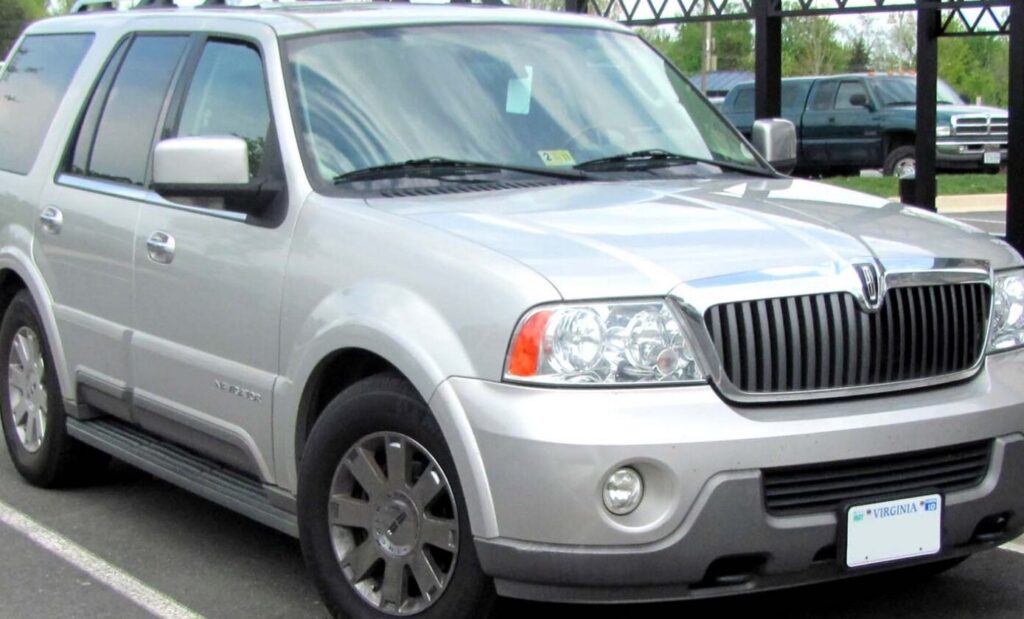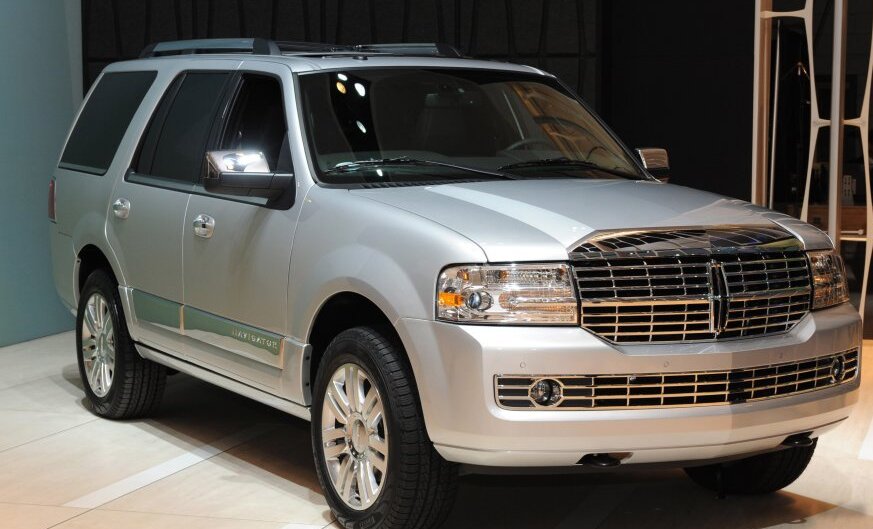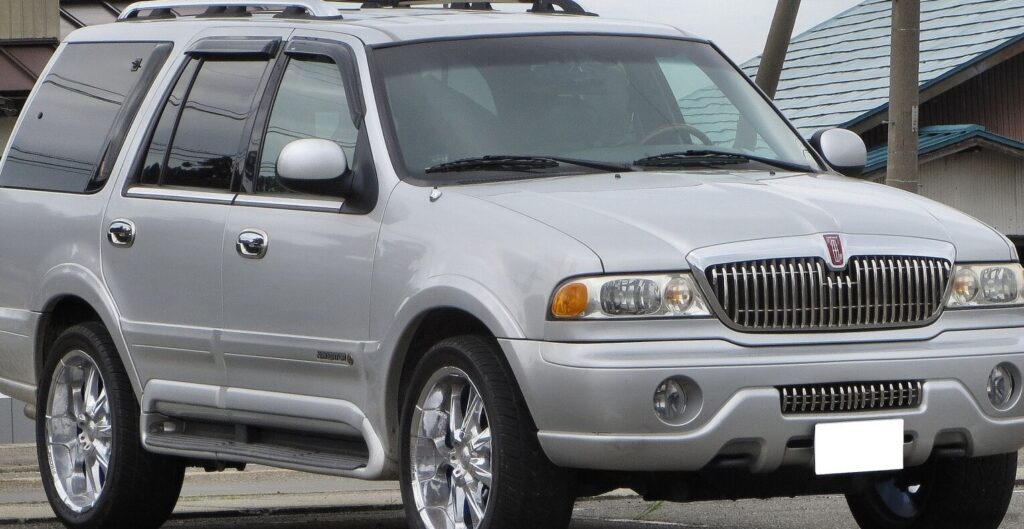
The Lincoln Navigator, launched in 1998, represented Lincoln’s entry into the burgeoning full-size SUV market. Designed to compete with offerings from Cadillac and GMC, the first-generation Navigator (1998-2002) was based on the Ford Expedition and shared its underlying platform. The 5.4-liter V8 4×4 Automatic variant, producing 300 horsepower, was a significant offering within the Navigator lineup, positioned as a premium, well-equipped choice for buyers needing substantial towing capacity and interior space. It aimed to deliver a more luxurious experience than its Ford counterpart, emphasizing comfort and refinement alongside capability.
Technical Specifications
| Brand | Lincoln |
| Model | Navigator |
| Generation | Navigator I |
| Type (Engine) | 5.4 V8 (300 Hp) 4×4 Automatic |
| Start of production | 1998 |
| End of production | 2002 |
| Powertrain Architecture | Internal Combustion engine |
| Body type | SUV |
| Seats | 8 |
| Doors | 5 |
| Fuel consumption (economy) – urban | 19.6 l/100 km (12 US mpg, 14.4 UK mpg, 5.1 km/l) |
| Fuel consumption (economy) – extra urban | 14.7 l/100 km (16 US mpg, 19.2 UK mpg, 6.8 km/l) |
| Fuel consumption (economy) – combined | 18.1 l/100 km (13 US mpg, 15.6 UK mpg, 5.5 km/l) |
| Fuel Type | Petrol (Gasoline) |
| Weight-to-power ratio | 8.4 kg/Hp, 118.5 Hp/tonne |
| Weight-to-torque ratio | 5.3 kg/Nm, 190 Nm/tonne |
| Power | 300 Hp @ 5000 rpm |
| Power per litre | 55.5 Hp/l |
| Torque | 481 Nm @ 2750 rpm (354.77 lb.-ft. @ 2750 rpm) |
| Engine layout | Front, Longitudinal |
| Engine Model/Code | InTech |
| Engine displacement | 5408 cm3 (330.02 cu. in.) |
| Number of cylinders | 8 |
| Engine configuration | V-engine |
| Cylinder Bore | 90.2 mm (3.55 in.) |
| Piston Stroke | 105.8 mm (4.17 in.) |
| Compression ratio | 9.5:1 |
| Number of valves per cylinder | 4 |
| Fuel injection system | Multi-port manifold injection |
| Engine aspiration | Naturally aspirated engine |
| Valvetrain | DOHC |
| Engine oil capacity | 5.7 l (6.02 US qt | 5.02 UK qt) |
| Coolant | 24.1 l (25.47 US qt | 21.21 UK qt) |
| Kerb Weight | 2532 kg (5582.1 lbs.) |
| Max. weight | 3266 kg (7200.3 lbs.) |
| Max load | 734 kg (1618.19 lbs.) |
| Trunk (boot) space – minimum | 1832 l (64.7 cu. ft.) |
| Trunk (boot) space – maximum | 3295 l (116.36 cu. ft.) |
| Fuel tank capacity | 114 l (30.12 US gal | 25.08 UK gal) |
| Length | 5202 mm (204.8 in.) |
| Width | 2030 mm (79.92 in.) |
| Height | 1948 mm (76.69 in.) |
| Wheelbase | 3023 mm (119.02 in.) |
| Front track | 1661 mm (65.39 in.) |
| Rear (Back) track | 1664 mm (65.51 in.) |
| Ride height (ground clearance) | 221 mm (8.7 in.) |
| Drag coefficient (Cd) | 0.43 |
| Minimum turning circle (turning diameter) | 12.3 m (40.35 ft.) |
| Drive wheel | All wheel drive (4×4) |
| Number of gears and type of gearbox | 4 gears, automatic transmission |
| Front suspension | Air suspension |
| Rear suspension | Air suspension |
| Front brakes | Ventilated discs |
| Rear brakes | Disc |
| Assisting systems | ABS (Anti-lock braking system) |
| Power steering | Hydraulic Steering |
| Tires size | 275/75 R16 |
| Wheel rims size | 16 |
INTRODUCTION
The Lincoln Navigator I, produced from 1998 to 2002, was a landmark vehicle for the Lincoln brand, establishing it firmly in the full-size luxury SUV segment. The 5.4-liter V8 engine paired with a four-speed automatic transmission and four-wheel drive was a popular configuration, offering a balance of power, capability, and comfort. This variant sat towards the higher end of the Navigator lineup, offering more performance than the base models but remaining below the potential for aftermarket modifications or higher-performance trims that might have been considered. It was designed to appeal to families and individuals needing a spacious, luxurious vehicle capable of towing boats, trailers, or other substantial loads.
Powertrain & Engine Architecture
The heart of the Navigator I 5.4 was the Ford InTech 5.4-liter V8 engine. This engine, part of Ford’s modular engine family, featured a cast-iron block with aluminum cylinder heads. It utilized a single overhead camshaft (SOHC) design per bank, with four valves per cylinder. Fuel delivery was handled by a multi-port fuel injection system, providing precise fuel metering for optimal performance and efficiency. The engine produced 300 horsepower at 5000 rpm and 481 Nm (354.77 lb-ft) of torque at 2750 rpm. The four-speed automatic transmission (4R70W) was chosen for its durability and ability to handle the engine’s torque output. This transmission featured electronic control for smoother shifting and improved responsiveness. The 4×4 system employed an electronic shift-on-the-fly transfer case, allowing the driver to easily switch between two-wheel drive and four-wheel drive modes depending on road conditions.
Driving Characteristics
The 5.4-liter V8 and automatic transmission combination provided adequate, though not exhilarating, performance. Acceleration from 0 to 60 mph was typically in the 7.5-8.5 second range. The automatic transmission, while smooth, wasn’t particularly quick to downshift, resulting in a slightly less responsive feel compared to the manual transmission options available in the Ford Expedition. However, the abundance of torque made it well-suited for towing and hauling. The air suspension system, standard on this trim, contributed to a comfortable ride, absorbing bumps and irregularities in the road effectively. The Navigator’s large size and weight were noticeable in cornering, with some body roll present. Overall, the driving experience prioritized comfort and capability over sporty handling.
Equipment & Trim Levels
The Navigator I 5.4 V8 4×4 Automatic came standard with a generous array of features. Interior appointments included leather upholstery, woodgrain trim, and power-adjustable front seats. Standard convenience features included a premium sound system, automatic climate control, power windows and locks, and a rear air conditioning system. Optional extras included a navigation system, a sunroof, and upgraded leather packages. The Navigator aimed to provide a luxurious interior environment, with attention paid to detail and material quality. The exterior featured chrome accents, alloy wheels, and a distinctive Lincoln grille.
Chassis & Braking
The Navigator I utilized a body-on-frame construction, providing a robust and durable chassis. The front suspension employed an independent air suspension system, while the rear suspension also featured an air suspension setup. This air suspension allowed for adjustable ride height and provided a comfortable ride. Braking duties were handled by ventilated disc brakes at all four corners, with ABS (Anti-lock Braking System) as standard equipment. The braking system was adequate for the vehicle’s weight, but stopping distances were longer than those of lighter vehicles. The Navigator’s large tires (275/75 R16) provided good grip in various conditions.
Market Reception & Comparison
The Lincoln Navigator was generally well-received by critics and consumers alike. It was praised for its spacious interior, comfortable ride, and powerful engine. However, its fuel economy was a common criticism, with the 5.4-liter V8 consuming a significant amount of gasoline. Compared to the Ford Expedition, the Navigator offered a more luxurious interior and a more refined driving experience. Compared to competitors like the Cadillac Escalade and GMC Yukon Denali, the Navigator offered a competitive level of luxury and features. The 5.4-liter V8 automatic combination was considered a good all-around choice, offering a balance of performance and fuel economy within the Navigator lineup.
Legacy
The first-generation Lincoln Navigator established the brand as a serious contender in the full-size luxury SUV market. The 5.4-liter V8 engine proved to be relatively reliable, although routine maintenance was essential. Common issues included oil leaks and occasional spark plug failures. Today, well-maintained examples of the Navigator I are sought after by collectors and enthusiasts. While fuel economy remains a concern, the Navigator’s spacious interior, comfortable ride, and classic styling continue to appeal to buyers looking for a large, luxurious SUV with a touch of nostalgia. The Navigator I laid the foundation for the continued success of the Navigator nameplate, and its influence can still be seen in modern Lincoln SUVs.