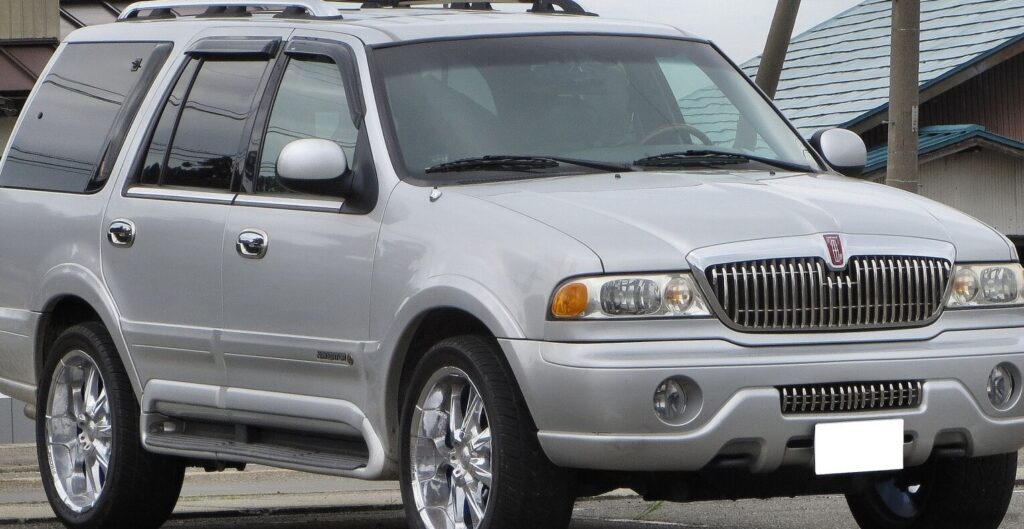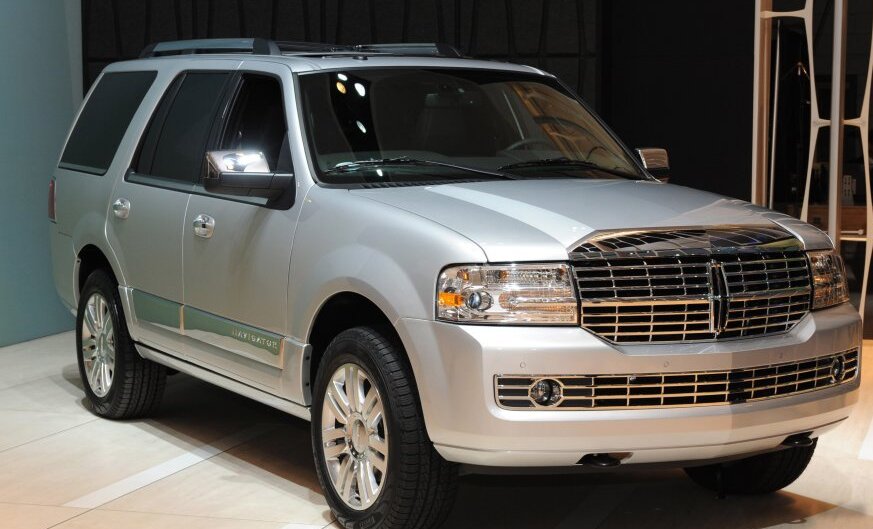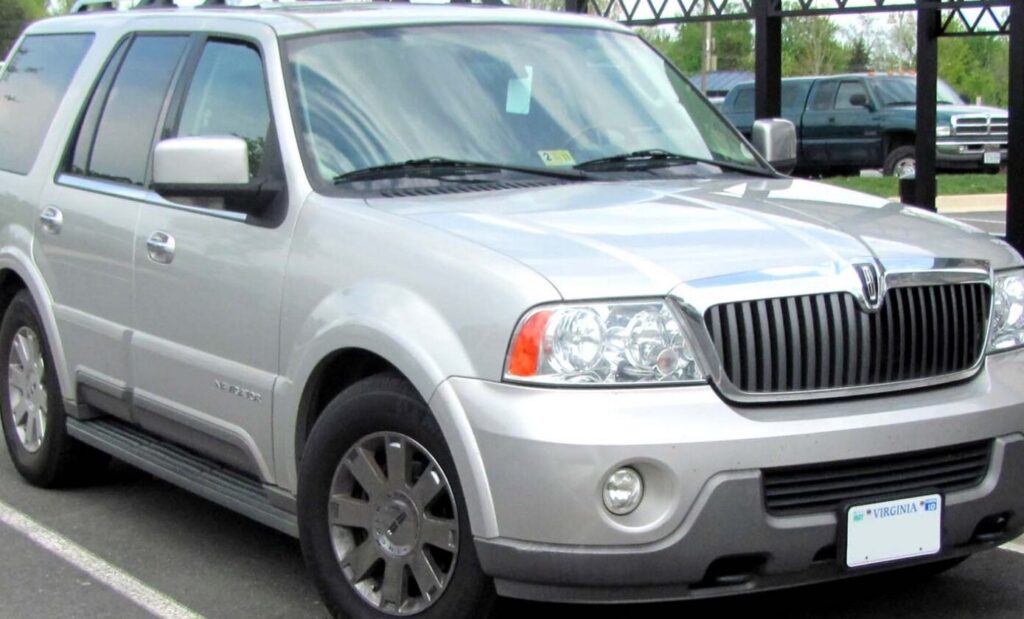
The Lincoln Navigator II, specifically the 5.4i V8 32V (300 Hp) 4×4 Automatic variant, represents a significant iteration in Lincoln’s full-size SUV offerings. Produced from 2002 through 2004, this model year falls within the second generation of the Navigator (2003-2006), which utilized the Ford U199 platform. This generation marked a substantial upgrade over the original Navigator, offering increased size, improved refinement, and a more powerful engine option. The 5.4i 4×4 Automatic trim occupied a prominent position in the lineup, serving as a well-equipped, capable, and popular choice for families and those needing substantial towing capacity.
Technical Specifications
| Brand | Lincoln |
| Model | Navigator |
| Generation | Navigator II |
| Type (Engine) | 5.4i V8 32V (300 Hp) 4×4 Automatic |
| Start of production | 2002 |
| End of production | 2004 |
| Powertrain Architecture | Internal Combustion engine |
| Body type | SUV |
| Seats | 8 |
| Doors | 5 |
| Fuel consumption (urban) | 21.4 l/100 km (11 US mpg, 13.2 UK mpg, 4.7 km/l) |
| Fuel consumption (extra urban) | 14.7 l/100 km (16 US mpg, 19.2 UK mpg, 6.8 km/l) |
| Fuel consumption (combined) | 18.1 l/100 km (13 US mpg, 15.6 UK mpg, 5.5 km/l) |
| Fuel Type | Petrol (Gasoline) |
| Acceleration 0 – 100 km/h | 10 sec |
| Acceleration 0 – 62 mph | 10 sec |
| Acceleration 0 – 60 mph | 9.5 sec |
| Maximum speed | 190 km/h (118.06 mph) |
| Weight-to-power ratio | 9.1 kg/Hp, 110.4 Hp/tonne |
| Weight-to-torque ratio | 5.7 kg/Nm, 177 Nm/tonne |
| Power | 300 Hp @ 5000 rpm |
| Power per litre | 55.5 Hp/l |
| Torque | 481 Nm @ 2750 rpm (354.77 lb.-ft. @ 2750 rpm) |
| Engine layout | Front, Longitudinal |
| Engine Model/Code | InTech / T54DSEM |
| Engine displacement | 5408 cm3 (330.02 cu. in.) |
| Number of cylinders | 8 |
| Engine configuration | V-engine |
| Cylinder Bore | 90.2 mm (3.55 in.) |
| Piston Stroke | 105.7 mm (4.16 in.) |
| Compression ratio | 9.5:1 |
| Number of valves per cylinder | 4 |
| Fuel injection system | Multi-port manifold injection |
| Engine aspiration | Naturally aspirated engine |
| Valvetrain | DOHC |
| Engine oil capacity | 6.6 l (6.97 US qt | 5.81 UK qt) |
| Coolant | 21 l (22.19 US qt | 18.48 UK qt) |
| Kerb Weight | 2718 kg (5992.16 lbs.) |
| Max. weight | 3380 kg (7451.62 lbs.) |
| Max load | 662 kg (1459.46 lbs.) |
| Trunk (boot) space – minimum | 507 l (17.9 cu. ft.) |
| Trunk (boot) space – maximum | 2966 l (104.74 cu. ft.) |
| Fuel tank capacity | 106 l (28 US gal | 23.32 UK gal) |
| Length | 5232 mm (205.98 in.) |
| Width | 2000 mm (78.74 in.) |
| Width with mirrors folded | 2029 mm (79.88 in.) |
| Width including mirrors | 2088 mm (82.2 in.) |
| Height | 1975 mm (77.76 in.) |
| Wheelbase | 3018 mm (118.82 in.) |
| Front track | 1701 mm (66.97 in.) |
| Rear (Back) track | 1704 mm (67.09 in.) |
| Ride height (ground clearance) | 218 mm (8.58 in.) |
| Drag coefficient (Cd) | 0.41 |
| Minimum turning circle | 11.8 m (38.71 ft.) |
| Approach angle | 21.9° |
| Departure angle | 19.8° |
| Ramp-over angle | 17.1° |
| Drive wheel | All wheel drive (4×4) |
| Number of gears | 4 |
| Gearbox type | automatic transmission |
| Front brakes | Ventilated discs |
| Rear brakes | Ventilated discs |
| Assisting systems | ABS (Anti-lock braking system) |
| Steering type | Steering rack and pinion |
| Power steering | Hydraulic Steering |
| Tires size | 255/70 R18 |
| Wheel rims size | 18 |
Powertrain & Engine Architecture
At the heart of the Navigator II 5.4i 4×4 Automatic lies Ford’s 5.4-liter InTech V8 engine, designated with the code T54DSEM. This engine is a naturally aspirated, three-valve-per-cylinder design, utilizing a 9.5:1 compression ratio. The engine employs multi-port fuel injection, delivering fuel directly into the intake ports. The double overhead camshaft (DOHC) valvetrain contributes to efficient cylinder filling and exhaust scavenging. This engine produced 300 horsepower at 5000 rpm and 354 lb-ft of torque at 2750 rpm. The engine’s longitudinal mounting and the robust four-speed automatic transmission (4R75E) allowed for effective power delivery to all four wheels via the 4×4 system. The 4R75E transmission was known for its durability and ability to handle the engine’s torque output, making it suitable for towing applications.
Driving Characteristics
The 5.4-liter V8, coupled with the four-speed automatic, provided adequate, though not exhilarating, performance. Acceleration from 0-60 mph took approximately 9.5 seconds. While not a sports car, the Navigator II offered sufficient power for everyday driving and highway cruising. The automatic transmission’s gear ratios were tuned for comfortable operation and towing capability rather than outright speed. Compared to the later addition of a higher-output version of the 5.4L, this variant prioritized smooth power delivery and fuel economy (relatively speaking for a vehicle of this size). The 4×4 system provided enhanced traction in various weather conditions and off-road scenarios, though the Navigator was primarily designed as a luxury road vehicle.
Equipment & Trim Levels
The Navigator II 5.4i 4×4 Automatic came standard with a comprehensive list of features, reflecting its position as a premium SUV. These included leather upholstery, power-adjustable front seats, a premium audio system, automatic climate control, and alloy wheels. Optional extras included a DVD entertainment system, a power-folding third-row seat, and upgraded trim packages. The interior design focused on comfort and spaciousness, with seating for up to eight passengers. The exterior styling featured chrome accents and a bold front grille, conveying a sense of luxury and presence.
Chassis & Braking
The Navigator II utilized a body-on-frame construction, providing a robust and durable chassis. The suspension system consisted of independent front suspension with coil springs and a solid rear axle with leaf springs. This setup prioritized ride comfort and load-carrying capacity. Braking duties were handled by ventilated discs on all four wheels, complemented by an Anti-lock Braking System (ABS) for enhanced safety. The Navigator II’s relatively heavy weight necessitated a capable braking system to ensure adequate stopping power.
Market Reception & Comparison
The Lincoln Navigator II 5.4i 4×4 Automatic was generally well-received by critics and consumers alike. It was praised for its spacious interior, comfortable ride, and powerful engine. However, its fuel economy was a common criticism, typical for a large SUV of its era. Compared to other trims, such as those with the optional higher-output 5.4L engine, this variant offered a balance between performance and fuel efficiency. It also represented a more affordable entry point into the Navigator II lineup. Against competitors like the Cadillac Escalade and Chevrolet Suburban, the Navigator II offered a unique blend of luxury, capability, and American styling.
Legacy
The 5.4-liter InTech V8 engine, in its various iterations, proved to be a relatively reliable powertrain. However, the Navigator II, like many vehicles of its age, is susceptible to age-related issues such as corrosion, suspension wear, and electronic component failures. The 4R75E transmission, while durable, can require maintenance and potential rebuilds after high mileage. Today, the Navigator II 5.4i 4×4 Automatic represents an affordable entry point into the full-size luxury SUV segment. Well-maintained examples are sought after by those seeking a capable and comfortable vehicle with classic American styling.