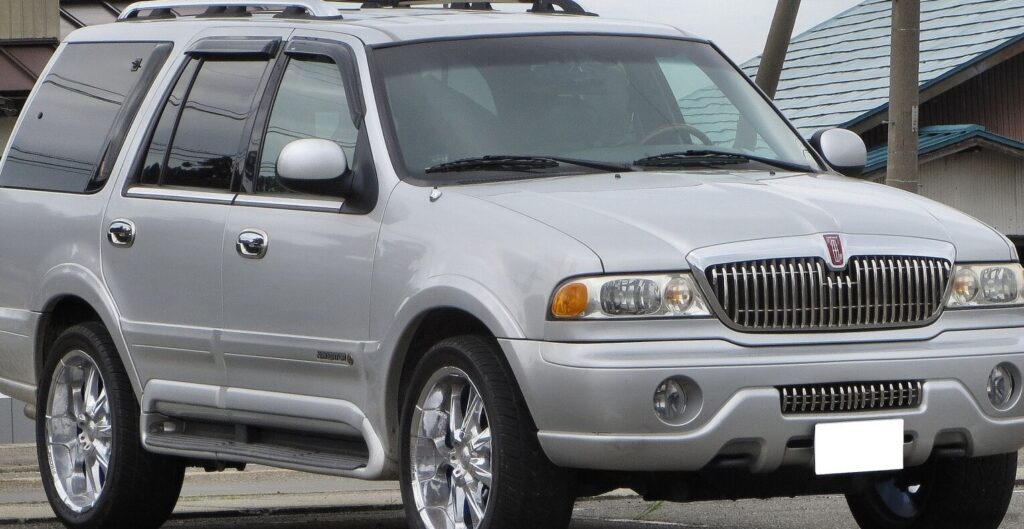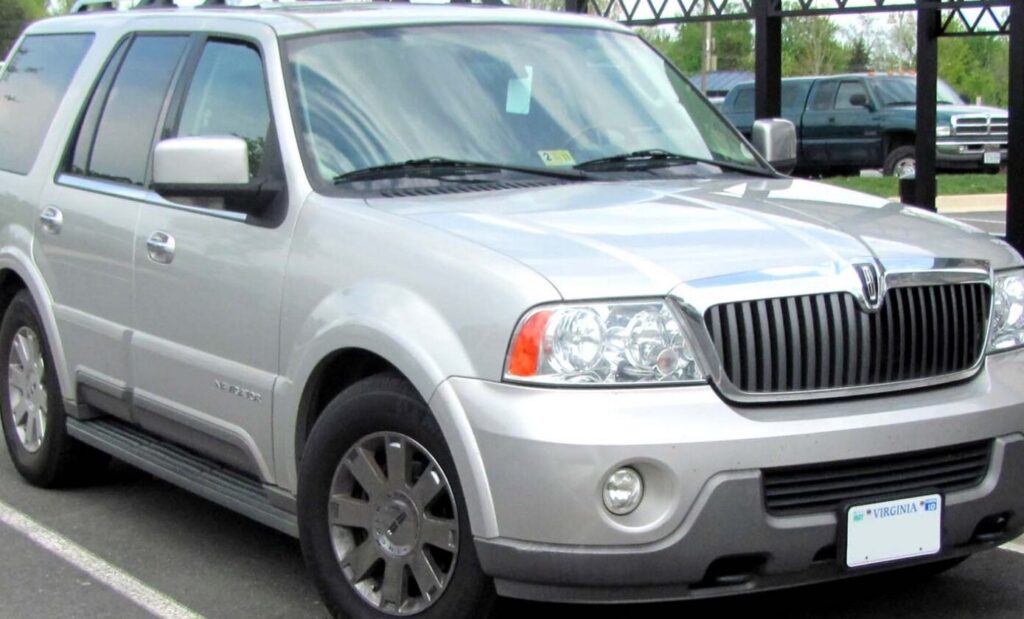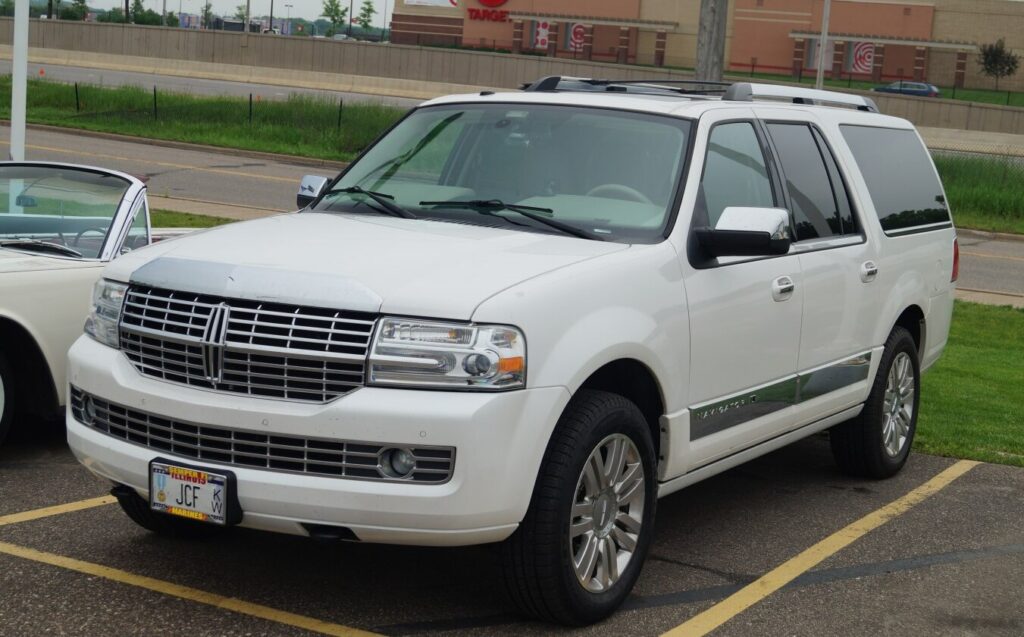
The Lincoln Navigator III L 5.4i, produced from 2006 to 2008, represented the third generation of Lincoln’s full-size SUV. Positioned as a luxury alternative to domestic competitors like the Chevrolet Suburban and Cadillac Escalade, the Navigator III L aimed to provide a more refined experience with a focus on spaciousness and powerful performance. The “L” designation indicated the extended wheelbase version, offering significantly increased third-row legroom and cargo capacity. This particular variant, equipped with the 5.4-liter Triton V8 engine and a six-speed automatic transmission, served as a mid-range offering within the Navigator lineup, balancing power with a degree of fuel efficiency for its class. It sat above the base Navigator models and below the more heavily optioned, and sometimes four-wheel drive, trims.
Technical Specifications
| Brand | Lincoln |
| Model | Navigator |
| Generation | Navigator III L |
| Type (Engine) | 5.4i V8 (300 Hp) Automatic |
| Start of production | 2006 |
| End of production | 2008 |
| Powertrain Architecture | Internal Combustion engine |
| Body type | SUV |
| Seats | 8 |
| Doors | 5 |
| Fuel consumption (urban) | 16.8 l/100 km (14 US mpg, 16.8 UK mpg) |
| Fuel consumption (extra urban) | 13.8 l/100 km (17 US mpg, 20.5 UK mpg) |
| Fuel Type | Petrol (Gasoline) |
| Weight-to-power ratio | 9 kg/Hp, 110.9 Hp/tonne |
| Weight-to-torque ratio | 5.5 kg/Nm, 183 Nm/tonne |
| Power | 300 Hp @ 5000 rpm |
| Power per litre | 55.5 Hp/l |
| Torque | 495 Nm @ 3750 rpm (365.09 lb.-ft. @ 3750 rpm) |
| Maximum engine speed | 5400 rpm |
| Engine layout | Front, Longitudinal |
| Engine Model/Code | Triton |
| Engine displacement | 5408 cm3 (330.02 cu. in.) |
| Number of cylinders | 8 |
| Engine configuration | V-engine |
| Cylinder Bore | 90.2 mm (3.55 in.) |
| Piston Stroke | 105.9 mm (4.17 in.) |
| Compression ratio | 9.8:1 |
| Number of valves per cylinder | 3 |
| Fuel injection system | Multi-port manifold injection |
| Engine aspiration | Naturally aspirated engine |
| Valvetrain | SOHC |
| Engine oil capacity | 6.6 l (6.97 US qt | 5.81 UK qt) |
| Coolant | 19.5 l (20.61 US qt | 17.16 UK qt) |
| Kerb Weight | 2705 kg (5963.5 lbs.) |
| Max. weight | 3493 kg (7700.75 lbs.) |
| Max load | 788 kg (1737.24 lbs.) |
| Trunk (boot) space – minimum | 1209 l (42.7 cu. ft.) |
| Trunk (boot) space – maximum | 3630 l (128.19 cu. ft.) |
| Fuel tank capacity | 127 l (33.55 US gal | 27.94 UK gal) |
| Length | 5672 mm (223.31 in.) |
| Width | 2002 mm (78.82 in.) |
| Width including mirrors | 2332 mm (91.81 in.) |
| Height | 1984 mm (78.11 in.) |
| Wheelbase | 3327 mm (130.98 in.) |
| Front track | 1699 mm (66.89 in.) |
| Rear (Back) track | 1702 mm (67.01 in.) |
| Ride height (ground clearance) | 231 mm (9.09 in.) |
| Drag coefficient (Cd) | 0.40 |
| Minimum turning circle (turning diameter) | 13.39 m (43.93 ft.) |
| Approach angle | 22.2° |
| Departure angle | 20.8° |
| Ramp-over (brakeover) angle | 18.4° |
| Drivetrain Architecture | The Internal combustion engine (ICE) drives the rear wheels of the vehicle. |
| Drive wheel | Rear wheel drive |
| Number of gears and type of gearbox | 6 gears, automatic transmission |
| Front suspension | Independent coil spring |
| Rear suspension | Independent coil spring |
| Front brakes | Ventilated discs |
| Rear brakes | Ventilated discs |
| Assisting systems | ABS (Anti-lock braking system) |
| Steering type | Steering rack and pinion |
| Tires size | 255/70 R18 |
| Wheel rims size | 18 |
Powertrain & Engine Architecture
The heart of this Navigator variant was the 5.4-liter Triton V8 engine. This engine, a staple of Ford’s full-size truck and SUV lineup for many years, featured a cast-iron block with aluminum cylinder heads. The engine utilized a single overhead camshaft (SOHC) design with three valves per cylinder (two intake, one exhaust). Fuel delivery was handled by a multi-port fuel injection system, providing adequate atomization for efficient combustion. The 6-speed automatic transmission, a significant upgrade from the earlier 4-speed units, was designed to improve both fuel economy and responsiveness. It featured electronic control and offered selectable driving modes, though these were limited in scope. The transmission’s gear ratios were tuned for towing capability and comfortable highway cruising, rather than outright acceleration.
Driving Characteristics
The 5.4-liter V8, producing 300 horsepower and 495 lb-ft of torque, provided ample power for everyday driving and towing. However, compared to the higher-output versions of the Navigator, or even competitors with larger displacement engines, the 5.4L felt somewhat less energetic. Acceleration from a standstill was adequate, but not particularly brisk. The six-speed automatic transmission helped to keep the engine in its optimal power band, but downshifts could sometimes be hesitant. The rear-wheel-drive configuration offered a more traditional driving feel, but lacked the all-weather capability of four-wheel-drive models. The extended wheelbase of the “L” model contributed to a comfortable ride, but also made the vehicle feel large and somewhat cumbersome in tight spaces.
Equipment & Trim Levels
The Navigator III L 5.4i typically came standard with features such as leather upholstery, tri-zone automatic climate control, a premium audio system, power-adjustable front seats, and rear parking sensors. Optional extras included a DVD entertainment system, power-folding running boards, and a navigation system. The interior trim was generally well-appointed, with woodgrain accents and chrome detailing. The extended wheelbase provided generous space for passengers in all three rows, making it a comfortable choice for families.
Chassis & Braking
The Navigator III L utilized a body-on-frame construction, providing a robust and durable platform. The suspension consisted of independent coil springs at both the front and rear, offering a reasonably comfortable ride. Ventilated disc brakes were used on all four wheels, providing adequate stopping power. An anti-lock braking system (ABS) was standard. The rear-wheel-drive configuration and substantial weight of the vehicle meant that handling was not particularly sporty, but the suspension did a good job of absorbing bumps and maintaining stability.
Market Reception & Comparison
Critics generally praised the Navigator III L for its spacious interior, comfortable ride, and powerful engine. However, fuel economy was a common complaint, as was the vehicle’s large size and cumbersome handling. Compared to the higher-output Navigator trims, the 5.4-liter V8 offered a more affordable entry point, but at the expense of performance. The 5.4L also proved to be generally more reliable than some of the more complex, higher-output engine options. Against competitors like the Escalade and Suburban, the Navigator offered a comparable level of luxury and features, but often at a slightly lower price point.
Legacy
The 5.4-liter Triton V8, while not without its quirks (such as potential spark plug issues in earlier iterations), proved to be a relatively durable and long-lasting engine. Today, well-maintained Navigator III L models with the 5.4L engine can still be found on the used car market, often at attractive prices. The extended wheelbase “L” model remains a popular choice for those seeking a spacious and comfortable full-size SUV. While fuel economy remains a concern, the Navigator III L 5.4i continues to offer a compelling combination of luxury, space, and capability.