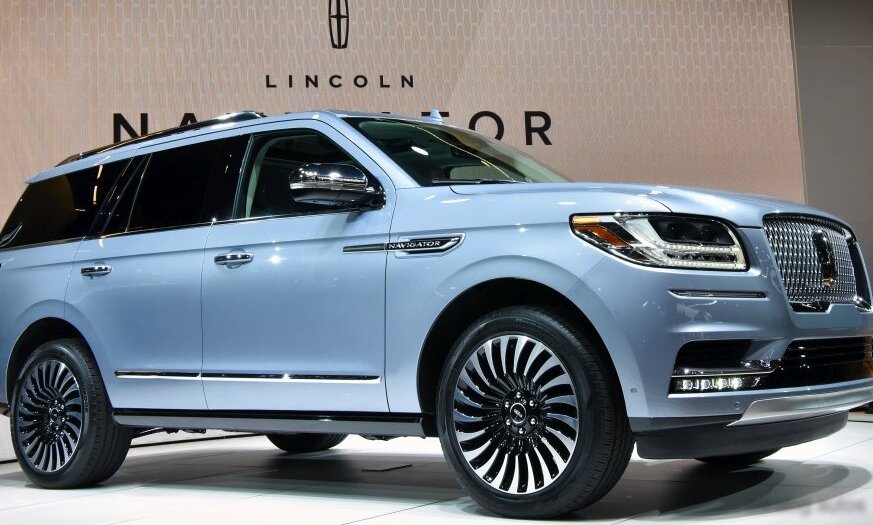
The Lincoln Navigator IV, specifically the 3.5 V6 (456 Hp) Automatic variant, represents a significant evolution in Lincoln’s full-size luxury SUV offerings. Produced from November 2017 through August 2021, this fourth generation Navigator (designated as the 4th generation) aimed to recapture market share in a segment increasingly dominated by domestic and import competitors. Built on a redesigned platform, it prioritized a blend of spaciousness, technology, and powerful performance. This particular configuration, featuring the twin-turbocharged 3.5-liter V6 paired with a ten-speed automatic transmission, served as a core offering within the Navigator lineup, positioned as a balance between the base model and the higher-trim Reserve and Black Label editions.
Technical Specifications
| Brand | Lincoln |
| Model | Navigator |
| Generation | Navigator IV |
| Type (Engine) | 3.5 V6 (456 Hp) Automatic |
| Start of production | November, 2017 |
| End of production | August, 2021 |
| Powertrain Architecture | Internal Combustion engine |
| Body type | SUV |
| Seats | 8 |
| Doors | 5 |
| Fuel consumption (economy) – urban | 14.7 l/100 km (16 US mpg, 19.2 UK mpg, 6.8 km/l) |
| Fuel consumption (economy) – extra urban | 10.2 l/100 km (23.1 US mpg, 27.7 UK mpg, 9.8 km/l) |
| Fuel consumption (economy) – combined | 12.4 l/100 km (19 US mpg, 22.8 UK mpg, 8.1 km/l) |
| Fuel Type | Petrol (Gasoline) |
| Weight-to-power ratio | 5.7 kg/Hp, 176.8 Hp/tonne |
| Weight-to-torque ratio | 3.7 kg/Nm, 267.9 Nm/tonne |
| Power | 456 Hp @ 5500 rpm |
| Power per litre | 130.4 Hp/l |
| Torque | 691 Nm @ 3000 rpm (509.66 lb.-ft. @ 3000 rpm) |
| Engine layout | Front, Longitudinal |
| Engine Model/Code | EcoBoost |
| Engine displacement | 3496 cm3 (213.34 cu. in.) |
| Number of cylinders | 6 |
| Engine configuration | V-engine |
| Cylinder Bore | 92.5 mm (3.64 in.) |
| Piston Stroke | 86.7 mm (3.41 in.) |
| Number of valves per cylinder | 4 |
| Fuel injection system | Direct injection |
| Engine aspiration | Twin-Turbo, Intercooler |
| Valvetrain | DOHC |
| Engine oil capacity | 5.7 l (6.02 US qt | 5.02 UK qt) |
| Coolant | 17 l (17.96 US qt | 14.96 UK qt) |
| Kerb Weight | 2579 kg (5685.72 lbs.) |
| Trunk (boot) space – minimum | 547 l (19.32 cu. ft.) |
| Trunk (boot) space – maximum | 2925 l (103.3 cu. ft.) |
| Fuel tank capacity | 88 l (23.25 US gal | 19.36 UK gal) |
| Permitted trailer load with brakes (12%) | 3946 kg (8699.44 lbs.) |
| Length | 5334 mm (210 in.) |
| Width | 2029 mm (79.88 in.) |
| Width with mirrors folded | 2123 mm (83.58 in.) |
| Width including mirrors | 2383 mm (93.82 in.) |
| Height | 1941 mm (76.42 in.) |
| Wheelbase | 3112 mm (122.52 in.) |
| Front track | 1717 mm (67.6 in.) |
| Rear (Back) track | 1707 mm (67.2 in.) |
| Ride height (ground clearance) | 246 mm (9.69 in.) |
| Drag coefficient (Cd) | 0.35 |
| Approach angle | 22.3° |
| Departure angle | 22° |
| Ramp-over (brakeover) angle | 21.3° |
| Drivetrain Architecture | The Internal combustion engine (ICE) drives the rear wheels of the vehicle. |
| Drive wheel | Rear wheel drive |
| Number of gears and type of gearbox | 10 gears, automatic transmission |
| Front brakes | Ventilated discs |
| Rear brakes | Ventilated discs |
| Assisting systems | ABS (Anti-lock braking system) |
| Steering type | Steering rack and pinion |
| Power steering | Electric Steering |
| Tires size | 275/55 R20 |
| Wheel rims size | 20 |
INTRODUCTION
The Lincoln Navigator IV, launched for the 2018 model year, marked a significant departure from its predecessors. Moving away from the body-on-frame construction of earlier Navigators, the IV adopted a fully independent rear suspension and a lighter-weight aluminum alloy body. This shift aimed to improve ride quality, handling, and fuel efficiency. The 3.5-liter EcoBoost V6 engine, paired with a sophisticated ten-speed automatic transmission, became the sole powertrain option for the Navigator IV, replacing the older V8 engines. This specific 456 horsepower configuration was a mainstay of the Navigator lineup for its production run, offering a compelling combination of power and refinement for buyers seeking a large, luxurious SUV.
Powertrain & Engine Architecture
At the heart of the Navigator IV 3.5 V6 Automatic lies the EcoBoost 3.5-liter twin-turbocharged V6 engine. This engine, part of Ford’s EcoBoost family, utilizes direct fuel injection and a dual overhead camshaft (DOHC) valvetrain. The twin turbochargers, along with an intercooler, provide significant boost, contributing to the engine’s impressive 456 horsepower and 691 lb-ft of torque. The engine code is generally associated with the Ford/Lincoln EcoBoost V6 family. The ten-speed automatic transmission, co-developed with General Motors, is a crucial component of this powertrain. Its wide gear ratio spread allows for both strong acceleration and efficient cruising. The transmission features sophisticated electronic controls to optimize shift points based on driving conditions and driver input. The rear-wheel-drive configuration was standard, with four-wheel drive available as an option.
Driving Characteristics
The Navigator IV 3.5 V6 Automatic delivers a markedly different driving experience compared to earlier Navigator models. The twin-turbocharged engine provides ample power for effortless acceleration and confident highway merging. While not a sports SUV, the Navigator IV feels surprisingly agile for its size, thanks in part to the independent rear suspension and the responsive ten-speed transmission. The transmission’s numerous gears keep the engine in its optimal power band, minimizing turbo lag and providing smooth, decisive shifts. Compared to potential higher-output versions (if offered in other Ford/Lincoln products), this configuration prioritized a balance of performance and fuel economy. While a more powerful engine might offer quicker acceleration, the 456 hp version provided sufficient power for most drivers while maintaining acceptable fuel consumption for a vehicle of this size.
Equipment & Trim Levels
The Navigator IV 3.5 V6 Automatic came standard with a generous array of features, including leather upholstery, tri-zone automatic climate control, a power liftgate, and a suite of advanced safety technologies such as blind-spot monitoring and lane-keeping assist. The infotainment system featured a large touchscreen display with navigation and smartphone integration. Optional extras included adaptive cruise control, a panoramic sunroof, and premium audio systems. The interior design emphasized luxury and comfort, with high-quality materials and meticulous attention to detail. The base Navigator trim offered a refined experience, while higher trims like Reserve and Black Label added even more luxurious appointments, such as unique leather finishes, wood trim, and advanced technology features.
Chassis & Braking
The Navigator IV’s chassis is a key element of its improved driving dynamics. The fully independent rear suspension, a significant upgrade from the solid rear axle of previous generations, contributes to a smoother, more controlled ride. The suspension system utilizes coil springs and adaptive dampers to optimize ride comfort and handling. Braking duties are handled by ventilated discs on all four wheels, providing ample stopping power. The anti-lock braking system (ABS) and electronic stability control (ESC) enhance safety and control in various driving conditions. The Navigator IV’s steering system utilizes an electric power steering (EPS) system, providing precise and responsive steering feel.
Market Reception & Comparison
The Lincoln Navigator IV was generally well-received by automotive critics. Reviewers praised its spacious interior, luxurious appointments, and improved driving dynamics. The 3.5-liter EcoBoost V6 engine was lauded for its power and refinement, while the ten-speed automatic transmission was commended for its smooth and efficient operation. Fuel economy, while not exceptional for a vehicle of this size, was considered competitive within the segment. Compared to rivals like the Cadillac Escalade and the Chevrolet Suburban, the Navigator IV offered a more modern and refined driving experience. However, some critics noted that the Navigator IV’s price point was higher than some of its competitors.
Legacy
The Lincoln Navigator IV 3.5 V6 Automatic represents a turning point for the Navigator model line. Its adoption of a lighter-weight body, independent rear suspension, and a powerful, efficient engine helped to elevate the Navigator’s position in the luxury SUV market. The EcoBoost engine and ten-speed transmission have proven to be reliable powertrains, and well-maintained examples continue to command strong resale values in the used car market. The Navigator IV established a new benchmark for luxury and refinement in the full-size SUV segment, paving the way for future generations of the Navigator.