
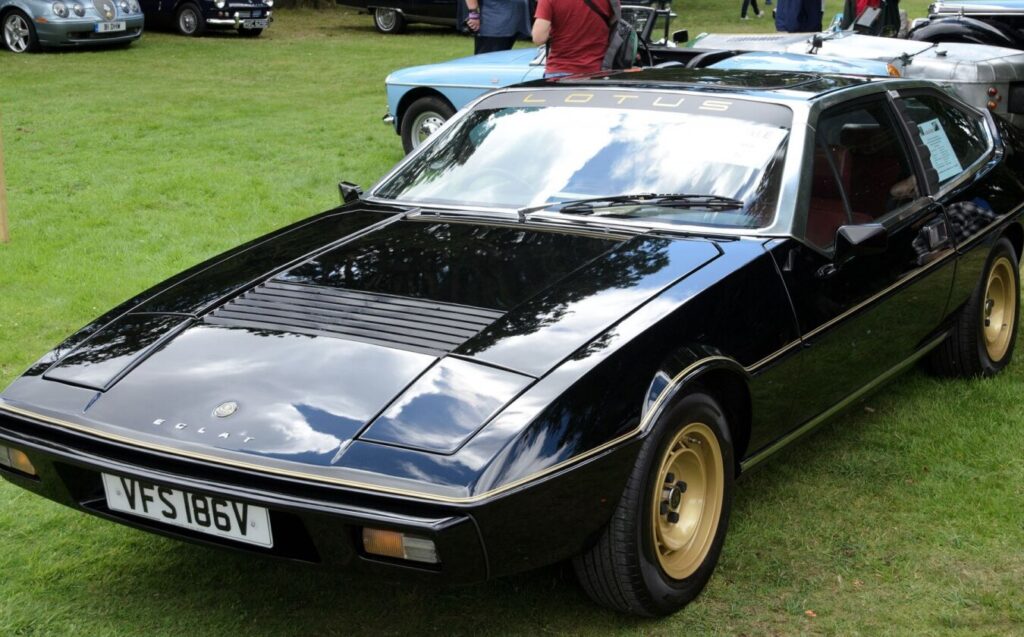
The Lotus Eclat 2.0, produced between 1975 and 1980, represents a pivotal point in Lotus’s strategy to offer a more accessible and refined sports car alongside the more focused and expensive Esprit. Positioned as a grand tourer rather than a pure sports car, the Eclat aimed to blend Lotus’s renowned handling characteristics with a degree of practicality and comfort previously unseen in their lineup. It was built on the backbone chassis, a Lotus signature, but with a more spacious interior and a focus on everyday usability. The 2.0-liter variant, producing 162 horsepower, was the mainstay of the Eclat range during its initial production run, offering a balance between performance and affordability. It served as the entry point into the Eclat family, with later models offering more powerful engine options.
Technical Specifications
| Brand | Lotus |
| Model | Eclat |
| Generation | Eclat |
| Type (Engine) | 2.0 (162 Hp) |
| Start of Production | 1975 |
| End of Production | 1980 |
| Powertrain Architecture | Internal Combustion Engine |
| Body Type | Coupe |
| Fuel Type | Petrol (Gasoline) |
| Acceleration 0-60 mph | 7.8 sec |
| Power | 162 Hp |
| Engine Model/Code | Lotus 907 |
| Engine Aspiration | Naturally Aspirated |
Powertrain & Engine Architecture
The heart of the Eclat 2.0 is the Lotus 907 engine, a 1,973 cc inline-four cylinder powerplant. This engine, while designed by Lotus, utilized components sourced from Ford, specifically the Ford Taunus and Cortina models. It’s a twin overhead camshaft (DOHC) design, a relatively sophisticated setup for the mid-1970s, contributing to its respectable power output. The 907 featured a cast iron block and an aluminum cylinder head. Fuel delivery was managed by a Weber 32/36 DGV carburetor, a common choice for performance cars of the era. The engine’s valvetrain employed two valves per cylinder.
The Eclat 2.0 was initially offered exclusively with a four-speed manual transmission. Later, a three-speed automatic transmission became available, though it was less common and generally considered to detract from the driving experience. The transmission was rear-wheel drive, consistent with Lotus’s focus on handling balance. The engine’s relatively high compression ratio (around 9.5:1) contributed to its performance, but also necessitated the use of premium gasoline.
Driving Characteristics
The Eclat 2.0 offered a distinctly Lotus driving experience, prioritizing handling and responsiveness over outright acceleration. The 162 horsepower engine provided adequate power for spirited driving, and the car’s relatively light weight (around 2,200 lbs) helped to offset the limitations of the engine’s torque output. Acceleration from 0 to 60 mph was achieved in approximately 7.8 seconds, which was competitive for its time, but not groundbreaking. The four-speed manual transmission allowed drivers to fully exploit the engine’s powerband, while the automatic, though offering convenience, resulted in noticeable performance loss.
The Eclat’s steering was unassisted, providing excellent feedback and a direct connection to the road. The suspension, a fully independent setup with double wishbones all around, was tuned for neutral handling and minimal body roll. This allowed the Eclat to corner with confidence and precision, making it a rewarding car to drive on winding roads. However, the ride quality could be firm, particularly on rough surfaces.
Equipment & Trim Levels
The Eclat 2.0 was relatively well-equipped for a sports car of its era, though luxury was not its primary focus. Standard features included reclining bucket seats, a wood-rimmed steering wheel, and a comprehensive instrument panel. Interior trim was typically cloth upholstery, though leather options were available. The dashboard layout was functional and driver-focused, with clearly marked gauges for speed, RPM, oil pressure, coolant temperature, and fuel level.
Optional extras included air conditioning, a sunroof, and upgraded audio systems. The Eclat was available in a range of exterior colors, with popular choices including white, red, and silver. The interior trim colors were more limited, typically offering shades of black, brown, or beige. The Eclat aimed for a more refined interior than the Esprit, with more sound deadening and a generally more comfortable cabin.
Chassis & Braking
The Eclat’s chassis was based on the Lotus backbone design, a steel spine that provided exceptional rigidity. This backbone was then attached to a fiberglass monocoque body, keeping weight to a minimum. The suspension, as mentioned previously, was fully independent with double wishbones all around, incorporating coil springs and anti-roll bars. The front suspension featured an anti-roll bar, while the rear initially did not, though later models did receive one to further improve handling.
Braking was initially accomplished with disc brakes on the front wheels and drum brakes on the rear. This configuration was adequate for most driving situations, but the rear drums could be prone to fading under heavy use. Later models were upgraded with disc brakes on all four wheels, providing improved stopping power and consistency. The steering was a rack and pinion system, known for its precision and responsiveness.
Market Reception & Comparison
The Lotus Eclat 2.0 was generally well-received by automotive critics, who praised its handling, steering, and overall driving experience. However, some criticized the engine’s lack of low-end torque and the carburetor’s occasional tuning issues. Compared to its sibling, the Esprit, the Eclat was seen as a more practical and comfortable car, but less visually striking and lacking the Esprit’s exotic appeal. Against competitors like the Porsche 924 and the Jaguar XJS, the Eclat offered a unique blend of British sports car character and grand touring comfort. Fuel economy was reasonable for the time, averaging around 22-25 mpg.
Reliability was a mixed bag. While the Lotus backbone chassis was generally robust, the Ford-sourced engine and components could be prone to issues if not properly maintained. The Weber carburetor required regular adjustment, and the electrical system could be temperamental. The automatic transmission, when equipped, was known to be less durable than the manual.
Legacy
The Lotus Eclat 2.0 remains a popular choice among classic car enthusiasts, particularly those who appreciate its unique blend of handling, style, and practicality. The 907 engine, while not without its quirks, is relatively straightforward to maintain and repair. Parts availability is generally good, though some specific components can be difficult to find.
Today, well-maintained Eclat 2.0 models command respectable prices in the used car market. They are often seen as a more affordable entry point into Lotus ownership than the Esprit, offering a similar driving experience at a lower cost. The Eclat’s legacy lies in its ability to demonstrate that Lotus could build a sports car that was both exciting to drive and comfortable to live with, paving the way for future models that would further refine this formula. The car represents a significant chapter in Lotus’s history, showcasing their engineering prowess and commitment to driver enjoyment.
