
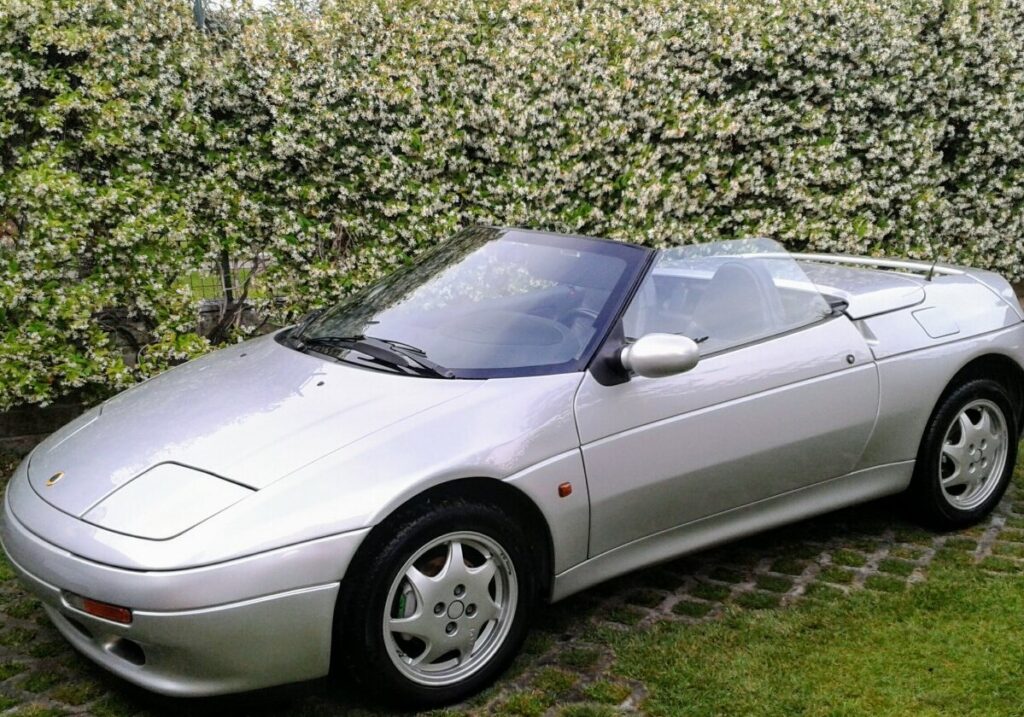
The Lotus Elan II (M100) 1.6i 16V, produced between 1991 and 1993, represented a significant departure for the iconic British sports car manufacturer. This variant, powered by a 1.6-liter, 16-valve engine producing 132 horsepower, aimed to broaden the Elan’s appeal while retaining its core handling characteristics. It sat within the M100 series, a front-wheel-drive platform that moved away from the traditional Lotus emphasis on rear-wheel drive and lightweight construction. The 1.6i 16V was positioned as a mid-range offering, providing a balance between performance and affordability within the Elan II lineup, slotting above the base 1.6 models and below potential future, higher-performance variants that never materialized. The M100 Elan was a product of the period when Lotus was under General Motors ownership, and its design reflected a blend of British sports car tradition and contemporary engineering practices.
Technical Specifications
| Brand | Lotus |
| Model | Elan |
| Generation | Elan II (M100) |
| Type (Engine) | 1.6 i 16V (132 Hp) |
| Start of production | 1991 |
| End of production | 1993 |
| Powertrain Architecture | Internal Combustion engine |
| Body type | Cabriolet |
| Seats | 2 |
| Doors | 2 |
| Fuel consumption (urban) | 10.9 l/100 km (21.6 US mpg) |
| Fuel consumption (extra urban) | 6.9 l/100 km (34.1 US mpg) |
| Fuel consumption (combined) | 8 l/100 km (29.4 US mpg) |
| Fuel Type | Petrol (Gasoline) |
| Acceleration 0 – 100 km/h | 8.2 sec |
| Acceleration 0 – 62 mph | 8.2 sec |
| Acceleration 0 – 60 mph | 7.8 sec |
| Maximum speed | 196 km/h (121.79 mph) |
| Weight-to-power ratio | 7.5 kg/Hp |
| Weight-to-torque ratio | 7 kg/Nm |
| Power | 132 Hp @ 7200 rpm |
| Power per litre | 83.1 Hp/l |
| Torque | 142 Nm @ 4200 rpm (104.73 lb.-ft. @ 4200 rpm) |
| Engine layout | Front, Transverse |
| Engine Model/Code | 4XE1-M |
| Engine displacement | 1588 cm3 (96.91 cu. in.) |
| Number of cylinders | 4 |
| Engine configuration | Inline |
| Cylinder Bore | 80 mm (3.15 in.) |
| Piston Stroke | 79 mm (3.11 in.) |
| Compression ratio | 10:1 |
| Number of valves per cylinder | 4 |
| Fuel injection system | Multi-port manifold injection |
| Engine aspiration | Naturally aspirated engine |
| Valvetrain | DOHC |
| Engine oil capacity | 3.5 l (3.7 US qt | 3.08 UK qt) |
| Coolant capacity | 6.25 l (6.6 US qt | 5.5 UK qt) |
| Kerb Weight | 995 kg (2193.6 lbs.) |
| Fuel tank capacity | 46 l (12.15 US gal | 10.12 UK gal) |
| Length | 3900 mm (153.54 in.) |
| Width | 1735 mm (68.31 in.) |
| Height | 1230 mm (48.43 in.) |
| Wheelbase | 2250 mm (88.58 in.) |
| Front track | 1485 mm (58.46 in.) |
| Rear track | 1485 mm (58.46 in.) |
| Drivetrain Architecture | Front wheel drive |
| Number of gears | 5 |
| Gearbox type | Manual transmission |
| Front suspension | Coil spring |
| Rear suspension | Coil spring |
| Front brakes | Ventilated discs |
| Rear brakes | Ventilated discs |
| Assisting systems | ABS (Anti-lock braking system) |
| Steering type | Steering rack and pinion |
| Power steering | Hydraulic Steering |
| Tires size | 205/50 R15 |
| Wheel rims size | 15 |
Powertrain & Engine Architecture
The heart of the Elan II 1.6i 16V is the 4XE1-M engine, a 1.6-liter inline-four cylinder powerplant. This engine utilized multi-port fuel injection and a double overhead camshaft (DOHC) valvetrain, contributing to its relatively high output for its displacement. The 16 valves (four per cylinder) allowed for improved breathing and higher revs, resulting in the 132 horsepower peak at 7200 rpm and 142 Nm (104.73 lb-ft) of torque at 4200 rpm. The engine’s transverse mounting within the front-wheel-drive chassis was a key element of the M100 platform. The transmission was a five-speed manual, chosen for its driver engagement and efficiency. While an automatic transmission was offered on some M100 Elans, the 1.6i 16V was primarily sold with the manual gearbox, enhancing the sporty driving experience.
Driving Characteristics
The 1.6i 16V Elan II offered a noticeably more spirited driving experience than the base 1.6-liter models. Acceleration to 60 mph was achieved in around 7.8 to 8.2 seconds, and it could reach a top speed of approximately 122 mph. The five-speed manual transmission allowed drivers to keep the engine within its optimal power band, providing responsive acceleration. Compared to the later, more powerful (but never fully realized) VR6-equipped Elans that were planned, the 1.6i 16V prioritized agility and balance over outright speed. The front-wheel-drive configuration, while a departure from Lotus tradition, provided good traction and predictable handling. However, it lacked the nuanced balance of a rear-wheel-drive setup, and torque steer could be noticeable under hard acceleration.
Equipment & Trim Levels
The Elan II 1.6i 16V typically came equipped with features considered standard for a sports car of its era. This included power steering, ventilated disc brakes on all four wheels, and an anti-lock braking system (ABS). Interior appointments included cloth upholstery, a leather-wrapped steering wheel, and basic instrumentation. Optional extras included a sunroof, upgraded sound system, and metallic paint finishes. The trim level was generally consistent across the 1.6i 16V models, with limited customization options available. The focus was on providing a well-equipped, driver-focused package rather than luxurious appointments.
Chassis & Braking
The Elan II utilized a steel unibody chassis, a significant change from the traditional Lotus approach of aluminum monocoques. The suspension consisted of coil springs and dampers all around, providing a comfortable yet sporty ride. The front suspension incorporated MacPherson struts, while the rear utilized a trailing arm setup. Braking duties were handled by ventilated discs on all four wheels, providing ample stopping power. The ABS system helped to maintain stability during hard braking. The chassis was designed to be relatively lightweight, contributing to the car’s agile handling characteristics. However, the weight was higher than previous Elans due to the steel construction and front-wheel-drive components.
Market Reception & Comparison
The Elan II 1.6i 16V was generally well-received by automotive critics, who praised its handling and responsive engine. However, the front-wheel-drive layout was a point of contention for some purists. Compared to the base 1.6-liter Elans, the 16V model offered a significant performance upgrade, justifying its higher price tag. Fuel economy was respectable for a sports car of its time, averaging around 29.4 US mpg in combined driving. Reliability was generally good, although some owners reported issues with the electrical system. Compared to rivals like the Mazda MX-5 Miata, the Elan II offered a more sophisticated driving experience but at a higher price point.
Legacy
The Lotus Elan II 1.6i 16V represents a unique chapter in Lotus history. It was a transitional model that attempted to blend traditional Lotus values with the realities of General Motors ownership and the demands of a changing automotive market. While the M100 Elan was not a commercial success, it remains a popular choice among enthusiasts who appreciate its distinctive styling and engaging driving dynamics. The 1.6i 16V powertrain has proven to be relatively durable, and well-maintained examples are still found on the road today. In the used car market, these Elans command a moderate premium over the base 1.6-liter models, reflecting their increased performance and desirability.
