
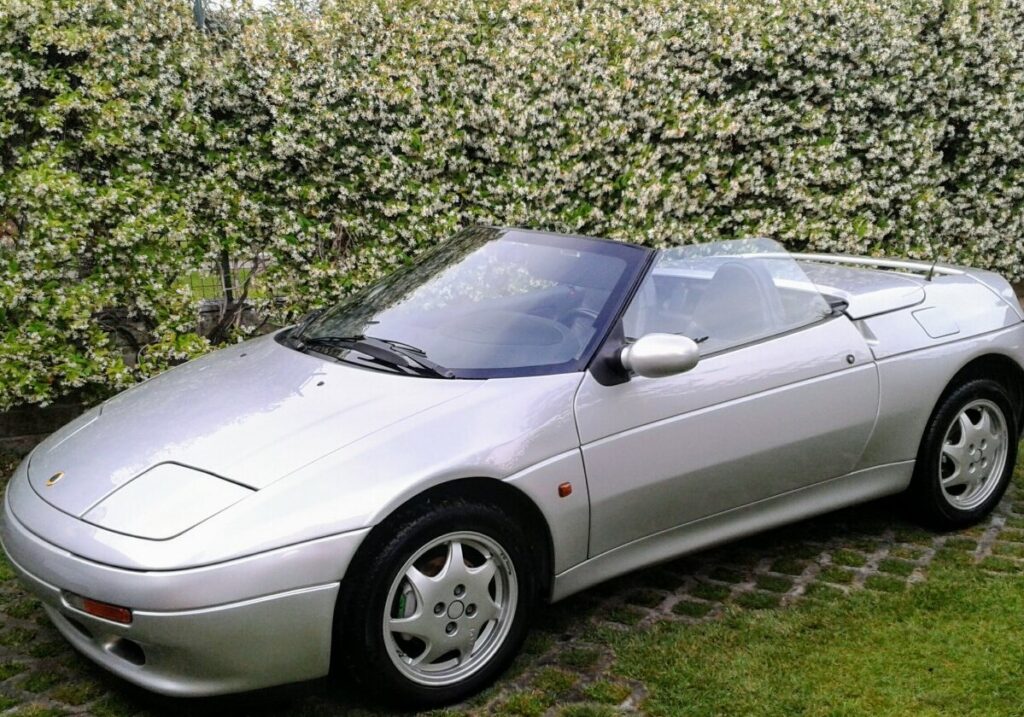
The Lotus Elan II (M100) 1.6i 16V S2, produced between 1994 and 1996, represents a significant departure from the traditional Elan formula, embracing front-wheel drive and a more modern, Isuzu-sourced engine. This variant occupied a mid-range position within the M100 Elan lineup, offering a balance between performance and affordability. It aimed to deliver the Lotus driving experience – lightweight agility and responsive handling – to a broader audience. The M100 Elan was a pivotal model for Lotus, representing an attempt to modernize and increase production volume, though it remains a somewhat controversial car among Lotus purists due to its shift away from the classic Elan’s rear-wheel drive layout.
Technical Specifications
| Brand | Lotus |
| Model | Elan |
| Generation | Elan II (M100) |
| Type (Engine) | 1.6 i 16V S2 (158 Hp) |
| Start of production | 1994 |
| End of production | 1996 |
| Powertrain Architecture | Internal Combustion engine |
| Body type | Cabriolet |
| Seats | 2 |
| Doors | 2 |
| Fuel consumption (combined) | 8.9 l/100 km |
| Fuel consumption (US mpg) | 26.4 US mpg |
| Fuel consumption (UK mpg) | 31.7 UK mpg |
| Fuel consumption (km/l) | 11.2 km/l |
| Fuel Type | Petrol (Gasoline) |
| Acceleration 0 – 100 km/h | 7.2 sec |
| Acceleration 0 – 62 mph | 7.2 sec |
| Acceleration 0 – 60 mph | 7.5 sec |
| Maximum speed | 220 km/h (136.7 mph) |
| Weight-to-power ratio | 6.5 kg/Hp, 154.9 Hp/tonne |
| Weight-to-torque ratio | 5.2 kg/Nm, 194.1 Nm/tonne |
| Power | 158 Hp @ 6000 rpm |
| Power per litre | 99.5 Hp/l |
| Torque | 198 Nm @ 4200 rpm (146.04 lb.-ft. @ 4200 rpm) |
| Engine layout | Front, Transverse |
| Engine displacement | 1588 cm3 (96.91 cu. in.) |
| Number of cylinders | 4 |
| Engine configuration | Inline |
| Cylinder Bore | 80 mm (3.15 in.) |
| Piston Stroke | 79 mm (3.11 in.) |
| Compression ratio | 8.2:1 |
| Number of valves per cylinder | 4 |
| Fuel injection system | Multi-port manifold injection |
| Engine aspiration | Turbocharger |
| Valvetrain | DOHC |
| Kerb Weight | 1020 kg (2248.72 lbs.) |
| Max. weight | 1270 kg (2799.87 lbs.) |
| Max load | 250 kg (551.16 lbs.) |
| Trunk (boot) space – minimum | 185 l (6.53 cu. ft.) |
| Fuel tank capacity | 46 l (12.15 US gal | 10.12 UK gal) |
| Length | 3803 mm (149.72 in.) |
| Width | 1734 mm (68.27 in.) |
| Height | 1240 mm (48.82 in.) |
| Wheelbase | 2250 mm (88.58 in.) |
| Front track | 1486 mm (58.5 in.) |
| Rear (Back) track | 1486 mm (58.5 in.) |
| Drivetrain Architecture | The Internal combustion engine (ICE) drives the front wheels of the vehicle. |
| Drive wheel | Front wheel drive |
| Number of gears and type of gearbox | 5 gears, manual transmission |
| Front suspension | Coil spring |
| Rear suspension | Coil spring |
| Front brakes | Ventilated discs |
| Rear brakes | Disc |
| Assisting systems | ABS (Anti-lock braking system) |
| Steering type | Steering rack and pinion |
| Power steering | Hydraulic Steering |
| Tires size | 205/45 R16 |
| Wheel rims size | 16 |
Powertrain & Engine Architecture
The heart of the Elan II 1.6i 16V S2 is the 1.6-liter, turbocharged inline-four cylinder engine, designated as the 4E-FDE. This engine was sourced from Isuzu, a strategic partnership that allowed Lotus to reduce development costs. The engine features a DOHC (Double Overhead Camshaft) valvetrain and multi-port fuel injection. The turbocharger provides a significant boost in power output compared to naturally aspirated versions of the 1.6-liter engine. The engine’s 8.2:1 compression ratio strikes a balance between performance and reliability. Power is delivered to the front wheels via a five-speed manual transmission. This transmission was chosen for its relatively lightweight design and direct feel, contributing to the car’s overall agility. The engine code is crucial for identifying specific parts and maintenance requirements, as variations exist within the Isuzu 4E-FDE family.
Driving Characteristics
The 158 horsepower and 198 Nm (146 lb-ft) of torque offered by the 1.6i 16V S2 engine provide brisk acceleration. The 0-60 mph sprint takes approximately 7.5 seconds, and the car can reach a top speed of 136.7 mph. While not as raw or visceral as the older, rear-wheel drive Elans, the M100 offers a different kind of driving experience. The front-wheel drive configuration provides good traction, particularly in wet conditions. The turbocharger introduces a slight amount of turbo lag, but once it spools up, the engine delivers a strong surge of power. The five-speed manual transmission allows for precise gear selection, and the relatively short gear ratios contribute to the car’s responsiveness. Compared to the base 1.6-liter Elan, the S2 offers a noticeable performance improvement, while remaining more accessible and easier to drive than higher-performance variants.
Equipment & Trim Levels
The Elan II 1.6i 16V S2 came reasonably well-equipped for its time. Standard features included power steering, ABS anti-lock brakes, and alloy wheels. The interior featured cloth upholstery, and a leather-wrapped steering wheel. Optional extras included air conditioning, a sunroof, and upgraded audio systems. The S2 trim level generally offered a more refined interior finish compared to the base Elan, with improved materials and detailing. The dashboard layout was functional and driver-focused, with clear instrumentation. The Elan II prioritized a minimalist approach to interior design, focusing on providing a comfortable and engaging driving environment.
Chassis & Braking
The Elan II M100 utilized a lightweight, all-steel monocoque chassis. The suspension system consisted of coil springs and dampers all around. The front suspension featured independent struts, while the rear suspension employed a twist-beam setup. The braking system consisted of ventilated discs at the front and solid discs at the rear. The ABS anti-lock braking system helped to maintain stability during hard braking. The Elan II’s relatively low weight – around 2249 lbs – contributed significantly to its agile handling. The suspension was tuned to provide a balance between comfort and responsiveness, offering a compliant ride without sacrificing handling precision.
Market Reception & Comparison
The Elan II 1.6i 16V S2 received mixed reviews from automotive critics. While praised for its handling and performance, it was often criticized for its front-wheel drive layout and its departure from the traditional Elan formula. Some reviewers felt that the car lacked the raw character and engagement of its predecessors. However, others appreciated its improved practicality and accessibility. Compared to other trims in the Elan II lineup, the S2 offered a compelling balance between performance and value. It was more affordable than the higher-performance models, while still providing a significant performance upgrade over the base 1.6-liter version. Fuel economy was reasonable for a sports car of its era, averaging around 26.4 mpg.
Legacy
The Lotus Elan II 1.6i 16V S2, while not a universally beloved model, remains a significant car in Lotus’s history. It represents an attempt to modernize the Elan and broaden its appeal. The Isuzu-sourced engine proved to be relatively reliable, although regular maintenance is essential. Today, the Elan II is a relatively affordable entry point into Lotus ownership. Parts availability can be a challenge, but a dedicated community of enthusiasts exists to support owners. The car’s lightweight construction and engaging handling continue to make it a rewarding driving experience, and it remains a unique and interesting alternative to more mainstream sports cars.
