
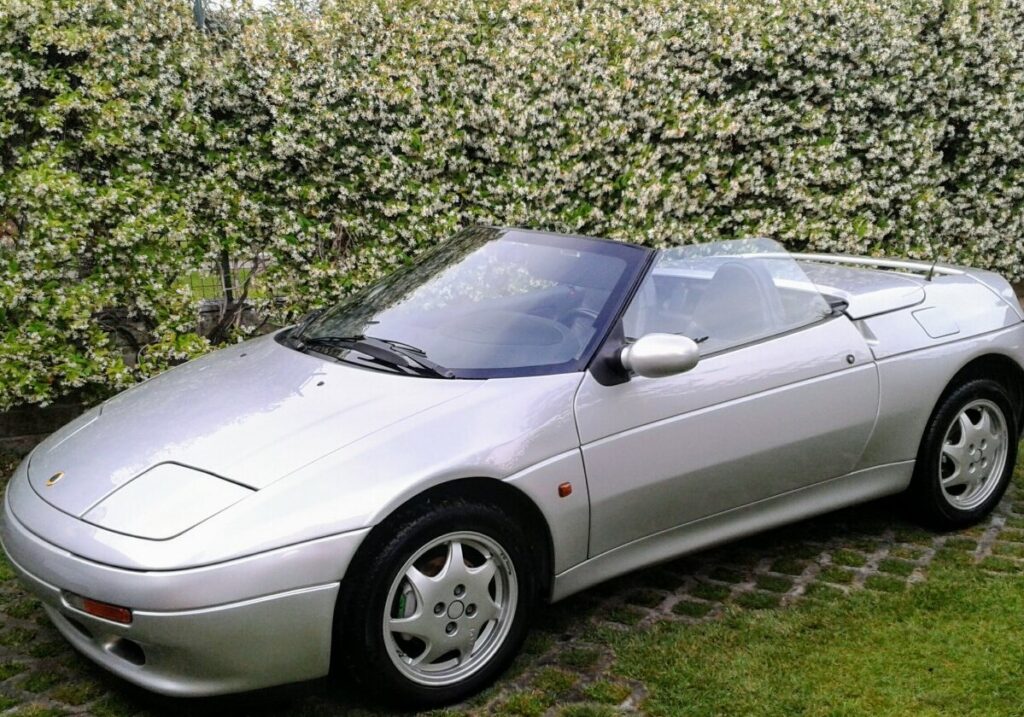
The Lotus Elan II 1.6i 16V Turbo, internally designated the M100, represents a significant departure for the iconic British sports car manufacturer. Produced between 1989 and 1992, this front-wheel-drive convertible aimed to broaden the Elan’s appeal while retaining the core Lotus philosophy of lightweight construction and engaging handling. It was positioned as the performance flagship of the M100 range, offering a substantial power increase over the naturally aspirated models. The M100 Elan, while controversial among purists, was a commercially important model for Lotus, attempting to capture a wider segment of the sports car market.
Technical Specifications
| Brand | Lotus |
| Model | Elan |
| Generation | Elan II (M100) |
| Type (Engine) | 1.6 i 16V Turbo (167 Hp) |
| Start of production | 1989 |
| End of production | 1992 |
| Powertrain Architecture | Internal Combustion engine |
| Body type | Cabriolet |
| Seats | 2 |
| Doors | 2 |
| Fuel consumption (urban) | 10.8 l/100 km (21.8 US mpg) |
| Fuel consumption (extra urban) | 6.7 l/100 km (35.1 US mpg) |
| Fuel consumption (combined) | 8.9 l/100 km (26.4 US mpg) |
| Fuel Type | Petrol (Gasoline) |
| Acceleration 0 – 100 km/h | 7.2 sec |
| Acceleration 0 – 62 mph | 7.2 sec |
| Acceleration 0 – 60 mph | 6.7 sec |
| Maximum speed | 220 km/h (136.7 mph) |
| Weight-to-power ratio | 6.1 kg/Hp |
| Weight-to-torque ratio | 5.1 kg/Nm |
| Power | 167 Hp @ 6500 rpm |
| Power per litre | 105.2 Hp/l |
| Torque | 201 Nm @ 4200 rpm (148.25 lb.-ft. @ 4200 rpm) |
| Engine layout | Front, Transverse |
| Engine Model/Code | 4XE1-MT |
| Engine displacement | 1588 cm3 (96.91 cu. in.) |
| Number of cylinders | 4 |
| Engine configuration | Inline |
| Cylinder Bore | 80 mm (3.15 in.) |
| Piston Stroke | 79 mm (3.11 in.) |
| Compression ratio | 8.2:1 |
| Number of valves per cylinder | 4 |
| Fuel injection system | Multi-port manifold injection |
| Engine aspiration | Turbocharger |
| Valvetrain | DOHC |
| Engine oil capacity | 3.5 l (3.7 US qt | 3.08 UK qt) |
| Coolant capacity | 6.25 l (6.6 US qt | 5.5 UK qt) |
| Kerb Weight | 1020 kg (2248.72 lbs.) |
| Fuel tank capacity | 46 l (12.15 US gal | 10.12 UK gal) |
| Length | 3900 mm (153.54 in.) |
| Width | 1735 mm (68.31 in.) |
| Height | 1230 mm (48.43 in.) |
| Wheelbase | 2250 mm (88.58 in.) |
| Front track | 1485 mm (58.46 in.) |
| Rear track | 1485 mm (58.46 in.) |
| Drivetrain Architecture | Front wheel drive |
| Number of gears | 5 |
| Gearbox type | Manual transmission |
| Front suspension | Coil spring |
| Rear suspension | Coil spring |
| Front brakes | Ventilated discs |
| Rear brakes | Ventilated discs |
| Assisting systems | ABS (Anti-lock braking system) |
| Steering type | Steering rack and pinion |
| Power steering | Hydraulic |
| Tires size | 205/50 R15 |
| Wheel rims size | 15 |
Introduction
The Lotus Elan II 1.6i 16V Turbo, produced from 1989 to 1992, was a pivotal model in Lotus’s history. Built on the M100 platform, it represented a significant shift away from the traditional steel backbone chassis used in previous Elans. This new platform, shared with other contemporary vehicles like the Isuzu Impulse and the Holden Barina, allowed for more cost-effective production and a broader appeal. The turbocharged 1.6-liter engine was the range-topping option, designed to deliver a more exhilarating driving experience than the naturally aspirated variants. The M100 Elan aimed to blend Lotus’s renowned handling characteristics with a more modern and accessible package.
Powertrain & Engine Architecture
The heart of the Elan II Turbo is the 4XE1-MT engine, a 1.6-liter inline-four cylinder powerplant. This engine utilizes a single overhead camshaft (SOHC) design with four valves per cylinder, and is augmented by a Garrett T25 turbocharger and an intercooler. Fuel delivery is managed by a multi-port fuel injection system, contributing to improved efficiency and responsiveness. The engine produces 167 horsepower at 6500 rpm and 201 Nm (148 lb-ft) of torque at 4200 rpm. The turbocharger significantly enhances low-end torque, making the car more tractable in everyday driving situations. The engine’s relatively high compression ratio of 8.2:1, combined with the turbocharging, demanded the use of premium fuel. The Elan II Turbo was exclusively offered with a five-speed manual transmission, chosen to complement the engine’s performance characteristics.
Driving Characteristics
The 1.6i 16V Turbo Elan offers a noticeably more spirited driving experience compared to the naturally aspirated versions. The turbocharger provides a significant boost in acceleration, allowing for a 0-60 mph time of around 6.7 seconds and a top speed of 136.7 mph. While the front-wheel-drive configuration wasn’t universally embraced by Lotus enthusiasts, the M100 chassis proved to be well-balanced and capable. The suspension, featuring coil springs all around, provides a comfortable ride without sacrificing handling precision. The steering, aided by hydraulic power assistance, is responsive and provides good feedback. The five-speed manual transmission has relatively short ratios, keeping the engine within its optimal power band. However, turbo lag is present, requiring the driver to anticipate and manage the power delivery effectively.
Equipment & Trim Levels
The Elan II Turbo was generally well-equipped for its time, though it wasn’t overtly luxurious. Standard features included power steering, ventilated disc brakes on all four wheels, and an anti-lock braking system (ABS). The interior featured cloth upholstery, a leather-wrapped steering wheel, and basic instrumentation. Optional extras included a sunroof, upgraded sound system, and metallic paint finishes. The dashboard layout is functional and driver-focused, with clearly marked gauges and controls. The Elan II Turbo was positioned as the premium trim level, and as such, it received a slightly more comprehensive equipment list than the base models.
Chassis & Braking
The M100 Elan utilizes a monocoque chassis construction, a departure from the traditional Lotus backbone chassis. The suspension consists of independent coil springs and dampers all around. The front suspension incorporates MacPherson struts, while the rear utilizes a semi-trailing arm design. The braking system features ventilated disc brakes on all four wheels, providing ample stopping power. The ABS system helps to maintain stability during hard braking. The Elan II Turbo’s relatively lightweight construction (approximately 2249 lbs) contributes to its agile handling characteristics. The front track width is 58.46 inches, and the rear track width is also 58.46 inches, promoting balanced handling.
Market Reception & Comparison
The Elan II Turbo received mixed reviews from automotive critics. While praised for its performance and handling, the front-wheel-drive layout and the departure from traditional Lotus engineering principles were points of contention. Compared to the naturally aspirated Elan models, the Turbo offered a significant performance upgrade, but at a higher price point. It also faced competition from other sports cars of the era, such as the Mazda MX-5 Miata and the Toyota MR2. Fuel economy was reasonable for a turbocharged sports car, averaging around 26.4 US mpg in combined driving. Reliability was generally good, although the turbocharger and fuel injection system required regular maintenance.
Legacy
The Lotus Elan II 1.6i 16V Turbo remains a desirable classic car among enthusiasts. Its combination of performance, handling, and relative rarity has ensured its continued appeal. While the M100 platform wasn’t without its critics, it represents an important chapter in Lotus’s history. The turbocharged engine is generally considered to be robust and reliable, provided it receives regular maintenance. Today, well-maintained examples of the Elan II Turbo command a premium in the used car market. The car’s unique blend of British sports car heritage and Japanese engineering continues to attract collectors and driving enthusiasts alike.
