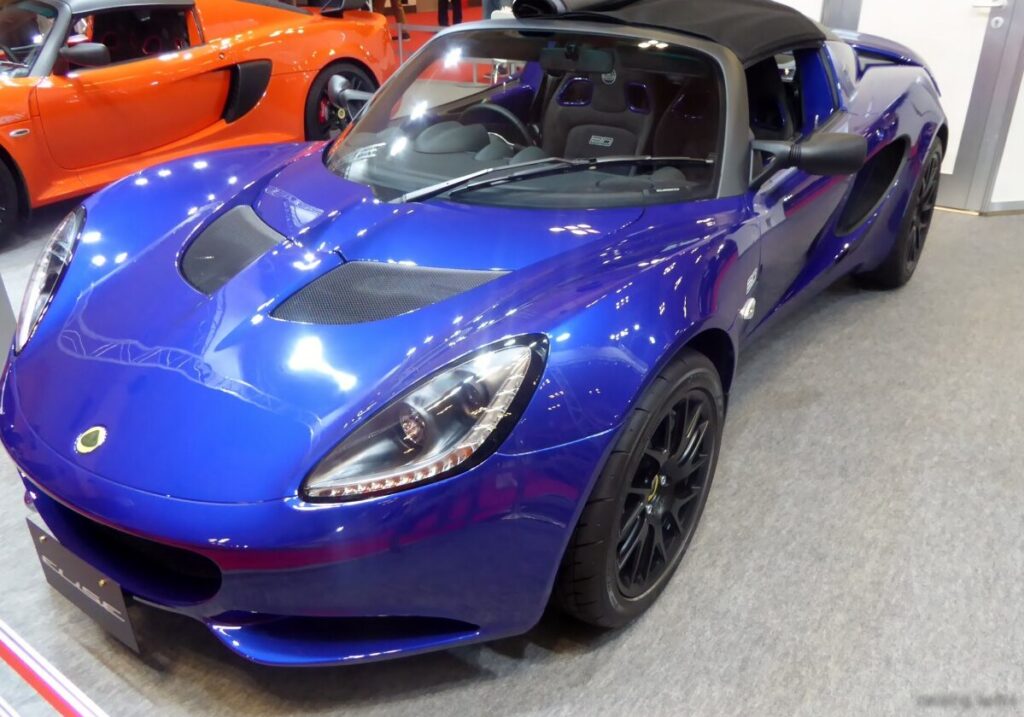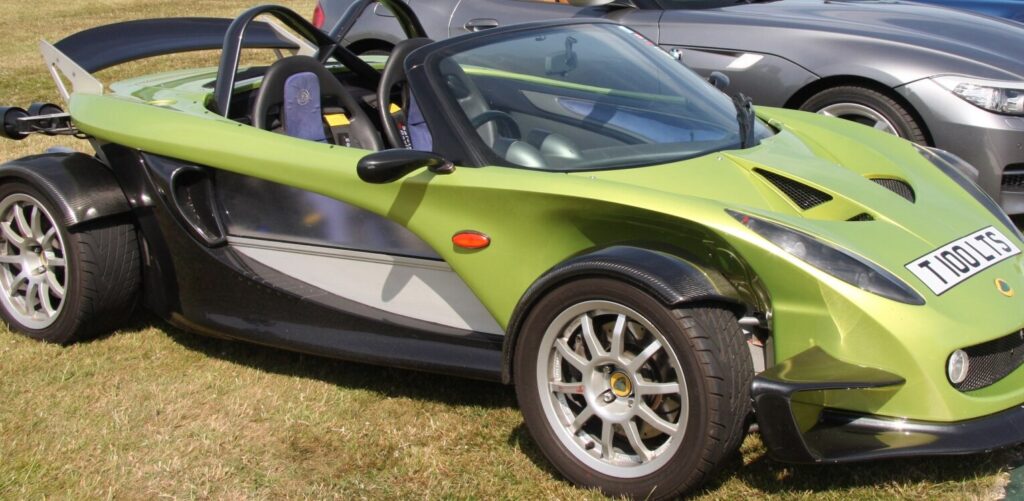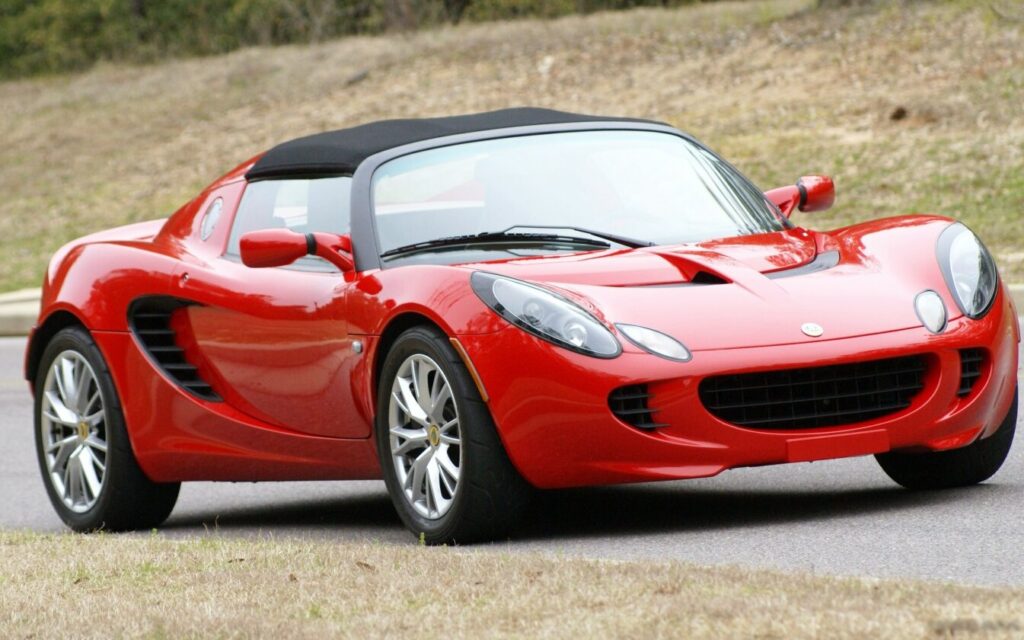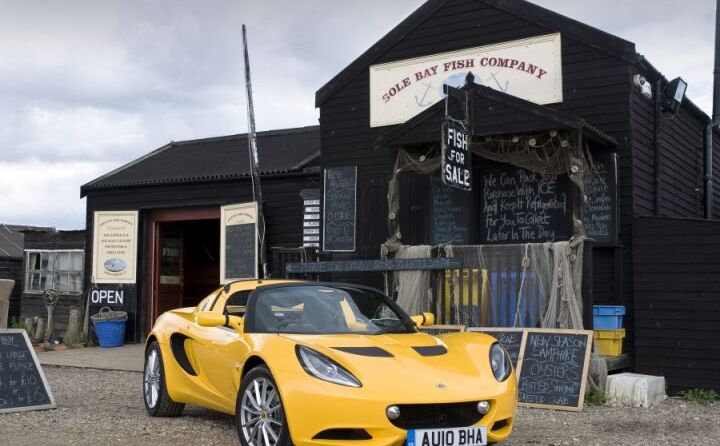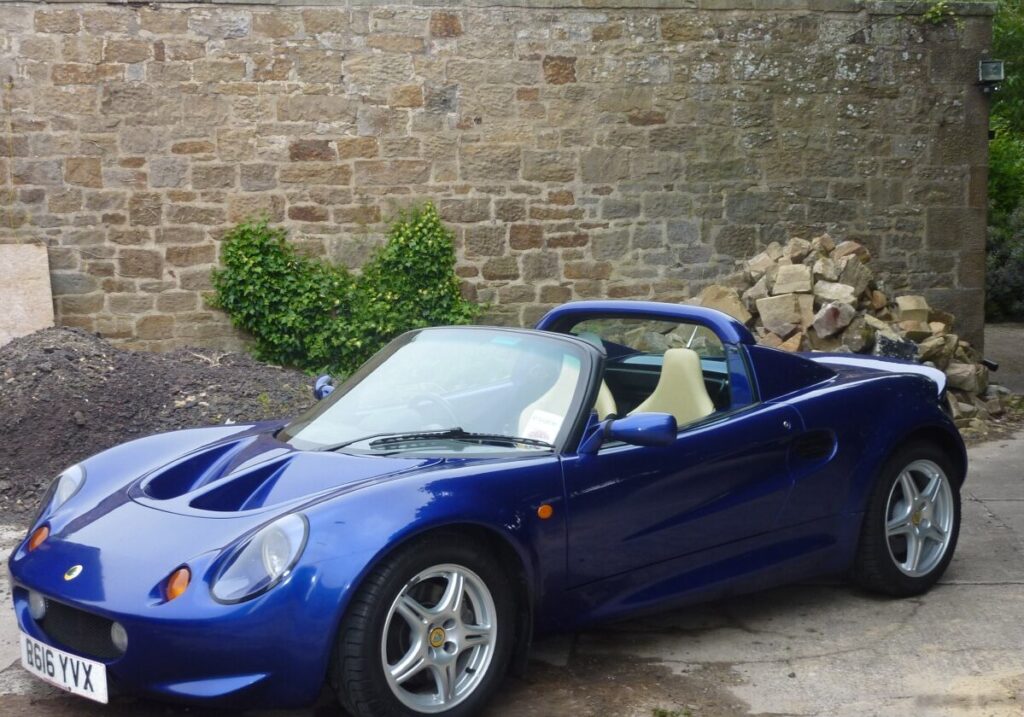
The Lotus Elise Series 1, launched in 1995, represented a pivotal moment for the British sports car manufacturer. Designed under the leadership of Julian Thomson and engineered by Richard Rackham, the Elise was a return to Lotus’s core principles of lightweight construction and exceptional handling. The 1.8 i 16V variant, powered by the K16 engine producing 120 horsepower, was a mainstay of the early production run, spanning from 1995 to 2000. It served as the entry point into the Elise range, offering a pure driving experience at a relatively accessible price point. The Elise (named after the granddaughter of then-Lotus CEO Romano Artioli) was built on a revolutionary bonded aluminum chassis, a technology that would become a hallmark of the model for years to come.
Technical Specifications
| Brand | Lotus |
| Model | Elise |
| Generation | Elise (Series 1) |
| Type (Engine) | 1.8 i 16V (120 Hp) |
| Start of production | 1995 |
| End of production | 2000 |
| Powertrain Architecture | Internal Combustion engine |
| Body type | Roadster |
| Seats | 2 |
| Doors | 2 |
| Fuel consumption (urban) | 9.6 l/100 km (24.5 US mpg) |
| Fuel consumption (extra urban) | 5.7 l/100 km (41.3 US mpg) |
| Fuel Type | Petrol (Gasoline) |
| Acceleration 0 – 100 km/h | 5.9 sec |
| Acceleration 0 – 62 mph | 5.9 sec |
| Acceleration 0 – 60 mph | 5.8 sec |
| Maximum speed | 202 km/h (125.52 mph) |
| Weight-to-power ratio | 5.8 kg/Hp |
| Weight-to-torque ratio | 4.2 kg/Nm |
| Power | 120 Hp @ 5500 rpm |
| Torque | 165 Nm @ 3000 rpm (121.7 lb.-ft. @ 3000 rpm) |
| Engine layout | Middle, Longitudinal |
| Engine Model/Code | K16 (18K4F) |
| Engine displacement | 1796 cm3 (109.6 cu. in.) |
| Number of cylinders | 4 |
| Engine configuration | Inline |
| Cylinder Bore | 80 mm (3.15 in.) |
| Piston Stroke | 89.3 mm (3.52 in.) |
| Compression ratio | 10.5:1 |
| Number of valves per cylinder | 4 |
| Fuel injection system | Multi-port manifold injection |
| Engine oil capacity | 4.5 l (4.76 US qt | 3.96 UK qt) |
| Coolant capacity | 8 l (8.45 US qt | 7.04 UK qt) |
| Kerb Weight | 690 kg (1521.19 lbs.) |
| Max. weight | 940 kg (2072.35 lbs.) |
| Max load | 250 kg (551.16 lbs.) |
| Trunk (boot) space – minimum | 210 l (7.42 cu. ft.) |
| Fuel tank capacity | 36 l (9.51 US gal | 7.92 UK gal) |
| Length | 3726 mm (146.69 in.) |
| Width | 1701 mm (66.97 in.) |
| Height | 1202 mm (47.32 in.) |
| Wheelbase | 2300 mm (90.55 in.) |
| Front track | 1440 mm (56.69 in.) |
| Rear track | 1453 mm (57.2 in.) |
| Drivetrain Architecture | Rear wheel drive |
| Number of gears | 5 |
| Gearbox type | Manual transmission |
| Front suspension | Coil spring |
| Rear suspension | Coil spring |
| Front brakes | Ventilated discs |
| Rear brakes | Ventilated discs |
| Assisting systems | ABS (Anti-lock braking system) |
| Steering type | Steering rack and pinion |
| Tires size | 185/55 R16; 205/50 R16 |
| Wheel rims size | 16 |
Powertrain & Engine Architecture
The heart of the Elise 1.8 i 16V is the Rover K-Series engine, specifically the 18K4F variant, often referred to as the K16. This 1.8-liter (1796cc) inline-four engine is a naturally aspirated powerplant known for its responsiveness and willingness to rev. It features a multi-port fuel injection system and a 10.5:1 compression ratio. The engine produced 120 horsepower at 5500 rpm and 165 Nm (121.7 lb-ft) of torque at 3000 rpm. The K-Series engine, while generally reliable, is known to require diligent cooling system maintenance to prevent head gasket failures, a common issue across various Rover and MG applications. The Elise utilized a five-speed manual transmission, providing a direct connection between the engine and the rear wheels. The transmission was chosen for its lightweight and precise shift feel, contributing to the car’s overall driving experience.
Driving Characteristics
The Elise 1.8 i 16V delivers a remarkably engaging driving experience, largely due to its incredibly low weight (approximately 690 kg or 1521 lbs). The 120 hp engine, while not overwhelming, provides sufficient power for spirited driving on both road and track. Acceleration from 0 to 60 mph takes around 5.8 seconds, and it reaches a top speed of 125.52 mph. The short wheelbase and precise steering contribute to exceptional agility and responsiveness. Compared to later, more powerful Elise variants (like those with the 1.9L engine or the Toyota-sourced 2ZZ-GE), the 1.8 i 16V offers a more accessible and forgiving driving experience. It’s less demanding to drive at the limit, making it a good choice for drivers new to lightweight sports cars. The gear ratios are well-matched to the engine’s powerband, allowing for brisk acceleration in each gear.
Equipment & Trim Levels
The Elise Series 1 was deliberately minimalist in its approach to equipment. The focus was on driving purity, and as such, creature comforts were kept to a minimum. Standard features included basic instrumentation, cloth seats, and a simple stereo system. Air conditioning and leather upholstery were available as optional extras, but were relatively uncommon on early models. The interior was functional and spartan, with a clear emphasis on weight reduction. The dashboard layout was straightforward, with all essential controls within easy reach. The early Elise models were not offered in a wide range of trim levels; the 1.8 i 16V represented the base specification.
Chassis & Braking
The defining feature of the Elise is its revolutionary bonded aluminum chassis. This construction method resulted in an incredibly stiff and lightweight structure, providing a solid foundation for the suspension. The Elise utilizes independent coil spring suspension at all four corners. The front suspension features anti-roll bar, while the rear suspension is simpler to save weight. Braking is provided by ventilated discs on all four wheels, assisted by an ABS system. The braking performance is more than adequate for the car’s weight and performance capabilities. The lightweight construction and well-balanced chassis contribute to exceptional handling and cornering grip.
Market Reception & Comparison
The Lotus Elise Series 1 was widely praised by automotive journalists for its exceptional handling, lightweight construction, and engaging driving experience. Critics noted its minimalist interior and lack of creature comforts, but generally considered these to be acceptable trade-offs for the car’s performance. Compared to other sports cars of the era, the Elise offered a unique combination of agility and affordability. The 1.8 i 16V variant was seen as a good entry point into the Elise range, offering a pure driving experience without the higher price tag of the more powerful models. Fuel economy was respectable for a sports car, averaging around 33 mpg on the combined cycle.
Legacy
The Lotus Elise Series 1 established the Elise as a benchmark for lightweight sports car design. The bonded aluminum chassis technology pioneered in the Elise has been widely adopted by other manufacturers. The 1.8 i 16V variant, while not the most powerful Elise model, remains a popular choice among enthusiasts due to its affordability and engaging driving experience. The K-Series engine, while requiring careful maintenance, is relatively easy to repair and rebuild. Today, well-maintained Elise Series 1 models are highly sought after by collectors and driving enthusiasts, and continue to provide a thrilling and rewarding driving experience.