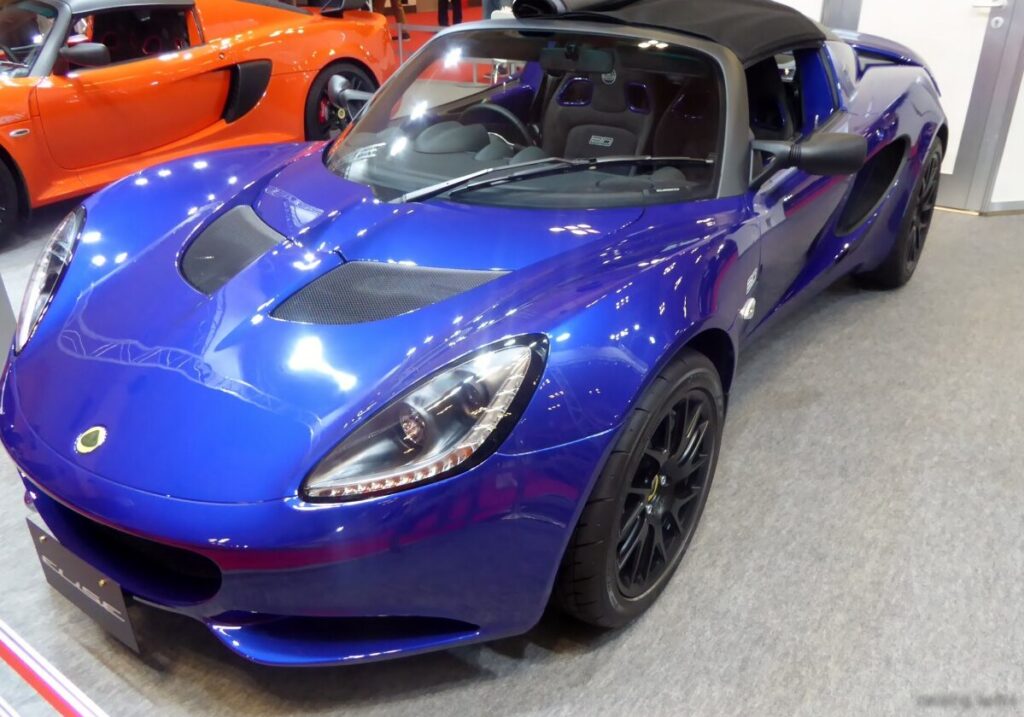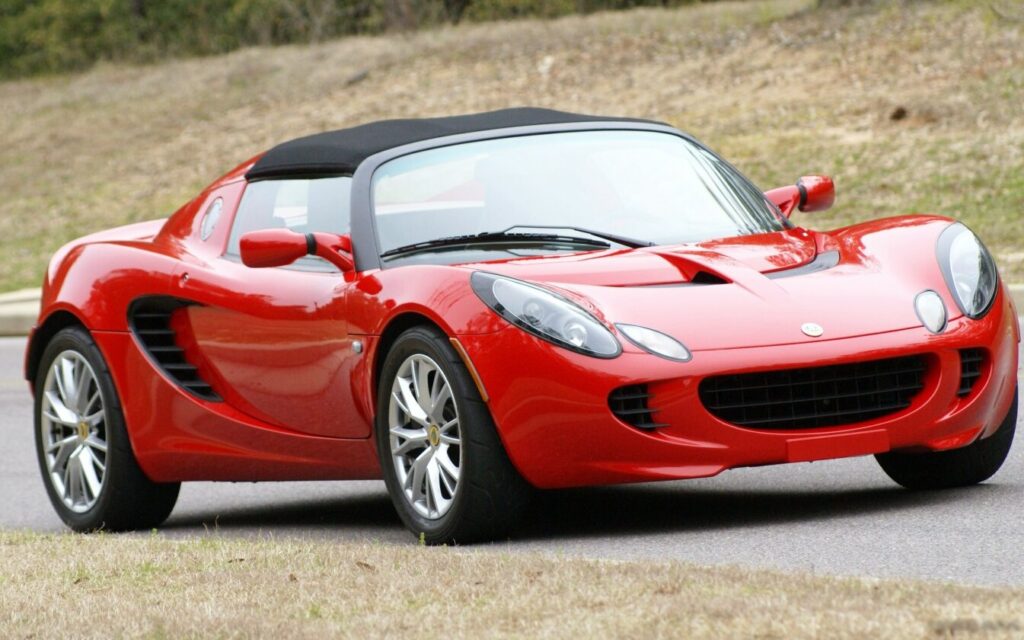
The Lotus Elise Series 3 CR 1.6, produced from 2011 to August 2017, represents a focused iteration of the iconic British sports car. Positioned as a performance-oriented variant within the Series 3 lineup, the CR (Cup Racer) 1.6 aimed to deliver a pure driving experience, emphasizing lightweight construction and agile handling. It served as a bridge between the standard Elise and the more extreme, track-focused Elise Race models. This version was primarily sold in European and Asian markets, with limited availability in North America due to homologation requirements.
Technical Specifications
| Brand | Lotus |
| Model | Elise |
| Generation | Elise (Series 3) |
| Type (Engine) | CR 1.6 (136 Hp) |
| Start of production | 2011 |
| End of production | August, 2017 |
| Powertrain Architecture | Internal Combustion engine |
| Body type | Roadster |
| Seats | 2 |
| Doors | 2 |
| Fuel consumption (urban) | 8.3 l/100 km (28.3 US mpg, 34 UK mpg, 12 km/l) |
| Fuel consumption (extra urban) | 5 l/100 km (47 US mpg, 56.5 UK mpg, 20 km/l) |
| Fuel consumption (combined) | 6.3 l/100 km (37.3 US mpg, 44.8 UK mpg, 15.9 km/l) |
| CO2 emissions | 149 g/km |
| Fuel Type | Petrol (Gasoline) |
| Acceleration 0 – 100 km/h | 6.5 sec |
| Acceleration 0 – 62 mph | 6.5 sec |
| Acceleration 0 – 60 mph | 6 sec |
| Maximum speed | 204 km/h (126.76 mph) |
| Weight-to-power ratio | 6.2 kg/Hp, 160.4 Hp/tonne |
| Weight-to-torque ratio | 5.3 kg/Nm, 188.7 Nm/tonne |
| Power | 136 Hp @ 6800 rpm |
| Torque | 160 Nm @ 4400 rpm (118.01 lb.-ft. @ 4400 rpm) |
| Engine layout | Middle, Transverse |
| Engine Model/Code | 1ZR-FAE |
| Number of cylinders | 4 |
| Engine configuration | Inline |
| Number of valves per cylinder | 4 |
| Fuel injection system | Multi-port manifold injection |
| Engine aspiration | Naturally aspirated engine |
| Valvetrain | DOHC – dual VVT-i |
| Engine oil capacity | 4.8 l (5.07 US qt | 4.22 UK qt) |
| Coolant capacity | 12 l (12.68 US qt | 10.56 UK qt) |
| Kerb Weight | 848 kg (1869.52 lbs) |
| Fuel tank capacity | 40 l (10.57 US gal | 8.8 UK gal) |
| Length | 3824 mm (150.55 in) |
| Width | 1719 mm (67.68 in) |
| Height | 1117 mm (43.98 in) |
| Wheelbase | 2300 mm (90.55 in) |
| Drivetrain Architecture | Rear wheel drive |
| Number of gears and type of gearbox | 6 gears, manual transmission |
| Front suspension | Double wishbone |
| Rear suspension | Double wishbone |
| Front brakes | Ventilated discs |
| Rear brakes | Ventilated discs |
| Assisting systems | ABS (Anti-lock braking system) |
| Steering type | Steering rack and pinion |
| Tires size | 175/55 ZR16; 225/45 ZR17 |
| Wheel rims size | 16; 17 |
Powertrain & Engine Architecture
The CR 1.6 is powered by the Toyota-sourced 1ZR-FAE 1.6-liter inline-four cylinder engine. This engine, while not a Lotus design, was chosen for its reliability and relatively lightweight construction. It features a dual overhead camshaft (DOHC) valvetrain with variable valve timing (VVT-i) on both intake and exhaust camshafts, optimizing performance and efficiency across the rev range. Fuel delivery is handled by a multi-port fuel injection system. The engine produces 136 horsepower at 6,800 rpm and 118 lb-ft of torque at 4,400 rpm. The engine is transversely mounted in a mid-engine layout, contributing to the car’s balanced handling characteristics. Power is transmitted to the rear wheels via a close-ratio six-speed manual transmission, a crucial element in the Elise’s driver-focused experience. The transmission was known for its precise shift feel, enhancing the connection between driver and machine.
Driving Characteristics
The 1.6-liter engine, paired with the manual transmission, delivers a distinctly different driving experience compared to the supercharged Elise variants or the diesel-powered models. While lacking the outright acceleration of its more powerful siblings, the CR 1.6 offers a more accessible and engaging driving experience. The close-ratio gearbox encourages frequent shifting, keeping the engine within its optimal power band. The car feels nimble and responsive, particularly on winding roads. The relatively low weight (approximately 1870 lbs) contributes significantly to its agility. Compared to the higher-output Elise models, the CR 1.6 requires more driver involvement to extract its full potential, but rewards skillful driving with a rewarding and balanced feel. The power delivery is linear, making it predictable and easy to control.
Equipment & Trim Levels
The Elise CR 1.6 was purposefully minimalist in its equipment levels, adhering to the Lotus philosophy of “simplify, then add lightness.” Standard features included lightweight composite body panels, a basic interior with leather and Alcantara upholstery, and a six-point roll cage for enhanced safety. Air conditioning and a radio were often optional extras. The CR trim level typically included upgraded suspension components, such as firmer springs and dampers, and a limited-slip differential to improve traction. Interior trim was functional rather than luxurious, with a focus on providing essential information to the driver. Options included upgraded seats, different wheel designs, and various exterior color choices.
Chassis & Braking
The Elise Series 3 utilizes a bonded aluminum chassis, a signature Lotus technology renowned for its exceptional strength and lightweight properties. The suspension employs double wishbones at both the front and rear, providing precise wheel control and excellent handling characteristics. The CR variant often featured stiffer springs and dampers compared to the standard Elise, further enhancing its track-focused capabilities. Braking duties are handled by ventilated discs at all four corners, providing ample stopping power. Anti-lock braking system (ABS) was standard. The lightweight construction of the chassis and suspension components contributes to the car’s overall agility and responsiveness. The rear track width is narrower than some competitors, contributing to the car’s sharp turn-in.
Market Reception & Comparison
The Elise CR 1.6 was generally well-received by automotive critics, who praised its engaging driving dynamics, lightweight construction, and pure sports car feel. While some noted the engine’s lack of outright power compared to other Elise variants, the CR 1.6 was lauded for its accessibility and rewarding driving experience. Fuel economy was respectable, averaging around 37 mpg in combined driving. Reliability was generally good, benefiting from the Toyota-sourced engine. Compared to the supercharged Elise models, the CR 1.6 offered a more affordable entry point into the Lotus brand, appealing to drivers who prioritized handling and driver involvement over sheer speed. Compared to the 1.9 TDI versions available in some European markets, the CR 1.6 offered a more sporting and engaging driving experience, albeit with lower fuel economy.
Legacy
The Lotus Elise Series 3 CR 1.6 has established itself as a desirable used sports car, appreciated by enthusiasts for its purity of purpose and engaging driving dynamics. The Toyota 1ZR-FAE engine is known for its reliability, making the CR 1.6 a relatively low-maintenance ownership proposition. Values have remained relatively stable, reflecting the car’s enduring appeal. The CR 1.6 represents a sweet spot in the Elise lineup, offering a compelling blend of performance, handling, and affordability. It continues to be a popular choice for track day enthusiasts and drivers who appreciate a truly analog driving experience. Its lightweight construction and balanced chassis continue to make it a benchmark for sports car handling.