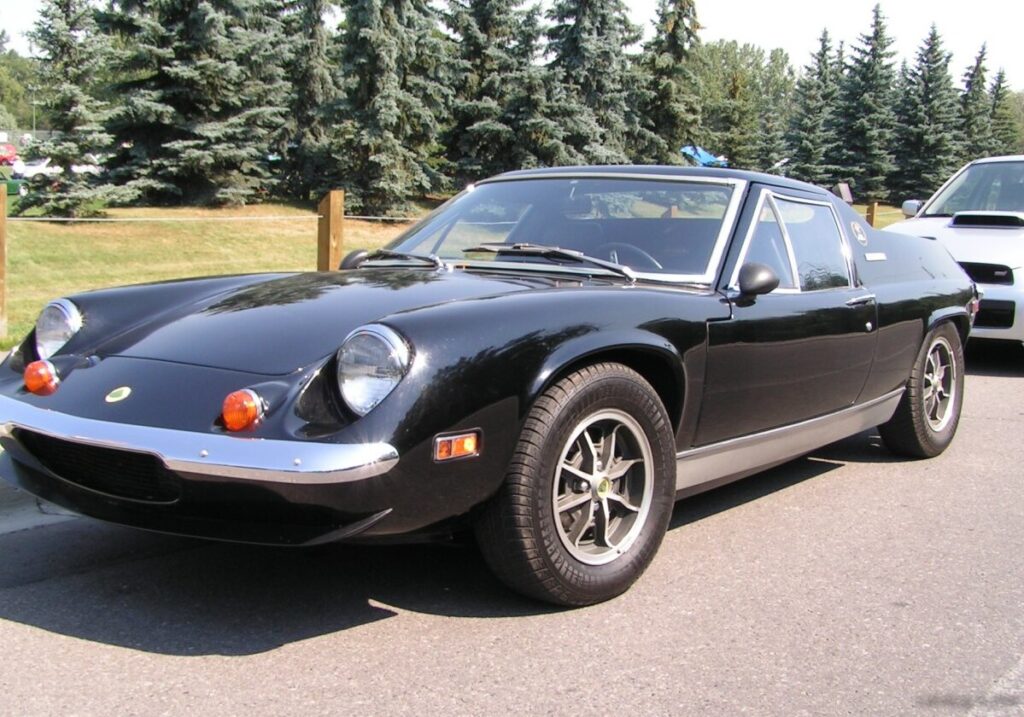
The Lotus Europa 1.6, produced between 1970 and 1976, represents a pivotal moment in the history of Lotus Cars. Positioned as a more accessible and attainable sports car compared to the Elan, the Europa aimed to bring the Lotus experience – lightweight construction, nimble handling, and a focus on driver engagement – to a wider audience. This particular 1.6-liter, 106 horsepower variant served as the mainstay of the Europa lineup for much of its production run, offering a compelling blend of performance and affordability. It was built on a backbone chassis, a signature Lotus design element, and featured a mid-engine layout, contributing to its exceptional balance and handling characteristics. The Europa was a significant departure for Lotus, being the first model to utilize a fully stressed monocoque chassis, a technique borrowed from Formula One racing.
Technical Specifications
| Brand | Lotus |
| Model | Europa |
| Generation | Europa |
| Type (Engine) | 1.6 (106 Hp) |
| Start of Production | 1970 |
| End of Production | 1976 |
| Powertrain Architecture | Internal Combustion Engine |
| Body Type | Coupe |
| Fuel Type | Petrol (Gasoline) |
| Acceleration 0-60 mph | 5.7 sec |
| Power | 106 Hp |
| Engine Aspiration | Naturally Aspirated |
| Engine Oil Capacity | 4 l (4.23 US qt | 3.52 UK qt) |
| Coolant Capacity | 10.8 l (11.41 US qt | 9.5 UK qt) |
| Fuel Tank Capacity | 56 l (14.79 US gal | 12.32 UK gal) |
Powertrain & Engine Architecture
The heart of the Europa 1.6 is the Lotus 907 engine, a 1,558 cc (95.0 cubic inches) inline-four cylinder engine. This engine, while initially sourced from Renault, underwent significant modifications by Lotus to improve its reliability and performance. It features a single overhead camshaft (SOHC) valvetrain operating two valves per cylinder. The engine utilized a Solex 32 PHH carburetor for fuel delivery, a relatively simple system for the era. While not particularly sophisticated by modern standards, the carburetor provided adequate fuel atomization for the engine’s output. The 907 engine produced 106 horsepower at 6,000 rpm and 103 lb-ft of torque at 4,000 rpm. The engine was mounted transversely behind the driver and passenger, driving the rear wheels. The transmission was a Renault-sourced four-speed manual gearbox, known for its light action and precise shifts. Later models saw the introduction of a five-speed gearbox, further enhancing the driving experience.
Driving Characteristics
The Europa 1.6 offered a distinctly engaging driving experience. Its lightweight construction – typically around 1,500 lbs (680 kg) – combined with the mid-engine layout resulted in exceptional handling and balance. The 106 horsepower engine, while not overwhelming, provided sufficient power for spirited driving, especially considering the car’s low weight. Acceleration from 0 to 60 mph was achieved in approximately 5.7 seconds, a respectable figure for the early 1970s. The four-speed gearbox required careful use to keep the engine in its power band, but the precise shift action made it a rewarding experience. Compared to the later, more powerful twin-cam versions of the Europa, the 1.6 felt less frantic and more approachable, making it a better choice for drivers seeking a more relaxed but still sporty driving experience. The car’s steering was direct and communicative, providing excellent feedback to the driver. However, the Europa’s ride quality was firm, reflecting its focus on handling rather than comfort.
Equipment & Trim Levels
The Europa 1.6 was relatively spartan in its standard equipment, reflecting its positioning as an affordable sports car. Standard features typically included reclining bucket seats, a wood-rimmed steering wheel, and basic instrumentation consisting of a speedometer, tachometer, and fuel gauge. Interior trim was generally simple, with vinyl upholstery and minimal carpeting. Optional extras included a radio, heated rear window, and upgraded interior trim materials. The dashboard layout was functional and driver-focused, with all controls within easy reach. Later models saw the addition of more modern features, such as a more comprehensive instrument cluster and improved ventilation system. The Europa’s interior was known for being somewhat cramped, particularly for taller drivers.
Chassis & Braking
The Europa’s chassis was a revolutionary design for Lotus, utilizing a fully stressed monocoque construction bonded to a steel backbone chassis. This construction method provided exceptional rigidity and lightness. The suspension consisted of double wishbones with coil springs and anti-roll bars at the front and rear, providing excellent handling characteristics. Braking was initially accomplished with Girling disc brakes at the front and drum brakes at the rear. Later models were upgraded with disc brakes all around, improving stopping performance. The steering was a rack and pinion system, providing precise and responsive control. The Europa’s relatively low weight contributed to its excellent braking performance, despite the use of drum brakes on earlier models.
Market Reception & Comparison
The Lotus Europa 1.6 was generally well-received by automotive critics, who praised its handling, performance, and affordability. It was often compared to other sports cars of the era, such as the MG B and the Triumph TR6. Compared to these rivals, the Europa offered superior handling and a more modern design, but it was often criticized for its cramped interior and relatively basic equipment. Fuel economy was reasonable for the time, averaging around 25-30 mpg. Reliability was a mixed bag, with some owners reporting issues with the Renault-sourced engine and transmission. However, with proper maintenance, the Europa proved to be a relatively durable and reliable sports car. The 1.6 version was seen as the sweet spot in the Europa range, offering a good balance between performance and cost.
Legacy
The Lotus Europa 1.6 holds a significant place in automotive history as a pioneering example of a mid-engine, lightweight sports car. Its innovative chassis construction and exceptional handling characteristics influenced the design of many subsequent Lotus models. Today, the Europa 1.6 is a sought-after classic car, appreciated by enthusiasts for its unique driving experience and timeless design. While finding well-maintained examples can be challenging, the Europa 1.6 remains a relatively affordable entry point into the world of classic Lotus ownership. The 907 engine, while not known for its outright power, is generally reliable when properly maintained. Parts availability can be an issue, but a dedicated network of Lotus specialists and aftermarket suppliers exists to support owners. The Europa’s enduring appeal lies in its ability to deliver a pure and engaging driving experience that remains captivating even by modern standards.