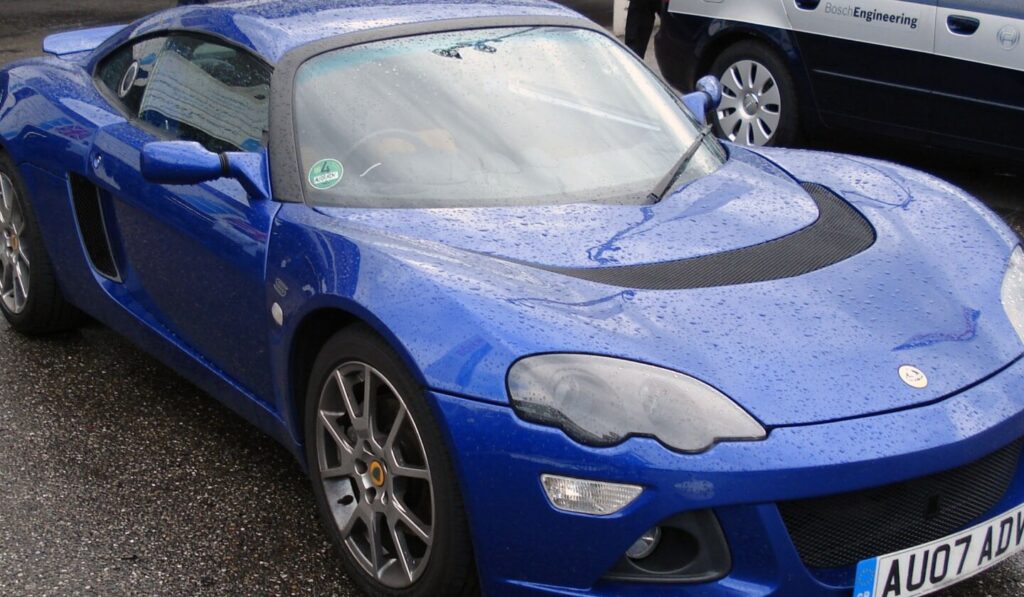
The Lotus Europa S 2.0 16V, produced between 2006 and 2010, marked a deliberate shift in strategy for the British sports car manufacturer. Positioned as a more accessible entry point into the Lotus lineup, the Europa S aimed to broaden the brand’s appeal while still upholding the core tenets of lightweight construction and engaging driving dynamics. This model utilized the General Motors-sourced L850 2.0-liter turbocharged engine – a departure from Lotus’s traditional engine choices – and was built on a revised version of the VX220 chassis. It bridged the gap between the more hardcore Elise/Exige models and a more grand-touring experience, offering a blend of performance and relative comfort within the Lotus ethos. The Europa S was intended to attract buyers who wanted a sports car they could use daily without sacrificing the Lotus driving experience.
Technical Specifications
| Brand | Lotus |
| Model | Europa |
| Generation | Europa S |
| Type (Engine) | 2.0 16V (203 Hp) |
| Start of production | 2006 |
| End of production | 2010 |
| Powertrain Architecture | Internal Combustion engine |
| Body type | Coupe |
| Seats | 2 |
| Doors | 2 |
| Fuel consumption (urban) | 12.7 l/100 km (18.5 US mpg) |
| Fuel consumption (extra urban) | 7.3 l/100 km (32.2 US mpg) |
| Fuel consumption (combined) | 9.3 l/100 km (25.3 US mpg) |
| Fuel Type | Petrol (Gasoline) |
| Acceleration 0 – 100 km/h | 5.8 sec |
| Acceleration 0 – 62 mph | 5.8 sec |
| Acceleration 0 – 60 mph | 9.3 sec |
| Maximum speed | 230 km/h (142.92 mph) |
| Emission standard | Euro 4 |
| Weight-to-power ratio | 4.9 kg/Hp |
| Weight-to-torque ratio | 3.8 kg/Nm |
| Power | 203 Hp @ 5400 rpm |
| Torque | 263 Nm (193.98 lb.-ft.) |
| Engine layout | Middle, Longitudinal |
| Engine Model/Code | GM Z20LER |
| Engine displacement | 1998 cm3 (121.93 cu. in.) |
| Number of cylinders | 4 |
| Engine configuration | Inline |
| Cylinder Bore | 86 mm (3.39 in.) |
| Piston Stroke | 86 mm (3.39 in.) |
| Compression ratio | 8.8:1 |
| Number of valves per cylinder | 4 |
| Fuel injection system | Multi-port manifold injection |
| Engine aspiration | Turbocharger, Intercooler |
| Kerb Weight | 995 kg (2193.6 lbs.) |
| Max. weight | 1066 kg (2350.13 lbs.) |
| Max load | 71 kg (156.53 lbs.) |
| Trunk (boot) space – maximum | 154 l (5.44 cu. ft.) |
| Fuel tank capacity | 44 l (11.62 US gal) |
| Length | 3900 mm (153.54 in.) |
| Width | 1714 mm (67.48 in.) |
| Height | 1120 mm (44.09 in.) |
| Wheelbase | 2330 mm (91.73 in.) |
| Front track | 1457 mm (57.36 in.) |
| Rear (Back) track | 1490 mm (58.66 in.) |
| Drivetrain Architecture | Rear wheel drive |
| Drive wheel | Rear wheel drive |
| Number of gears and type of gearbox | 6 gears, manual transmission |
| Front suspension | Independent coil spring |
| Rear suspension | Independent coil spring |
| Front brakes | Ventilated discs |
| Rear brakes | Disc |
| Assisting systems | ABS (Anti-lock braking system) |
| Tires size | 175/55 R17; 225/45 R17 |
| Wheel rims size | 17 |
Powertrain & Engine Architecture
The heart of the Europa S 2.0 16V is the GM Z20LER engine, a 2.0-liter inline-four cylinder powerplant. This engine, originally designed for Opel/Vauxhall applications, was selected for its relatively compact size and readily available power output. The Z20LER features a single overhead camshaft, four valves per cylinder, and a low-pressure turbocharger coupled with an intercooler. Fuel delivery is managed by a multi-port fuel injection system. The engine produces 203 horsepower at 5400 rpm and 263 Nm (194 lb-ft) of torque. The engine is mounted longitudinally in a mid-engine configuration, contributing to the car’s balanced handling characteristics. Critically, the Europa S was exclusively offered with a Getrag M32 6-speed manual transmission, renowned for its precise shifts and robust construction. This transmission was instrumental in effectively channeling the engine’s power to the rear wheels.
Driving Characteristics
The Europa S 2.0 16V delivers a driving experience distinct from the more focused Elise and Exige models. While still offering a sporty feel, the Europa S prioritizes comfort and usability. The turbocharged engine provides a broad torque curve, making it responsive in everyday driving scenarios. Acceleration from 0 to 60 mph takes approximately 5.8 seconds, and the car boasts a top speed of 143 mph. The 6-speed manual transmission allows for precise gear selection, and the mid-engine layout contributes to excellent balance and cornering ability. However, the added weight compared to the Elise/Exige is noticeable, resulting in slightly reduced agility. The suspension, while firm, is more compliant than that of its more hardcore siblings, providing a more comfortable ride on less-than-ideal road surfaces. The steering, while communicative, lacks some of the directness found in the Elise/Exige.
Equipment & Trim Levels
The Europa S was relatively well-equipped for a Lotus of its time. Standard features included leather upholstery, air conditioning, power windows, and a CD stereo system. The interior, while functional, wasn’t as spartan as the Elise/Exige, offering a more refined ambiance. Optional extras included a premium audio system, metallic paint finishes, and various interior trim upgrades. The Europa S aimed to provide a more complete package for buyers who desired a sports car with a higher level of comfort and convenience. It was positioned as a step up in terms of refinement without completely sacrificing the Lotus driving experience.
Chassis & Braking
The Europa S utilizes a bonded aluminum chassis, a hallmark of Lotus engineering. This construction method results in a lightweight yet incredibly rigid structure. The suspension consists of independent coil springs all around, providing a good balance between handling and ride comfort. Braking is handled by ventilated discs at the front and solid discs at the rear, equipped with ABS. The car’s relatively low weight contributes to effective braking performance. The Europa S features a standard limited-slip differential, enhancing traction and stability during cornering. This feature is particularly beneficial when exiting corners, helping to maintain grip and control.
Market Reception & Comparison
The Europa S received mixed reviews upon its release. Critics praised its comfortable ride, refined interior, and accessible performance. However, some lamented the use of the GM engine, arguing that it lacked the character of a Lotus-designed powerplant. Compared to the Elise and Exige, the Europa S was seen as a more practical and user-friendly option, but it sacrificed some of the raw driving excitement. Fuel economy was reasonable for a sports car of its performance level, averaging around 25 mpg in combined driving. Reliability was generally good, although some owners reported minor issues with the GM engine and electrical components. The Europa S was often seen as a compromise – a more livable Lotus, but one that didn’t quite capture the essence of the brand for purists.
Legacy
The Lotus Europa S 2.0 16V represents an interesting chapter in Lotus’s history. It was an attempt to broaden the brand’s appeal without compromising its core values. While it didn’t achieve the same iconic status as the Elise or Exige, the Europa S remains a desirable sports car for enthusiasts who appreciate its blend of performance, comfort, and style. On the used car market, the Europa S is generally well-regarded, with prices varying depending on condition and mileage. The GM engine, while not a traditional Lotus component, is relatively easy to maintain and repair, contributing to the car’s long-term usability. The Europa S serves as a reminder of Lotus’s willingness to experiment and adapt to changing market demands, even if it meant venturing outside of its traditional engineering comfort zone.