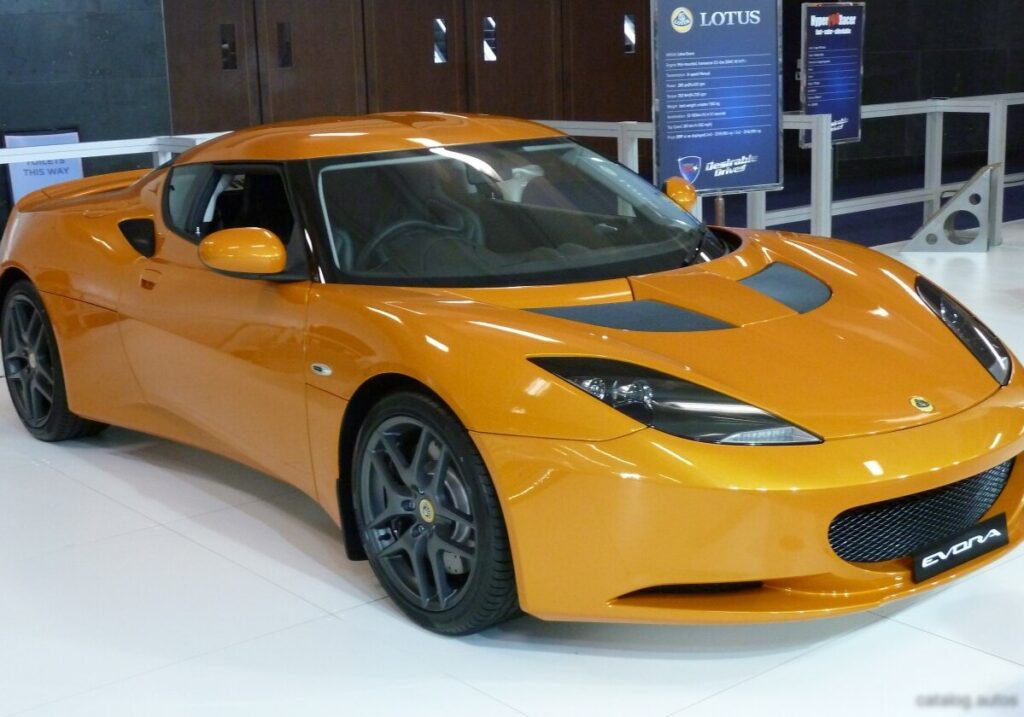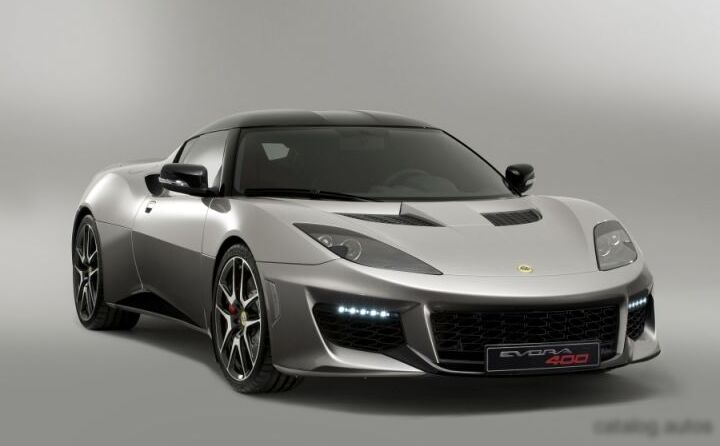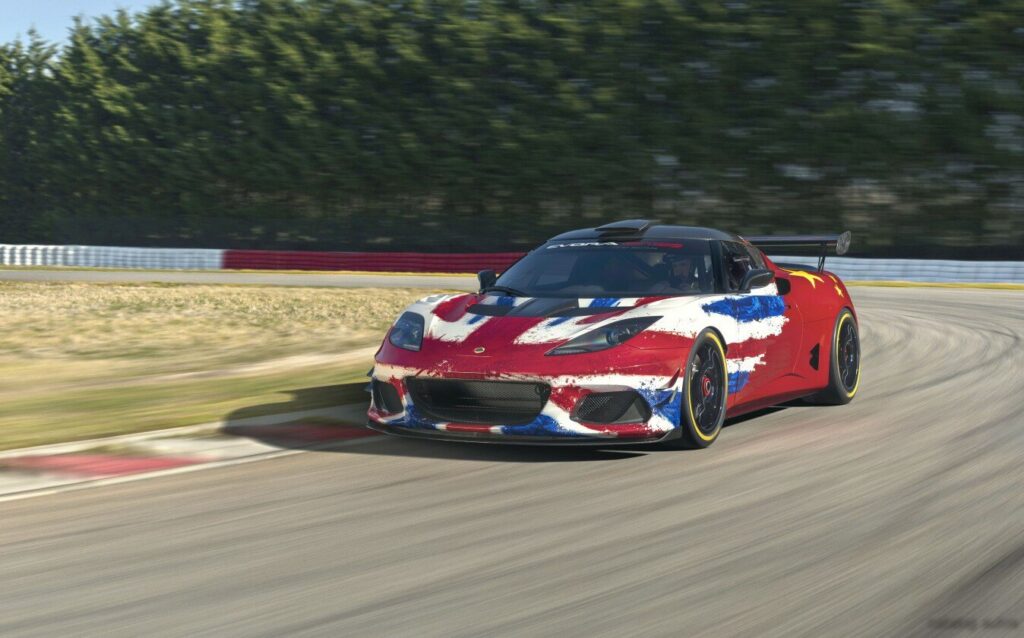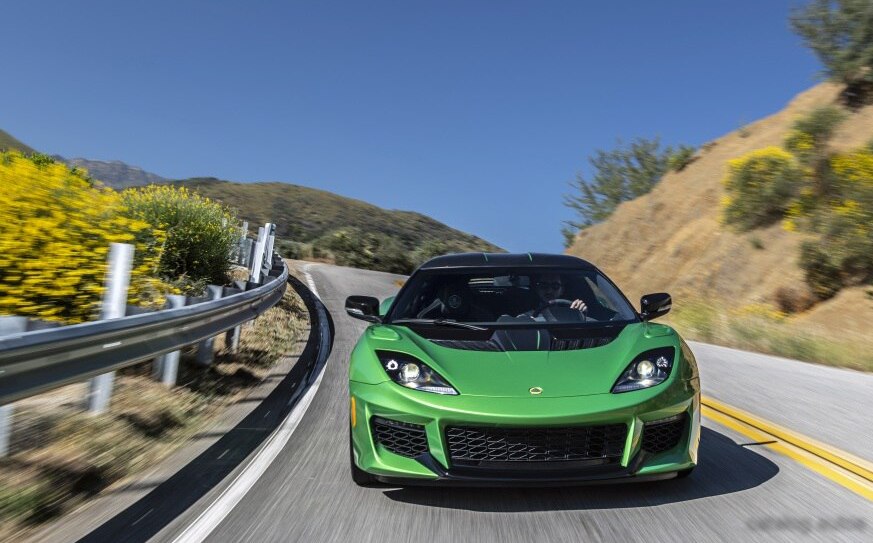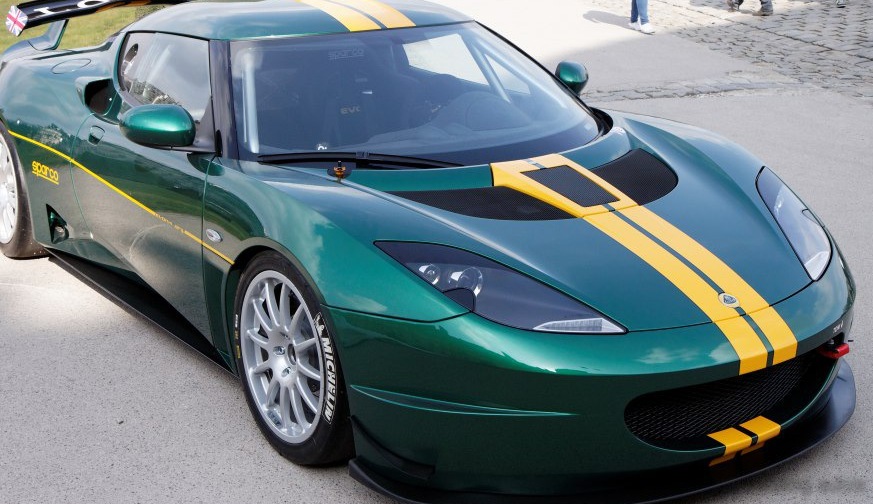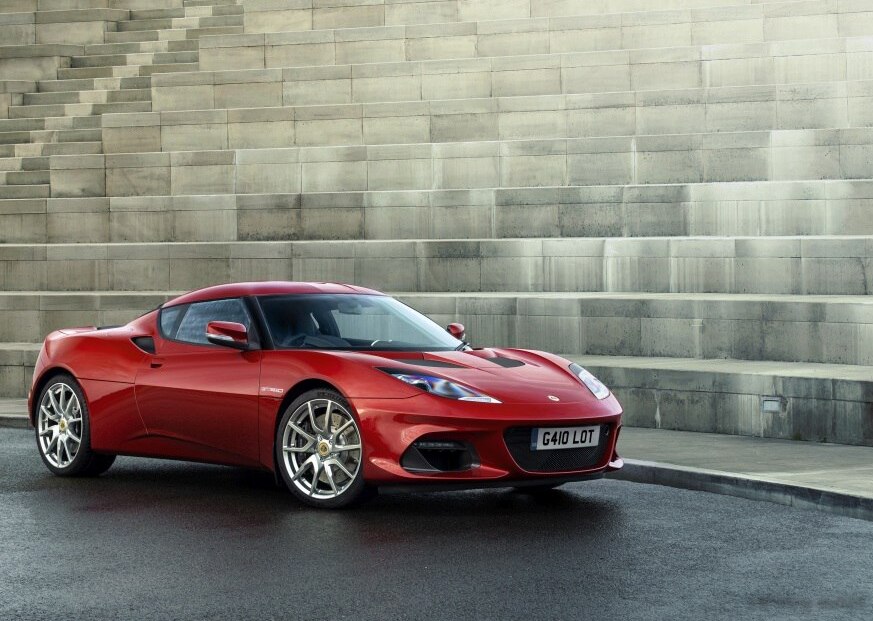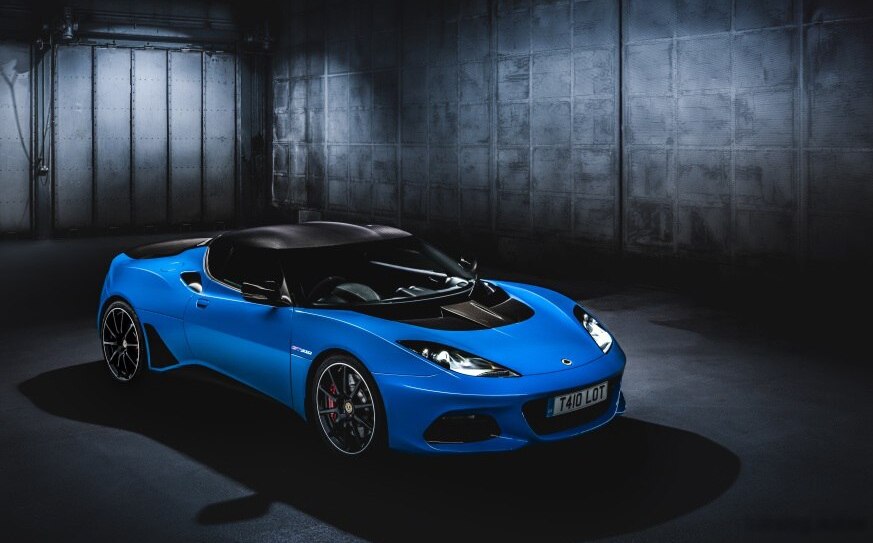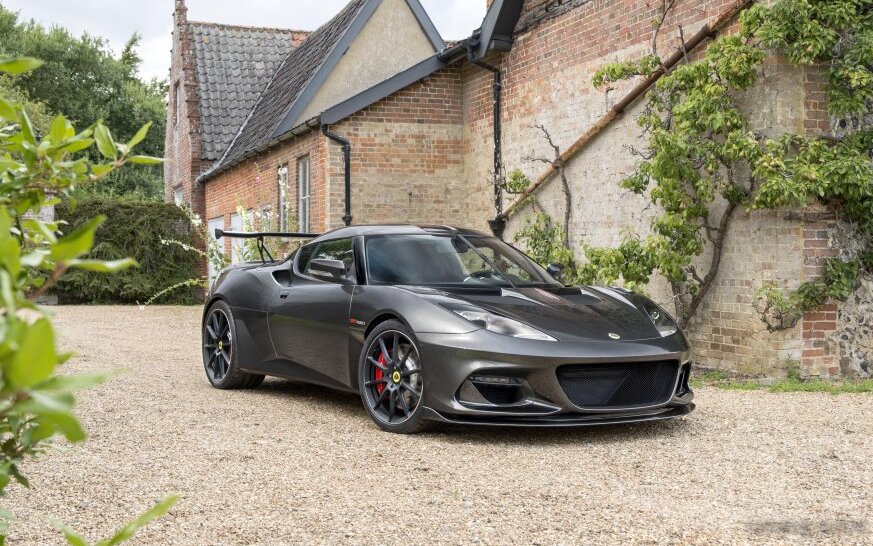
The Lotus Evora GT430, produced from 2017 to August 2018, represents the most extreme iteration of the Evora platform, a mid-engine sports car intended to revitalize the Lotus brand. Positioned as a limited-production, high-performance variant, the GT430 aimed to deliver a more focused and track-capable experience than the standard Evora. It built upon the foundation of the Evora 400, increasing power and incorporating significant aerodynamic enhancements. The GT430 was never officially sold in the United States, remaining a primarily European market offering, though some examples have been imported privately.
Technical Specifications
| Brand | Lotus |
| Model | Evora |
| Generation | Evora GT430 |
| Type (Engine) | 3.5 V6 24V (436 Hp) |
| Start of production | 2017 |
| End of production | August, 2018 |
| Powertrain Architecture | Internal Combustion engine |
| Body type | Coupe |
| Seats | 2 |
| Doors | 2 |
| Fuel consumption (economy) – urban | 13.7 l/100 km (17.2 US mpg, 20.6 UK mpg, 7.3 km/l) |
| Fuel consumption (economy) – extra urban | 8 l/100 km (29.4 US mpg, 35.3 UK mpg, 12.5 km/l) |
| Fuel consumption (economy) – combined | 10.1 l/100 km (23.3 US mpg, 28 UK mpg, 9.9 km/l) |
| CO2 emissions | 234 g/km |
| Fuel Type | Petrol (Gasoline) |
| Acceleration 0 – 100 km/h | 3.8 sec |
| Acceleration 0 – 62 mph | 3.8 sec |
| Acceleration 0 – 60 mph | 3.7 sec |
| Maximum speed | 305 km/h (189.52 mph) |
| Weight-to-power ratio | 3 kg/Hp, 335.6 Hp/tonne |
| Weight-to-torque ratio | 3 kg/Nm, 338.7 Nm/tonne |
| Power | 436 Hp @ 7000 rpm |
| Power per litre | 126.2 Hp/l |
| Torque | 440 Nm @ 4500 rpm (324.53 lb.-ft. @ 4500 rpm) |
| Engine layout | Middle, Transverse |
| Engine Model/Code | 2GR-FE |
| Engine displacement | 3456 cm3 (210.9 cu. in.) |
| Number of cylinders | 6 |
| Engine configuration | V-engine |
| Cylinder Bore | 94 mm (3.7 in.) |
| Piston Stroke | 83 mm (3.27 in.) |
| Compression ratio | 10:1 |
| Number of valves per cylinder | 4 |
| Fuel injection system | Multi-port manifold injection |
| Engine aspiration | Supercharger, Intercooler |
| Valvetrain | DOHC |
| Engine oil capacity | 5.75 l (6.08 US qt | 5.06 UK qt) |
| Coolant | 5.5 l (5.81 US qt | 4.84 UK qt) |
| Kerb Weight | 1299 kg (2863.8 lbs.) |
| Trunk (boot) space – minimum | 160 l (5.65 cu. ft.) |
| Fuel tank capacity | 60 l (15.85 US gal | 13.2 UK gal) |
| Length | 4396 mm (173.07 in.) |
| Width | 1845 mm (72.64 in.) |
| Height | 1229 mm (48.39 in.) |
| Wheelbase | 2575 mm (101.38 in.) |
| Ride height (ground clearance) | 120 mm (4.72 in.) |
| Drivetrain Architecture | Rear wheel drive |
| Drive wheel | Rear wheel drive |
| Number of gears and type of gearbox | 6 gears, manual transmission |
| Front suspension | Double wishbone, Transverse stabilizer |
| Rear suspension | Double wishbone, Transverse stabilizer |
| Front brakes | Ventilated discs |
| Rear brakes | Ventilated discs |
| Assisting systems | ABS (Anti-lock braking system) |
| Steering type | Steering rack and pinion |
| Power steering | Hydraulic Steering |
| Tires size | Front wheel tires: 235/35 R19 Rear wheel tires: 295/30 R20 |
| Wheel rims size | Front wheel rims: 8J x 19 Rear wheel rims: 10.5J x 20 |
Powertrain & Engine Architecture
The heart of the Evora GT430 is the Toyota-sourced 2GR-FE 3.5-liter supercharged V6 engine. This engine, also found in various Toyota and Lexus models, was chosen for its reliability and performance potential. In GT430 guise, it produces 436 horsepower at 7000 rpm and 440 Nm (324.53 lb-ft) of torque at 4500 rpm. The supercharger, an Eaton TVS unit, provides instant boost, contributing to the car’s impressive acceleration. Fuel is delivered via multi-port fuel injection. The engine features a dual overhead camshaft (DOHC) valvetrain with four valves per cylinder. The GT430 exclusively came with a six-speed manual transmission, a deliberate choice to enhance driver engagement and cater to the enthusiast market. This transmission is known for its precise shifts and robust construction.
Driving Characteristics
The Evora GT430 delivers a raw and engaging driving experience. The combination of the supercharged V6 and the manual transmission results in rapid acceleration – 0 to 60 mph in approximately 3.7 seconds and a top speed of 189.52 mph. The car’s relatively lightweight construction (1299 kg / 2863.8 lbs) further enhances its agility. Compared to the standard Evora, the GT430 offers significantly more grip and stability, thanks to its revised suspension and aerodynamic enhancements. The manual gearbox requires a skilled driver to extract the most performance, while the shorter gear ratios prioritize acceleration over fuel economy. The power delivery is linear and predictable, making it a rewarding car to drive on both the road and the track.
Equipment & Trim Levels
The GT430 was a relatively well-equipped vehicle, though Lotus prioritized performance over luxury. Standard features included lightweight sports seats trimmed in Alcantara and leather, a leather-wrapped steering wheel, and air conditioning. The interior featured carbon fiber trim elements, emphasizing the car’s performance focus. Options included upgraded audio systems and various exterior color choices. The GT430 was not offered with a wide range of customization options, reflecting its limited production run and focus on delivering a specific, high-performance package.
Chassis & Braking
The Evora GT430 utilizes a lightweight aluminum chassis, a hallmark of Lotus engineering. The suspension consists of double wishbones at both the front and rear, with transverse stabilizer bars to reduce body roll. The braking system features ventilated discs on all four wheels, providing ample stopping power. ABS (Anti-lock Braking System) is standard. The GT430’s suspension was specifically tuned for track use, resulting in a firmer ride compared to the standard Evora. The car’s balanced weight distribution contributes to its neutral handling characteristics.
Market Reception & Comparison
The Evora GT430 was generally well-received by automotive critics, who praised its performance, handling, and driver engagement. It was often compared to Porsche Cayman GT4, offering a similar level of performance at a slightly lower price point. However, the Evora GT430’s interior was considered less refined than the Porsche’s. Fuel economy was not a strong point, with combined consumption around 23.3 US mpg. Reliability was generally good, benefiting from the Toyota-sourced engine, but Lotus’s build quality was sometimes questioned.
Legacy
The Evora GT430 represents a high point in Lotus’s modern history, showcasing the brand’s commitment to lightweight construction and driver-focused engineering. While production numbers were limited, the GT430 has become a sought-after collector’s item. The 2GR-FE engine has proven to be remarkably durable, and well-maintained examples are expected to remain reliable for years to come. On the used car market, the GT430 commands a premium price, reflecting its rarity and performance capabilities. It stands as a testament to Lotus’s enduring philosophy of “simplify, then add lightness.”