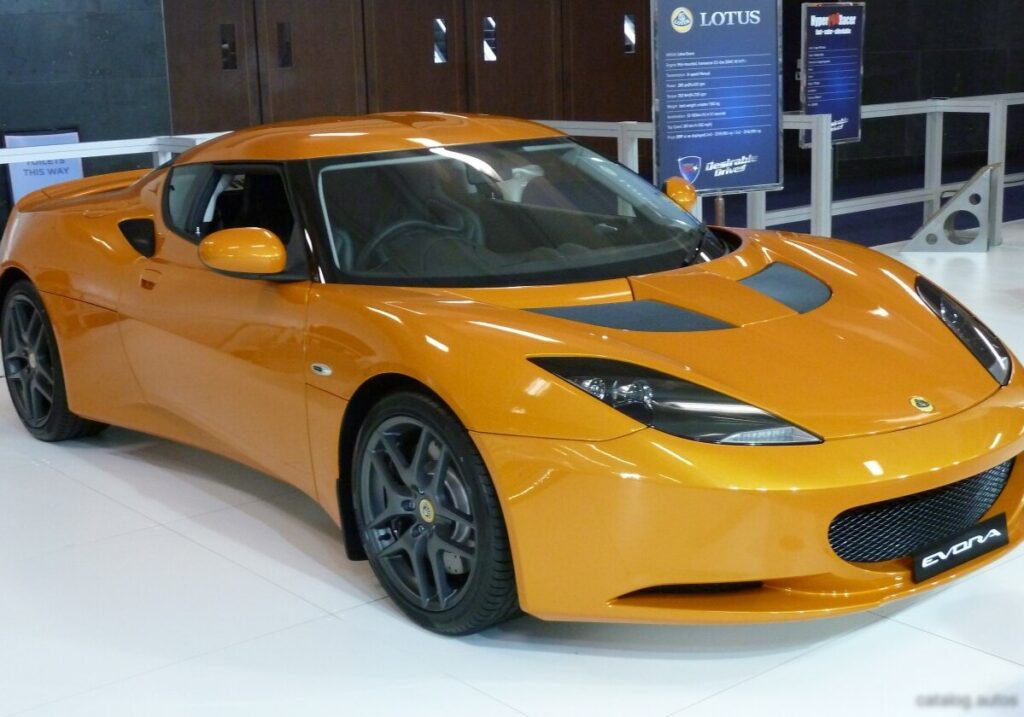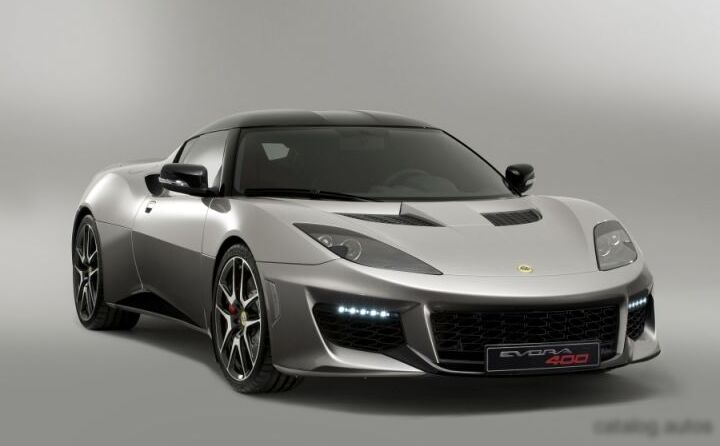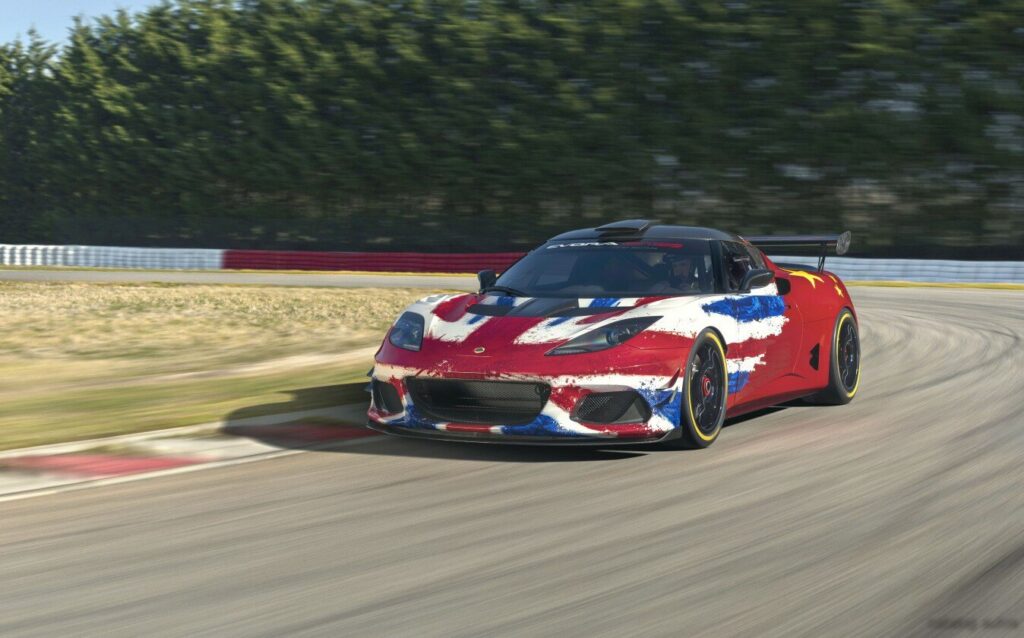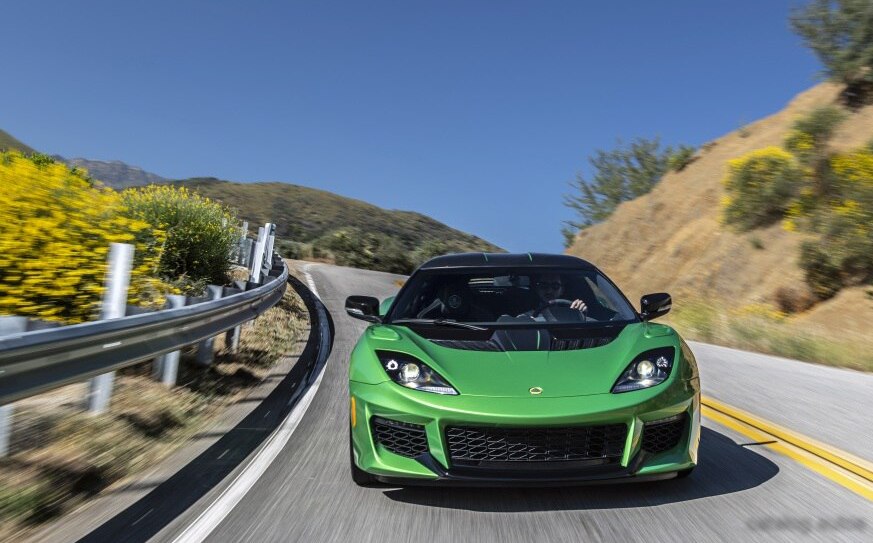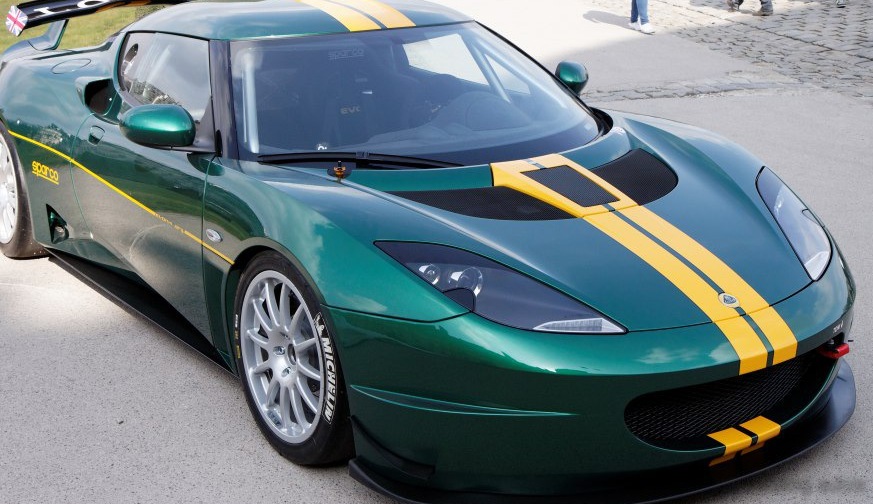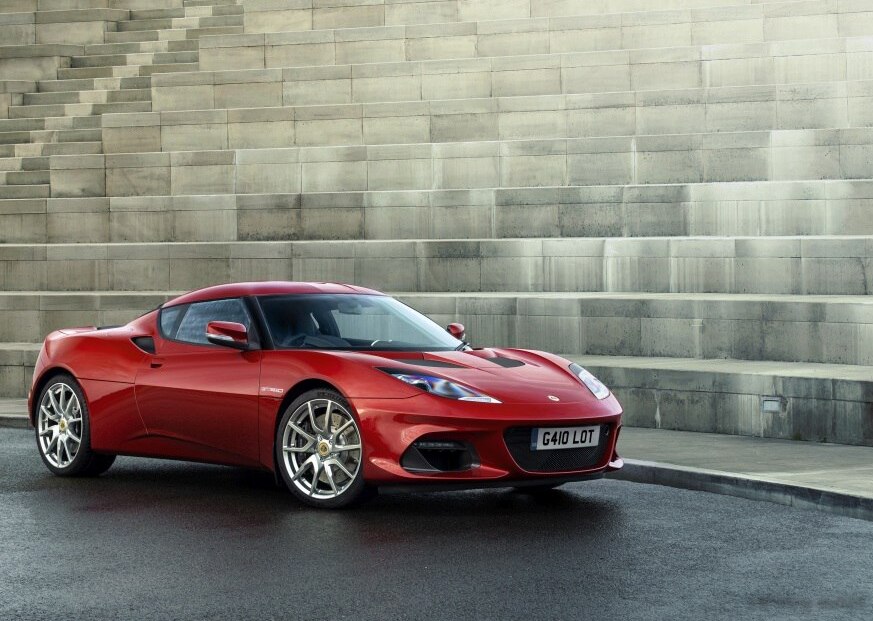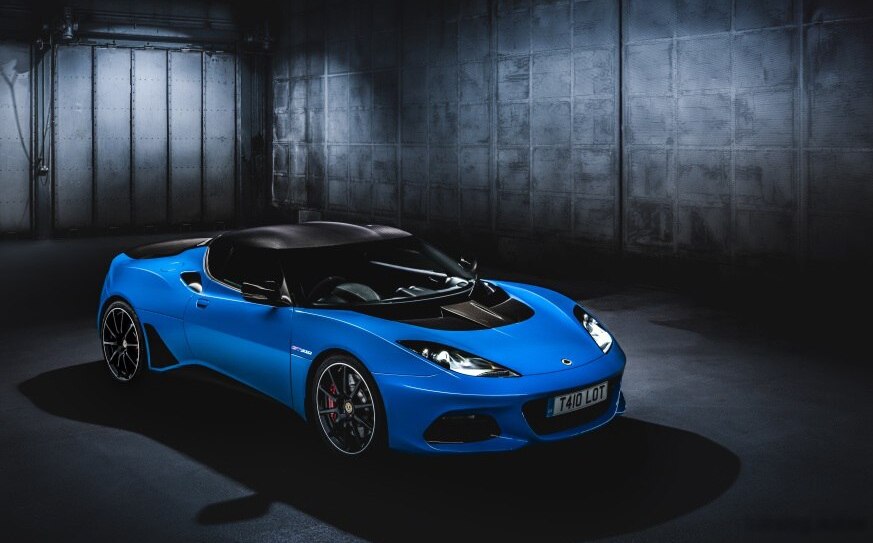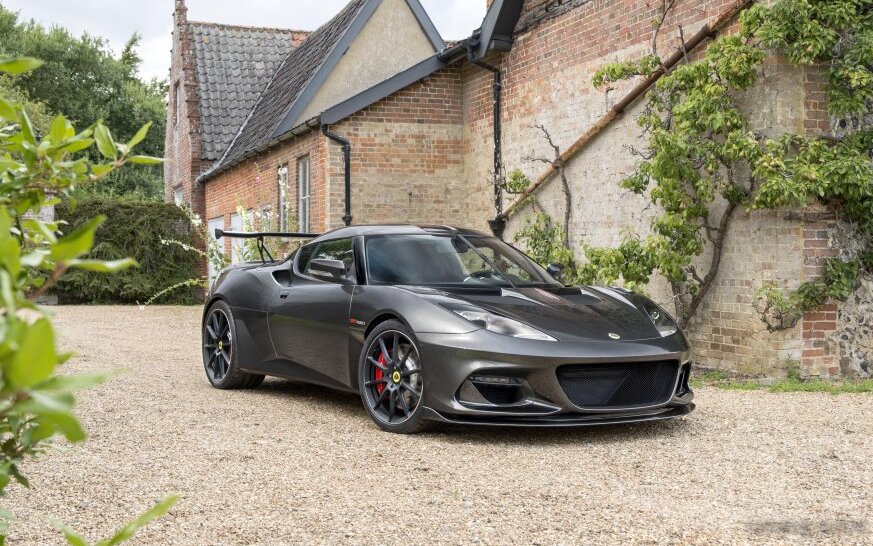
The Lotus Evora GT430 Sport, specifically the 3.5 V6 24V (436 Hp) Automatic variant, represents a focused, high-performance iteration of the Evora platform. Produced from 2017 to August 2018, it sat at the pinnacle of the Evora range, designed to deliver a more visceral and track-oriented driving experience than the standard Evora or even the earlier GT430 models. This variant was part of the broader Evora lineage, which itself was built upon the Lotus Versatile Vehicle Architecture (LVVA) platform, intended to provide a flexible base for a range of Lotus models. The GT430 Sport aimed to bridge the gap between the hardcore GT430 and a more usable, albeit still very sporty, grand tourer.
Technical Specifications
| Brand | Lotus |
| Model | Evora |
| Generation | Evora GT430 |
| Type (Engine) | Sport 3.5 V6 24V (436 Hp) Automatic |
| Start of production | 2017 |
| End of production | August, 2018 |
| Powertrain Architecture | Internal Combustion engine |
| Body type | Coupe |
| Seats | 2 |
| Doors | 2 |
| Fuel consumption (economy) – urban | 15.2 l/100 km (15.5 US mpg, 18.6 UK mpg, 6.6 km/l) |
| Fuel consumption (economy) – extra urban | 8.3 l/100 km (28.3 US mpg, 34 UK mpg, 12 km/l) |
| Fuel consumption (economy) – combined | 10.8 l/100 km (21.8 US mpg, 26.2 UK mpg, 9.3 km/l) |
| CO2 emissions | 247 g/km |
| Fuel Type | Petrol (Gasoline) |
| Acceleration 0 – 100 km/h | 3.7 sec |
| Acceleration 0 – 62 mph | 3.7 sec |
| Acceleration 0 – 60 mph | 3.6 sec |
| Maximum speed | 280 km/h (173.98 mph) |
| Weight-to-power ratio | 3 kg/Hp, 335.4 Hp/tonne |
| Weight-to-torque ratio | 2.9 kg/Nm, 346.2 Nm/tonne |
| Power | 436 Hp @ 7000 rpm |
| Power per litre | 126.2 Hp/l |
| Torque | 450 Nm @ 4500 rpm (331.9 lb.-ft. @ 4500 rpm) |
| Engine layout | Middle, Transverse |
| Engine Model/Code | 2GR-FE |
| Engine displacement | 3456 cm3 (210.9 cu. in.) |
| Number of cylinders | 6 |
| Engine configuration | V-engine |
| Cylinder Bore | 94 mm (3.7 in.) |
| Piston Stroke | 83 mm (3.27 in.) |
| Compression ratio | 10:1 |
| Number of valves per cylinder | 4 |
| Fuel injection system | Multi-port manifold injection |
| Engine aspiration | Supercharger, Intercooler |
| Valvetrain | DOHC |
| Engine oil capacity | 5.75 l (6.08 US qt | 5.06 UK qt) |
| Coolant | 5.5 l (5.81 US qt | 4.84 UK qt) |
| Kerb Weight | 1300 kg (2866.01 lbs.) |
| Trunk (boot) space – minimum | 160 l (5.65 cu. ft.) |
| Fuel tank capacity | 60 l (15.85 US gal | 13.2 UK gal) |
| Length | 4396 mm (173.07 in.) |
| Width | 1845 mm (72.64 in.) |
| Height | 1229 mm (48.39 in.) |
| Wheelbase | 2575 mm (101.38 in.) |
| Ride height (ground clearance) | 120 mm (4.72 in.) |
| Drivetrain Architecture | Rear wheel drive |
| Drive wheel | Rear wheel drive |
| Number of gears and type of gearbox | 6 gears, automatic transmission |
| Front suspension | Double wishbone, Transverse stabilizer |
| Rear suspension | Double wishbone, Transverse stabilizer |
| Front brakes | Ventilated discs |
| Rear brakes | Ventilated discs |
| Assisting systems | ABS (Anti-lock braking system) |
| Steering type | Steering rack and pinion |
| Power steering | Hydraulic Steering |
| Tires size | Front wheel tires: 235/35 R19 Rear wheel tires: 285/30 R20 |
| Wheel rims size | Front wheel rims: 8J x 19 Rear wheel rims: 9.5J x 20 |
Powertrain & Engine Architecture
At the heart of the Evora GT430 Sport Automatic lies the Toyota-sourced 2GR-FE 3.5-liter supercharged V6 engine. This engine, a staple of many Lotus models, is renowned for its robust construction and high power output. The ‘24V’ designation refers to the four valves per cylinder configuration, contributing to efficient cylinder filling and improved performance. The supercharger, an Eaton TVS unit, provides instant boost, delivering a broad torque curve and minimizing turbo lag. Fuel is delivered via multi-port fuel injection, carefully calibrated to optimize combustion. The engine produces 436 horsepower at 7000 rpm and 450 Nm (331.9 lb-ft) of torque at 4500 rpm. The six-speed automatic transmission, while not as engaging as a manual, offers smooth shifts and convenience, particularly in urban environments. It’s a traditional torque-converter automatic, tuned for responsiveness but prioritizing comfort over outright speed.
Driving Characteristics
The GT430 Sport Automatic delivers a thrilling driving experience, albeit one slightly tempered by the automatic transmission. While a manual gearbox would offer more driver involvement, the automatic provides surprisingly quick shifts and allows the driver to focus on navigating corners. The supercharger provides immediate throttle response, making the car feel eager and responsive. The relatively light weight of the Evora (1300 kg / 2866 lbs) contributes to its agility and allows it to accelerate from 0-60 mph in around 3.6 seconds and reach a top speed of 174 mph. Compared to the manual GT430, the automatic version sacrifices some raw engagement but gains in everyday usability. The gear ratios are optimized for both acceleration and cruising, providing a balance between performance and efficiency.
Equipment & Trim Levels
The GT430 Sport Automatic came generously equipped, reflecting its position as the range-topping model. Standard features included lightweight forged alloy wheels, a full leather interior, climate control, and a premium audio system. The interior featured sport seats providing excellent support during spirited driving. Optional extras included a range of carbon fiber trim pieces, upgraded audio systems, and bespoke paint options. The GT430 Sport also benefited from a revised suspension setup, featuring stiffer springs and dampers, and a more aggressive aerodynamic package, including a large rear wing and front splitter, enhancing downforce and stability at high speeds.
Chassis & Braking
The Evora GT430 Sport utilizes a lightweight aluminum chassis, providing a rigid and stable platform. The suspension consists of double wishbones at both the front and rear, with transverse stabilizer bars to reduce body roll. The braking system features ventilated discs all around, providing ample stopping power. ABS (Anti-lock Braking System) is standard, enhancing safety and control. The suspension was tuned to provide a firm but compliant ride, balancing performance with comfort. The car’s relatively low weight and well-balanced chassis contribute to its exceptional handling characteristics.
Market Reception & Comparison
The Evora GT430 Sport Automatic was generally well-received by automotive critics, praised for its performance, handling, and exclusivity. However, some reviewers noted that the automatic transmission didn’t fully exploit the engine’s potential. Compared to the manual GT430, the automatic version offered slightly lower fuel economy and a less engaging driving experience. However, it appealed to buyers who prioritized convenience and ease of use. Against competitors like the Porsche 911, the Evora GT430 Sport offered a unique blend of British engineering, raw performance, and relative affordability.
Legacy
The Lotus Evora GT430 Sport Automatic remains a desirable and collectible sports car. The 2GR-FE engine is known for its reliability, provided it is properly maintained. The automatic transmission, while not as sought-after as the manual, is generally considered durable. In the used car market, these models command a premium due to their limited production numbers and high performance. The GT430 Sport represents a high point in the Evora’s development, offering a compelling combination of performance, handling, and exclusivity, solidifying its place as a modern classic.