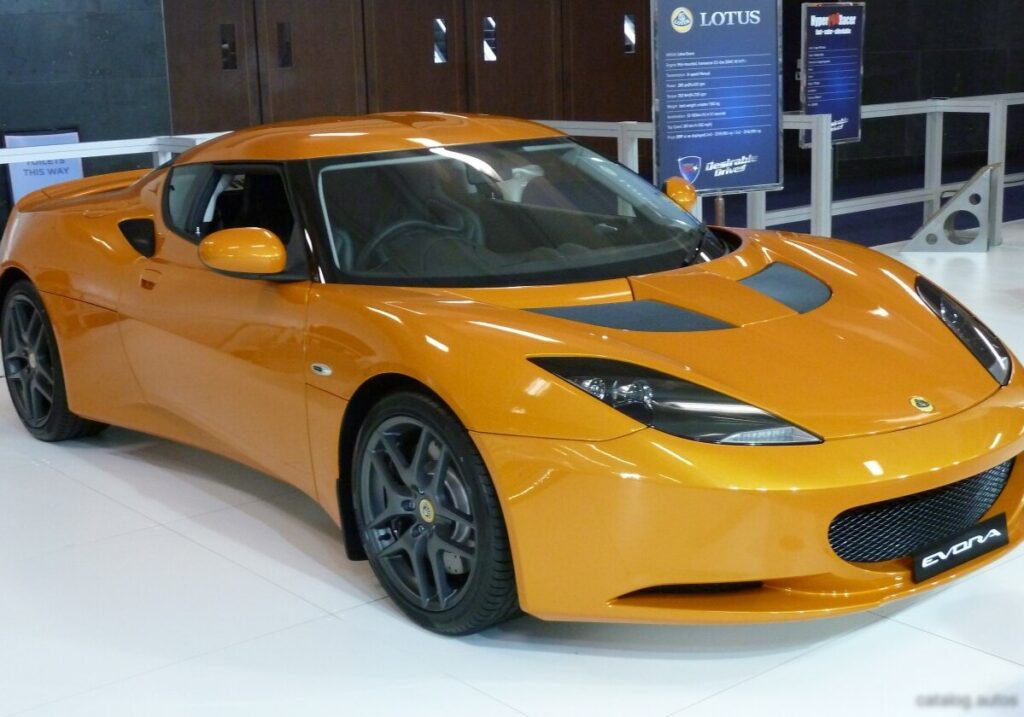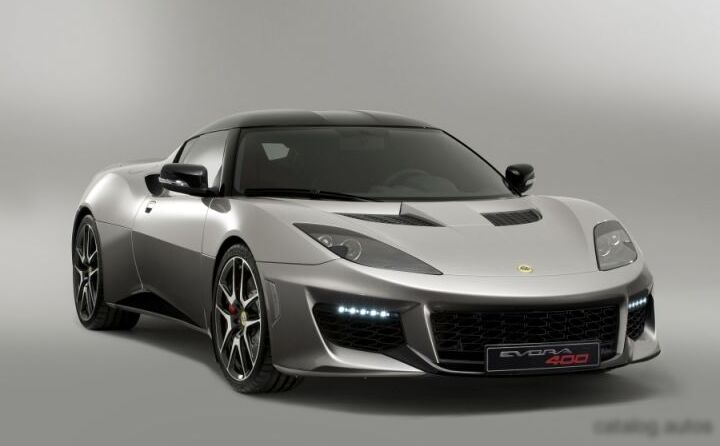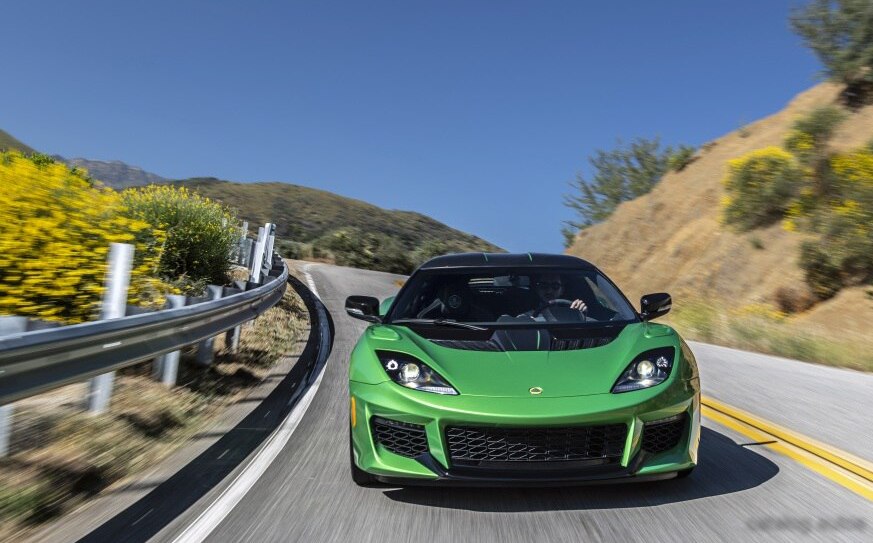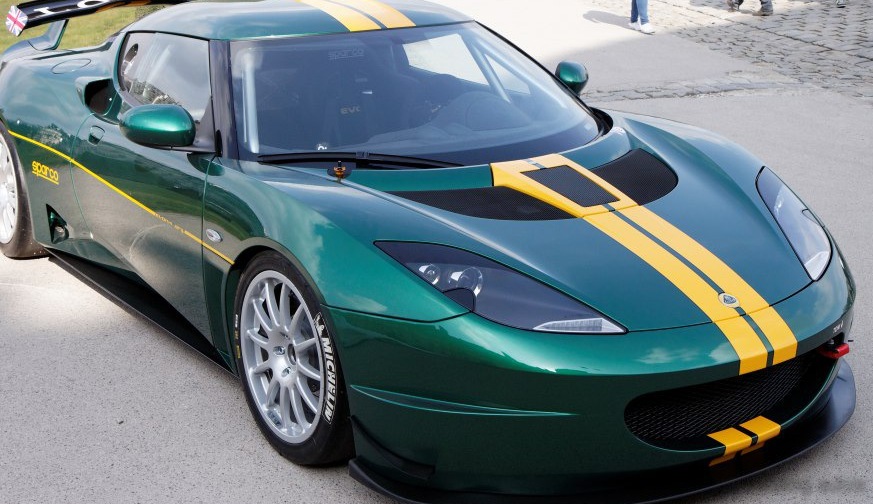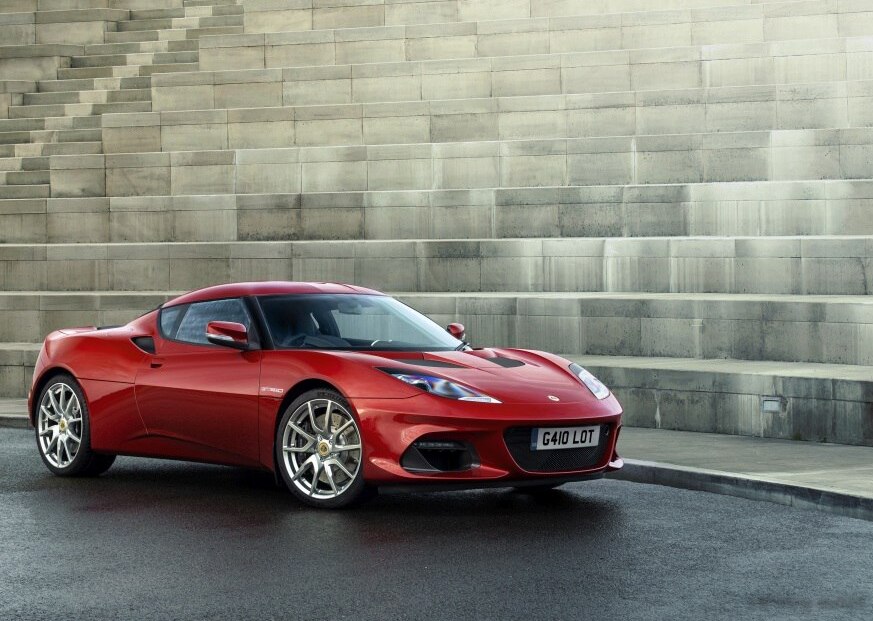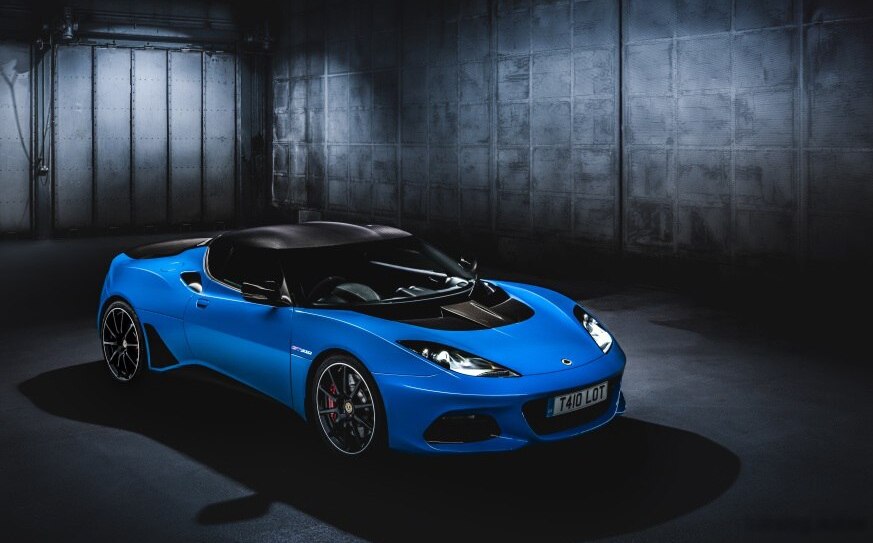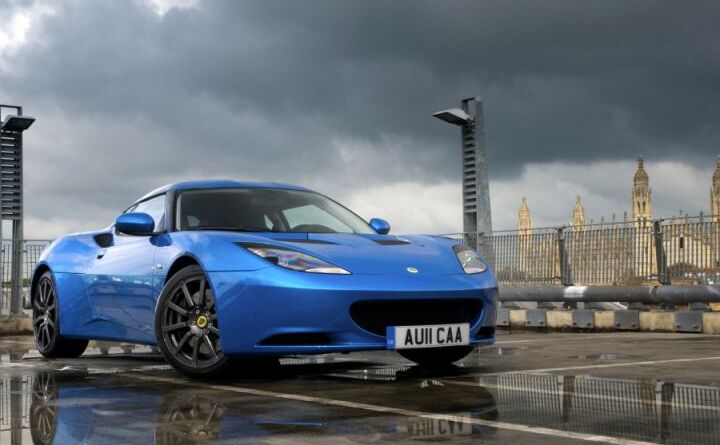
The Lotus Evora S 3.5 V6 Automatic, produced between 2011 and July 2015, represented a significant step forward for the Evora model line. Positioned as the performance-oriented variant within the broader Evora range, it aimed to deliver a more engaging driving experience than the standard Evora while maintaining the practicality of a 2+2 coupe. The “S” designation denoted the inclusion of a supercharged engine and upgraded components, placing it above the base Evora in terms of price and performance, but below the more track-focused Evora 400 introduced later. It was built on the Lotus Versatile Vehicle Architecture (LVVA) platform, a design intended to underpin a range of Lotus models.
Technical Specifications
| Brand | Lotus |
| Model | Evora |
| Generation | Evora S |
| Type (Engine) | 3.5 V6 (350 Hp) Automatic |
| Start of production | 2011 |
| End of production | July, 2015 |
| Powertrain Architecture | Internal Combustion engine |
| Body type | Coupe |
| Seats | 2-4 |
| Doors | 2 |
| Fuel consumption (urban) | 14.4 l/100 km (16.3 US mpg, 19.6 UK mpg, 6.9 km/l) |
| Fuel consumption (extra urban) | 6.9 l/100 km (34.1 US mpg, 40.9 UK mpg, 14.5 km/l) |
| Fuel consumption (combined) | 9.7 l/100 km (24.2 US mpg, 29.1 UK mpg, 10.3 km/l) |
| CO2 emissions | 224 g/km |
| Fuel Type | Petrol (Gasoline) |
| Acceleration 0 – 100 km/h | 4.7 sec |
| Acceleration 0 – 62 mph | 4.7 sec |
| Acceleration 0 – 60 mph | 4.4 sec |
| Maximum speed | 269 km/h (167.15 mph) |
| Emission standard | Euro 5 |
| Weight-to-power ratio | 4.1 kg/Hp, 242.7 Hp/tonne |
| Weight-to-torque ratio | 3.6 kg/Nm, 277.4 Nm/tonne |
| Power | 350 Hp @ 7000 rpm |
| Power per litre | 101.3 Hp/l |
| Torque | 400 Nm @ 4500 rpm (295.02 lb.-ft. @ 4500 rpm) |
| Engine layout | Middle, Transverse |
| Engine Model/Code | 2GR-FE |
| Engine displacement | 3456 cm3 (210.9 cu. in.) |
| Number of cylinders | 6 |
| Engine configuration | V-engine |
| Cylinder Bore | 94 mm (3.7 in.) |
| Piston Stroke | 83 mm (3.27 in.) |
| Compression ratio | 10.8:1 |
| Number of valves per cylinder | 4 |
| Fuel injection system | Multi-port manifold injection |
| Engine aspiration | Supercharger, Intercooler |
| Valvetrain | DOHC – VVT-i |
| Engine oil capacity | 7.1 l (7.5 US qt | 6.25 UK qt) |
| Coolant | 17 l (17.96 US qt | 14.96 UK qt) |
| Kerb Weight | 1442 kg (3179.07 lbs.) |
| Trunk (boot) space – minimum | 160 l (5.65 cu. ft.) |
| Fuel tank capacity | 60 l (15.85 US gal | 13.2 UK gal) |
| Length | 4361 mm (171.69 in.) |
| Width including mirrors | 2047 mm (80.59 in.) |
| Height | 1229 mm (48.39 in.) |
| Wheelbase | 2575 mm (101.38 in.) |
| Front track | 1564 mm (61.57 in.) |
| Rear (Back) track | 1575 mm (62.01 in.) |
| Front overhang | 1000 mm (39.37 in.) |
| Rear overhang | 786 mm (30.94 in.) |
| Ride height (ground clearance) | 140 mm (5.51 in.) |
| Drag coefficient (Cd) | 0.33 |
| Minimum turning circle (turning diameter) | 10.7 m (35.1 ft.) |
| Approach angle | 11.5° |
| Departure angle | 18.5° |
| Drive wheel | Rear wheel drive |
| Number of gears and type of gearbox | 6 gears, automatic transmission |
| Front suspension | Double wishbone |
| Rear suspension | Double wishbone |
| Front brakes | Ventilated discs |
| Rear brakes | Ventilated discs |
| Assisting systems | ABS (Anti-lock braking system) |
| Steering type | Steering rack and pinion |
| Tires size | 225/40 ZR18; 255/35 ZR19 |
| Wheel rims size | 18; 19 |
Powertrain & Engine Architecture
The heart of the Evora S is the Toyota-sourced 2GR-FE 3.5-liter V6 engine. Lotus opted for this engine due to its reputation for reliability and its compact dimensions, which suited the mid-engine layout. The key difference between the standard Evora’s engine and the ‘S’ variant is the addition of an Eaton Roots-type supercharger, along with an intercooler, boosting power output to 350 horsepower and 295 lb-ft of torque. The engine utilizes multi-port fuel injection and a double overhead camshaft (DOHC) valvetrain with variable valve timing (VVT-i) on both intake and exhaust camshafts. This configuration provides a broad torque curve and responsive throttle behavior. The automatic transmission is a six-speed unit, providing smooth shifts but generally not as quick as the available manual transmission. It was designed to balance performance with ease of use, appealing to drivers who preferred the convenience of an automatic.
Driving Characteristics
The Evora S Automatic delivers a distinctly different driving experience compared to its manual counterpart and the naturally aspirated Evora. The supercharger provides immediate and substantial boost, resulting in strong acceleration. While the automatic transmission is competent, it doesn’t offer the same level of driver engagement as the manual. Gear changes are generally smooth, but can feel slightly hesitant during aggressive driving. The car’s mid-engine layout contributes to excellent balance and handling, making it a rewarding car to drive on winding roads. The automatic transmission does slightly dull the immediacy of the engine response, but the overall experience remains sporty and enjoyable. 0-60 mph times were consistently reported around 4.4 seconds, making it a genuinely quick car for its time.
Equipment & Trim Levels
The Evora S Automatic typically came well-equipped, though options allowed for significant customization. Standard features included leather upholstery, air conditioning, power windows and locks, and a premium audio system. The interior design was relatively minimalist, focusing on functionality and driver engagement. Optional extras included heated seats, navigation, upgraded audio systems, and various cosmetic enhancements. Trim levels were relatively simple, with most customization occurring through the selection of individual options. The focus was on providing a driver-focused experience, rather than luxurious appointments.
Chassis & Braking
The Evora S utilizes a lightweight aluminum chassis, a hallmark of Lotus engineering. The suspension consists of double wishbones at both the front and rear, providing excellent handling and ride quality. The braking system features ventilated discs on all four wheels, providing ample stopping power. ABS (Anti-lock Braking System) was standard. The suspension was tuned to provide a balance between comfort and performance, making the car suitable for both road and track use. The relatively low weight of the car, despite the automatic transmission, contributed to its agile handling characteristics.
Market Reception & Comparison
The Evora S Automatic was generally well-received by automotive critics, who praised its performance, handling, and distinctive styling. However, some reviewers noted that the automatic transmission didn’t fully exploit the engine’s potential and that the interior, while functional, lacked the refinement of some competitors. Compared to the standard Evora, the ‘S’ offered a significant performance upgrade, but at a higher price point. Compared to other sports cars in its class, such as the Porsche Cayman, the Evora S offered a unique driving experience and a more exotic appeal, but often lacked the same level of build quality and brand prestige. Fuel economy, while not terrible for a performance car, was not a strong point, averaging around 24.2 US mpg combined.
Legacy
The Lotus Evora S 3.5 V6 Automatic remains a desirable sports car in the used market. The Toyota 2GR-FE engine is known for its reliability, and the supercharger, while adding complexity, has proven to be generally durable. Maintenance costs can be higher than for more mainstream sports cars, due to the specialized nature of the vehicle and the potential need for Lotus-specific parts. However, the Evora S offers a unique blend of performance, handling, and exclusivity that continues to appeal to enthusiasts. Its mid-engine layout and lightweight construction make it a rewarding car to drive, and its distinctive styling ensures it stands out from the crowd. The automatic transmission variant, while not as sought-after as the manual, provides a more accessible entry point into the Evora ownership experience.