
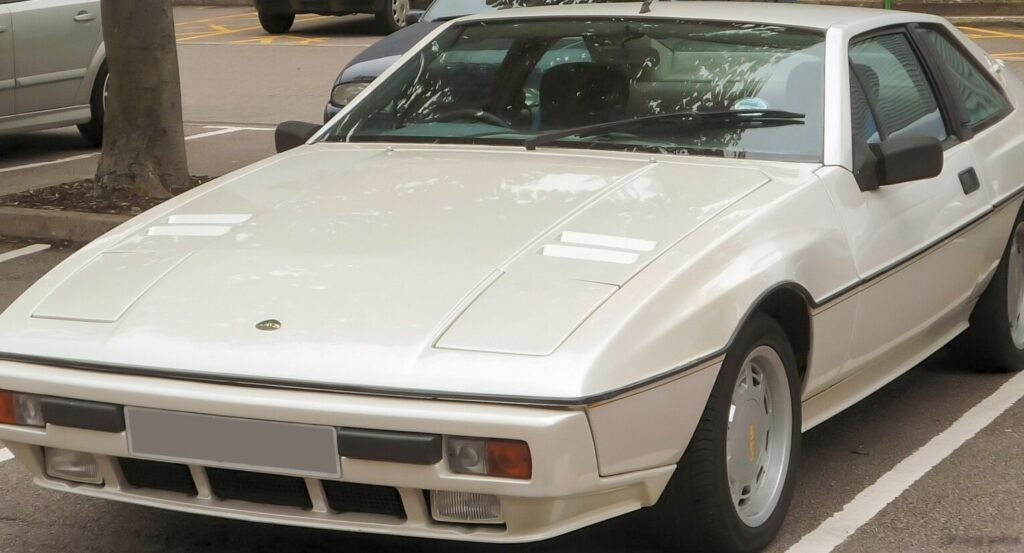
The Lotus Excel 2.2, produced between 1983 and 1986, represented a significant evolution in Lotus’s approach to sports car design and manufacturing. Positioned as a more accessible and refined alternative to the earlier Elite, the Excel aimed to broaden Lotus’s appeal while retaining the core principles of lightweight construction and engaging handling. It was built on the backbone chassis, a Lotus hallmark, and featured a sleek, modern body penned by Oliver Winterbottom. The 2.2-liter variant, producing 162 horsepower, occupied a middle ground in the Excel lineup, offering a balance between performance and usability. It served as a stepping stone to the higher-performance SE and Turbo models.
Technical Specifications
| Brand | Lotus |
| Model | Excel |
| Generation | Excel |
| Type (Engine) | 2.2 (162 Hp) |
| Start of Production | 1983 |
| End of Production | 1986 |
| Powertrain Architecture | Internal Combustion Engine |
| Body Type | Coupe |
| Seats | 4 |
| Doors | 2 |
| Fuel Consumption (Urban) | 14.1 l/100 km (16.7 US mpg / 20 UK mpg / 7.1 km/l) |
| Fuel Type | Petrol (Gasoline) |
| Acceleration 0-60 mph | 7 seconds |
| Maximum Speed | 216 km/h (134.22 mph) |
| Power | 162 Hp |
| Engine Model/Code | Lotus 912 |
| Engine Aspiration | Naturally Aspirated |
| Fuel Tank Capacity | 67 l (17.7 US gal / 14.74 UK gal) |
Powertrain & Engine Architecture
The heart of the Excel 2.2 was the Lotus 912 engine, a 2.2-liter, naturally aspirated, all-aluminum, inline-four cylinder powerplant. This engine was a development of the earlier 2.0-liter unit found in the earlier Elite and Eclat models. It featured a cast iron block with an aluminum cylinder head, and utilized a single overhead camshaft operating two valves per cylinder. Fuel delivery was managed by Bosch K-Jetronic mechanical fuel injection, a system known for its reliability and relatively simple maintenance. The 912 produced 162 horsepower at 5500 rpm and 148 lb-ft of torque at 3500 rpm. While not a high-revving engine, it provided a broad torque curve suitable for both spirited driving and comfortable cruising. The engine was typically paired with a four-speed manual transmission, though a three-speed automatic transmission was also available, albeit less common. The automatic transmission, while offering convenience, did noticeably impact acceleration and overall driving engagement.
Driving Characteristics
The Lotus Excel 2.2, even in its base form, offered a driving experience markedly different from its contemporaries. The lightweight construction – thanks to the extensively use of aluminum and the backbone chassis – resulted in nimble handling and responsive steering. The 2.2-liter engine provided adequate power for enjoyable performance, with the 0-60 mph sprint achievable in around 7 seconds. However, compared to the manual transmission version, the automatic variant felt somewhat sluggish, particularly during kickdown. The gear ratios in the automatic were spaced to prioritize fuel economy and smooth operation over outright acceleration. The suspension, featuring independent double wishbones all around with coil springs and anti-roll bars, provided a comfortable yet controlled ride. The Excel wasn’t a raw, visceral sports car like some of its rivals; instead, it offered a more refined and accessible experience, making it a viable daily driver for those seeking a sporty coupe.
Equipment & Trim Levels
The Excel 2.2 was relatively well-equipped for its time, though it wasn’t overtly luxurious. Standard features included power-assisted steering, leather upholstery, electric windows, and a basic stereo system. The interior design was functional and driver-focused, with a straightforward dashboard layout. Optional extras included air conditioning, a sunroof, upgraded stereo systems, and metallic paint finishes. The trim level was fairly consistent across the 2.2 models, with the primary differentiation being the transmission choice (manual or automatic) and the selection of optional equipment. The interior trim was typically available in a range of colors, allowing for some personalization. The build quality, while generally good, wasn’t always on par with more established manufacturers like Porsche or BMW.
Chassis & Braking
The Excel’s chassis was a defining feature, utilizing Lotus’s renowned backbone construction. This consisted of a steel spine running the length of the car, to which the suspension and body panels were attached. This design provided exceptional rigidity for its weight, contributing to the car’s precise handling. The suspension employed independent double wishbones all around, with coil springs and anti-roll bars. Braking was initially provided by Girling disc brakes on all four wheels, although some earlier models featured rear drum brakes. Later models universally adopted four-wheel disc brakes. The braking system was generally effective, providing adequate stopping power for the car’s performance capabilities. Steering was unassisted, providing excellent feedback and a direct connection to the road.
Market Reception & Comparison
The Lotus Excel 2.2 was generally well-received by automotive critics, who praised its handling, lightweight construction, and distinctive styling. However, some criticism was directed at the engine’s performance, particularly in the automatic transmission variants. Compared to the higher-performance Excel SE and Turbo models, the 2.2 offered a more affordable entry point into the Lotus lineup. It competed with other sports coupes of the era, such as the Porsche 944, BMW 3-Series, and Mazda RX-7. The Excel offered a unique blend of British charm and Japanese reliability (due to Toyota supplying some components), but it often lacked the prestige of its German rivals. Fuel economy was reasonable for a sports car of the time, averaging around 16-20 mpg in mixed driving. Reliability was generally good, although the K-Jetronic fuel injection system could require occasional maintenance.
Legacy
The Lotus Excel 2.2, while not the most iconic model in Lotus’s history, played a crucial role in the company’s evolution. It demonstrated Lotus’s ability to produce a more accessible and refined sports car without sacrificing its core values of lightweight construction and engaging handling. Today, the Excel 2.2 remains a popular choice among Lotus enthusiasts, offering a relatively affordable entry point into the world of classic Lotus ownership. The 912 engine is generally considered reliable, although regular maintenance is essential. Parts availability can be a challenge, but a dedicated network of Lotus specialists and aftermarket suppliers exists. Well-maintained examples of the Excel 2.2 are appreciating in value, reflecting their growing desirability as a unique and enjoyable classic sports car. The automatic transmission versions, while less sought after by purists, offer a more relaxed driving experience and can be found at lower prices.
