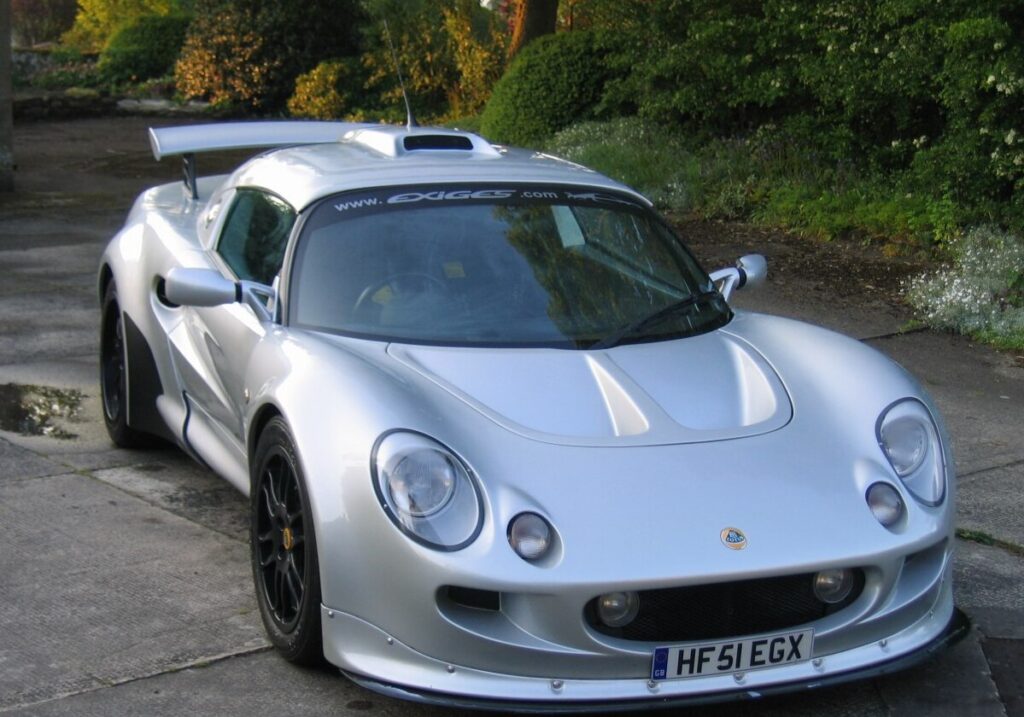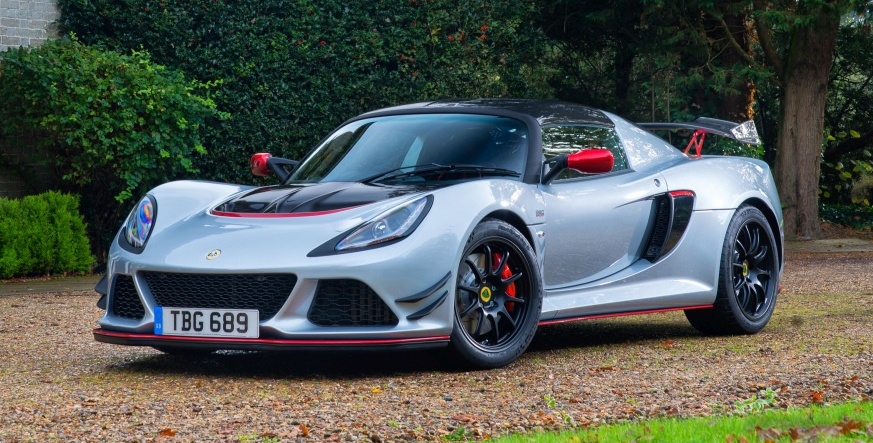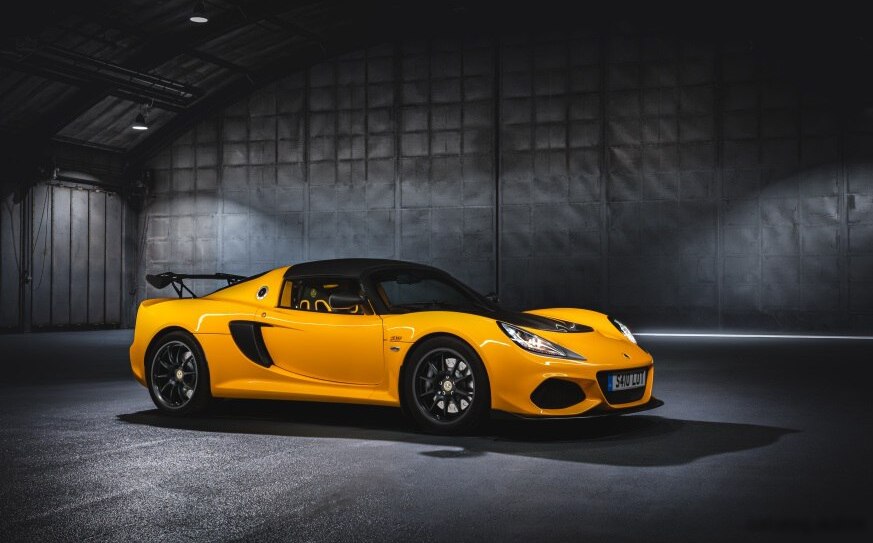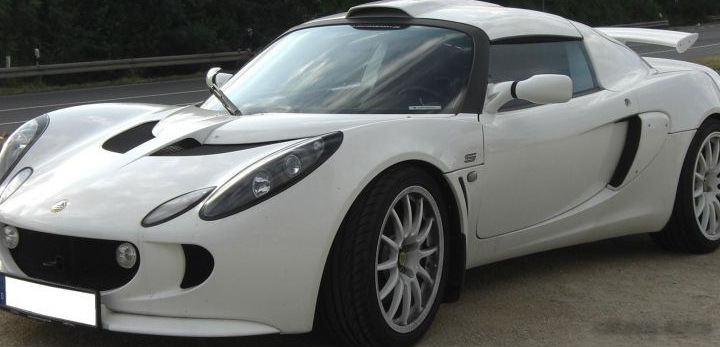
The Lotus Exige II 1.8 i 16V Sport 240R, produced between 2005 and 2011, represents a focused and highly capable iteration of the Exige model line. Positioned as a performance-oriented variant within the Exige II generation (based on the 1HX0/A3 platform), the 240R aimed to deliver a raw, engaging driving experience. It served as a stepping stone between the base Exige models and the more extreme Exige Cup variants, offering a significant power upgrade and track-focused enhancements while remaining relatively accessible. This model cemented Lotus’s reputation for lightweight sports cars with exceptional handling characteristics.
Technical Specifications
| Brand | Lotus |
| Model | Exige |
| Generation | Exige II |
| Type | 1.8 i 16V Sport 240R (246 Hp) |
| Start of production | 2005 |
| End of production | 2011 |
| Powertrain Architecture | Internal Combustion engine |
| Body type | Coupe |
| Seats | 2 |
| Doors | 2 |
| Fuel Type | Petrol (Gasoline) |
| Acceleration 0 – 100 km/h | 3.9 sec |
| Acceleration 0 – 62 mph | 3.9 sec |
| Acceleration 0 – 60 mph | 3.9 sec |
| Maximum speed | 249 km/h (154.72 mph) |
| Weight-to-power ratio | 3.8 kg/Hp, 264.5 Hp/tonne |
| Weight-to-torque ratio | 3.9 kg/Nm, 253.8 Nm/tonne |
| Power | 246 Hp @ 8000 rpm |
| Power per litre | 137 Hp/l |
| Torque | 236 Nm @ 7000 rpm (174.06 lb.-ft. @ 7000 rpm) |
| Engine layout | Middle, Longitudinal |
| Engine Model/Code | 2ZZ-GE |
| Engine displacement | 1796 cm3 (109.6 cu. in.) |
| Number of cylinders | 4 |
| Engine configuration | Inline |
| Cylinder Bore | 82 mm (3.23 in.) |
| Piston Stroke | 85 mm (3.35 in.) |
| Compression ratio | 9.6:1 |
| Number of valves per cylinder | 4 |
| Fuel injection system | Multi-port manifold injection |
| Engine aspiration | Turbocharger, Intercooler |
| Valvetrain | DOHC |
| Engine oil capacity | 4.4 l (4.65 US qt | 3.87 UK qt) |
| Coolant | 12 l (12.68 US qt | 10.56 UK qt) |
| Kerb Weight | 930 kg (2050.3 lbs) |
| Max. weight | 1185 kg (2612.48 lbs) |
| Max load | 255 kg (562.18 lbs) |
| Trunk (boot) space – minimum | 115 l (4.06 cu. ft.) |
| Fuel tank capacity | 40 l (10.57 US gal | 8.8 UK gal) |
| Length | 3797 mm (149.49 in.) |
| Width | 1727 mm (67.99 in.) |
| Height | 1150 mm (45.28 in.) |
| Wheelbase | 2300 mm (90.55 in.) |
| Front track | 1454 mm (57.24 in.) |
| Rear (Back) track | 1507 mm (59.33 in.) |
| Drivetrain Architecture | The Internal combustion engine (ICE) drives the rear wheels of the vehicle. |
| Drive wheel | Rear wheel drive |
| Number of gears and type of gearbox | 6 gears, manual transmission |
| Front suspension | Coil spring |
| Rear suspension | Coil spring |
| Front brakes | Ventilated discs |
| Rear brakes | Ventilated discs |
| Steering type | Steering rack and pinion |
| Tires size | 195/50 R16; 225/45 R17 |
| Wheel rims size | 7J x 16; 8.5J x 17 |
INTRODUCTION
The Lotus Exige II 1.8 i 16V Sport 240R, launched in 2005, built upon the foundation of the Exige S, offering a significant performance boost through a supercharged 1.8-liter engine. It occupied a sweet spot in the Exige lineup, providing a more accessible entry point to high-performance Lotus ownership than the track-focused Exige Cup models, yet delivering a thrilling driving experience. The 240R was designed to appeal to enthusiasts seeking a lightweight, agile sports car capable of both spirited road driving and occasional track days. Production continued until 2011, with minor revisions occurring throughout its lifespan.
Powertrain & Engine Architecture
At the heart of the 240R lies the 2ZZ-GE engine, a 1.8-liter inline-four cylinder powerplant. This engine is notable for its Toyota origins, a result of Lotus’s long-standing technical partnership with the Japanese manufacturer. The 2ZZ-GE is a highly-tuned version of the engine found in the Toyota Celica GT-S and MR2 Spyder, but with significant modifications by Lotus to enhance its performance. Crucially, the 240R features a Lysholm supercharger and intercooler, boosting power output to 246 horsepower. The engine utilizes multi-port fuel injection and a double overhead camshaft (DOHC) valvetrain with four valves per cylinder, contributing to its high-revving nature and responsive power delivery. The engine is mounted longitudinally in a mid-engine configuration, optimizing weight distribution for superior handling. The 240R exclusively came with a six-speed manual transmission, chosen for its direct connection and driver engagement. This transmission features close ratios designed to maximize the engine’s powerband.
Driving Characteristics
The driving experience in the Exige 240R is defined by its exceptional responsiveness and agility. The combination of a lightweight chassis (approximately 2050 lbs) and the supercharged 1.8-liter engine results in exhilarating acceleration. The 0-60 mph sprint is dispatched in around 3.9 seconds, and the car reaches a top speed of 154.72 mph. The six-speed manual transmission allows for precise gear selection, keeping the engine within its optimal power range. The supercharger provides instant boost, eliminating turbo lag and delivering a linear power curve. Steering is direct and communicative, providing ample feedback to the driver. The relatively short wheelbase and stiff suspension contribute to a nimble and engaging handling experience, making the 240R a joy to drive on winding roads. Compared to naturally aspirated Exige models, the 240R offers a substantial increase in torque, making it more tractable in everyday driving situations. However, it lacks the raw, unfiltered character of the Exige Cup variants.
Equipment & Trim Levels
The Exige 240R was relatively spartan in its standard equipment, reflecting Lotus’s focus on performance over luxury. Standard features included lightweight composite body panels, a minimalist interior with leather and Alcantara upholstery, and performance-oriented seats. Air conditioning and a radio were often optional extras. The interior was designed to be functional and driver-focused, with a clear instrument cluster and ergonomically positioned controls. Optional extras included upgraded suspension components, limited-slip differentials, and various cosmetic enhancements. The 240R typically featured a unique front splitter and rear wing to enhance aerodynamic performance. Interior color options were limited, typically focusing on dark shades to minimize glare and maintain a sporty aesthetic.
Chassis & Braking
The Exige II chassis is a bonded aluminum monocoque, providing exceptional rigidity and a low weight. The suspension utilizes coil springs and dampers, with double wishbones at all four corners. The 240R benefits from a stiffer suspension setup compared to the standard Exige, further enhancing its handling capabilities. Braking is provided by ventilated discs at all four corners, offering ample stopping power. The braking system is unassisted, providing a direct and progressive feel. The car’s lightweight construction and balanced weight distribution contribute to its exceptional handling and braking performance. The 240R typically featured a thicker rear anti-roll bar compared to base models, further reducing body roll during cornering.
Market Reception & Comparison
The Exige 240R was well-received by automotive critics, who praised its exceptional handling, exhilarating performance, and raw driving experience. It was often compared favorably to other lightweight sports cars, such as the Porsche Cayman and the Mazda MX-5. While the 240R offered significantly more performance than the base Exige models, it was also more expensive. Compared to the Exige Cup variants, the 240R offered a more comfortable and refined driving experience, making it a more practical choice for everyday use. Fuel economy was reasonable for a high-performance sports car, averaging around 25-30 mpg. Reliability was generally good, although the supercharged engine required more frequent maintenance than naturally aspirated counterparts.
Legacy
The Lotus Exige II 1.8 i 16V Sport 240R remains a highly sought-after sports car among enthusiasts. Its combination of lightweight construction, powerful engine, and exceptional handling has cemented its place as a modern classic. The 2ZZ-GE engine, while requiring regular maintenance, is known for its durability and tunability. Today, well-maintained 240Rs command a premium in the used car market. The car’s enduring appeal lies in its ability to deliver a pure and engaging driving experience that is increasingly rare in modern automobiles. It represents a high point in Lotus’s history, showcasing the company’s commitment to lightweight, driver-focused sports cars.