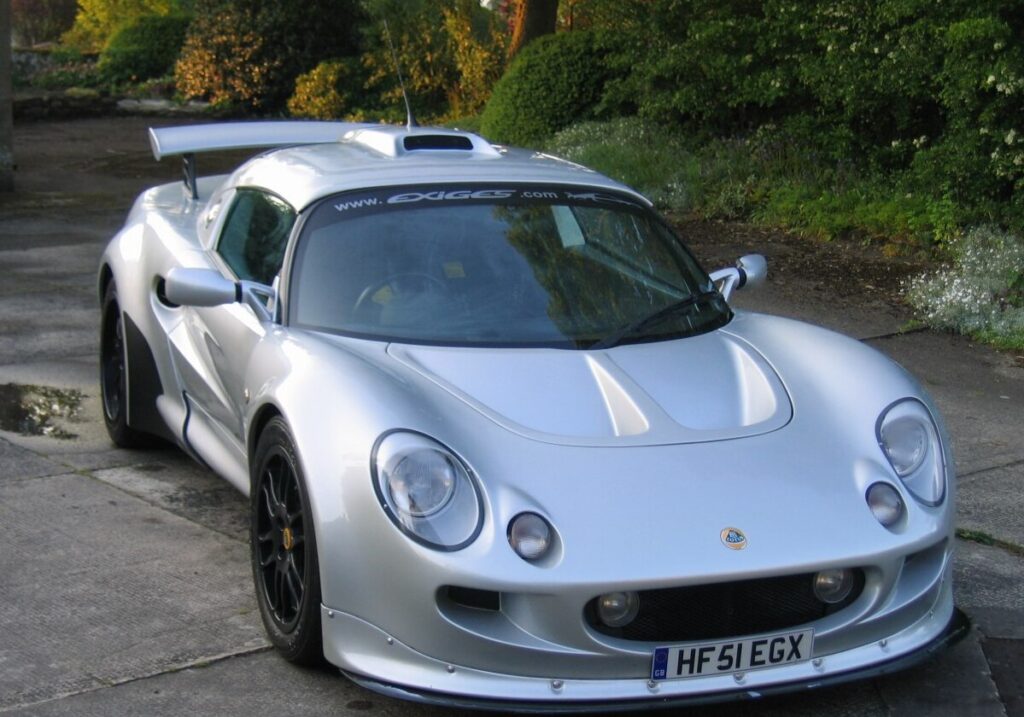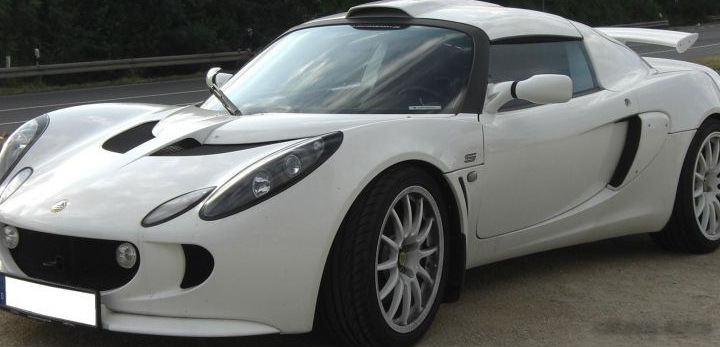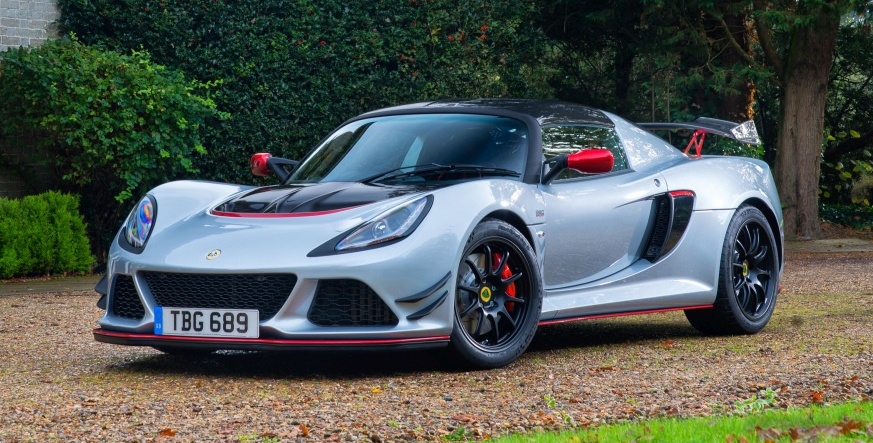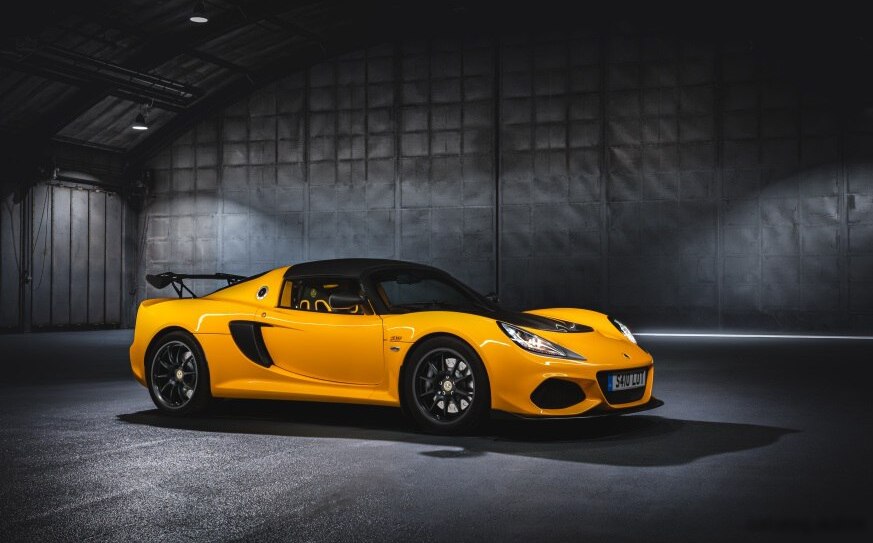
The Lotus Exige Sport 410, introduced in 2018 as part of the Exige III facelift, represents a focused, high-performance iteration of the long-running Exige model line. Building upon the already lightweight and agile Exige platform, the Sport 410 aimed to deliver an even more visceral driving experience. Positioned as a premium offering within the Exige range, it sat above the base Exige S models and below the more track-focused Exige Cup variants. Production continued through 2020, solidifying its place as a modern classic for Lotus enthusiasts. The “410” designation refers to the model’s metric horsepower rating, a key marketing point emphasizing its power-to-weight ratio.
Technical Specifications
| Brand | Lotus |
| Model | Exige |
| Generation | Exige III S Coupe (facelift 2018) |
| Type | Sport 410 3.5 V6 (416 Hp) |
| Start of production | 2018 |
| Powertrain Architecture | Internal Combustion engine |
| Body type | Coupe |
| Seats | 2 |
| Doors | 2 |
| Fuel consumption at Low speed (WLTP) | 16.8 l/100 km (14 US mpg, 16.8 UK mpg, 6 km/l) |
| Fuel consumption at Medium speed (WLTP) | 9.9 l/100 km (23.8 US mpg, 28.5 UK mpg, 10.1 km/l) |
| Fuel consumption at high speed (WLTP) | 8.5 l/100 km (27.7 US mpg, 33.2 UK mpg, 11.8 km/l) |
| Fuel consumption at very high speed (WLTP) | 9.4 l/100 km (25 US mpg, 30.1 UK mpg, 10.6 km/l) |
| Combined fuel consumption (WLTP) | 10.2 l/100 km (23.1 US mpg, 27.7 UK mpg, 9.8 km/l) |
| CO2 emissions (WLTP) | 230 g/km |
| Fuel consumption (economy) – urban | 14.9 l/100 km (15.8 US mpg, 19 UK mpg, 6.7 km/l) |
| Fuel consumption (economy) – extra urban | 8.1 l/100 km (29 US mpg, 34.9 UK mpg, 12.3 km/l) |
| Fuel consumption (economy) – combined | 10.6 l/100 km (22.2 US mpg, 26.6 UK mpg, 9.4 km/l) |
| CO2 emissions | 240 g/km |
| Fuel Type | Petrol (Gasoline) |
| Acceleration 0 – 100 km/h | 3.4 sec |
| Acceleration 0 – 62 mph | 3.4 sec |
| Acceleration 0 – 60 mph | 3.3 sec |
| Maximum speed | 280 km/h (173.98 mph) |
| Weight-to-power ratio | 2.5 kg/Hp, 394.7 Hp/tonne |
| Weight-to-torque ratio | 2.5 kg/Nm, 398.5 Nm/tonne |
| Power | 416 Hp @ 7000 rpm |
| Power per litre | 120.4 Hp/l |
| Torque | 420 Nm @ 3000-7000 rpm (309.78 lb.-ft. @ 3000-7000 rpm) |
| Engine layout | Middle, Transverse |
| Engine displacement | 3456 cm3 (210.9 cu. in.) |
| Number of cylinders | 6 |
| Engine configuration | V-engine |
| Number of valves per cylinder | 4 |
| Engine aspiration | Supercharger, Intercooler |
| Kerb Weight | 1054 kg (2323.67 lbs.) |
| Trunk (boot) space – minimum | 160 l (5.65 cu. ft.) |
| Fuel tank capacity | 44 l (11.62 US gal | 9.68 UK gal) |
| Length | 4090 mm (161.02 in.) |
| Width | 1810 mm (71.26 in.) |
| Height | 1130 mm (44.49 in.) |
| Wheelbase | 2580 mm (101.57 in.) |
| Front track | 1570 mm (61.81 in.) |
| Rear (Back) track | 1580 mm (62.2 in.) |
| Drivetrain Architecture | Rear wheel drive |
| Drive wheel | Rear wheel drive |
| Number of gears and type of gearbox | 6 gears, manual transmission |
| Front suspension | Double wishbone |
| Rear suspension | Double wishbone |
| Front brakes | Ventilated discs |
| Rear brakes | Ventilated discs |
| Assisting systems | ABS (Anti-lock braking system) |
| Steering type | Steering rack and pinion |
| Tires size | 215/45 R17; 285/30 R18 |
| Wheel rims size | 17; 18 |
INTRODUCTION
The Lotus Exige Sport 410 is a two-seat, mid-engine sports car designed and manufactured by British manufacturer Lotus. Introduced in 2018, it’s a significant evolution of the Exige, a model that has been in continuous production since 2000. The Sport 410 is part of the Exige III generation, which received a substantial facelift in 2018, incorporating revised aerodynamics, interior enhancements, and a more refined driving experience. It’s built on the lightweight aluminum chassis that is a hallmark of Lotus engineering, prioritizing handling and driver engagement above all else. The car’s primary market was Europe and Australia, with limited imports to North America.
Powertrain & Engine Architecture
At the heart of the Exige Sport 410 lies the Toyota-sourced 2GR-FE 3.5-liter V6 engine, supercharged by an Edelbrock E-Force supercharger. This engine, designated as a Lotus engine code, delivers 416 horsepower at 7000 rpm and 420 Nm (309.78 lb-ft) of torque between 3000 and 7000 rpm. The supercharger provides instant throttle response and a broad torque curve. Fuel is delivered via direct injection, contributing to both performance and efficiency. The engine features a four-valve-per-cylinder design and an aluminum block and cylinder heads to minimize weight. The Sport 410 exclusively came with a six-speed manual transmission, chosen for its direct connection to the driver and its contribution to the car’s overall lightweight philosophy. The transmission features a short throw shifter for precise gear changes.
Driving Characteristics
The Exige Sport 410 delivers a raw and engaging driving experience. Its lightweight construction (approximately 1054 kg or 2323.67 lbs) combined with the potent supercharged V6 results in blistering acceleration – 0 to 60 mph in just 3.3 seconds and a top speed of 174 mph. The manual transmission requires skillful operation, but rewards the driver with a direct and connected feel. The suspension, tuned for track performance, is firm but communicative, providing excellent body control and cornering grip. While not designed for long-distance comfort, the Sport 410 excels on twisty roads and race tracks. The steering is exceptionally precise and provides abundant feedback, allowing the driver to feel intimately connected to the car.
Equipment & Trim Levels
The Sport 410 was relatively sparsely equipped, reflecting Lotus’s focus on minimizing weight. Standard features included lightweight composite body panels, a minimalist interior with leather and Alcantara upholstery, and a track-focused suspension setup. Air conditioning and a radio were often optional extras. The interior prioritized functionality over luxury, with simple, easy-to-read gauges and a driver-centric layout. Optional extras included upgraded seats, a full interior trim package, and various aerodynamic enhancements. The car’s design emphasized functionality, with a focus on providing the driver with the information and control needed to maximize performance.
Chassis & Braking
The Exige Sport 410 utilizes a bonded aluminum chassis, a signature Lotus design element. This chassis is incredibly stiff and lightweight, providing a solid foundation for the suspension and contributing to the car’s exceptional handling. The suspension consists of double wishbones at both the front and rear, with adjustable dampers and anti-roll bars. Braking is handled by ventilated discs at all four corners, providing ample stopping power. An ABS system is standard. The car’s relatively low weight minimizes the demands on the braking system, contributing to its longevity and reliability.
Market Reception & Comparison
The Exige Sport 410 was widely praised by automotive journalists for its exceptional handling, blistering performance, and raw driving experience. Critics noted its uncompromising nature, acknowledging that it wasn’t a comfortable daily driver but a focused sports car designed for enthusiasts. Compared to the standard Exige S models, the Sport 410 offered significantly more power and a more aggressive suspension setup. Compared to the Exige Cup variants, the Sport 410 offered a slightly more forgiving setup, making it more suitable for road use. Fuel economy, while not a primary concern for buyers of this type of vehicle, was reasonable for its performance, averaging around 23 mpg combined.
Legacy
The Lotus Exige Sport 410 has established itself as a highly desirable modern classic. Its combination of lightweight construction, potent engine, and exceptional handling has earned it a loyal following among Lotus enthusiasts. The 2GR-FE V6 engine, while sourced from Toyota, has proven to be remarkably reliable when properly maintained. The manual transmission is also known for its durability. On the used car market, well-maintained examples of the Sport 410 command premium prices, reflecting its rarity and desirability. The car represents a high point in Lotus’s commitment to pure, unadulterated driving pleasure.