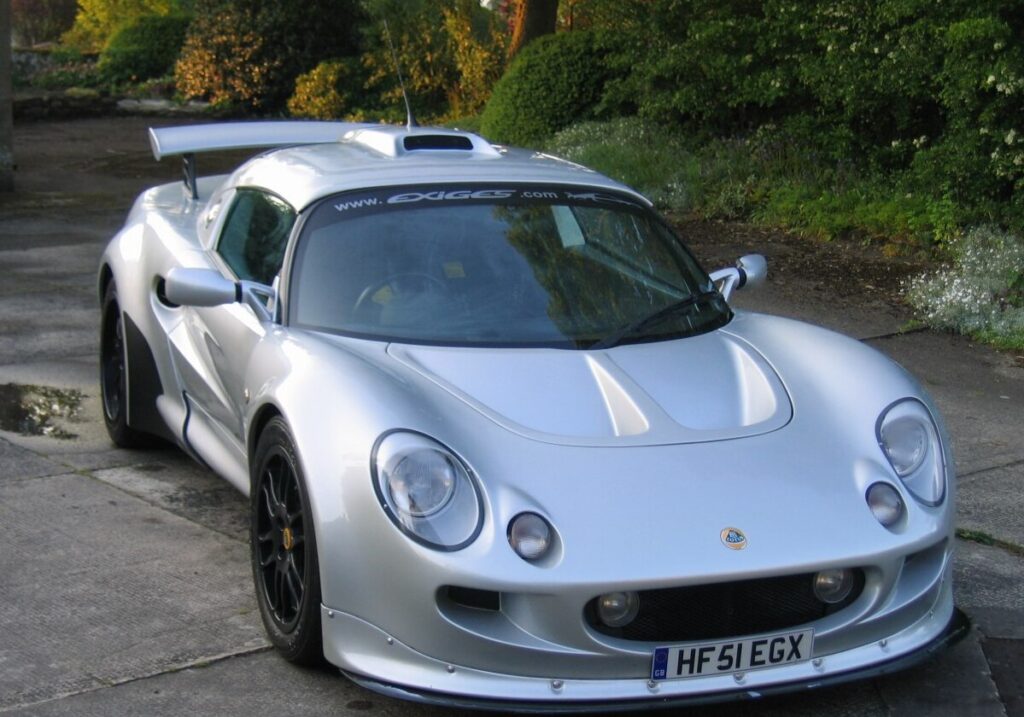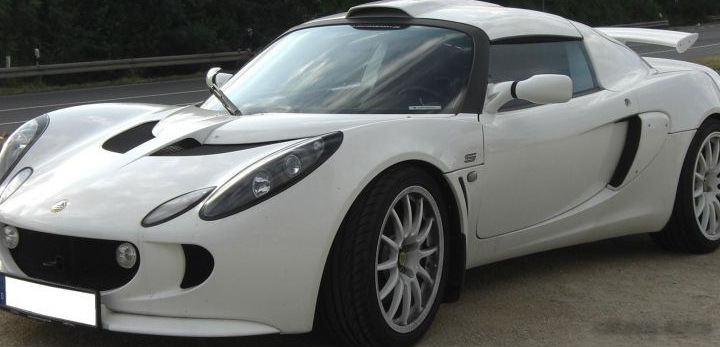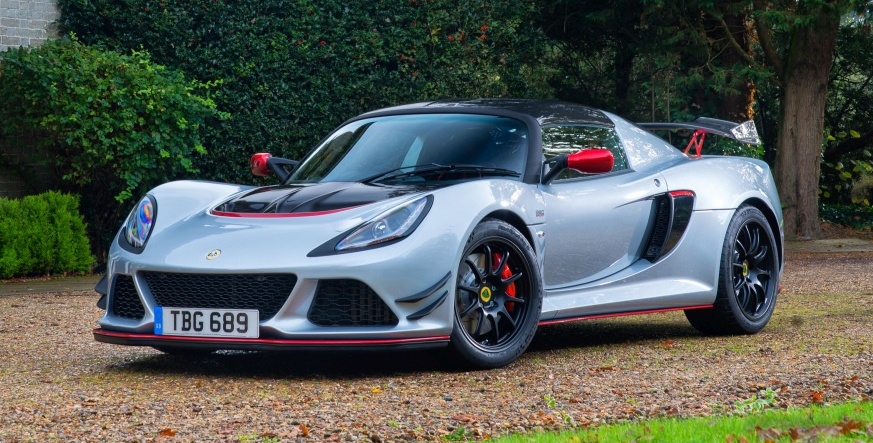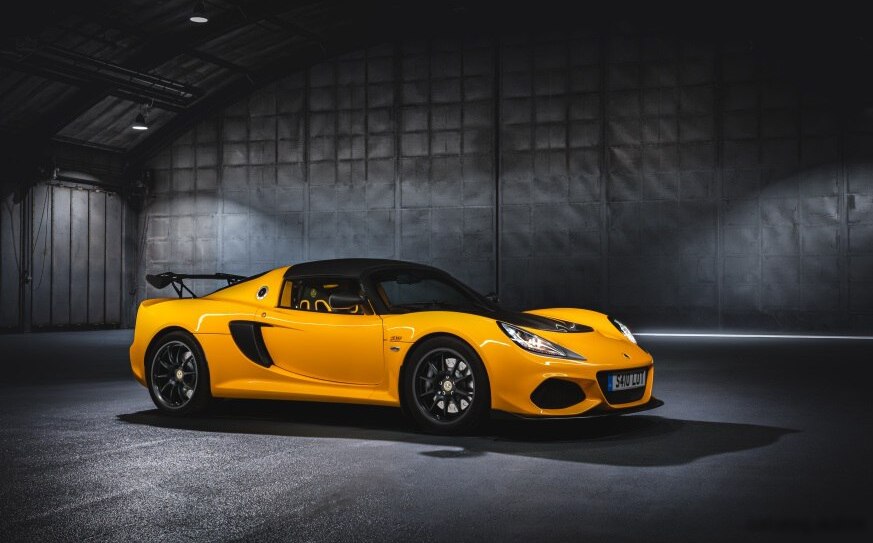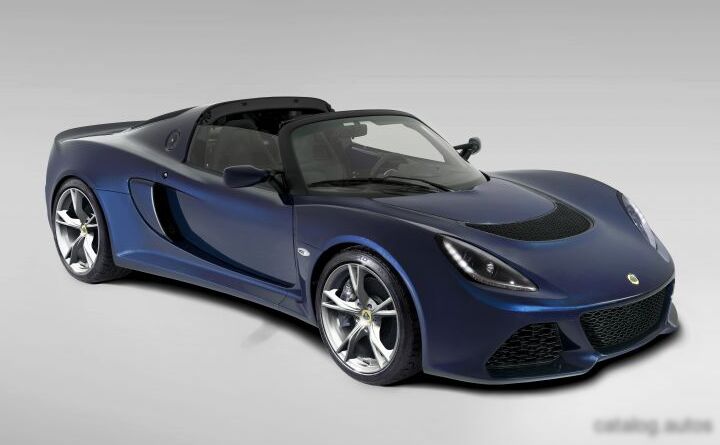
The Lotus Exige III S Roadster Sport 350, produced between 2013 and 2016, represents a focused and exhilarating iteration of the Exige lineage. Positioned as a high-performance variant within the broader Exige III range, the Sport 350 aimed to deliver a raw, unfiltered driving experience, prioritizing lightweight construction and potent power. It built upon the foundation of the Exige III, which itself was based on the extruded and bonded aluminum chassis technology pioneered by Lotus, offering a compelling alternative to heavier, more comfort-oriented sports cars. This particular model catered to enthusiasts seeking a track-capable machine equally at home on the open road, offering a convertible experience without sacrificing significant performance.
Technical Specifications
| Brand | Lotus |
| Model | Exige |
| Generation | Exige III S Roadster |
| Type | Sport 350 3.5 V6 (350 Hp) |
| Start of production | 2013 |
| End of production | 2016 |
| Powertrain Architecture | Internal Combustion engine |
| Body type | Cabriolet |
| Seats | 2 |
| Doors | 2 |
| Fuel consumption (urban) | 14.5 l/100 km (16.2 US mpg, 19.5 UK mpg) |
| Fuel consumption (extra urban) | 7.6 l/100 km (30.9 US mpg, 37.2 UK mpg) |
| Fuel consumption (combined) | 10.1 l/100 km (23.3 US mpg, 28 UK mpg) |
| CO2 emissions | 235 g/km |
| Fuel Type | Petrol (Gasoline) |
| Acceleration 0 – 100 km/h | 4 sec |
| Acceleration 0 – 62 mph | 4 sec |
| Acceleration 0 – 60 mph | 3.8 sec |
| Maximum speed | 233 km/h (144.78 mph) |
| Weight-to-power ratio | 3.2 kg/Hp, 313.9 Hp/tonne |
| Weight-to-torque ratio | 2.8 kg/Nm, 358.7 Nm/tonne |
| Power | 350 Hp @ 7000 rpm |
| Torque | 400 Nm @ 4500 rpm (295.02 lb.-ft. @ 4500 rpm) |
| Engine layout | Middle, Transverse |
| Number of cylinders | 6 |
| Engine configuration | V-engine |
| Number of valves per cylinder | 4 |
| Fuel injection system | Multi-port manifold injection |
| Engine aspiration | Supercharger, Intercooler |
| Valvetrain | DOHC – VVT-i |
| Kerb Weight | 1115 kg (2458.15 lbs.) |
| Fuel tank capacity | 40 l (10.57 US gal | 8.8 UK gal) |
| Length | 4084 mm (160.79 in.) |
| Width | 1802 mm (70.94 in.) |
| Height | 1129 mm (44.45 in.) |
| Wheelbase | 2370 mm (93.31 in.) |
| Drivetrain Architecture | Rear wheel drive |
| Number of gears | 6 |
| Gearbox type | Manual transmission |
| Front suspension | Double wishbone |
| Rear suspension | Double wishbone |
| Front brakes | Ventilated discs |
| Rear brakes | Ventilated discs |
| Assisting systems | ABS (Anti-lock braking system) |
| Steering type | Steering rack and pinion |
| Tires size | 205/45 R17; 265/35 R18 |
| Wheel rims size | 17; 18 |
Powertrain & Engine Architecture
The heart of the Exige III S Roadster Sport 350 is the Lotus-Toyota 2GR-FE 3.5-liter V6 engine. This engine, a collaboration between Lotus and Toyota, is renowned for its reliability and performance potential. The Sport 350 variant utilizes a supercharger, adding forced induction to increase power output to 350 horsepower at 7000 rpm and 295 lb-ft of torque at 4500 rpm. The supercharger, an Edelbrock E-Force unit, provides instant throttle response and a broad torque curve. Fuel delivery is managed by a multi-port fuel injection system, ensuring precise fuel metering. The engine features a double overhead camshaft (DOHC) valvetrain with variable valve timing (VVT-i) on both intake and exhaust camshafts, optimizing performance across the rev range. The engine is transversely mounted behind the driver, contributing to the car’s exceptional balance. Power is transmitted to the rear wheels via a six-speed manual transmission, chosen for its direct connection and driver engagement.
Driving Characteristics
The Exige III S Roadster Sport 350 delivers a visceral driving experience. The combination of a lightweight chassis (around 2458 lbs) and the supercharged V6 results in blistering acceleration – 0 to 60 mph in just 3.8 seconds. The manual transmission requires precise shifts, rewarding skilled drivers with a direct and engaging feel. The car’s limited-slip differential helps to maximize traction during cornering, allowing for impressive levels of grip. Compared to the base Exige, the Sport 350 offers significantly more power and a more aggressive character. While the base model prioritizes efficiency and affordability, the Sport 350 is unapologetically focused on performance. The steering is direct and communicative, providing ample feedback to the driver. The suspension, while firm, is well-damped, offering a reasonable compromise between ride comfort and handling precision.
Equipment & Trim Levels
The Exige III S Roadster Sport 350 was relatively spartan in its standard equipment, reflecting Lotus’s philosophy of prioritizing performance over luxury. Standard features included lightweight composite body panels, a minimalist interior with leather and Alcantara upholstery, and air conditioning. Optional extras were plentiful, allowing buyers to customize their cars to their preferences. These included upgraded audio systems, navigation, and various cosmetic enhancements. The Roadster configuration, of course, featured a removable soft top, providing open-air driving enjoyment. Interior trim was focused on functionality, with supportive bucket seats and a simple dashboard layout.
Chassis & Braking
The Exige III S Roadster utilizes a lightweight, bonded aluminum chassis, a hallmark of Lotus engineering. This chassis provides exceptional rigidity while minimizing weight. The suspension features double wishbones at both the front and rear, optimized for track performance. Braking duties are handled by ventilated discs at all four corners, providing ample stopping power. An ABS (Anti-lock Braking System) is standard. The car’s relatively low weight contributes to reduced brake wear and improved braking performance. The suspension geometry is carefully tuned to minimize body roll and maximize cornering grip.
Market Reception & Comparison
The Exige III S Roadster Sport 350 was generally well-received by automotive critics, who praised its exceptional handling, potent performance, and raw driving experience. It was often compared to other lightweight sports cars, such as the Porsche Cayman and the Chevrolet Corvette. While the Cayman offered a more refined interior and a broader range of features, the Exige provided a more focused and visceral driving experience. The Corvette, while offering more power, was significantly heavier and less agile. Fuel economy, while not a primary concern for buyers of this type of vehicle, was respectable at around 23.3 US mpg combined. Reliability was generally good, thanks to the robust Toyota-sourced engine.
Legacy
The Lotus Exige III S Roadster Sport 350 remains a highly sought-after vehicle among driving enthusiasts. The Toyota 2GR-FE engine is known for its durability and relatively low maintenance costs. The car’s lightweight construction and exceptional handling continue to make it a compelling choice for track days and spirited driving. In the used car market, well-maintained examples command premium prices. The Sport 350 represents a sweet spot in the Exige lineup, offering a significant performance upgrade over the base model without sacrificing too much practicality. It stands as a testament to Lotus’s commitment to building lightweight, driver-focused sports cars.