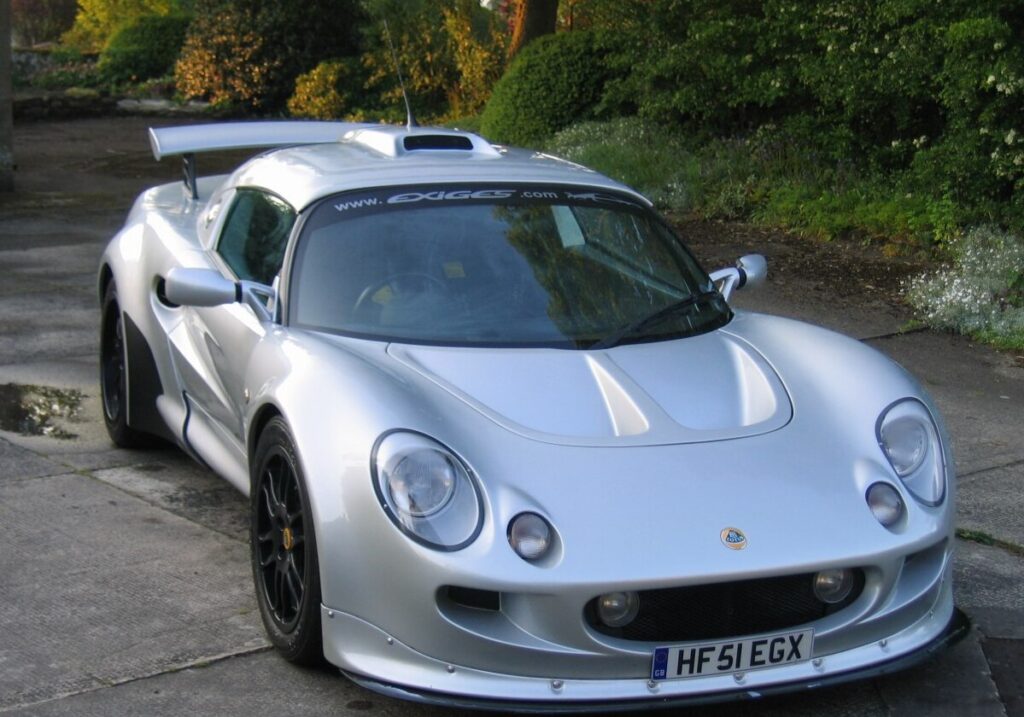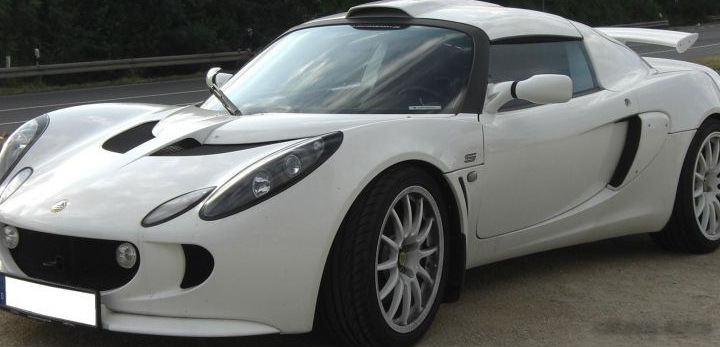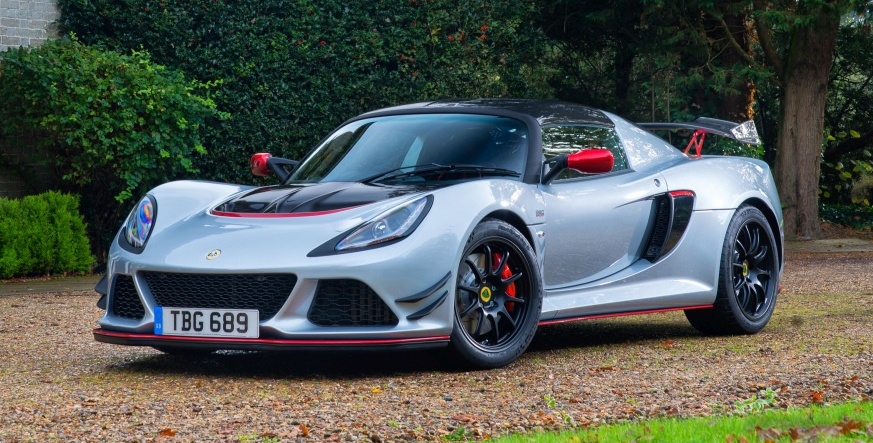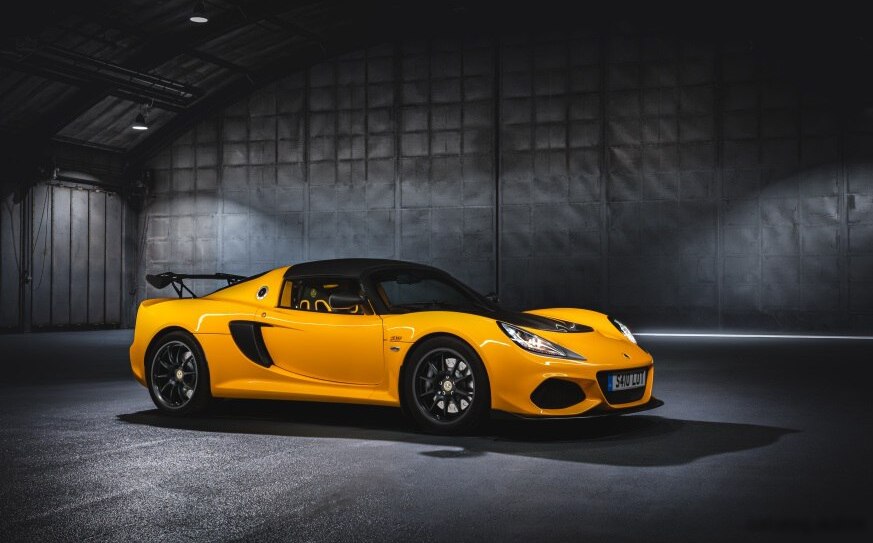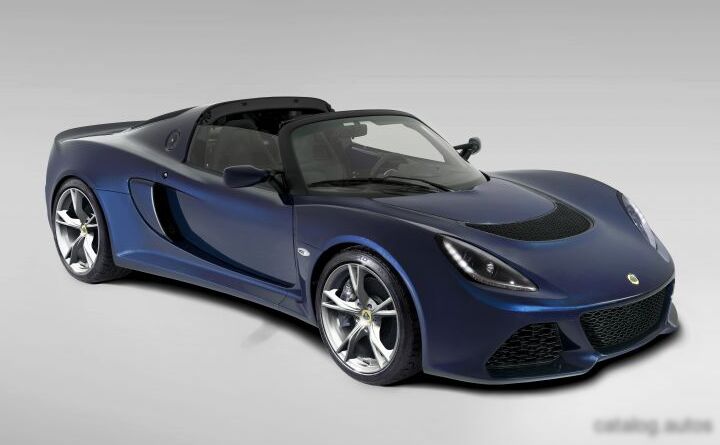
The Lotus Exige III S Roadster Sport 410, produced from 2018 onwards, represents a focused and exhilarating iteration of the long-running Exige lineage. Positioned as a high-performance variant within the Exige III range, the Sport 410 prioritizes driver engagement and track capability while offering the open-air experience of a roadster. It builds upon the foundation of the Exige’s lightweight philosophy and mid-engine layout, delivering a visceral driving experience. This model is a key example of Lotus’s commitment to pure sports car principles, offering minimal weight and maximum performance.
Technical Specifications
| Brand | Lotus |
| Model | Exige |
| Generation | Exige III S Roadster |
| Type | Sport 410 3.5 V6 (416 Hp) |
| Start of production | 2018 |
| Powertrain Architecture | Internal Combustion engine |
| Body type | Cabriolet |
| Seats | 2 |
| Doors | 2 |
| Fuel consumption at Low speed (WLTP) | 16.8 l/100 km (14 US mpg, 16.8 UK mpg, 6 km/l) |
| Fuel consumption at Medium speed (WLTP) | 9.9 l/100 km (23.8 US mpg, 28.5 UK mpg, 10.1 km/l) |
| Fuel consumption at high speed (WLTP) | 8.5 l/100 km (27.7 US mpg, 33.2 UK mpg, 11.8 km/l) |
| Fuel consumption at very high speed (WLTP) | 9.4 l/100 km (25 US mpg, 30.1 UK mpg, 10.6 km/l) |
| Combined fuel consumption (WLTP) | 10.2 l/100 km (23.1 US mpg, 27.7 UK mpg, 9.8 km/l) |
| CO2 emissions (WLTP) | 230 g/km |
| Fuel consumption (economy) – urban | 14.9 l/100 km (15.8 US mpg, 19 UK mpg, 6.7 km/l) |
| Fuel consumption (economy) – extra urban | 8.1 l/100 km (29 US mpg, 34.9 UK mpg, 12.3 km/l) |
| Fuel consumption (economy) – combined | 10.6 l/100 km (22.2 US mpg, 26.6 UK mpg, 9.4 km/l) |
| CO2 emissions | 240 g/km |
| Fuel Type | Petrol (Gasoline) |
| Acceleration 0 – 100 km/h | 3.4 sec |
| Acceleration 0 – 62 mph | 3.4 sec |
| Acceleration 0 – 60 mph | 3.3 sec |
| Maximum speed | 241 km/h (149.75 mph) |
| Weight-to-power ratio | 2.5 kg/Hp, 394.7 Hp/tonne |
| Weight-to-torque ratio | 2.5 kg/Nm, 398.5 Nm/tonne |
| Power | 416 Hp @ 7000 rpm |
| Power per litre | 120.4 Hp/l |
| Torque | 420 Nm @ 3000-7000 rpm (309.78 lb.-ft. @ 3000-7000 rpm) |
| Engine layout | Middle, Transverse |
| Engine displacement | 3456 cm3 (210.9 cu. in.) |
| Number of cylinders | 6 |
| Engine configuration | V-engine |
| Number of valves per cylinder | 4 |
| Engine aspiration | Supercharger, Intercooler |
| Kerb Weight | 1054 kg (2323.67 lbs.) |
| Trunk (boot) space – minimum | 160 l (5.65 cu. ft.) |
| Length | 4090 mm (161.02 in.) |
| Width | 1810 mm (71.26 in.) |
| Height | 1130 mm (44.49 in.) |
| Wheelbase | 2580 mm (101.57 in.) |
| Front track | 1570 mm (61.81 in.) |
| Rear (Back) track | 1580 mm (62.2 in.) |
| Drivetrain Architecture | Rear wheel drive |
| Drive wheel | Rear wheel drive |
| Number of gears and type of gearbox | 6 gears, manual transmission |
| Front suspension | Double wishbone |
| Rear suspension | Double wishbone |
| Front brakes | Ventilated discs |
| Rear brakes | Ventilated discs |
| Assisting systems | ABS (Anti-lock braking system) |
| Steering type | Steering rack and pinion |
| Tires size | 215/45 R17; 285/30 R18 |
| Wheel rims size | 17; 18 |
Powertrain & Engine Architecture
At the heart of the Exige Sport 410 lies the Lotus 3.5-liter supercharged V6 engine, internally designated as the V6 Supercharged. This engine is a significant evolution of the powerplant found in earlier Exige models. It utilizes an Eaton Roots-type supercharger with an integrated water-to-air intercooler, delivering 416 horsepower at 7000 rpm and 420 Nm (309.78 lb-ft) of torque between 3000 and 7000 rpm. The engine features four valves per cylinder and direct fuel injection, contributing to its responsive power delivery. The engine is mounted transversely behind the driver, contributing to the car’s exceptional balance. The standard transmission is a precise six-speed manual gearbox, optimized for quick shifts and driver control. The engine’s layout and the transmission’s gearing are specifically tuned to maximize acceleration and provide a thrilling driving experience.
Driving Characteristics
The Exige Sport 410 delivers a raw and engaging driving experience. The combination of the lightweight chassis (approximately 1054 kg or 2323.67 lbs) and the potent supercharged V6 results in blistering acceleration – 0 to 60 mph in just 3.3 seconds and a top speed of 149.75 mph. The manual gearbox requires skillful operation, but rewards the driver with precise control. Compared to potential lower-powered Exige variants, the Sport 410 offers a substantial performance increase, particularly in acceleration and overall responsiveness. The suspension is firm, prioritizing handling and control over outright comfort, making it ideally suited for track days or spirited driving on winding roads. The steering is direct and communicative, providing excellent feedback to the driver.
Equipment & Trim Levels
The Exige Sport 410, while focused on performance, wasn’t entirely spartan. Standard equipment included lightweight sports seats, a leather-wrapped steering wheel, and air conditioning. A basic audio system was also included. However, Lotus offered a range of optional extras, allowing buyers to personalize their cars. These included upgraded audio systems, full leather interiors, and various carbon fiber trim pieces to further reduce weight. The interior design is minimalist and functional, prioritizing driver focus. The roadster configuration features a manually operated soft top, providing open-air driving enjoyment.
Chassis & Braking
The Exige’s chassis is its defining feature – a bonded aluminum monocoque providing exceptional rigidity and low weight. The suspension utilizes double wishbones at both the front and rear, with Eibach springs and Bilstein dampers tuned for performance. Braking is handled by ventilated discs at all four corners, providing ample stopping power. An ABS system is standard. The car’s lightweight construction and balanced weight distribution contribute to its exceptional handling characteristics. The relatively narrow tires (215/45 R17 front, 285/30 R18 rear) maximize grip without adding excessive weight.
Market Reception & Comparison
The Exige Sport 410 was widely praised by automotive journalists for its exceptional performance, handling, and driver engagement. Critics noted its raw and visceral driving experience, comparing it favorably to more expensive and complex sports cars. Fuel economy, while not a primary concern for buyers of this type of vehicle, was reasonable for its performance level, averaging around 23.1 US mpg combined. Compared to other Exige variants, the Sport 410 represented the pinnacle of performance, offering a significant upgrade in power and handling. Reliability was generally good, although maintenance costs could be higher than more mainstream sports cars due to the specialized nature of the vehicle.
Legacy
The Lotus Exige Sport 410 has established itself as a modern classic among enthusiasts. Its focus on lightweight construction, driver engagement, and pure sports car principles has resonated with those seeking a truly rewarding driving experience. On the used car market, well-maintained examples command a premium, reflecting their desirability and limited production numbers. The powertrain, while requiring regular maintenance, has proven to be relatively robust. The Exige Sport 410 represents a high point in Lotus’s history, showcasing the brand’s commitment to building exceptional sports cars.