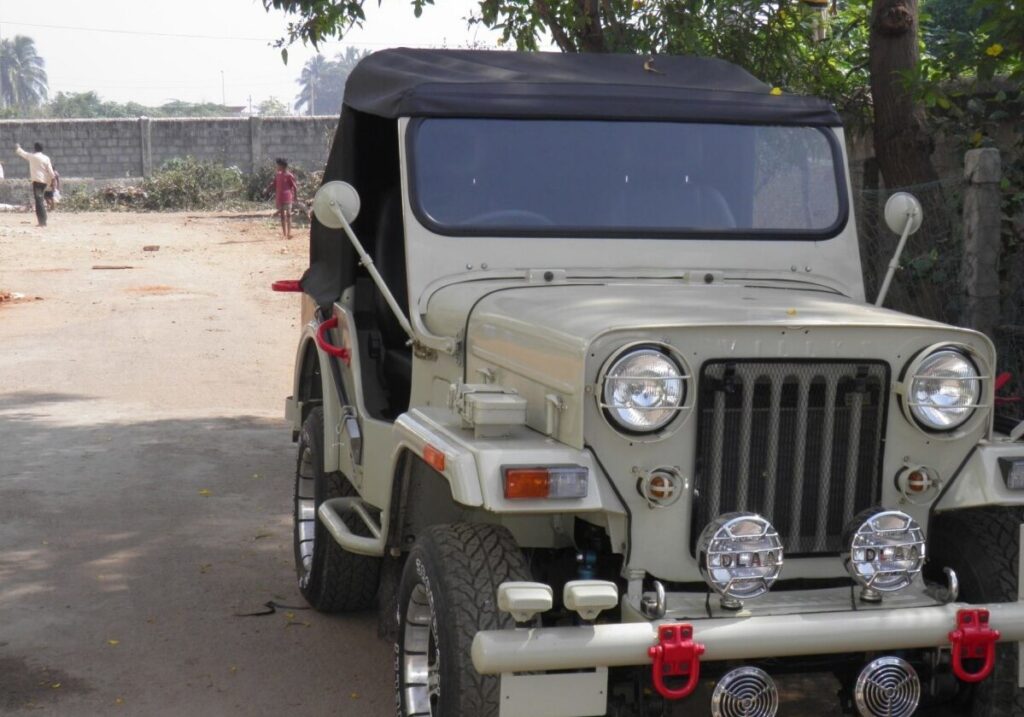
The Mahindra CJ 3 Wagon 2.1 D, produced between 1988 and 1992, represents a significant iteration of Mahindra’s long-running CJ series, a lineage deeply rooted in the American Jeep design. This particular variant, powered by a 2.1-liter diesel engine producing 63 horsepower, was aimed squarely at the utilitarian vehicle market in India, offering a robust and affordable off-road solution for rural transportation and agricultural needs. It occupied a crucial position in Mahindra’s lineup as a workhorse vehicle, bridging the gap between basic utility and limited passenger comfort. The CJ 3 Wagon, and specifically this diesel version, became a common sight in the Indian countryside during its production run, and continues to be seen today, often maintained for its simplicity and durability.
Technical Specifications
| Brand | Mahindra |
| Model | CJ 3 Wagon |
| Generation | CJ 3 Wagon |
| Type (Engine) | 2.1 D (63 Hp) |
| Start of Production | 1988 |
| End of Production | 1992 |
| Powertrain Architecture | Internal Combustion Engine |
| Body Type | Off-Road Vehicle |
| Fuel Type | Diesel |
| Power | 63 Hp |
| Engine Aspiration | Naturally Aspirated |
Powertrain & Engine Architecture
The heart of the CJ 3 Wagon 2.1 D is its 2.1-liter, naturally aspirated diesel engine. This engine, while relatively simple in design, was chosen for its fuel efficiency and reliability – critical factors for its intended market. It’s a direct-injection diesel, meaning fuel is injected directly into the combustion chamber, rather than being pre-mixed with air. This contributes to improved fuel economy and lower emissions compared to older indirect-injection designs. The engine utilizes a robust cast iron block and head, designed for longevity and ease of repair. The engine’s 63 horsepower output is achieved at a relatively low RPM, prioritizing torque over outright speed. Specific details regarding the fuel injection pump are often model-year dependent, but typically employed a mechanical pump system. The engine’s valvetrain consists of a simple overhead valve (OHV) configuration, further contributing to its mechanical simplicity. The transmission paired with this engine was typically a four-speed manual gearbox, selected for its durability and straightforward operation. A key characteristic of this powertrain is its lack of sophisticated technology; it’s a purely mechanical system, making it relatively easy to diagnose and repair even in remote locations.
Driving Characteristics
The driving experience of the CJ 3 Wagon 2.1 D is defined by its utilitarian nature. With only 63 horsepower, acceleration is modest, and the vehicle is best suited for low-speed operation. The four-speed manual transmission requires frequent shifting, particularly when ascending hills or carrying a load. However, the engine’s torque characteristics provide adequate pulling power for its intended tasks. The gear ratios are optimized for climbing ability and maintaining momentum on rough terrain, rather than achieving high speeds. Steering is typically non-power assisted, requiring considerable effort, especially at low speeds. The suspension, while simple, is robust and capable of absorbing significant impacts. Compared to potential gasoline-powered versions (though less common in this generation), the diesel offered significantly improved fuel economy, but at the cost of refinement and responsiveness. The 2.1 D variant was noticeably slower than any potential gasoline alternatives, but its superior fuel efficiency and low-end torque made it the preferred choice for many users.
Equipment & Trim Levels
The CJ 3 Wagon 2.1 D was not a vehicle focused on luxury or extensive features. It was designed to be a functional workhorse. Standard equipment typically included basic steel wheels, a simple dashboard with minimal instrumentation (speedometer, fuel gauge, and often an ammeter), and basic seating – usually vinyl or a durable cloth material. The interior was spartan, with minimal sound insulation and a focus on practicality. Optional extras were limited, but could include a basic radio, a winch (often aftermarket), and potentially a hardtop or canvas cover for the cargo area. Trim levels were largely non-existent; the CJ 3 Wagon 2.1 D was offered in a fairly standardized configuration. Variations primarily stemmed from owner modifications and aftermarket additions.
Chassis & Braking
The chassis of the CJ 3 Wagon 2.1 D is a body-on-frame construction, utilizing a ladder frame for strength and durability. This design is typical of off-road vehicles and allows for significant articulation and resistance to twisting forces. The suspension consists of leaf springs at both the front and rear, providing a robust and simple suspension system. Braking was typically accomplished with drum brakes on all four wheels, which were adequate for the vehicle’s weight and intended use, but lacked the stopping power of more modern disc brake systems. Steering is a recirculating ball system, known for its simplicity and durability, but offering limited feedback. A stabilizer bar was not typically fitted to the CJ 3 Wagon, prioritizing suspension travel over on-road handling. The vehicle’s relatively high ground clearance and short wheelbase contribute to its off-road capability.
Market Reception & Comparison
The Mahindra CJ 3 Wagon 2.1 D was well-received in the Indian market for its affordability, reliability, and off-road capability. Critics generally praised its ruggedness and simplicity, but noted its lack of refinement and limited performance. Compared to other vehicles in its class, such as the Tata Sumo, the CJ 3 Wagon offered superior off-road performance but less passenger comfort and cargo space. Its fuel economy was a significant advantage over gasoline-powered alternatives. The diesel engine, while slow, provided ample torque for hauling and navigating challenging terrain. The CJ 3 Wagon’s relatively low purchase price and simple maintenance requirements made it an attractive option for rural customers and small businesses. It was often compared to the earlier CJ models, with the 2.1 D variant offering improved fuel efficiency and slightly more power.
Legacy
The Mahindra CJ 3 Wagon 2.1 D has left a lasting legacy in India. Its robust design and simple mechanics have ensured that many examples remain on the road today, often maintained by dedicated owners. The powertrain, while aging, is known for its durability and relatively low maintenance costs. In the used car market, these vehicles are valued for their simplicity and off-road capability. They are often sought after by enthusiasts and collectors who appreciate their historical significance and rugged charm. The CJ 3 Wagon 2.1 D represents a pivotal moment in Mahindra’s history, solidifying its position as a leading manufacturer of utility vehicles in India. Its influence can still be seen in Mahindra’s current lineup of off-road vehicles, which continue to prioritize robustness and practicality.