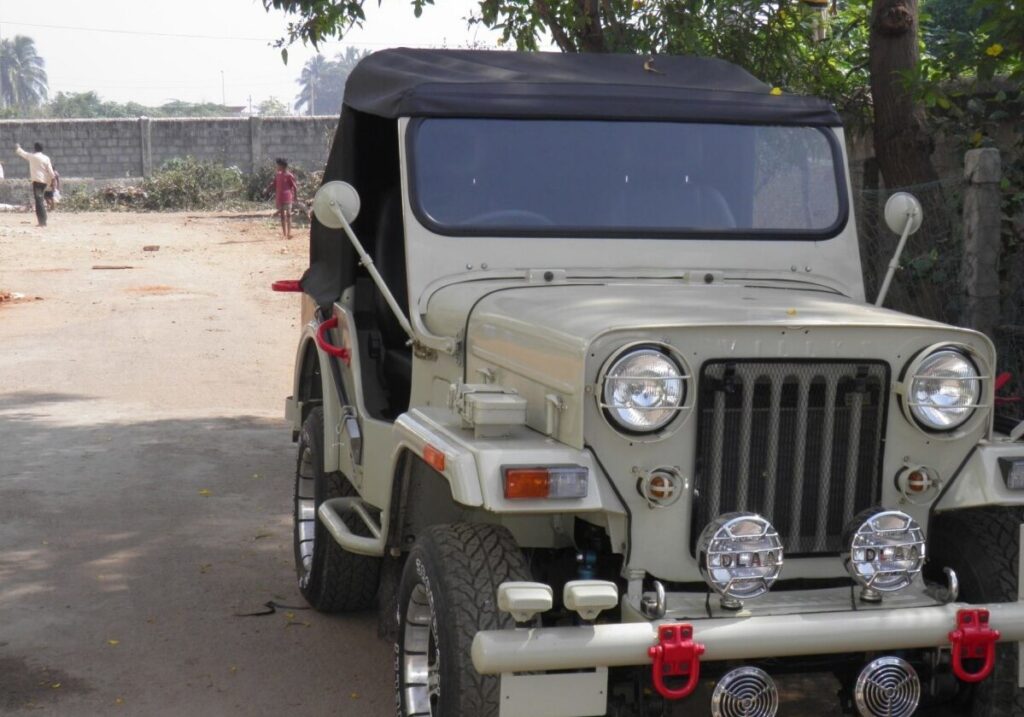
The Mahindra CJ 3 Wagon 2.2, produced between 1988 and 1992, represents a significant iteration of the iconic CJ (Civilian Jeep) series from Mahindra & Mahindra Limited. This particular variant, powered by a 2.2-liter gasoline engine producing 72 horsepower, occupied a crucial position in the Indian automotive landscape, serving as a versatile and affordable off-road vehicle for both personal and commercial use. It built upon the established foundation of the CJ series, offering a blend of rugged durability and practical utility, tailored to the challenging terrains and infrastructural conditions prevalent in India during that period. The CJ 3 Wagon was a direct descendant of the original Willys Jeep design, licensed and produced by Mahindra since 1949, and continued the tradition of providing a robust, simple, and easily maintainable vehicle.
Technical Specifications
| Brand | Mahindra |
| Model | CJ 3 Wagon |
| Generation | CJ 3 Wagon |
| Type (Engine) | 2.2 (72 Hp) |
| Start of Production | 1988 |
| End of Production | 1992 |
| Powertrain Architecture | Internal Combustion Engine |
| Body Type | Off-road Vehicle |
| Fuel Type | Petrol (Gasoline) |
| Power | 72 Hp |
| Engine Aspiration | Naturally Aspirated |
Powertrain & Engine Architecture
The heart of the CJ 3 Wagon 2.2 was a 2.2-liter, four-cylinder gasoline engine. While specific engine codes aren’t widely documented for this period of Mahindra production, the engine was a naturally aspirated inline-four, representing an evolution of earlier Mahindra gasoline engines. It featured a relatively simple design, prioritizing reliability and ease of maintenance over outright performance. The engine utilized a conventional pushrod valvetrain, a cost-effective and robust system common in vehicles of this era. Fuel delivery was managed by a carburetor, typical for gasoline engines produced in India during the late 1980s and early 1990s. The carburetor system, while less efficient than fuel injection, was easier to repair and maintain in areas with limited access to specialized tools and expertise. The engine’s 72 horsepower output was modest, but sufficient for the vehicle’s intended purpose – navigating rough terrain and carrying moderate loads. The transmission was a typically robust, but unsophisticated, four-speed manual gearbox. A three-speed column-shift automatic transmission was offered as an option, though it was considerably less common than the manual due to cost and the preference for driver control in off-road conditions.
Driving Characteristics
The driving experience of the CJ 3 Wagon 2.2 was characterized by its ruggedness and simplicity. The 72 horsepower engine, coupled with the four-speed manual transmission, provided adequate, though not exhilarating, performance. Acceleration was slow by modern standards, and hill climbing required careful gear selection and momentum management. The automatic transmission, when equipped, further reduced acceleration capability, prioritizing ease of use over performance. The vehicle’s short wheelbase and high ground clearance contributed to its exceptional off-road capability. It could traverse uneven terrain, navigate obstacles, and ford shallow streams with relative ease. The steering was non-power-assisted, requiring considerable effort, particularly at low speeds, but providing direct and predictable feedback. The suspension, consisting of leaf springs front and rear, offered a comfortable ride on paved roads, but was primarily designed to absorb the shocks and stresses of off-road driving. The overall driving experience was one of purposeful functionality, prioritizing durability and capability over refinement and comfort.
Equipment & Trim Levels
The CJ 3 Wagon 2.2 was offered with a relatively basic level of equipment, reflecting its utilitarian purpose and affordability. Standard features typically included simple steel wheels, basic vinyl or cloth upholstery, a rudimentary dashboard with essential gauges (speedometer, fuel level, temperature), and minimal exterior trim. The interior was spartan, focusing on practicality and ease of cleaning. Optional extras were limited, but could include features such as a basic radio, a hardtop or soft top, and upgraded seating. The trim level was largely uniform across the 2.2-liter models, with variations primarily stemming from customer-specified options. The vehicle was designed to be easily customized and adapted to specific needs, with many owners adding their own modifications, such as winches, brush guards, and auxiliary lighting.
Chassis & Braking
The chassis of the CJ 3 Wagon 2.2 was a traditional ladder frame construction, providing exceptional strength and durability. This robust chassis was essential for withstanding the stresses of off-road driving and carrying heavy loads. The suspension system consisted of leaf springs front and rear, offering a balance of ride comfort and load-carrying capacity. The braking system was relatively simple, utilizing drum brakes on all four wheels. While adequate for the vehicle’s weight and performance, the drum brakes lacked the stopping power and fade resistance of disc brakes. Steering was a recirculating ball system, providing a direct but somewhat heavy feel. The vehicle’s track width was narrow, contributing to its maneuverability in tight spaces, but also affecting its stability on paved roads.
Market Reception & Comparison
The Mahindra CJ 3 Wagon 2.2 was well-received in the Indian market, particularly among rural communities and commercial operators. Its affordability, ruggedness, and off-road capability made it an ideal vehicle for a wide range of applications, including agriculture, forestry, and transportation. Compared to other vehicles available in India at the time, such as the Maruti Suzuki Gypsy (a lighter, more performance-oriented off-roader) and the Tata Sumo (a larger, more passenger-focused utility vehicle), the CJ 3 Wagon 2.2 occupied a unique niche. It offered a compelling combination of durability, affordability, and off-road capability that few other vehicles could match. Fuel economy was modest, typical for a gasoline engine of that era, and maintenance costs were relatively low due to the vehicle’s simple design and readily available parts. Reliability was generally good, although the carburetor system required periodic adjustment and maintenance.
Legacy
The Mahindra CJ 3 Wagon 2.2 holds a significant place in the history of the Indian automotive industry. It represents a continuation of the iconic Willys Jeep legacy and played a vital role in providing affordable and reliable transportation to a large segment of the population. While production ceased in 1992, the CJ series continued to evolve, eventually leading to the development of more modern Mahindra vehicles. Today, the CJ 3 Wagon 2.2 is a popular choice among classic car enthusiasts and collectors in India. Well-maintained examples are highly sought after, and the vehicle’s simple design and robust construction ensure that many are still in active use. The powertrain, while not particularly sophisticated by modern standards, is known for its durability and ease of repair, making it a relatively reliable and affordable classic vehicle to own and operate. The CJ 3 Wagon 2.2 remains a symbol of rugged individualism and practical utility, embodying the spirit of adventure and self-reliance.