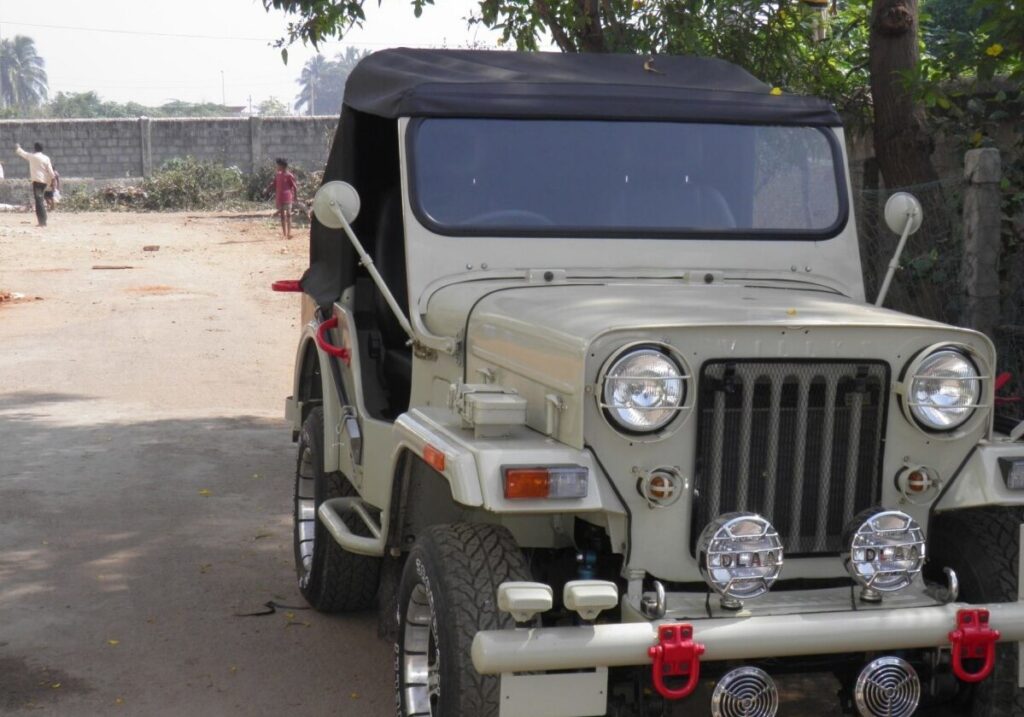
The Mahindra CJ 3 Wagon 2.5 D, produced between 1988 and 1992, represents a significant iteration of Mahindra’s long-running CJ series, a lineage deeply rooted in the American Jeep design. This particular variant, powered by a 2.5-liter diesel engine producing 39 horsepower, was specifically tailored for the Indian market, serving as a utilitarian workhorse and a popular choice for rural transportation. It occupied the base trim level within the CJ 3 Wagon range, prioritizing affordability and durability over outright performance. The CJ 3 Wagon, and this 2.5 D version in particular, played a crucial role in the motorization of rural India, providing a robust and relatively inexpensive means of transport where paved roads were scarce.
Technical Specifications
| Brand | Mahindra |
| Model | CJ 3 Wagon |
| Generation | CJ 3 Wagon |
| Type (Engine) | 2.5 D (39 Hp) |
| Start of Production | 1988 |
| End of Production | 1992 |
| Powertrain Architecture | Internal Combustion Engine |
| Body Type | Off-road Vehicle |
| Fuel Type | Diesel |
| Power | 39 Hp |
| Engine Aspiration | Naturally Aspirated |
Powertrain & Engine Architecture
The heart of the CJ 3 Wagon 2.5 D is a 2.5-liter, four-cylinder diesel engine. This engine, while relatively simple in design, was chosen for its reliability, fuel efficiency, and ability to produce usable torque at low engine speeds – characteristics highly valued in its intended operating environment. The engine is naturally aspirated, meaning it doesn’t utilize a turbocharger or supercharger to force air into the cylinders. This contributes to its simplicity but also limits its overall power output. The engine employs indirect injection, a common diesel technology of the time, where fuel is injected into a pre-chamber before entering the main combustion chamber. This system, while less efficient than direct injection, was more tolerant of lower fuel quality, a significant consideration in the Indian market. Details regarding the specific pump manufacturer and injection pressures are scarce, but it was a robust, mechanically governed system. The engine is mated to a four-speed manual transmission, chosen for its durability and straightforward operation. The transmission sends power to all four wheels via a part-time four-wheel-drive system, activated via a lever located within the cabin. A two-speed transfer case provides low-range gearing for enhanced off-road capability.
Driving Characteristics
The driving experience of the CJ 3 Wagon 2.5 D is defined by its utilitarian nature. With only 39 horsepower on tap, acceleration is deliberately slow, and highway speeds require considerable planning. The engine’s strength lies in its low-end torque, allowing it to tackle steep inclines and rough terrain with relative ease. The four-speed manual transmission requires frequent shifting, especially when encountering hills or carrying a load. The gear ratios are widely spaced, prioritizing pulling power over high-speed cruising. Steering is non-power-assisted, requiring significant effort, particularly at low speeds. The suspension, consisting of leaf springs front and rear, provides a firm ride, well-suited for absorbing the impacts of uneven roads but less comfortable on smoother surfaces. The part-time four-wheel-drive system, when engaged, transforms the CJ 3 Wagon into a capable off-road vehicle, capable of navigating challenging terrain. However, it’s crucial to disengage the four-wheel drive when driving on paved roads to avoid drivetrain binding and damage.
Equipment & Trim Levels
The CJ 3 Wagon 2.5 D was intentionally spartan in its equipment levels, reflecting its focus on affordability and functionality. Standard features were minimal, typically including basic instrumentation (speedometer, fuel gauge), a simple steering wheel, and bench seats upholstered in vinyl. Doors featured basic latches and wind-up windows. A canvas top was often fitted as standard, providing some protection from the elements, though it was not fully weatherproof. Optional extras were limited, potentially including a more substantial hardtop, a basic radio, and upgraded seating. The dashboard was constructed from durable plastic and featured minimal trim. The overall interior design prioritized practicality and ease of cleaning over aesthetics.
Chassis & Braking
The chassis of the CJ 3 Wagon is a body-on-frame construction, utilizing a ladder frame design for strength and durability. This construction method is typical of traditional off-road vehicles. The suspension consists of leaf springs at both the front and rear, providing a robust and simple suspension system. The front axle is a solid axle, contributing to its off-road capability. Rear brakes are typically drum brakes, while front brakes are also drum brakes, reflecting the vehicle’s cost-conscious design. Steering is a recirculating ball system, providing a direct but somewhat imprecise steering feel. The vehicle’s relatively high ground clearance and short wheelbase contribute to its off-road prowess, allowing it to navigate obstacles and uneven terrain with ease.
Market Reception & Comparison
The Mahindra CJ 3 Wagon 2.5 D was well-received in the Indian market, particularly in rural areas. Its affordability, durability, and four-wheel-drive capability made it a popular choice for farmers, landowners, and those requiring a robust vehicle for transportation in challenging conditions. Compared to other vehicles available at the time, such as the Maruti Suzuki Gypsy (a lighter, more road-oriented vehicle) and the Tata Sumo (a larger, more passenger-focused vehicle), the CJ 3 Wagon occupied a unique niche. It offered a compelling combination of off-road capability and affordability that few other vehicles could match. Fuel economy, while not exceptional by modern standards, was reasonable for a diesel engine of its era. Reliability was generally good, although maintenance requirements were relatively high due to the engine’s mechanical nature.
Legacy
The Mahindra CJ 3 Wagon, and the 2.5 D variant specifically, holds a significant place in the history of the Indian automotive industry. It helped to democratize personal transportation in rural areas and played a vital role in the country’s economic development. Today, the CJ 3 Wagon is a popular vehicle among classic car enthusiasts in India, prized for its simplicity, ruggedness, and historical significance. While finding well-maintained examples can be challenging, the 2.5-liter diesel engine is known for its longevity, and parts availability, while diminishing, remains reasonable. The CJ 3 Wagon serves as a reminder of a bygone era of automotive engineering, where durability and functionality were prioritized over luxury and performance. It remains a testament to Mahindra’s ability to produce robust and affordable vehicles tailored to the specific needs of the Indian market.