
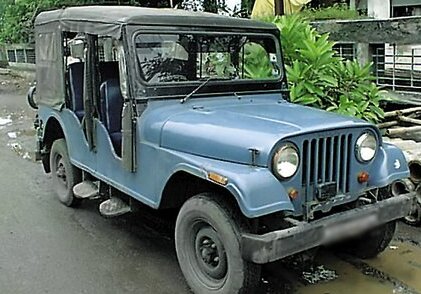
The Mahindra Commander 650 Di (50 hp) was a rugged, utilitarian off-road vehicle produced by the Indian manufacturer Mahindra & Mahindra from 1990 to 2013. It represented a mainstay of Mahindra’s lineup, particularly in rural markets, offering a robust and affordable transportation solution. The Commander, based on the Jeep CJ platform originally licensed from Willys, evolved over decades into a distinctly Mahindra product. The 650 Di variant, powered by a 2.5-liter diesel engine, occupied the entry-level position within the Commander range, prioritizing durability and low running costs over outright performance. It was a popular choice for agricultural use, commercial applications, and as a general-purpose vehicle where paved roads were scarce.
Technical Specifications
| Brand | Mahindra |
| Model | Commander |
| Generation | Commander |
| Type (Engine) | 650 Di (50 Hp) |
| Start of production | 1990 year |
| End of production | 2013 year |
| Powertrain Architecture | Internal Combustion engine |
| Body type | Off-road vehicle |
| Seats | 8 |
| Doors | 5 |
| Fuel Type | Diesel |
| Maximum speed | 90 km/h (55.92 mph) |
| Weight-to-power ratio | 29 kg/Hp, 34.5 Hp/tonne |
| Weight-to-torque ratio | 10 kg/Nm, 100 Nm/tonne |
| Power | 50 Hp @ 3000 rpm |
| Power per litre | 19.8 Hp/l |
| Torque | 145 Nm @ 1800 rpm (106.95 lb.-ft. @ 1800 rpm) |
| Engine layout | Front, Longitudinal |
| Engine displacement | 2523 cm3 (153.96 cu. in.) |
| Number of cylinders | 4 |
| Engine configuration | Inline |
| Cylinder Bore | 88.9 mm (3.5 in.) |
| Piston Stroke | 101.6 mm (4 in.) |
| Compression ratio | 18:1 |
| Number of valves per cylinder | 2 |
| Fuel injection system | Direct injection |
| Engine aspiration | Naturally aspirated engine |
| Kerb Weight | 1450 kg (3196.7 lbs.) |
| Max. weight | 2150 kg (4739.94 lbs.) |
| Max load | 700 kg (1543.24 lbs.) |
| Fuel tank capacity | 45 l (11.89 US gal | 9.9 UK gal) |
| Length | 4305 mm (169.49 in.) |
| Width | 1680 mm (66.14 in.) |
| Height | 1740 mm (68.5 in.) |
| Wheelbase | 2680 mm (105.51 in.) |
| Front track | 1346 mm (52.99 in.) |
| Rear (Back) track | 1346 mm (52.99 in.) |
| Drive wheel | All wheel drive (4×4) |
| Number of gears and type of gearbox | 4 gears, automatic transmission |
| Front suspension | Leaf spring |
| Rear suspension | Leaf spring |
| Front brakes | Drum |
| Rear brakes | Drum |
| Assisting systems | ABS (Anti-lock braking system) |
Powertrain & Engine Architecture
The heart of the Commander 650 Di was Mahindra’s 2.5-liter (2523 cc) inline-four diesel engine. This engine, internally designated with various codes depending on the specific year of manufacture, was a robust and simple design. It featured direct injection, a relatively low compression ratio of 18:1 for a diesel, and a two-valve per cylinder configuration. The engine’s design prioritized durability and fuel efficiency over high output. The 50 horsepower peak was achieved at 3000 rpm, while the 145 Nm (106.95 lb-ft) of torque was available from 1800 rpm. This torque curve was well-suited to low-speed, high-load applications. The 650 Di was paired with a four-speed automatic transmission, a relatively uncommon feature for a vehicle of this type and market segment at the time. This automatic transmission, while offering convenience, was not known for its speed or refinement, but rather for its robustness and ability to handle the engine’s torque.
Driving Characteristics
The Commander 650 Di Automatic offered a driving experience focused on practicality rather than performance. The 50 hp output and the four-speed automatic resulted in leisurely acceleration. The automatic transmission, while convenient, did detract from the engine’s available torque, particularly when climbing hills or carrying a full load. Compared to the manual transmission versions of the Commander, the automatic felt noticeably slower. The gear ratios were optimized for low-speed torque, making it suitable for off-road conditions and hauling, but less enjoyable on paved roads at highway speeds. The vehicle’s high center of gravity and leaf spring suspension contributed to a noticeable body roll in corners. However, the robust suspension was capable of absorbing significant impacts from rough terrain.
Equipment & Trim Levels
The Commander 650 Di Automatic was positioned as a relatively basic trim level. Standard equipment typically included a simple vinyl interior, basic instrumentation, and minimal exterior trim. Air conditioning was often an optional extra, as were power windows and central locking. The dashboard layout was functional and utilitarian, prioritizing ease of use over aesthetics. The seats were typically bench-style, capable of accommodating up to eight passengers, although comfort was limited, especially on longer journeys. The focus was on providing a durable and functional vehicle rather than a luxurious one.
Chassis & Braking
The Commander’s chassis was a body-on-frame construction, providing a high degree of strength and durability. The suspension utilized leaf springs at both the front and rear, a design choice that prioritized load-carrying capacity and robustness over ride comfort. The braking system consisted of drum brakes on all four wheels. While adequate for the vehicle’s weight and intended use, the drum brakes lacked the stopping power and modulation of disc brakes. An Anti-lock Braking System (ABS) was included as a safety feature, which was relatively advanced for a vehicle in this class during its production run. The Commander’s 4×4 drivetrain, with its selectable four-wheel drive, provided excellent off-road capability.
Market Reception & Comparison
The Mahindra Commander 650 Di Automatic received mixed reviews. Critics acknowledged its ruggedness, affordability, and off-road capability, but often criticized its lack of refinement, slow performance, and basic interior. Compared to other trims in the Commander lineup, such as those equipped with more powerful engines (like the 2.1-liter diesel), the 650 Di Automatic was significantly slower and less capable on paved roads. However, it offered a lower price point and better fuel economy. Its main competitors were other utilitarian off-road vehicles popular in the Indian market, such as the Tata Sumo and the Maruti Gypsy, though these vehicles often catered to slightly different segments.
Legacy
The Mahindra Commander 650 Di, and the Commander line as a whole, holds a significant place in the history of Indian automotive manufacturing. It was a workhorse vehicle that served a vital role in rural India for decades. While the 650 Di Automatic variant wasn’t known for its performance, its durability and affordability made it a popular choice for those seeking a reliable and capable off-road vehicle. Today, well-maintained examples of the Commander 650 Di are sought after by enthusiasts and collectors, particularly those who appreciate its simple design and rugged character. The powertrain, while aging, is known for its longevity, and parts availability remains relatively good in India. The Commander’s legacy continues in Mahindra’s current lineup of SUVs and off-road vehicles, which build upon the foundation of robustness and practicality established by the original Commander.
