
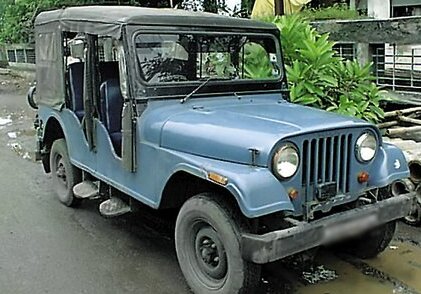
The Mahindra Commander 750 ST 2WD (62 hp) was a utilitarian, body-on-frame sport utility vehicle produced by the Indian manufacturer Mahindra & Mahindra from 1990 to 2013. It represented a significant vehicle in the Indian automotive landscape, offering affordable and rugged transportation, particularly in rural areas. The 750 ST 2WD variant, powered by a 2.1-liter diesel engine and a four-speed automatic transmission, occupied the lower end of the Commander lineup, prioritizing affordability and ease of use over outright performance. It was based on the older, but robust, Mahindra CJ platform, evolving over its long production run with incremental updates.
Technical Specifications
| Brand | Mahindra |
| Model | Commander |
| Generation | Commander |
| Type (Engine) | 750 ST 2WD (62 Hp) |
| Start of production | 1990 |
| End of production | 2013 |
| Powertrain Architecture | Internal Combustion engine |
| Body type | Off-road vehicle |
| Seats | 8 |
| Doors | 5 |
| Fuel Type | Diesel |
| Maximum speed | 95 km/h (59.03 mph) |
| Weight-to-power ratio | 21 kg/Hp, 47.7 Hp/tonne |
| Weight-to-torque ratio | 10.7 kg/Nm, 93.1 Nm/tonne |
| Power | 62 Hp @ 4500 rpm |
| Power per litre | 29.4 Hp/l |
| Torque | 121 Nm @ 2000 rpm (89.25 lb.-ft. @ 2000 rpm) |
| Engine layout | Front, Longitudinal |
| Engine displacement | 2112 cm3 (128.88 cu. in.) |
| Number of cylinders | 4 |
| Engine configuration | Inline |
| Cylinder Bore | 90 mm (3.54 in.) |
| Piston Stroke | 83 mm (3.27 in.) |
| Compression ratio | 22.4:1 |
| Number of valves per cylinder | 2 |
| Fuel injection system | Precombustion chamber injection |
| Engine aspiration | Naturally aspirated engine |
| Kerb Weight | 1300 kg (2866.01 lbs.) |
| Max. weight | 2080 kg (4585.62 lbs.) |
| Max load | 780 kg (1719.61 lbs.) |
| Fuel tank capacity | 45 l (11.89 US gal | 9.9 UK gal) |
| Length | 4305 mm (169.49 in.) |
| Width | 1680 mm (66.14 in.) |
| Height | 1740 mm (68.5 in.) |
| Wheelbase | 2680 mm (105.51 in.) |
| Front track | 1346 mm (52.99 in.) |
| Rear track | 1346 mm (52.99 in.) |
| Drivetrain Architecture | The Internal combustion engine (ICE) drives the rear wheels of the vehicle. |
| Drive wheel | Rear wheel drive |
| Number of gears and type of gearbox | 4 gears, automatic transmission |
| Front suspension | Leaf spring |
| Rear suspension | Leaf spring |
| Front brakes | Drum |
| Rear brakes | Drum |
| Assisting systems | ABS (Anti-lock braking system) |
Powertrain & Engine Architecture
The heart of the Commander 750 ST 2WD was a 2.1-liter (2112 cc) inline-four cylinder diesel engine. This engine, often referred to by its internal codes, utilized a precombustion chamber injection system – a common technology for diesel engines of that era. This system involved a small pre-chamber where fuel was initially injected and ignited, then transferred to the main combustion chamber. This design aided in cold starting and reduced engine noise compared to direct injection systems. The engine produced 62 horsepower at 4500 rpm and 121 Nm (89.25 lb-ft) of torque at 2000 rpm. The four-speed automatic transmission was a relatively uncommon feature for a vehicle of this type and price point in the Indian market, aiming to provide ease of driving, particularly for urban users. It was a simple, hydraulically controlled unit, prioritizing durability over shift speed.
Driving Characteristics
The 750 ST 2WD, with its 62 hp and automatic transmission, was not designed for rapid acceleration or high-speed cruising. Its performance was best described as adequate for its intended purpose – transporting people and goods over varied terrain. The automatic transmission, while convenient, did sap some power from the engine, resulting in slower acceleration compared to the manual transmission versions. The gear ratios were optimized for low-end torque, making it suitable for climbing hills and navigating rough roads, but limited its top speed to around 95 km/h (59 mph). The leaf spring suspension provided a comfortable, if somewhat bouncy, ride, particularly when fully loaded. The rear-wheel-drive configuration meant it wasn’t suited for serious off-roading, but could handle well-maintained dirt roads.
Equipment & Trim Levels
The Commander 750 ST 2WD was a fairly basic vehicle, reflecting its affordability. Standard equipment typically included vinyl or cloth upholstery, a simple dashboard layout with basic instrumentation, and manually operated windows and door locks. Air conditioning was often an optional extra. The interior was designed for practicality and durability rather than luxury. The 750 ST trim level generally represented a mid-range offering, positioned above the more spartan base models but below the higher-spec versions with more features and potentially a more powerful engine. Optional extras could include power steering, upgraded audio systems, and different exterior color options.
Chassis & Braking
The Commander utilized a traditional body-on-frame construction, providing a robust and durable chassis. Both the front and rear suspension systems employed leaf springs, a cost-effective and reliable design well-suited for carrying heavy loads. The braking system consisted of drum brakes on all four wheels. While adequate for the vehicle’s weight and performance, the drum brakes lacked the stopping power and fade resistance of disc brakes. An Anti-lock Braking System (ABS) was included as a safety feature, which was relatively advanced for a vehicle in this segment during its production years. The track width was relatively narrow, contributing to its maneuverability in tight spaces.
Market Reception & Comparison
The Mahindra Commander 750 ST 2WD was well-received in the Indian market as a practical and affordable utility vehicle. Critics generally praised its ruggedness, spacious interior, and relatively low running costs. However, the 62 hp engine and automatic transmission combination were often criticized for being underpowered, especially when the vehicle was fully loaded. Compared to the manual transmission versions, the automatic offered less performance and slightly lower fuel economy. The 750 ST 2WD competed with other utility vehicles like the Tata Sumo and the Maruti Gypsy, offering a different blend of affordability, practicality, and ease of use.
Legacy
The Mahindra Commander, in all its variants, played a significant role in the Indian automotive industry, providing a reliable and affordable transportation solution for a large segment of the population. The 750 ST 2WD, while not the most powerful or refined version, offered a unique combination of features that appealed to a specific niche of buyers. Today, these vehicles are relatively common in the used car market, often sought after for their simplicity, durability, and low maintenance costs. The powertrain, while aging, is known for its robustness and can provide years of reliable service with proper maintenance. However, finding parts may become increasingly challenging as the vehicle ages. The Commander remains a recognizable and fondly remembered vehicle in India, representing a bygone era of rugged and utilitarian automotive design.
