
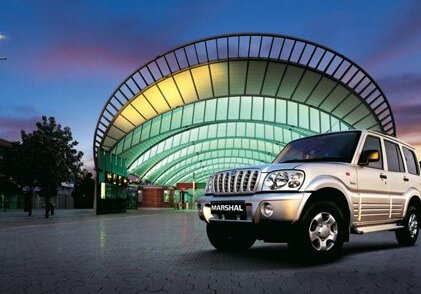
The Mahindra Marshal 2.0 i 16V, produced between 2002 and 2005, was a utilitarian, body-on-frame SUV designed primarily for the Indian market, with limited export to other developing nations. It represented Mahindra’s attempt to offer a more refined and powerful alternative to existing rugged utility vehicles, blending off-road capability with a degree of passenger comfort. The 2.0 i 16V variant occupied a mid-range position within the Marshal lineup, offering a step up in performance from the base models while remaining more affordable than potential future, more luxurious trims. It was built on a robust chassis intended for challenging terrain and demanding use.
Technical Specifications
| Brand | Mahindra |
| Model | Marshal |
| Generation | Marshal |
| Type (Engine) | 2.0 i 16V (116 Hp) |
| Start of production | 2002 |
| End of production | 2005 |
| Powertrain Architecture | Internal Combustion engine |
| Body type | Off-road vehicle |
| Seats | 7 |
| Doors | 5 |
| Fuel consumption (urban) | 15 l/100 km (15.7 US mpg, 18.8 UK mpg, 6.7 km/l) |
| Fuel consumption (extra urban) | 12.8 l/100 km (18.4 US mpg, 22.1 UK mpg, 7.8 km/l) |
| Fuel Type | Petrol (Gasoline) |
| Acceleration 0 – 100 km/h | 20 sec |
| Acceleration 0 – 62 mph | 20 sec |
| Acceleration 0 – 60 mph | 19 sec |
| Maximum speed | 150 km/h (93.21 mph) |
| Weight-to-power ratio | 15.6 kg/Hp (64.1 Hp/tonne) |
| Weight-to-torque ratio | 9.8 kg/Nm (102.2 Nm/tonne) |
| Power | 116 Hp @ 5500 rpm |
| Power per litre | 58.1 Hp/l |
| Torque | 185 Nm @ 3800 rpm (136.45 lb.-ft. @ 3800 rpm) |
| Engine layout | Front, Longitudinal |
| Engine Model/Code | Renault F4R |
| Engine displacement | 1998 cm3 (121.93 cu. in.) |
| Number of cylinders | 4 |
| Engine configuration | Inline |
| Compression ratio | 9.8:1 |
| Number of valves per cylinder | 4 |
| Fuel injection system | Multi-port manifold injection |
| Engine aspiration | Naturally aspirated engine |
| Valvetrain | DOHC |
| Kerb Weight | 1810 kg (3990.37 lbs.) |
| Max. weight | 2610 kg (5754.07 lbs.) |
| Max load | 800 kg (1763.7 lbs.) |
| Trunk (boot) space – minimum | 460 l (16.24 cu. ft.) |
| Trunk (boot) space – maximum | 1540 l (54.38 cu. ft.) |
| Fuel tank capacity | 55 l (14.53 US gal | 12.1 UK gal) |
| Length | 4475 mm (176.18 in.) |
| Width | 1916 mm (75.43 in.) |
| Height | 1916 mm (75.43 in.) |
| Wheelbase | 2680 mm (105.51 in.) |
| Front track | 1450 mm (57.09 in.) |
| Rear (Back) track | 1450 mm (57.09 in.) |
| Minimum turning circle | 11.4 m (37.4 ft.) |
| Drive wheel | All wheel drive (4×4) |
| Number of gears | 5 gears, manual transmission |
| Front suspension | Torsion |
| Rear suspension | Leaf spring |
| Front brakes | Disc |
| Rear brakes | Drum |
| Tires size | 235/75 R15 |
| Wheel rims size | 6.5J x 15 |
Powertrain & Engine Architecture
The heart of the Marshal 2.0 i 16V was the Renault F4R engine, a 1.998-liter inline-four cylinder gasoline engine. This engine was licensed by Mahindra and represented a significant upgrade over the smaller, less powerful engines previously offered in the Marshal. The F4R featured a double overhead camshaft (DOHC) valvetrain with four valves per cylinder, contributing to its improved breathing and power output. Fuel delivery was handled by a multi-port fuel injection system, optimizing fuel atomization and combustion efficiency. The engine produced 116 horsepower at 5500 rpm and 185 Nm (136.45 lb-ft) of torque at 3800 rpm. The engine’s longitudinal mounting and the availability of a five-speed manual transmission were key components of its drivetrain. The transmission was chosen for its durability and suitability for off-road conditions, although it lacked the refinement of more modern automatic gearboxes.
Driving Characteristics
The 2.0-liter engine provided a noticeable improvement in performance compared to the lower-displacement engines available in other Marshal variants. While not a sports car by any means, the 116 hp engine offered sufficient power for both on-road driving and tackling moderate off-road obstacles. Acceleration was adequate, with a 0-100 km/h (0-62 mph) time of around 20 seconds. The five-speed manual transmission allowed drivers to keep the engine in its optimal power band, maximizing performance. The gear ratios were relatively tall, prioritizing fuel economy and low-speed torque for off-road use. Compared to a hypothetical automatic transmission version (which wasn’t offered), the manual gearbox provided more control and driver engagement. The vehicle’s weight of approximately 1810 kg (3990 lbs) did limit its overall agility, but the robust suspension and all-wheel-drive system compensated for this in off-road scenarios.
Equipment & Trim Levels
The Marshal 2.0 i 16V was positioned as a mid-range offering, featuring a basic but functional level of equipment. Standard features typically included power steering, a basic audio system, and vinyl or cloth upholstery. Air conditioning was often an optional extra. The interior was designed with practicality in mind, featuring durable materials and a straightforward layout. The dashboard was relatively simple, with clearly labeled controls. The seven-seat configuration provided ample space for passengers, making it suitable for families or commercial use. Optional extras could include upgraded audio systems, alloy wheels, and additional interior trim.
Chassis & Braking
The Marshal’s chassis was a traditional body-on-frame construction, providing excellent durability and off-road capability. The front suspension utilized a torsion bar setup, while the rear suspension employed leaf springs. This combination offered a good balance between ride comfort and load-carrying capacity. The braking system consisted of disc brakes on the front wheels and drum brakes on the rear. While adequate for normal driving conditions, the braking performance was not particularly sophisticated. The all-wheel-drive system provided enhanced traction in slippery conditions, making it well-suited for off-road use. Tires were typically 235/75 R15, chosen for their durability and off-road grip.
Market Reception & Comparison
The Mahindra Marshal 2.0 i 16V was generally well-received in the Indian market as a capable and affordable SUV. Critics praised its robust construction, all-wheel-drive system, and improved performance compared to earlier Marshal models. However, some criticisms were leveled at its basic interior, relatively crude ride quality, and lack of advanced safety features. Compared to other trims in the Marshal lineup, the 2.0 i 16V offered a significant performance advantage over the lower-displacement engines, but at a higher price point. Fuel economy was reasonable for a vehicle of its size and type, averaging around 15 l/100 km (15.7 US mpg) in urban driving and 12.8 l/100 km (18.4 US mpg) on the highway.
Legacy
The Mahindra Marshal 2.0 i 16V, while no longer in production, remains a popular choice among enthusiasts and those seeking a rugged and reliable off-road vehicle. The Renault F4R engine, when properly maintained, is known for its durability and relatively simple mechanics. Parts availability can be a challenge in some regions, but the engine’s widespread use in other vehicles (particularly Renault models) helps to mitigate this issue. Today, the Marshal 2.0 i 16V is often found in the used car market at affordable prices, making it an attractive option for those seeking a capable and inexpensive SUV. Its robust construction and simple design contribute to its continued appeal as a workhorse vehicle.
