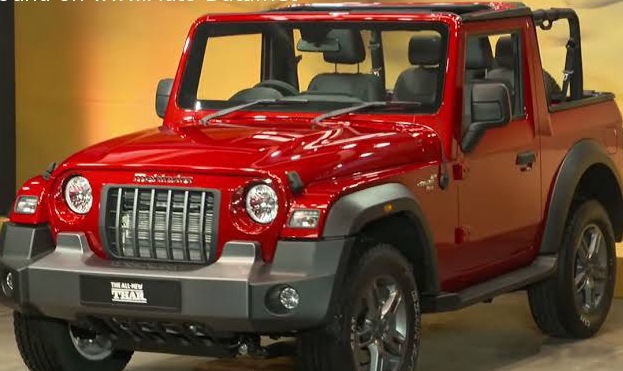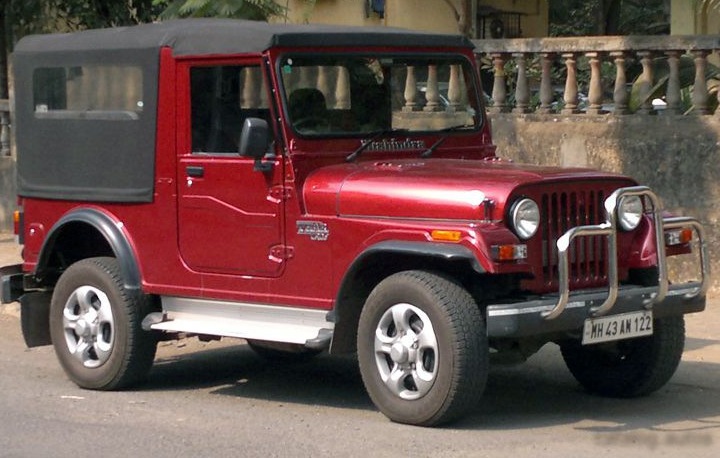
The Mahindra Thar I 2.6 (64 hp) is a rugged, body-on-frame, off-road vehicle produced by the Indian manufacturer Mahindra & Mahindra from 2010 to 2020. Representing the first generation of the Thar, this variant played a crucial role in establishing the model as a capable and affordable 4×4 option, particularly within the Indian market. It was designed as a successor to the Mahindra CJ series, offering a more modern, yet still utilitarian, approach to off-road motoring. The 2.6-liter engine and five-speed manual transmission combination positioned it as the entry-level offering in the Thar lineup, appealing to buyers prioritizing functionality and durability over outright performance.
Technical Specifications
| Brand | Mahindra |
| Model | Thar |
| Generation | Thar I |
| Type (Engine) | 2.6 (64 Hp) |
| Start of production | 2010 |
| End of production | 2020 |
| Powertrain Architecture | Internal Combustion engine |
| Body type | Off-road vehicle, Cabriolet |
| Seats | 7 |
| Doors | 3 |
| Fuel consumption (combined) | 5.5 l/100 km (42.8 US mpg, 51.4 UK mpg, 18.2 km/l) |
| Fuel Type | Diesel |
| Acceleration 0 – 100 km/h | 11 sec |
| Acceleration 0 – 62 mph | 11 sec |
| Acceleration 0 – 60 mph | 10.5 sec |
| Maximum speed | 150 km/h (93.21 mph) |
| Power | 64 Hp @ 3200 rpm |
| Power per litre | 25.4 Hp/l |
| Torque | 182 Nm @ 1500-1800 rpm (134.24 lb.-ft. @ 1500-1800 rpm) |
| Engine layout | Front, Longitudinal |
| Engine displacement | 2523 cm3 (153.96 cu. in.) |
| Number of cylinders | 4 |
| Engine configuration | Inline |
| Cylinder Bore | 88.9 mm (3.5 in.) |
| Piston Stroke | 101.6 mm (4 in.) |
| Number of valves per cylinder | 4 |
| Fuel injection system | Diesel Commonrail |
| Engine aspiration | Turbocharger, Intercooler |
| Max. weight | 2090 kg (4607.66 lbs.) |
| Trunk (boot) space – minimum | 384 l (13.56 cu. ft.) |
| Fuel tank capacity | 45 l (11.89 US gal | 9.9 UK gal) |
| Length | 3760 mm (148.03 in.) |
| Width | 1640 mm (64.57 in.) |
| Height | 1904 mm (74.96 in.) |
| Wheelbase | 2430 mm (95.67 in.) |
| Front track | 1314 mm (51.73 in.) |
| Rear (Back) track | 1295 mm (50.98 in.) |
| Ride height (ground clearance) | 187 mm (7.36 in.) |
| Minimum turning circle | 12.56 m (41.21 ft.) |
| Approach angle | 41° |
| Departure angle | 23° |
| Ramp-over angle | 25° |
| Drivetrain Architecture | Rear wheel drive. Internal Combustion engine. |
| Drive wheel | Rear wheel drive |
| Number of gears and type of gearbox | 5 gears, manual transmission |
| Front suspension | Leaf spring |
| Rear suspension | Leaf spring |
| Front brakes | Disc |
| Rear brakes | Drum |
| Tires size | 185/85 R16 |
| Wheel rims size | 16 |
Powertrain & Engine Architecture
The heart of the Thar I 2.6 is a 2.5-liter (2523 cc) inline-four cylinder diesel engine. This engine, often referred to by its internal codes, utilizes a turbocharger with an intercooler to boost power output to 64 horsepower at 3200 rpm and 182 Nm (134.24 lb-ft) of torque between 1500-1800 rpm. The engine employs a diesel commonrail fuel injection system, which contributes to improved fuel efficiency and reduced emissions compared to older mechanical injection systems. The engine is longitudinally mounted in the chassis. The five-speed manual transmission is a relatively simple, robust unit designed for durability rather than sporty performance. Gear ratios are geared towards low-speed torque, prioritizing off-road capability over on-road acceleration.
Driving Characteristics
The 2.6-liter engine, paired with the five-speed manual transmission, delivers a driving experience focused on usability and off-road prowess. Acceleration is modest, with a 0-60 mph time of around 10.5 seconds. However, the engine’s torque output, available from relatively low RPMs, provides sufficient pulling power for navigating challenging terrain. The gear ratios are spaced to maximize torque delivery, making it easy to crawl over obstacles. Compared to later, more powerful Thar variants (like those with the CRDe engine), the 2.6 feels underpowered on paved roads, especially when fully loaded. The leaf spring suspension provides a comfortable ride on rough surfaces but can feel bouncy on smoother roads.
Equipment & Trim Levels
The Thar I 2.6 was intentionally kept basic in terms of equipment, reflecting its utilitarian purpose. Standard features typically included basic steel wheels, vinyl upholstery, a simple dashboard layout, and minimal creature comforts. Power steering was often an optional extra. The interior was designed to be easily washable and durable, with a focus on practicality. Optional extras could include a hard top in place of the standard soft top, and basic audio systems. The trim level was largely defined by the addition of these optional features rather than distinct interior or exterior styling packages.
Chassis & Braking
The Thar I utilizes a rugged body-on-frame chassis construction, providing excellent durability and off-road capability. The suspension consists of leaf springs at both the front and rear, offering a robust and simple design. Braking is handled by disc brakes on the front wheels and drum brakes on the rear. This configuration was common for vehicles in this weight class and price range at the time. The relatively high ground clearance (187 mm / 7.36 inches) and favorable approach, departure, and ramp-over angles contribute to the Thar’s impressive off-road abilities.
Market Reception & Comparison
The Mahindra Thar I 2.6 was generally well-received in the Indian market as an affordable and capable off-road vehicle. Critics praised its ruggedness, simplicity, and go-anywhere ability. However, the engine’s limited power and the basic interior were often points of criticism. Compared to other trims in the Thar lineup, such as those equipped with the more powerful CRDe engine, the 2.6 offered a more economical entry point but at the expense of performance. Fuel economy was a strong point, averaging around 42.8 US mpg. Reliability was generally good, owing to the engine’s simple design and robust construction.
Legacy
The Mahindra Thar I 2.6 holds a significant place in the history of the Thar model. It established the Thar as a viable alternative to more expensive 4x4s and helped to cultivate a loyal following among off-road enthusiasts. While the 2.6-liter engine is no longer in production, its simplicity and durability mean that many examples remain on the road today. In the used car market, the Thar I 2.6 is often sought after by those looking for a classic, affordable, and capable off-road vehicle. Its straightforward mechanicals make it relatively easy to maintain and repair, further contributing to its enduring appeal.