
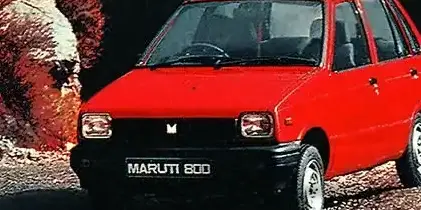
The Maruti 800 0.8 (35 hp) represents a pivotal moment in the history of Indian automotive manufacturing. Produced from 1997 to 2013, this variant of the iconic Maruti 800 served as an accessible and economical entry point into personal transportation for a vast segment of the Indian population. It was a key component of the second generation (SB30) of the 800, building upon the foundation laid by the original, and remained in production for a remarkably long period, becoming a ubiquitous sight on Indian roads. The 800, in all its iterations, was fundamentally based on the Suzuki Alto, adapted for the Indian market and manufactured by Maruti Udyog (later Maruti Suzuki). This specific 0.8-liter, 35 horsepower version occupied the base trim level, prioritizing affordability and fuel efficiency above all else.
Technical Specifications
| Brand | Maruti |
| Model | 800 |
| Generation | 800 |
| Type (Engine) | 0.8 (35 Hp) |
| Start of production | 1997 |
| End of production | 2013 |
| Powertrain Architecture | Internal Combustion engine |
| Body type | Hatchback |
| Seats | 5 |
| Doors | 5 |
| Fuel consumption (urban) | 6.9 l/100 km (34.1 US mpg, 40.9 UK mpg, 14.5 km/l) |
| Fuel consumption (extra urban) | 5.5 l/100 km (42.8 US mpg, 51.4 UK mpg, 18.2 km/l) |
| Fuel Type | Petrol (Gasoline) |
| Maximum speed | 137 km/h (85.13 mph) |
| Weight-to-power ratio | 18.3 kg/Hp, 54.7 Hp/tonne |
| Weight-to-torque ratio | 11.4 kg/Nm, 87.5 Nm/tonne |
| Power | 35 Hp @ 5500 rpm |
| Power per litre | 44 Hp/l |
| Torque | 56 Nm @ 2500 rpm (41.3 lb.-ft. @ 2500 rpm) |
| Engine layout | Front, Transverse |
| Engine displacement | 796 cm3 (48.57 cu. in.) |
| Number of cylinders | 3 |
| Engine configuration | Inline |
| Cylinder Bore | 68.5 mm (2.7 in.) |
| Piston Stroke | 72 mm (2.83 in.) |
| Compression ratio | 8.7:1 |
| Number of valves per cylinder | 2 |
| Fuel injection system | Single-point injection |
| Engine aspiration | Naturally aspirated engine |
| Kerb Weight | 640 kg (1410.96 lbs.) |
| Max. weight | 1000 kg (2204.62 lbs.) |
| Max load | 360 kg (793.66 lbs.) |
| Trunk (boot) space – minimum | 160 l (5.65 cu. ft.) |
| Trunk (boot) space – maximum | 1050 l (37.08 cu. ft.) |
| Fuel tank capacity | 30 l (7.93 US gal | 6.6 UK gal) |
| Length | 3335 mm (131.3 in.) |
| Width | 1440 mm (56.69 in.) |
| Height | 1410 mm (55.51 in.) |
| Wheelbase | 2175 mm (85.63 in.) |
| Front track | 1215 mm (47.83 in.) |
| Rear (Back) track | 1200 mm (47.24 in.) |
| Minimum turning circle | 8.8 m (28.87 ft.) |
| Drivetrain Architecture | The Internal combustion engine (ICE) drives the front wheels of the vehicle. |
| Drive wheel | Front wheel drive |
| Number of gears | 4 gears, manual transmission |
| Front suspension | Spring Strut |
| Rear suspension | Coil spring |
| Front brakes | Disc |
| Rear brakes | Drum |
| Assisting systems | ABS (Anti-lock braking system) |
| Steering type | Steering rack and pinion |
| Tires size | 145/70 R12 |
| Wheel rims size | 12 |
Powertrain & Engine Architecture
The heart of the Maruti 800 0.8 was the F8B engine, a 796cc inline-three cylinder petrol engine. This engine, derived from the Suzuki Alto, utilized a single-point fuel injection system, a relatively simple and cost-effective technology for the time. The engine featured a two-valve per cylinder configuration and a compression ratio of 8.7:1. The F8B engine was known for its simplicity and durability, though it lacked the sophistication of more modern engines. The 35 horsepower output was achieved at 5500 rpm, with a torque figure of 56 Nm (41.3 lb-ft) at 2500 rpm. This engine was mated to a four-speed manual transmission, the only transmission option available for this variant. The transmission was designed for durability and ease of maintenance, reflecting the overall ethos of the vehicle.
Driving Characteristics
The Maruti 800 0.8, with its modest power output and lightweight construction, offered a basic but functional driving experience. Acceleration was understandably slow, particularly when fully loaded. The four-speed gearbox was geared for economy rather than performance, with relatively tall ratios. This meant that frequent downshifts were necessary when climbing hills or overtaking. Compared to potential upgrades like a 1.0L engine, the 0.8L version prioritized fuel efficiency. The steering was light and relatively precise, making it easy to maneuver in urban environments. The suspension, while basic, provided a reasonably comfortable ride on smooth roads, though it could become unsettled on rough surfaces. The overall driving experience was best described as utilitarian, focusing on getting from point A to point B with minimal fuss and maximum fuel economy.
Equipment & Trim Levels
The Maruti 800 0.8 was deliberately spartan in its equipment levels, reflecting its position as the entry-level model. Standard features typically included basic cloth upholstery, a simple dashboard layout with analog gauges, and manual windows and door locks. Air conditioning was often an optional extra, and power steering was not available. The interior was designed for practicality and durability, with hard-wearing materials used throughout. The focus was on providing a functional and reliable transportation solution at the lowest possible cost. Later models saw the addition of minor cosmetic enhancements, such as updated dashboard trim and seat fabrics, but the overall level of equipment remained relatively basic.
Chassis & Braking
The Maruti 800 0.8 featured a simple body-on-frame construction, contributing to its lightweight and robust nature. The front suspension utilized a MacPherson strut setup, while the rear suspension employed a coil spring arrangement. Braking was provided by disc brakes at the front and drum brakes at the rear. ABS (Anti-lock Braking System) was not standard on all models, and its availability varied depending on the year of manufacture. The steering system was a rack and pinion type, offering reasonable precision and feedback. The tires were typically 145/70 R12 size, chosen for their balance of affordability and grip.
Market Reception & Comparison
The Maruti 800 0.8 was overwhelmingly well-received in the Indian market, primarily due to its affordability and fuel efficiency. It became the default choice for first-time car buyers and families on a budget. Critics generally praised its reliability and ease of maintenance, but acknowledged its lack of performance and limited features. Compared to other trims in the Maruti 800 lineup (which included a 1.0L engine option), the 0.8L version offered the lowest purchase price and the best fuel economy, but at the expense of performance. It directly competed with other entry-level hatchbacks available in the Indian market at the time, such as the Hyundai Santro and the Tata Indica, often undercutting them on price.
Legacy
The Maruti 800, and particularly the 0.8L variant, holds a significant place in Indian automotive history. It democratized personal transportation for millions of Indians and played a crucial role in the growth of the Indian auto industry. The F8B engine proved to be remarkably durable, and many examples of the Maruti 800 are still on the road today, testament to its robust design. In the used car market, the 800 0.8 remains a popular choice for those seeking an affordable and reliable vehicle, although finding well-maintained examples is becoming increasingly challenging. Its simplicity and ease of repair continue to make it a favorite among mechanics and DIY enthusiasts. The Maruti 800 0.8 is remembered not just as a car, but as a symbol of a changing India.
