
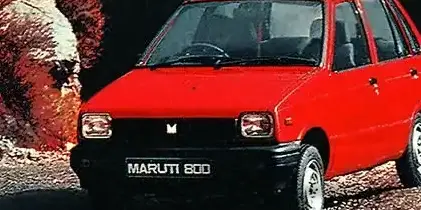
The Maruti 800 0.8i (45 hp) was a mainstay of the Indian automotive market from 1997 to 2013. A derivative of the original Maruti 800, itself based on the Suzuki Alto, this variant represented an affordable and practical transportation solution for a rapidly growing middle class. It occupied the entry-level position within the Maruti Suzuki lineup, serving as the most accessible option for first-time car buyers. The 800, in all its iterations, played a pivotal role in motorizing India, and the 0.8i version continued that legacy with incremental improvements in efficiency and reliability. It was built on the F8 platform.
Technical Specifications
| Brand | Maruti |
| Model | 800 |
| Generation | 800 |
| Type (Engine) | 0.8 i (45 Hp) |
| Start of production | 1997 |
| End of production | 2013 |
| Powertrain Architecture | Internal Combustion engine |
| Body type | Hatchback |
| Seats | 5 |
| Doors | 5 |
| Fuel consumption (urban) | 7.5 l/100 km (31.4 US mpg) |
| Fuel consumption (extra urban) | 5.5 l/100 km (42.8 US mpg) |
| Fuel consumption (combined) | 6.5 l/100 km (36.2 US mpg) |
| Fuel Type | Petrol (Gasoline) |
| Acceleration 0 – 100 km/h | 18.5 sec |
| Acceleration 0 – 62 mph | 18.5 sec |
| Acceleration 0 – 60 mph | 17.6 sec |
| Maximum speed | 137 km/h (85.13 mph) |
| Weight-to-power ratio | 14.2 kg/Hp |
| Weight-to-torque ratio | 10.5 kg/Nm |
| Power | 45 Hp @ 6000 rpm |
| Power per litre | 56.5 Hp/l |
| Torque | 61 Nm @ 3000 rpm (44.99 lb.-ft. @ 3000 rpm) |
| Engine layout | Front, Transverse |
| Engine displacement | 796 cm3 (48.57 cu. in.) |
| Number of cylinders | 3 |
| Engine configuration | Inline |
| Cylinder Bore | 68.5 mm (2.7 in.) |
| Piston Stroke | 72 mm (2.83 in.) |
| Compression ratio | 8.7:1 |
| Number of valves per cylinder | 4 |
| Fuel injection system | Multi-port manifold injection |
| Engine aspiration | Naturally aspirated |
| Kerb Weight | 640 kg (1410.96 lbs.) |
| Max. weight | 1000 kg (2204.62 lbs.) |
| Max load | 360 kg (793.66 lbs.) |
| Trunk (boot) space – minimum | 160 l (5.65 cu. ft.) |
| Trunk (boot) space – maximum | 1050 l (37.08 cu. ft.) |
| Fuel tank capacity | 30 l (7.93 US gal) |
| Length | 3335 mm (131.3 in.) |
| Width | 1440 mm (56.69 in.) |
| Height | 1405 mm (55.31 in.) |
| Wheelbase | 2175 mm (85.63 in.) |
| Front track | 1215 mm (47.83 in.) |
| Rear track | 1200 mm (47.24 in.) |
| Minimum turning circle | 8.8 m (28.87 ft.) |
| Drivetrain Architecture | Front wheel drive |
| Number of gears | 5 |
| Gearbox type | Manual transmission |
| Front suspension | Spring Strut |
| Rear suspension | Coil spring |
| Front brakes | Disc |
| Rear brakes | Drum |
| Steering type | Steering rack and pinion |
| Tires size | 145/70 R12 |
| Wheel rims size | 12 |
Powertrain & Engine Architecture
The heart of the Maruti 800 0.8i was the F8B three-cylinder, naturally aspirated gasoline engine. This engine, displacing 796cc, produced 45 horsepower at 6000 rpm and 61 Nm (45 lb-ft) of torque at 3000 rpm. It utilized a multi-point fuel injection system, a significant upgrade from the carburetor-equipped earlier models, contributing to improved fuel efficiency and smoother operation. The engine featured a single overhead camshaft (SOHC) and four valves per cylinder. The 5-speed manual transmission was the only gearbox option available, geared for economy rather than outright performance. The engine’s relatively simple design prioritized reliability and ease of maintenance, crucial factors in the Indian market.
Driving Characteristics
The Maruti 800 0.8i was not known for its blistering acceleration. Its 0-60 mph time of around 17.6 seconds reflects its modest power output. However, the lightweight construction (approximately 640 kg or 1411 lbs) helped to mitigate the lack of horsepower. The gearbox ratios were optimized for city driving, providing adequate, if not exhilarating, performance in urban environments. Compared to potential upgrades like a 1.0L engine (available in some markets), the 0.8i prioritized fuel economy and affordability. The steering was light and responsive, making it easy to maneuver in congested traffic. The suspension, while basic, provided a reasonably comfortable ride on typical Indian road conditions.
Equipment & Trim Levels
The Maruti 800 0.8i was deliberately spartan in its standard equipment. It typically included basic features such as black plastic bumpers, steel wheels with hubcaps, and a simple interior with vinyl upholstery. Power steering and air conditioning were generally offered as optional extras, adding to the vehicle’s cost. Higher trim levels, though rare, might include features like a basic audio system and upgraded interior trim. The focus was on providing a functional and affordable vehicle, rather than luxury or extensive features.
Chassis & Braking
The Maruti 800 0.8i utilized a body-on-frame construction, a relatively simple and cost-effective design. The front suspension consisted of a MacPherson strut setup, while the rear employed a coil spring arrangement. Braking was handled by disc brakes at the front and drum brakes at the rear. The braking system was adequate for the vehicle’s weight and performance, but lacked the sophistication of more modern systems. The relatively narrow tires (145/70 R12) contributed to fuel efficiency but offered limited grip.
Market Reception & Comparison
The Maruti 800 0.8i was overwhelmingly well-received in India. Its affordability, reliability, and fuel efficiency made it a popular choice for families and first-time car buyers. Critics generally praised its practicality and ease of maintenance. Compared to other vehicles in its segment, such as the Hyundai Santro, the 800 offered a lower price point, but with fewer features and a less refined driving experience. Its fuel economy, averaging around 36.2 US mpg, was a significant selling point in a market sensitive to fuel costs.
Legacy
The Maruti 800, and the 0.8i variant specifically, holds a significant place in Indian automotive history. It democratized car ownership and played a crucial role in the growth of the Indian auto industry. While no longer in production, the Maruti 800 remains a common sight on Indian roads, and is known for its durability and relatively low maintenance costs. The F8B engine, while simple, proved to be remarkably robust and reliable. In the used car market, well-maintained examples of the 0.8i continue to command reasonable prices, reflecting its enduring popularity and reputation for dependability. Its legacy extends beyond just being a car; it represents a pivotal moment in India’s economic and social development.
